You can’t get too much winter in the winter

2018 Feb Lowther Shap and Preston (20).JPG
Lowther Castle in Cumbria is a stunning ruin

Retirement has completely changed my experience of winter and given the season a different character that is new and refreshing.  I have always dreaded the winter and would become quite low in November as the days got shorter and colder.  But now we are retired and no longer tied to just two days of freedom we can take off for a day trip or camping tour as soon as sunshine is forecast.  This flexibility means that winter starts to feel like a succession of fantastic frosty and sunny days and is suddenly much more enjoyable and fun.  Last week we spotted another window of opportunity to make the most of the blue skies and we headed north.  After some mooching around the border city of Carlisle with its red sandstone castle and marvellous museum, we visited the dramatic ruin of Lowther Castle whose roof was removed in the 1950s to save the estate from crippling taxation.  The castle and gardens have been recently opened up and are a fantastic place for a day out at any time of year.

We returned south via another ruin, Shap Abbey.  Set in an idyllic and peaceful valley the remains of this ancient abbey are open to the public, although only one tower remains from the original buildings.  From the village of Shap we had views to the Lake District fells dusted in snow and in the sunshine the north-west of England showed off its most beautiful side.

We popped in to Preston for old times sake and were pleased to see the hot potato and parched peas stall [the original street food] was still doing business in the Flag Square.  Continuing south to the town of Ashbourne in Derbyshire we had a great day walking in more sunshine.  Then the weekend arrived and with it the drizzle.  We met friends for a pub lunch and a walk and had a lovely afternoon thanks to excellent waterproofs but it would have been better if the fine weather had blessed those working folk too.

PS the quote is from Robert Frost.


Sharing a marvellous vegan [and fat-free] fruit cake recipe

2018 Feb Lowther Shap and Preston (1).JPG
Vegan fruit cake

With a few days winter camping planned I thought we needed some wholesome sustenance to ward off the winter chill.  This delicious fruit cake is easy to make [although it does take a bit of pre-planning] and keeps well for around five days.  I first made this cake by soaking the fruit in tea but starting using whisky to use up some we had in the cupboard.  I found that the whisky gives the cake a real flavourful punch and it is going to be hard to go back to cold tea when the surplus whisky has gone.  Having a cake in the campervan is comforting and helps us to save money as it encourages us to have tea and cake in the ‘van rather than stopping at a tea shop [too often].

So here is my recipe for a vegan tea or whisky fruit cake

Ingredients

  • 225 grams of flour
  • 2 teaspoons baking powder
  • 70 grams of sugar
  • 1/2 mashed banana [60 grams] or you can use one egg if having a vegan cake isn’t important to you
  • 250 mls whisky or brewed black tea
  • 300 grams of your favourite mixed dried fruit [I like a mixture of cranberries and sultanas]
  • 60 mls of soya milk [you can use cow’s milk]
  • 1/2 teaspoon mixed spice
  • Pinch of salt

Method

  • The day before, put the dried fruit in a bowl, pour over the whisky or brewed black tea and leave overnight to soak.
  • The next day preheat the oven to 180C [gas mark 4] and line a baking loaf tin [the recipe has no oil so it needs the paper to stop it sticking].
  • In a mixing bowl sift in the flour, salt, baking powder and mixed spice.  Add the sugar and mix well, breaking any lumps.  Make a well in the centre and add the mashed banana and the milk.  Add the dried fruit and any remaining liquid.  Mix well.  You should have a soft mixture, add a little more milk if it feels too dry.
  • Pour the mixture in to the loaf tin and bake for 40 minutes to one hour and a skewer comes out clean.  Cool and leave a day before you eat it if you can.  The cake keeps well in a tin.


My journey through travel writing

P1070870
One of our campervan mottos

I don’t just write travel articles, I am also an enthusiastic reader of travel books.  As I read I am in awe of travel writers who can string together more than the 2,000 word limit of my articles and still hold my attention, be well-written, informative and entertaining; what stamina and discipline that must take.  I immerse myself in these armchair journeys to the familiar and the exotic through the pages of a good travel book and I have many favourites.  For me, good travel writing is not a guidebook [although I read these too] or a series of facts about a place; good travel writing is about stories and experiences, it is about how a place made someone feel, it is about tales told honestly and it is about personal journeys.  In the hands of a good travel writing I feel I am sitting on the author’s shoulder and I am along for ‘The glory of the ride.’

My reading of travel writing started as a young teenager.  With a passion for reading I soon exhausted the children’s section of the small town library near to my home and so [with some hesitation as I wasn’t sure if it was allowed] I furtively moved across the room to the adult books.  At the end of two tall rows of books by a large warm radiator I found a little-visited corner where I could browse unnoticed and here was the library’s small travel section.  Amazingly there were gems here and in particular I discovered two Ethel Mannin books; An Italian Journey from 1974 about her travels around northern Italy that captivated my imagination and started my love affair with Italy and her 1960s American Journey, telling tales from her travels by Greyhound around an America that was far from the glitzy American dream I saw on the TV.  I am sure I missed much of the subtlety of her writing, I knew nothing of Ethel Mannin and her politics and little of the world beyond Staffordshire and yet the travellers tales and adventures of a lone woman both touched me and inspired me.  It was some years later that I discovered Dervla Murphy and her individual style of travel writing and I have followed her on her numerous and exciting journeys ever since.  Dervla Murphy has an honest style that is never sentimental.  She is such a fantastic listener and gatherer of individual stories and she weaves historical information and personal narratives so well I feel I have been there with her every step of the way.

Some time ago World Hum compiled a list of their top 30 favourite travel books and I took a look to see if any of my own ‘must read’ books were on there and to look for ideas for new travel books to read.  Paul Theroux, Norman Lewis, Bill Bryson, Bruce Chatwin, Eric Newby, Jan Morris and Patrick Leigh Fermor all make the list and are excellent choices that I have loved reading.  Others such as Evelyn Waugh and John Steinbeck are writers I enjoy reading but think of as novelists rather than travel writers, so I added their books to my list.  There are other titles and authors I’ve not come across and I have been looking at these; up to now I have added Europe, Europe by Hans Magnus Enzensberger to my wish list.

That young teenager had ambitions to be a writer but, despite my reading, I only thought of novels as the way to earn money as a writer and I lacked the imagination for such an undertaking.  Forty-years later in my 50s I realised that ambition and became a published writer.  My first travel article was published in 2013 and the thrill each time I see my writing and photographs in print has never faded.  That said, there may be travel writers with glamorous lives but for me it is less razzle-dazzle and more about typing.  The time I spend travelling versus the time sat behind a desk researching, writing and editing [words and photographs] is about 1:10.

I will never be as accomplished a writer as my heroes but I try to tell readers a story that every motorhomer can relate to.  This narrative combined with the 2,000 word limit excludes many of my travel experiences and anecdotes and the editing process takes many hours.  In these articles I am balancing practical information with my desire to paint a comprehensive pictures of the places we visit by describing the sights, smells and sounds I have experienced.

These ten tips for writing travel articles are a good and useful start for anyone who is thinking of writing their own travel articles but firstly check out this article 15 signs you are born for travel writing to see if travel writing is for you.  The tips made me aware that I rarely include any direct dialogue in my travel articles.  I can see how this can strengthen the intimacy of my stories and my current resolution is to try and bring this in to as many future articles as I can!


Top tips for campsites and stop overs when you are abroad

09.14 Vila Praia de Ancora campsite
Idyllic Portuguese campsite

Updated November 2024

Prompted by a fellow Devon ‘van owner I have given some thought to the baffling array of guides out there for motorhomers to use, buy or download to help you find a campsite in mainland Europe.  Very few motorhomers have unlimited amounts of space to store numerous guides and unlimited amounts of money to purchase them so how do you choose what to spend your hard-earned on?  When travelling we generally plan on a day-by-day basis and out-of-season and in more remote areas you can’t always rely on just coming across somewhere suitable to stay [either a campsite or wild camping pitch] without a bit of planning.  Below is a guide to the resources we have found most useful when we travel abroad.  Each guide or app has its plus points as well as its limitations.

Guides, apps and websites

Since I wrote this post in 2018, finding a campsite has changed dramatically. We now use Search for Sites app and the ACSI Card books and app {see below], almost excusively.

ACSI Card – Available from Vicarious Books in the UK, this is great value for out-of-season touring (from September to June) and this is our first port of call when we are looking for a campsite so that we can get maximum value from it.  You pay for the card and books and campsites in the scheme charge a set fee for a pitch with electricity.  The number of sites in the scheme various by country. There are few in the UK but plenty in France.

Caravan and Motorhome Club Guides – We used to have these guides for our European trips.  The entries and campsite reviews are from members and can be quirky and brief.  We like to read between the lines of these reviews and do find these books of assistance, even though the information is not always up-to-date.

Aires and Camperstop Guides – We used to carry some of these guide books with us, relevant to the country we were travelling in. The books are fairly comprehensive and kept as up-to-date as a book can be and give an honest review of each aire, its facilities, its outlook and how comfortable it is. Nowadays we rely on apps and the internet.

In France we will look for municipal campsites in small towns as these are generally good value and near to the town centre for [the essential] bakeries and bars.

Home-based research & recommendations

In addition to the above we will research areas we are fairly certain we will be going to, particularly national parks and mountain areas where there are often few campsites and we are looking for the best situation for walking.  This might be Google searches, Rough Guide / Lonely Planet information, some Cicerone Guides include campsites and we sometimes ask a question about an area on a motorhome forum or Facebook page where there are generous well-travelled people with a wide range of knowledge.

You also can’t beat personal recommendations from other campers you meet on the way and these have sometimes taken us to interesting places that we never expected to visit when we set off.

To book or not & the one house rule

Until 2020, we generally never booked campsites when we were abroad as it was rarely necessary. Since 2020, owning a campervan has become more popular and campsites have become busier. Even in May, June and September we have come across full campsites in France, Germany and the Netherlands, particularly during public holidays. We now try and keep some flexibility and book sites a day or two in advance. In 2024 in France, we never managed to get a pitch on the popular campsite in Bayeux, despite turning up on a wet Sunday and then trying to book ahead online. If you really want to stay in a particular site, it may be worth booking.

Our house rule is to start looking for somewhere for the night by around 17.00.  This is just because we did get caught out in Mecklenburg in northern Germany on one trip.  There were plenty of campsites around the Mecklenburg lakes and none of them were full as it was only June.  The mistake we made was to be too busy enjoying a lovely sunny evening and leaving looking for a campsite until after 18.00 and German campsites don’t keep the evening hours that are common in southern Europe [and even Poland where we had just come from].  At each campsite we arrived at reception was closed and the barriers were down.  We eventually got a pitch on a site that we could drive in to but we didn’t have the key for the toilets and had to hang around for another camper to show up to use them, which was somewhat disconcerting for other campers!


Discovering the Arts and Crafts Movement in the Lake District

P1070511.JPG
Beautiful Blackwell Arts and Crafts House above Windermere

In retirement our winter trips are being dictated by the weather forecast rather than the weekend and this freedom is liberating.  With some cold sunny weather forecast last week we baked a cake, packed some warm clothing and set off for the Lake District.  Windermere is easy to get to from Salford and we were soon soaking up the views along the lake from Orrest Head, pottered by the Windermere and seeking a cosy pub to warm up in.

In the afternoon we visited the lovely Blackwell Arts and Crafts House.  We had been here before many years ago and since then the staff and volunteers have been busy and many improvements have been made.  Built by M H Bailie Scott as a holiday home for Edward Holt, this is a beautiful example of an Arts and Crafts house that retains many of its original features that, in keeping with the movement, are both decorative and practical.  The door handles are leaf-shaped, the window catches are interesting.  There is attractive stained glass and plaster work too but just as important, the atmosphere is relaxed, rather than stuffy and visitors are encouraged to linger.

After being a holiday home the house became a school and then offices before being bought by a Trust in 1999 and it opened to the public in 2001.  The White Drawing Room has slender columns with decorative capitals, a sunny aspect over the lake and is a room where the sunlight dances around the room.

The Arts and Crafts Movement began in Britain in the 1880s and spread across Europe and America.  As the V&A writes:

‘It was a movement born of ideals. It grew out of a concern for the effects of industrialisation: on design, on traditional skills and on the lives of ordinary people. In response, it established a new set of principles for living and working. It advocated the reform of art at every level and across a broad social spectrum, and it turned the home into a work of art.’

The Arts and Crafts Movement has strong links with the Lake District.  The three founder members, William Morris, Edward Burne Jones and Phillip Webb were supported by  George Howard from Naworth Castle near Carlisle and he used William Morris’ wallpapers in many of his properties.  John Ruskin, a Lake District resident, strongly influenced the Arts and Crafts Movement.  He considered machine-made items to be dishonest and that craftmanship was linked to dignity.

P1070558.JPG
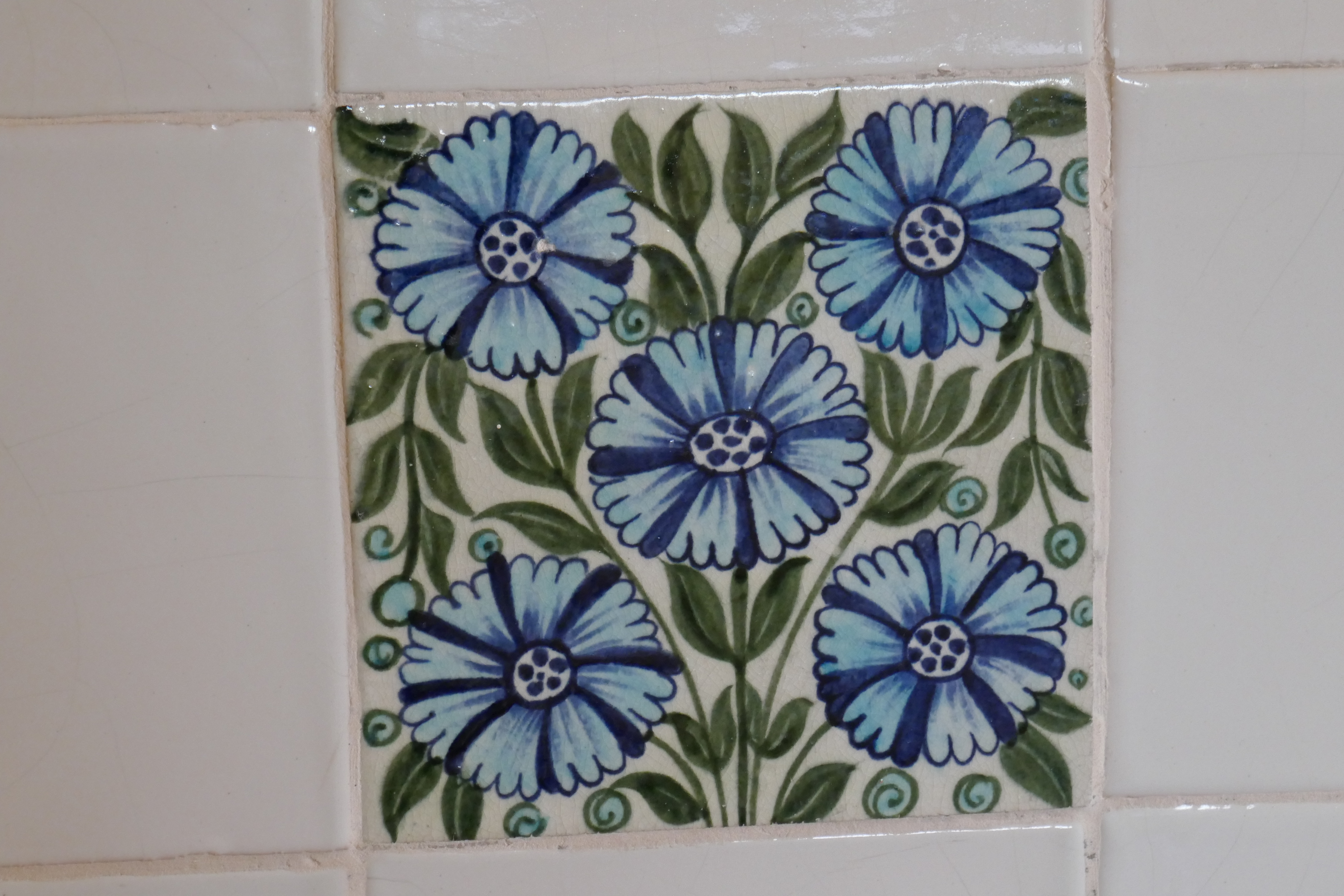
Tile detail from a fireplace at Blackwell

Ready for any emergency?

10.27 Castrojeriz (111).JPG
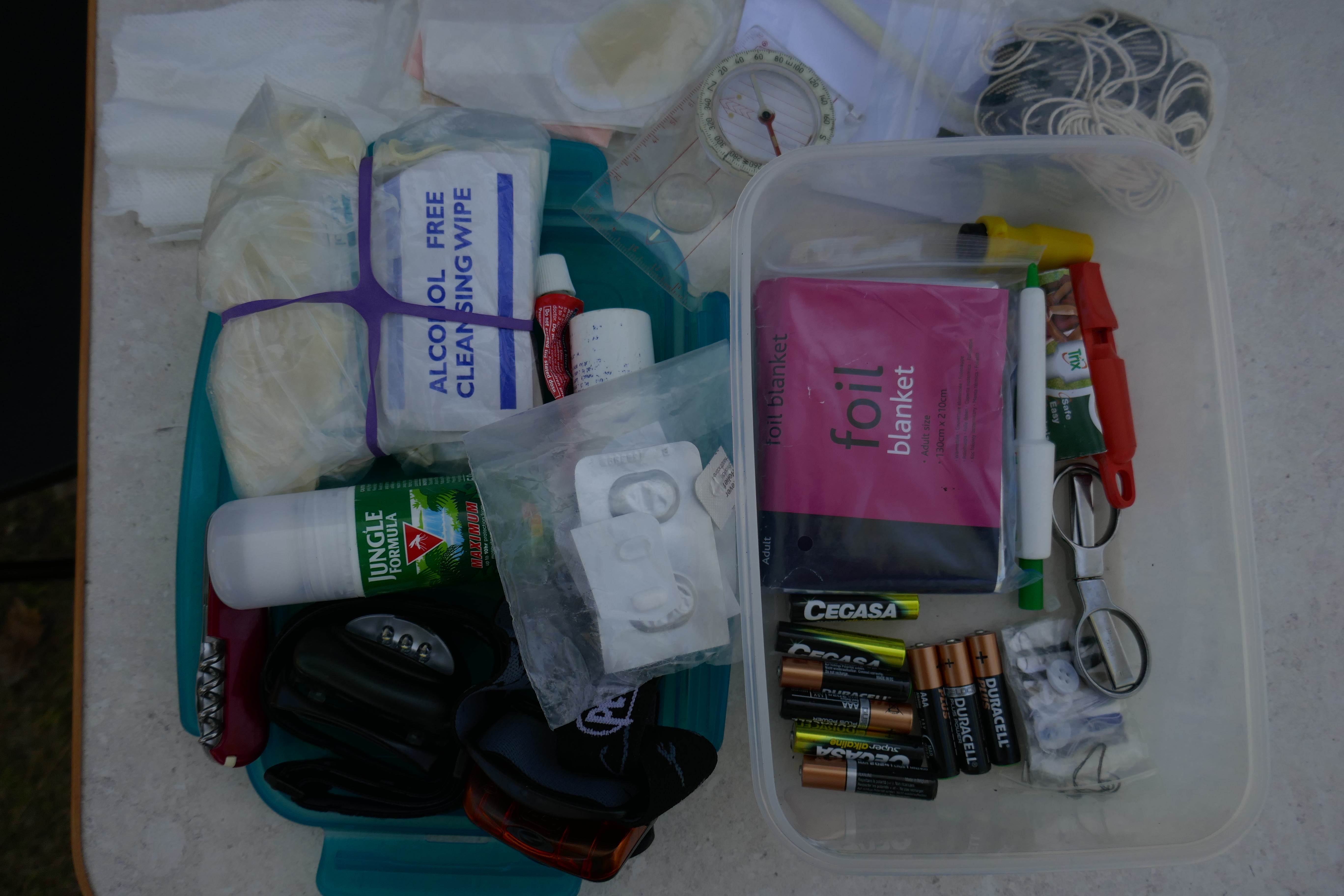
Our ’emergency’ kit

Emergency kit is a bit of a grand name for our tupperware box full of things we keep in the campervan.  This box contains items we think might be useful when we are out walking or cycling and ’emergency kit’ is what we call it when we are checking what to stuff in the rucksacks or pannier for a walk or bike ride.  We have recently reviewed what we carry in this kit.  We like to have these small essentials in one place so that we feel ready for almost anything and can head off for the day with some confidence.

We have used items in the ’emergency kit’ [for ourselves and other people] and we have added to it when we have had an ’emergency’ and realised there is something essential missing.  One summer we ended up on a path heavy with nettles, I was wearing shorts and emerged unable to see my legs under a tapestry of nettle stings and we spent much of the rest of the day looking for a chemist in Cotswold villages to get antihistamine tablets, now we carry these.  We use the tick lasso regularly as we are often in areas where these small insects are numerous [we also keep our tick-borne encephalitis jabs up-to-date].  The plasters get used regularly for small injuries but many of the other items are there for a serious emergency, such as the foil emergency blankets and whistle.  We previously carried just one small torch but now keep our two head torches in the ’emergency kit’ as if we are returning in the dusk or dark from a walk or cycle ride these are more useful for getting us home safely.

We think we are prepared for anything but what do you think is missing?  Our kit comprises:

  • Two head torches and batteries
  • Bandages [various]
  • Wipes
  • Towelettes
  • Lifeboat matches
  • Plasters, including blister plasters
  • Paper and pencil
  • Compass
  • String and spare lace
  • Scissors [fantastic neat folding scissors actually]
  • Bite and sting relief cream and bite and sting click-away
  • Insect repellent
  • Foil emergency blankets
  • Medications – antihistamine, ibuprofen, migraine tablets, paracetamol [we change these regularly so they are not out of date]
  • Sewing kit [not sure what emergency this is really for]
  • Swiss army knife with knife and corkscrew
  • Whistle
  • Tick lasso (for removing ticks)

In addition we also ensure we carry at least one charged mobile phone as well as a map and water on any walk or bike ride that is further than a trip to the shops.

The mountain safety advice is not to bother but should we carry a distress flare?  What do you always carry with you?


Spain & Portugal: What did a two months campervan trip cost?

09.07 Salamanca night visit (35).JPG
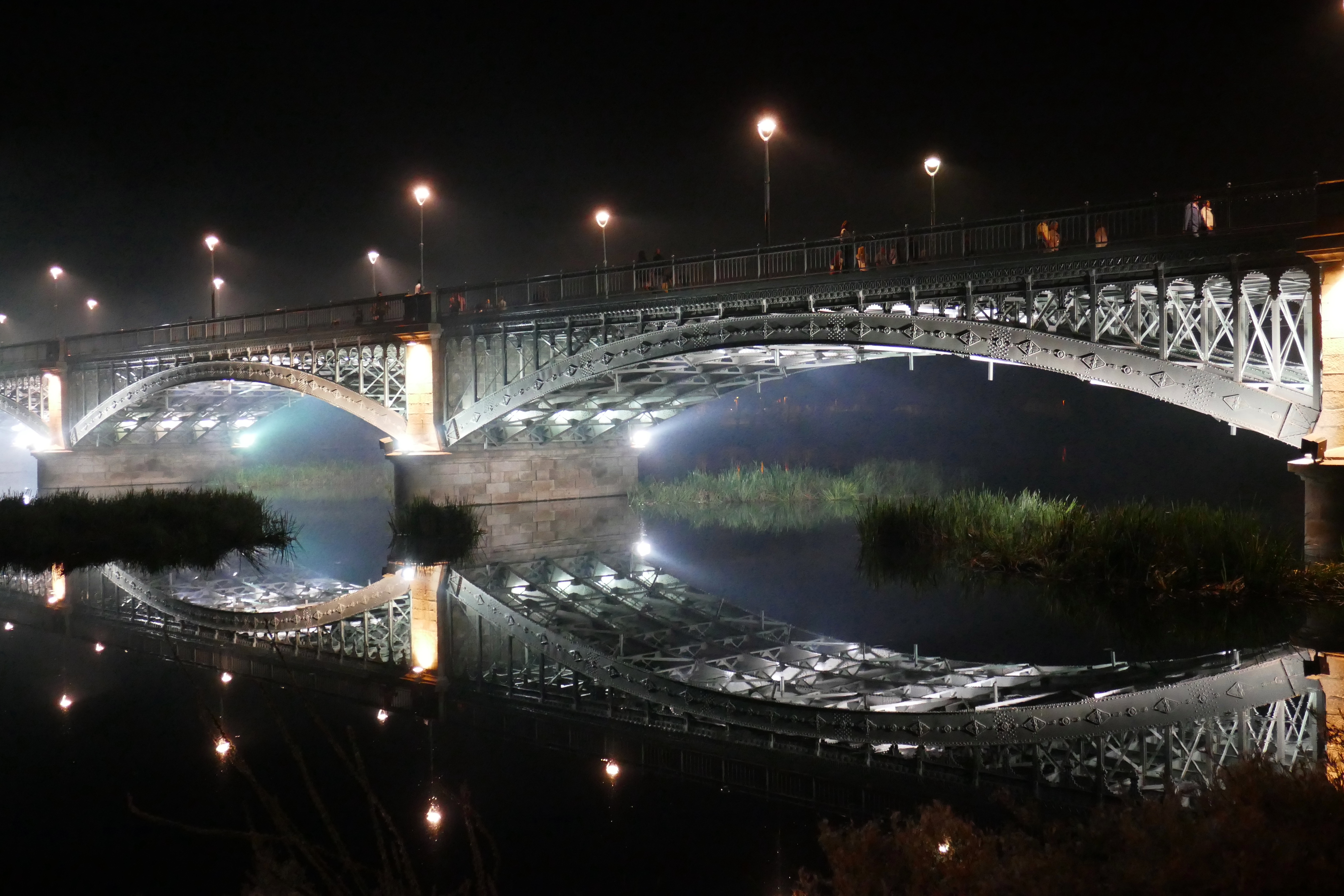
The river Tormes in Salamanca

We loved touring around Spain and Portugal and highly recommend it.  If you’re planning your own trip to these or many other European countries these costs might be a useful guide, although WARNING – everyone’s trip is their own and everyone’s spending is different.  We are not uber-frugal campers and anyone could do this trip cheaper [even we could if we tried] but this is our trip, it isn’t all about money and we set out to enjoy it in our own way.  So below are a few notes on our spending.

  1. Of the 66 nights we were away only seven of these were spent free-camping, the rest of the time we were on campsites [although we stayed on low-cost camperstops and ACSI sites].
  2. In Portugal we had coffee and cake in a cafe almost everyday because it is cheap enough and the cakes are fantastic [hence the €434 spent in cafes] but we are vegetarian and so had very few evening meals out in restaurants as Portugal isn’t always ready for vegetarians.
  3. We did drink wine or beer every night but we did try some very cheap [and very good] red wine [the lowest we tried was 1.89].
  4. As you can see, we paid to get in to some attractions as we travelled, budget travellers could skip these.
  5. Other spending includes an occasional washing machine, presents for loved ones at home, bike spares, some clothes and a few household replacement items.
  • Diesel – €523
  • Food [supermarkets etc] – €864
  • Cafes & restaurants – €434
  • Campsites – €931
  • Bus fares, taxis etc – €48
  • Entrance fees to attractions – €174
  • Other spending – €146
  • TOTAL SPENDING – €3,120

Interestingly, this amount is more or less the same as we would have spent had we stayed at home [and while away we’ve not been using gas, electric or water in the flat] so the only additional cost to our normal spending has been the ferry.  Portsmouth to Bilbao is an expensive route at £730 but it does take you straight to Spain and I feel that this amount represents better value when spread out over a two month trip.

We have been generous with our budget and expected higher spending than this on our trips away so our annual spending for our first year of retirement is still looking good at the moment despite additional spending following the incident.


Spain and Portugal campsites & overnights

09.14 Vila Praia de Ancora campsite.JPG
Evening light on a campsite

In the spirit of sharing for anyone who is planning their own trip to northern Spain and Portugal, during our two months trip around these two countries we stayed on some great campsites, a few indifferent ones and a few free camping places.  The full list with the low season cost and some comments are below:

Campsite nameCommentsCost
Port at PortsmouthEdge of the lanes for checking in, facilities nearby open 05.00-23.30, some noise and 4 other vans €           –
Casalarreina Aire near Haron, SpainOn the edge of a small town, pleasantly situated by sports area, short walk in to Casalarreina and shops and cafes €           –
Camping Fuente de la Treya, SoriaGood hot showers, not the cleanest, main road above site so some noise, grassy and trees, okay for one night, electric €6/night €    21.50
Camping Carion del Rio Lobos, Ucero, SpainLots of shade under the trees, clean facilities, showers very fine spray and not quite warm enough €    28.50
Camping El Acuedecto, Segovia, SpainOn the edge of the city, marked pitches, buses to city, clean facilities & roomy showers, water not very warm, plenty of dishwashing and laundry sinks €    26.00
Camping Gredos, Hoyos del Espino, SpainA sloping site in the pine trees, peaceful and walking & cycling in the natural park, excellent hot showers, wash up a bit grim, pitches a reasonable size €    18.10
Camping Parque National Monfrague Malpartida de Plasencia, SpainA large site, ACSI, English spoken, some shade, uneven pitches, good hot showers, shop & bread €    17.00
Camping Don Quijte, Salamanca, SpainLarge, level and sandy pitches that are marked with hedges & have plenty of shade, good cycle route to the city and good hot showers with clean facilities, ACSI €    17.00
Camping Sierra de la Culebra, Figueruela de Arriba, SpainA peaceful site in the countryside, some shade, sandy, facilities dated & have shower curtains but acceptable, ACSI €    17.00
Active Lima, Entre Ambos-os-Rios, PortugalSite in pine trees, few definite pitches, facilities basic & no hot water at sinks, showers lukewarm, English spoken, ACSI €    13.00
Parque de Campismo do Paco, Vila Praia de Ancora, PortugalIn eucalypus trees & oak, no marked pitches, popular site, facilities fine, hot showers & toilet paper, only lukewarm water for wash-up, ACSI €    11.00
Parque de Campismo de Cerdeira, Campo do Geres, PortugalA large terraced level site under trees, organised & modern facilities, shop, showers, clean but lukewarm, wash up outdoors €    23.00
Campismo Arco Unipessoal, Arco de Baulhe, PortugalSmall terraced site, 300 m from a town, facilities open, clean & showers reasonably warm, open views to hills, wifi at bar, ACSI €    17.00
Parque de Campismo Municipio de Meda, PortugalA neatly laid out small site by the swimming pool, good English spoken at reception, toilet paper, very hot showers, fully adjustable, clean facilities, good wifi on pitch, an excellent site by the town €    11.00
Camping Quinta das Cegonhas, near Gouveia, PortugalTerraced site with views down the hillside, good information on walks, facilities clean & showers hot, English spoken, well organised, good wifi on pitch €    19.10
Toca da Raposa, Meruge near Oliveira do Hospital, PortugalSmall site with trees for shade, friendly welcome, walks information available, clean facilities & good hot showers, wifi at bar, ACSI €    15.00
Coimbra Aire at Parque Verde / Piscinas, PortugalCar park near the town & river, popular & busy, road noise, toilets that are open in the day €           –
Quinta do Pomarinho, Castelo de Vide, PortugalSandy site with some trees but limited shade, lovely views of hills, good facilities, wifi by reception, 1 1/2 hr walk to town, hot showers, lots and lots of information about walks locally €    20.00
Camping Alentejo, Evoramonte, PortugalBy a busy road, flat site, some shade, pool, clean facilities, showers only warm €    12.00
Costa do Vizir Camping, Porto Covo, PortugalLarge site with many facilities near the village, showers fine & clean, paved roads, no views but peaceful €    17.10
Foia Autocarravana parking near Monchique at 902 m, PortugalCar park with cafe, shops & antennae at top of hill, good views, traffic late at night & early morning €           –
Vale a Carrasqueira Camperstop, Caldas de Monchique, Portugal14 pitch camperstop with lovely views over a wooded valley, extra €2.50 to use pool, wifi, basic clean facilities, good hot showers €    12.50
Camping Alvor, Alvor, Portugallarge site with pool, shop & motorhome service pint, busy due to ACSI reduction, hot showers & clean facilities although a bit dated €    13.00
Algarve Motorhome Park, Silves, PortugalLarge gravel aire by the road, little shade, clean & tidy, 2 showers cost 50c each €       8.50
Parque de Campismo Municipal de Serpa, PortugalSandy site, some slope, some trees, good hot showers & clean facilities, Intermarche & cafes near & town only 10 mins away €    10.05
Parque de Campismo Markadia, Odivelas, PortugalBeautiful & peaceful position on the reservoir with generous pitches, clean facilities, roomy & hot showers, bread €    19.44
Orbitur Parque Campismo de Evora, PortugalMarked pitches, facilities dated but acceptable, showers hot, 2 kms from centre, large pitches €    14.58
Elvas car park by Aqueduct, PortugalLarge slightly sloping car park, beside the stunning aqueduct & 15 mins walk from the town, popular aire €           –
Camping Os Anjos, Campo Maior, PortugalSmall terraced site with open views, clean facilities, no toilet paper, water for wash up & showers not hot enough, information on walks, 1.5 kms from the lovely town €    17.30
Camping Cuidad de Caceres, SpainTerraced site that is popular & large, each pitch with bathroom, some road noise, shower a bit feeble but hot & nice to have space, ACSI €    17.00
Camping Parque National Monfrague, Malpartida de Pasencia, SpainStill busy but good welcome, wifi, roomy showers with hot water & good flow, good wash-up facilities, ACSI €    17.00
Camino de Santiago Camping, Castrojeriz, SpainPeaceful site with marked out pitches & bread by small town, showers push button for short time but hot, only 1 hot tap for wash-up, ACSI €    17.00
Camping de Haro, SpainLarge site with shady marked pitches, well organised, heating in sanitary block & good hot showers, 10 mins walk from the town, ACSI €    19.00
Bilbao Port for Britanny FerriesFlat & busy car park after check-in with toilets available, arrive between 16.00-19.00 €           –

Walking and camping around the Algarve

10.06 Foia walk (6).JPG
The view from Foia, the highest point on the Algarve

We eventually reached the Algarve, the southern part of Portugal and although we did spend some time on the coast, we also explored the inland area of the Algarve and continued to find some good walking options, particularly in the Serra de Monchique, the wooded chain of hills in the south-western tip of Portugal.  The highest point of the Serra de Monchique is Foia at 902 metres above sea level.  This isn’t the prettiest summit, with telecommunication masts and a radar station dotted around the plateau but turn your back on the masts and it is a great viewpoint over the Algarve.  We wild camped here overnight and it is a peaceful spot once the cafe and gift shops have closed and we watched a spectacular sunset from our lofty spot.  At the summit there is an information board with details for the Trilho da Foia PR3 path which is 6.5 kms long and follows stone tracks beside well constructed terraces and ruined barns with shady stretches under chestnut and walnut trees.  The path winds steeply downhill, traverses along the road [and passes a couple of cafe stops] and ends with a knee-trembling climb back up to the summit.

The second highest summit in the Serra de Monchique is Picota at 774 metres high.  By contrast this is a more attractive summit than Foia with just a rickety look-out tower on the granite top.  The well-marked walk up to the hilltop is cool and shady through orange groves, cork oak and eucalyptus trees and is a perfect half-day excursion.  From the top the view across the town of Monchique to the wooded slopes of Foia is worth the climb.

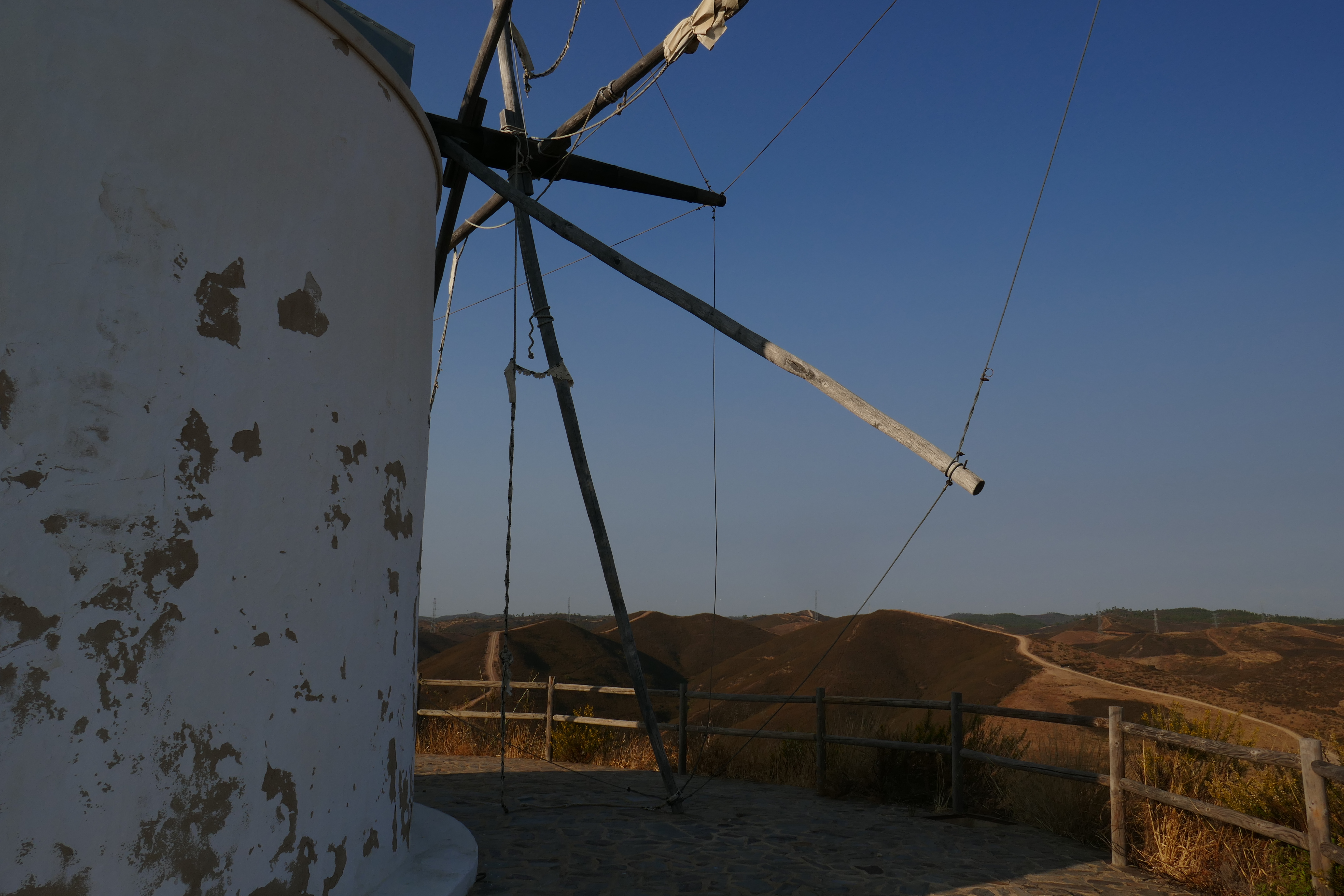
We moved on to the lively and charming town of Silves, staying on one of the many aires in the town which has long been popular with motorhomers.  Here we followed a walk from the Sunflower Walking in the Algarve guide book that takes in the old windmill above the town.  This is an excellent view point back to Silves and its castle and over the green Arade river valley.

We don’t make repeat visits to many places when we are in continental Europe but we made an exception for Serpa and headed there as we moved back north away from the Algarve.  Serpa proved you can go back to places you love; I still think this small town in the Alentejo punches well above its weight.  The municipal campsite is very good, the local sheep’s cheese is sharp, fresh-tasting and excellent, the local pastries, Queijadas de Serpa are delicious and the pretty town has a relaxed atmosphere that easily detained us for a few days.

But our time in lovely Portugal is running out …

10.09 Sand sculptures and Silves (48)
The old windmill above Silves

Walking in central Portugal top tips

09.26 Serra da Estrela drive (26).JPG
Near the highest point of the Serra da Estrela at 1,993 metres

The Serra da Estrela are another of Portugal’s inland secrets, although no secret to the Portuguese as they are known for Torre, Portugal’s highest mainland point.  You can drive up to Torre and it isn’t the most stunning mountain top but there are plenty of places in the Serra da Estrela to find excellent and peaceful walking.  Our campsite near Gouveia on the western slopes of the natural park was an idyllic spot and also well organised with a folder of instructions in English for twelve local walks [more than enough even for us].  We had a perfect day’s walking, firstly to the top of Gravanho with a distinctive white trig point and then on to Folgosinho, the second highest village in Portugal, a sleepy place on a hot Monday afternoon where the most activity was at the newly renovated communal wash house.  We didn’t meet any other walkers all day on the sandy tracks and cobbled paths through pine and chestnut trees as well as fig, apple and walnut trees.  Descending from Folgosinho we passed the remains of a tungsten mine.  Mining and selling this rare metal bought prosperity to the area during the first and second world wars.

After a few days walking from a small and comfortable campsite near Meruge where the campsite dogs who accompanied us on a walk helped us spot a mole and a day of culture in Coimbra we crossed the river Tejo [or Tagus] and headed towards the border with Spain.  The scenery changed, to rolling plains, straighter roads, fields of cattle and olive groves as far as the eye can see.  We found a perfect campsite a few kilometres outside the lovely town of Castelo de Vide and were almost overwhelmed by the information on local walks and attractions that the helpful owner loaned us during our stay [campsite owners note, this meant we stayed longer than intended].  From the site we followed medieval paths over the hill to Castelo de Vide where we walked between some of the town’s many fountains, sampling the water from each one.  This was a great area for bird watching and we spotted a little owl, griffon vultures, fire crest, black cap, sardinian warblers, blue rock thrushes and many others.

Portugal is a land of castles and these Spanish border towns all have their own.  In Castelo de Vide the stone walls enclose the old town of white-washed houses and you can climb up to the tower for the view, walking along the apex of a roof and climbing steps with no handrails.  This is the beautiful Parque Natural da Serra de Sao Marmede  and there is plenty to see.  Another superb day out started with a taxi ride to the picture postcard lofty village of Marvao and after exploring the village and inevitable castle we walked back along the old lanes.

Near the interesting town of Evora is the Almendres stone circle with 95 standing stones in two circles, one inside the other.  The circle is in a woodland clearing on a hillside with a view of Evora in the distance.  The 4 kms track to the stone circle is a fairly well-made sandy track but we decided to cycle to the stone circle, rather than drive the ‘van up the track.  The cycling was hot and dusty in the lunchtime temperatures of over 30C but arriving in this way gave us a better sense of the landscape the stone circle sits in than if we had driven in our air-conditioned van there.

09.30 Castelo de Vide walk (43).JPG
Looking down on the winding streets of Castelo de Vide from the castle tower