I am taking you to the warmth of the Italian island of Sicily. We spent two weeks here in September in four different towns and cities, eating delicious food, drinking the best wine and soaking up the history. The weather was hot but we were determined to get out on foot and see Sicily at a slow pace. Below are the five walks around Sicily that we enjoyed on our trip. Sit back, imagine the sunshine and take a walk around Sicily.
- Monte Pellegrino from Palermo [12km & 560m of ascent]
- Castelmola loop from Taormino (14km & 600m of ascent]
- Monte Veneretta from Taormina [6km & 400m of ascent]
- Grotta Santa to Siracusa & Ortigia [8km & flat]
- La Rocca from Cefalù [around 3km & 260m ascent]
Note on navigating – We used Komoot to choose and plan four of these walks and, if relevant, I have given the name of the walk on Komoot. We don’t have the paid version [I would pay, but at £5/month it is a bit too expensive on top of our subscription for Ordnance Survey, although the £30 lifetime charge is good value if you like Komoot] but even the free version allows you to see the map of a walk and follow it with GPS as you progress.
1. Monte Pellegrino from Palermo [12km & 560m of ascent]
It was hot! We packed bottles of water, bought panini at a local shop and bus tickets from the kiosk and caught the 812 bus from Piazza Crispi to the bottom of the Scala Vecchia [old staircase] that climbs Monte Pellegrino.
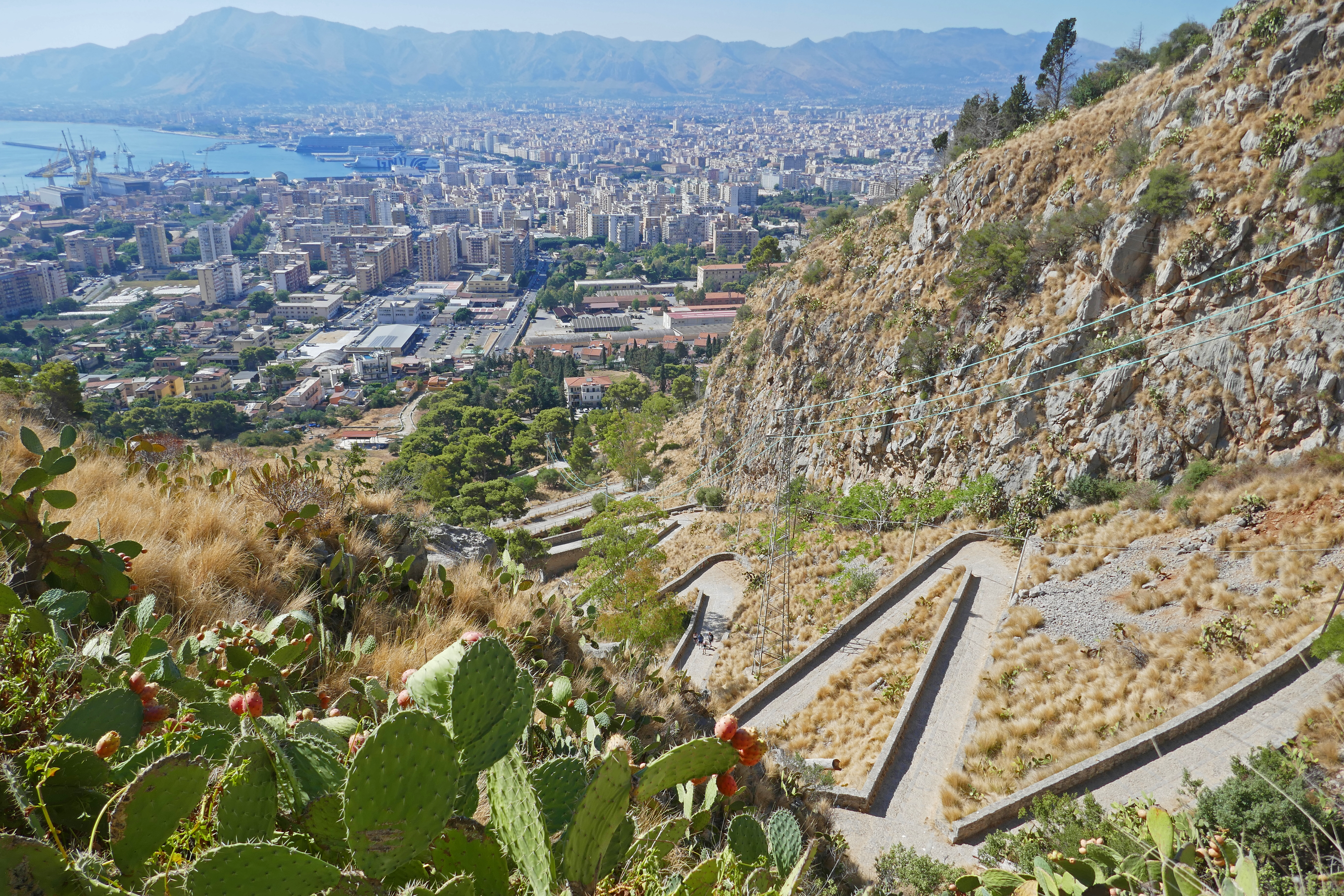
In the heat the steep climb up the cobbled zig-zag path to Santuario di Santa Rosalia was a hard 2 hrs 30 minutes. With little shade on the path we stopped many times to rest and enjoy the view over the lively sprawl of Palermo and its surrounding mountains. The serpentine cobbled path is easy to follow and higher up the route becomes a well-made path that occasionally crosses the road that climbs the mountain [yes, you can stay on the 812 bus to the sanctuary!] At a shady junction we had a choice of continuing upwards to the right or taking a path that headed left away from the road. This lefthand path quickly became a steep downhill and, not wanting to lose so much height, other hikers were turning back and taking the right path. We trusted our instincts and went left and were rewarded with an idyllic path that soon levelled out and took us through shrubs, including yellow bitter-apple bushes festooned with small fruit. In the heat, we rested in the shade of a double row of trees, breathing in the sweet pine smells and listening to the buzz of insects. Climbing higher, we re-joined the other path and walked through the rocky landscape to the sanctuary.
After the tranquility of the trail, the sanctuary is a shock to the senses. The road is packed with stalls selling souvenirs and there are a couple of cafes. We had a reviving coffee before tackling the steps to the 17th century chapel. Santa Rosalia is the patron saint of Palermo and the usual church facade gives no clue to the interior. Walking inside you enter a cave, decorated with plaques and statues and a glass case which holds a rich gold leaf and marble statue of a recumbent Santa Rosalia.
We had our picnic lunch on shady benches near the chapel before setting off for a further seven kilometres around the summit of Monte Pellegrino. The sandy and stony paths took us through woodland of pines and eucalyptus, flowers still bloomed in the bone-dry land and butterflies fluttered around our feet. Looking up through the trees we spotted a buzzard.
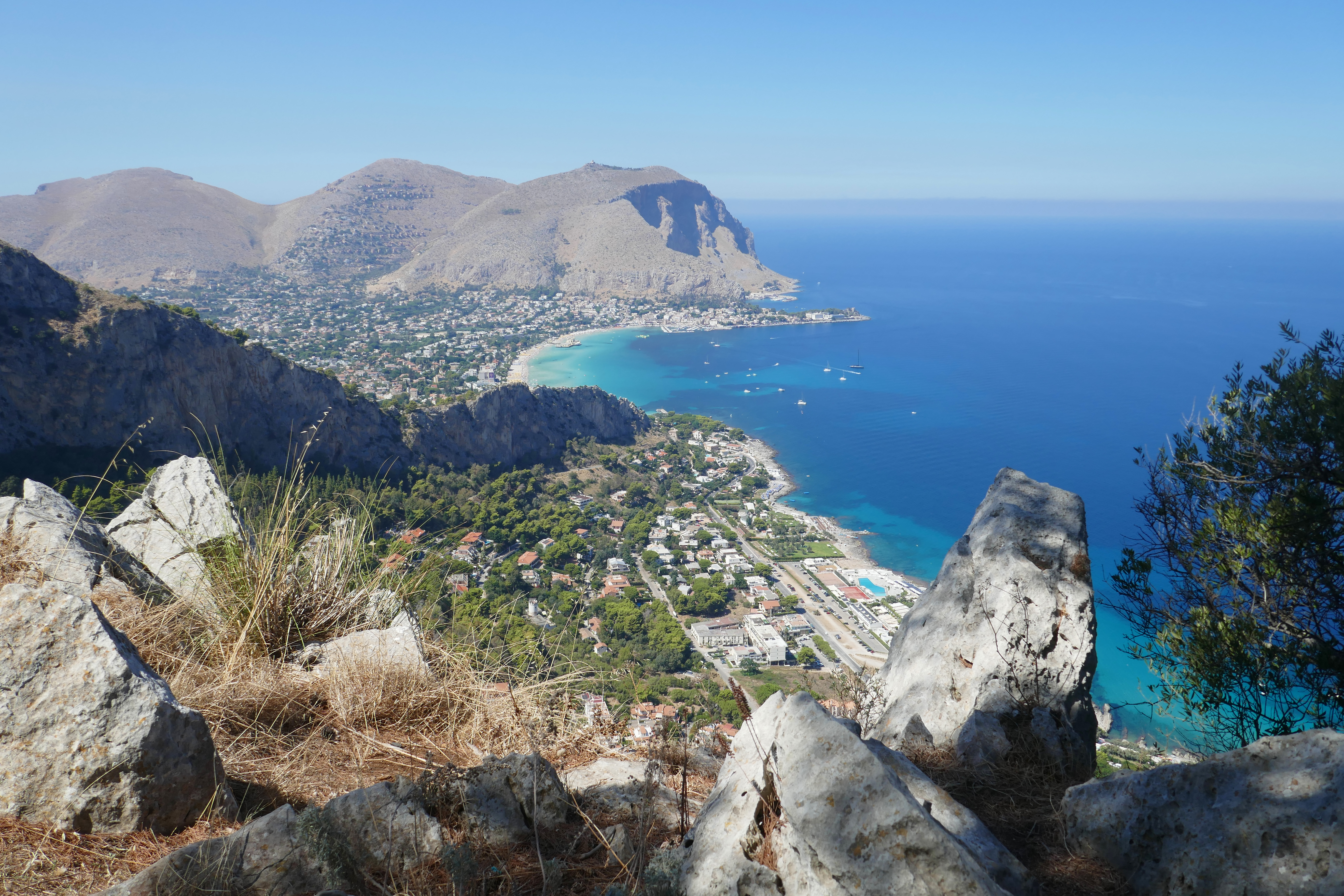
Reaching an area with picnic benches, cautiously we edged to the brink of the cliffs and looked down on Mondello far below by a turquoise sea. We re-joined the road that climbs up to the summit viewpoint to look down on Palermo and then followed the road the short distance to the sanctuary and the bus back to Palermo.
We used the Komoot walk – View of Palermo and its harbor – 16km & 560m of ascent
2. Castelmola loop from Taormino [14km & 600m of ascent]
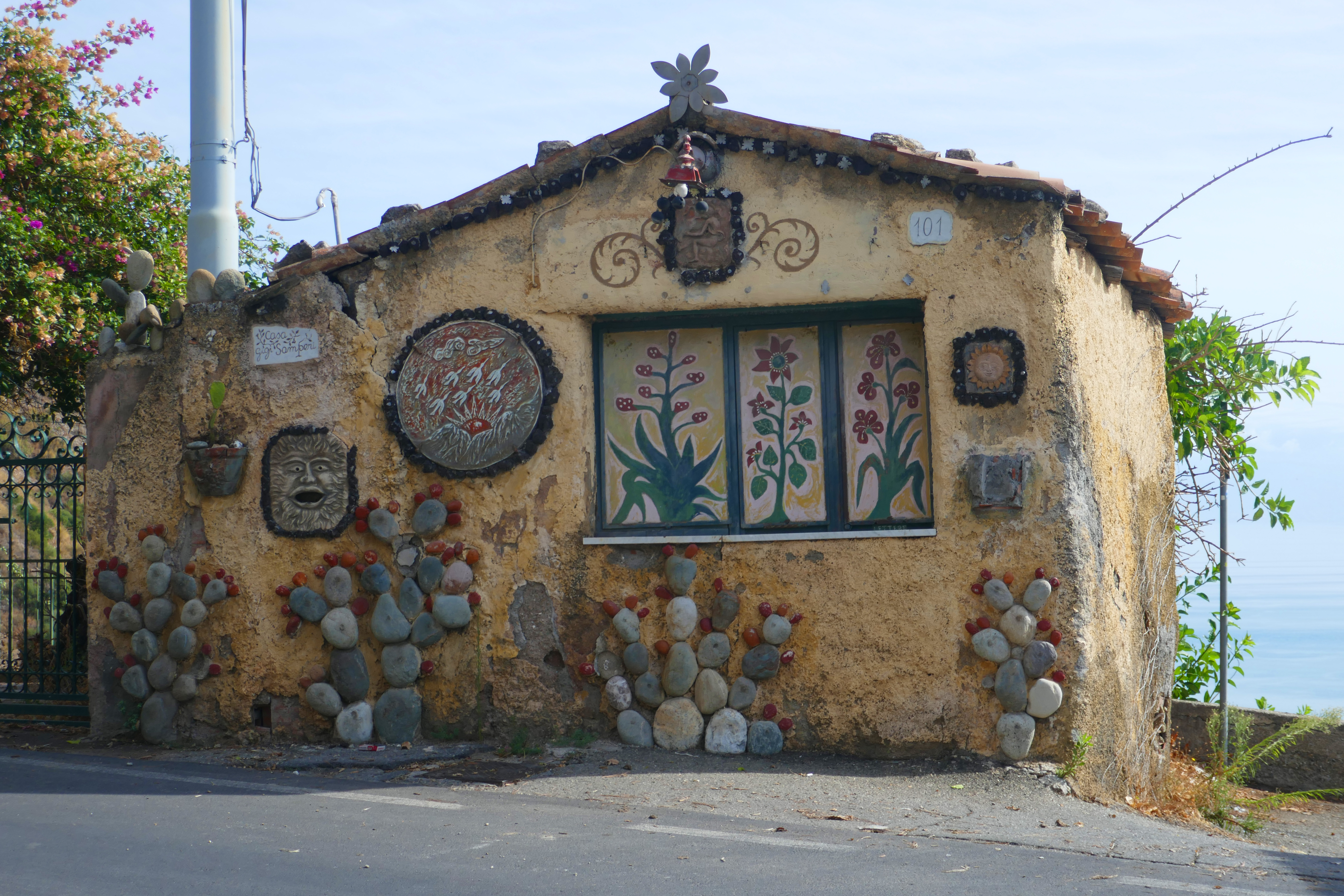
You can take the bus up to Castelmola but I would recommend anyone who can makes the hike up the mostly traffic-free path from Taormina at least once. Castelmola is perched on a peak above Taormina and the path, with a knee-trembling 20% gradient, took us a steady 1 hour 15 minutes to walk. Castelmola has a few shops and cafes and we had a coffee with views across to Etna before continuing.
The navigation on Komoot was useful to find Via Petralia and Melia Castelmola from the hairpin bend on the SP10 just below Castelmola. The road goes to Petralia and Ogliastrello and is marked with white and red stripes and is the 189 trail. This was a tarmac road but we were only passed by one or two cars while we walked. To our left the hillside climbed steeply up and to our right we had views to terraced hillsides and steep-sided valleys, the sea beyond. We were walking through a landscape with few buildings, olive trees and occasional vines and lemon trees and lots of prickly pears. Lizards scurried across the road in front of us. I enjoyed the contrast between the crowds of nearby Taormina and this lonely landscape.
The tarmac crumbled and eventually became a gravel track as we crested the ridge. New views opened out to successions of craggy mountains, dotted with small hilltowns and the coastline of Calabria on Italy’s mainland beyond. Dizzyingly far below was a river valley reached by a snaking track lined with tall agave plants. Our only companions in this brittle-dry landscape were birds, insects and the ever-present lizards.
We were weary when we reached sea level and Letojanni and opted to walk to the railway station and wait ten minutes for a train to Taormina. This is a short journey and we were soon climbing the steep hillside on a path that alternated between being excellent and broken. This short path took us to the heart of Taormina.
This is based on the Komoot walk – Messina Gate, Castelmola Castle loop from Taormina [15.5km & 600m ascent). We walked all the height gain but only walked 14km as we took the train from Letojanni to Taormina.
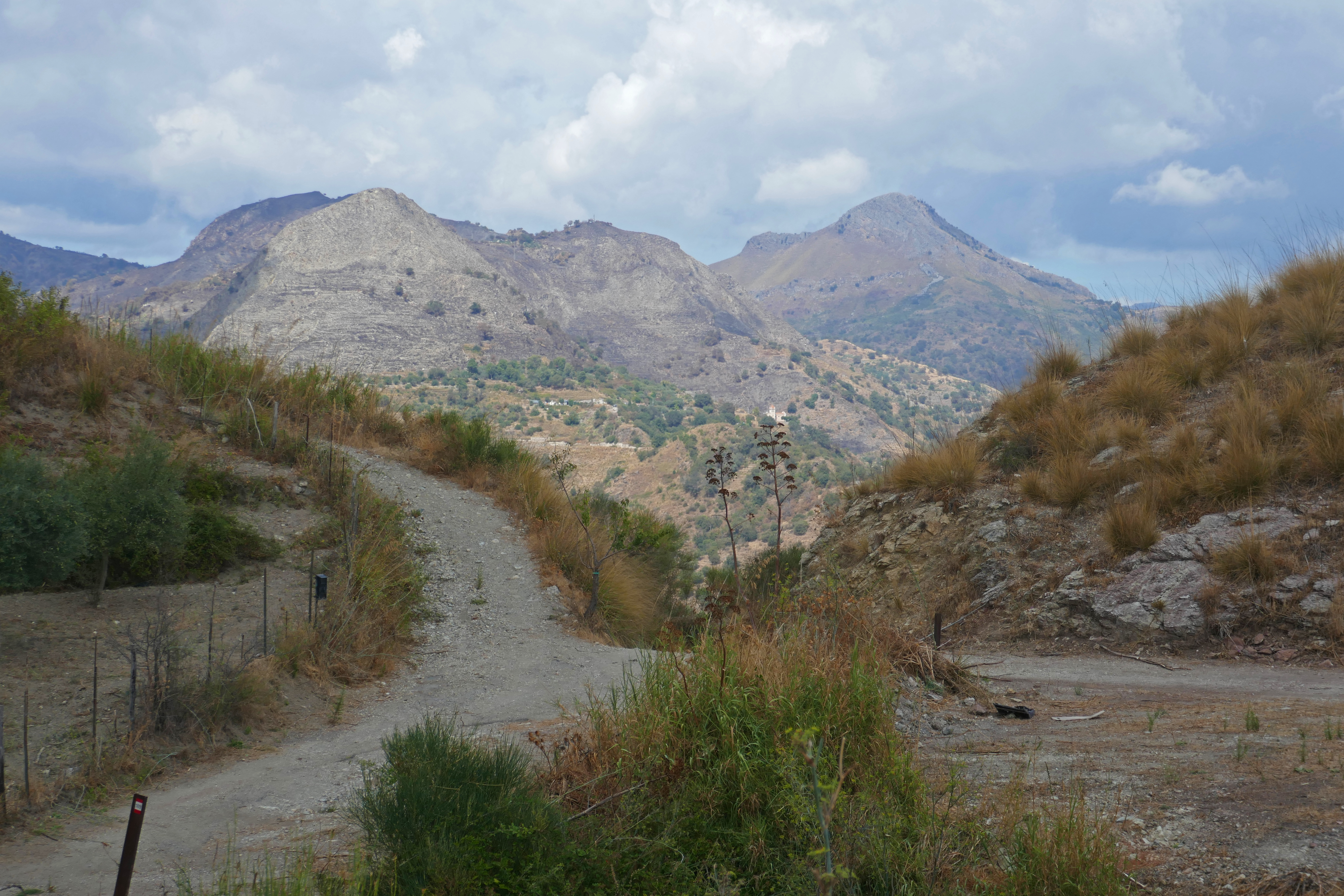
3. Monte Veneretta from Taormina [6km & 400m of ascent]
Womderful as the walk was, we decided to take the 09.55 bus to Castelmola rather than walk the steep path a second time. In Taormina you can pay on the bus, but it is a little more expensive and the drivers seem to prefer customers to buy tickets in advance if they can. There is an Interbus ticket office by the stop on Piazza San Pancrazio just outside Porta Messina and when we bought our tickets we had to guess which bus we would be returning on!
In Castelmola, we had coffee on the terrace outside Antico Caffè San Giorgio that has been serving tourists good coffee and their own almond wine for over 100 years. Fortified we set off uphill to the top of Monte Veneretta [883m] beginning with the tarmac road by the cemetery. Later sections were on gravel paths or steps, all more or less 20% gradient. This initial section is easy to follow and, like us, you will probably meet other walkers.
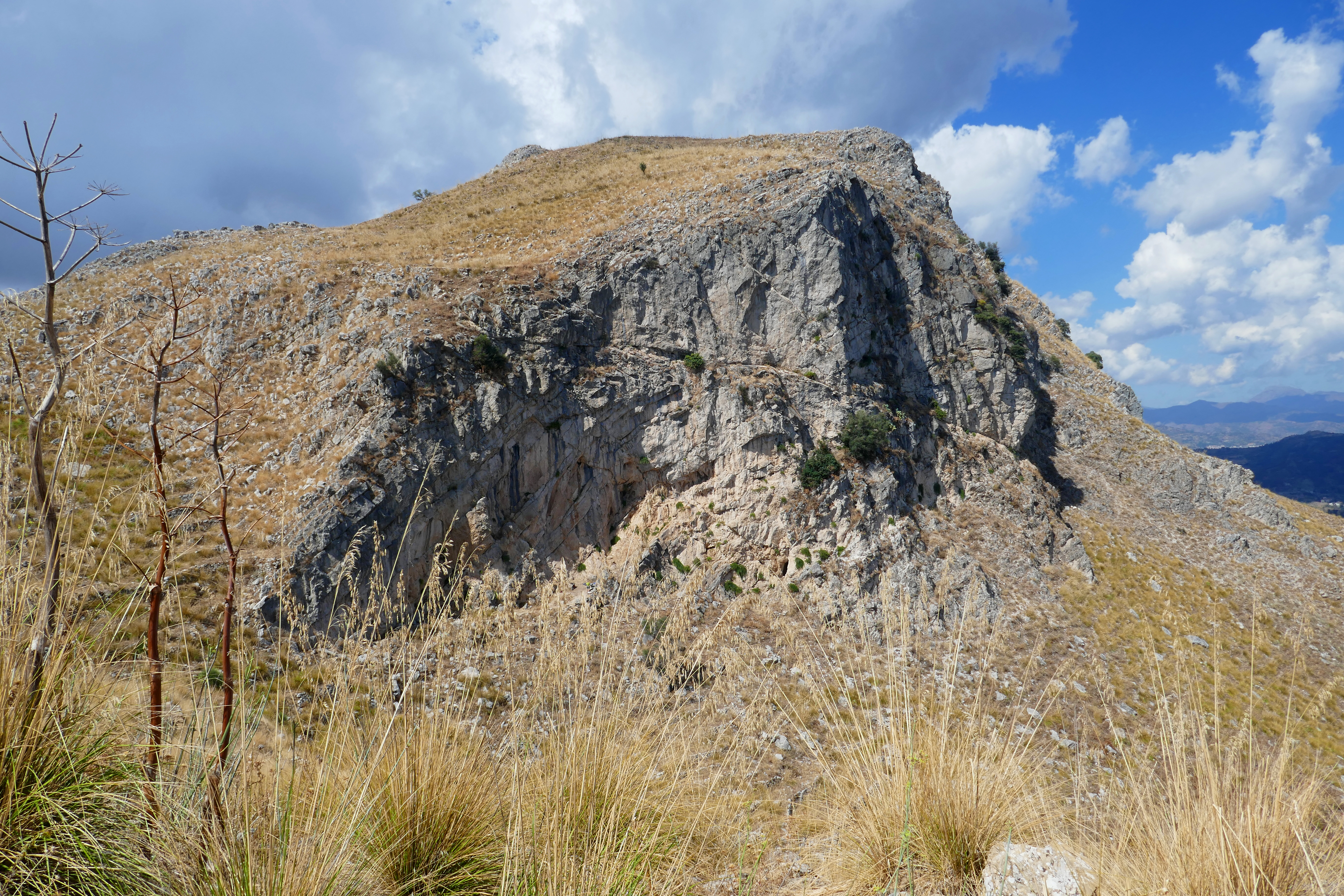
Reaching a high point on the road and a stone building, the walk becomes more challenging for the final 1.5km or so to the summit. I scrambled on the steep indistinct paths, using three points of contact, but confident hikers will have no problem with this path. We veered off the path and onto a steeper craggy section of the mountain near the top when we met a viper sunbathing on our route!
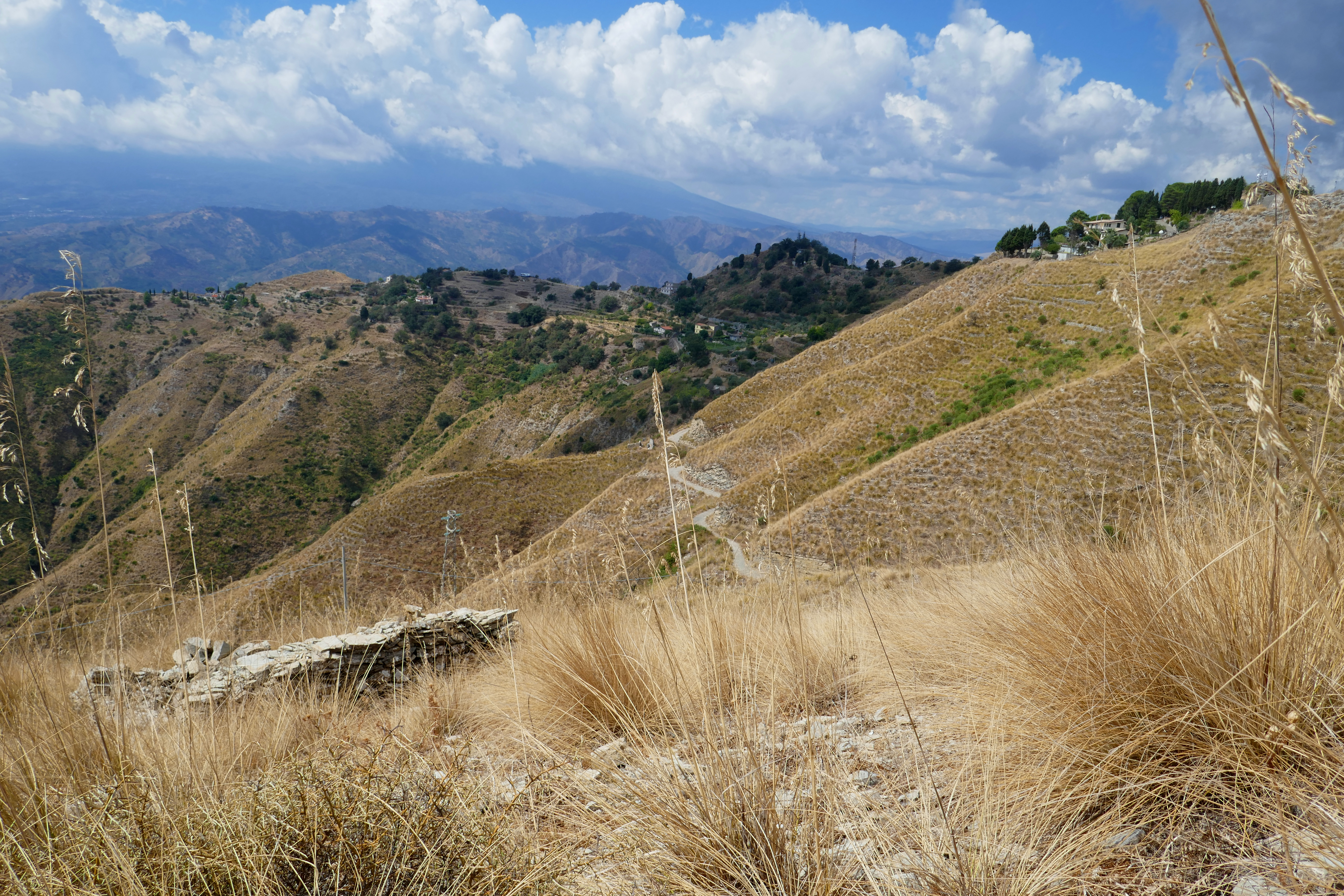
The short, dry grass and tall agave plants growing among the old stone terraces on the summit were unexpected, the simple wooden cross less so. These terraces are remnants of cereal farming that was carried out here until the 1950s and I sensed the ghosts of those farmers who worked on the summit of Monte Veneretta years ago. The views spanned Taormina, the sea and inland to Etna and layers of other mountains.
With the help of Komoot we found the direction of our planned descent more or less to the north. There was no clear path but we made our way through the terraces and long tough grass towards a northwesterly ridge. This route was easier to manage than our ascent. We picked up a good path that traversed the hillside below the summit.
Back at the roadside we rested before heading downhill, taking the road to the left, rather than the path. This gave us a good view of the crags of Monte Veneretta that are popular with climbers. In Castelmola we had welcome beers and sharp lemon granita and caught the 16.10 bus, as we had guessed!
Based on the Komoot Walk – Monte Veneretta Trail Saracen’s Trail (14km & 940m ascent). We reduced this by taking the bus to and from Castelmola to approximately a 6km walk with 400m of ascent.
4. Grotta Santa to Siracusa & Ortigia [8km & flat]
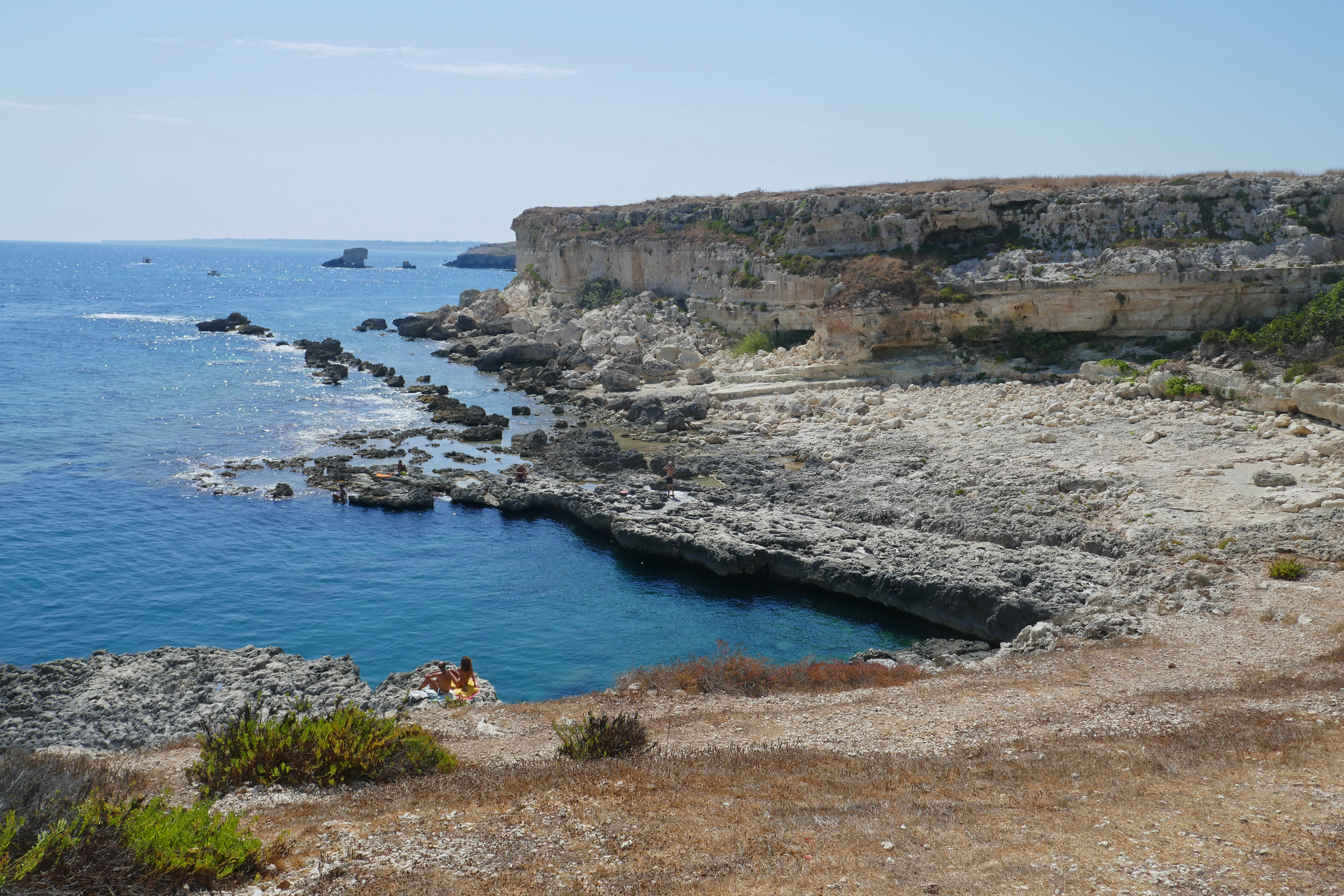
It was a blistering hot day when we caught the 101 bus on Corso Umberto I in Siracusa to the end of the line at Grotta Santa. In the rucksacks we had 4.5 litres of water and 2 small Sicilian pizzas from the bakery.
We hopped off the bus in a residential area of blocks of flats and picked up the former railway line that is now a walking and cycle path along the coast. We began heading towards Targia, where large ships were moored. Finding a way off the cycle path, we walked to the coast and headed towards Siracusa, closely following the crinkly shore through low scrub on sandy and rocky land. Lots of pine thistles grew here and we spotted a kestrel, a great egret and a stonechat. A few gulls hung out on the rocks.
The craggy white coastline meandered in and out of coves with caves and sea stacks. An overhanging crag gave us some shade for our lunch stop and we rested listening to the waves, far away from the bustle and crowds of beautiful Ortigia. Occasionally there were sunbathing platforms for those who wanted more comfort than the rocks and these were busy, otherwise we had the area to ourselves.
As the island of Ortigia came into view, the sea became busy with boat trips viewing the coastal caves. We made our way back to the cycle path and at the end of this we walked around the fascist-era memorial to Italians who died during the Ethiopian War of 1935-36. The memorial was intended to be shipped to Ethiopia but the Second World War prevented the transportation. Instead the large monument, with bronze statues and sculpted marble reliefs, was eventually placed in Siracusa in the 1960s, as this was where many troops boarded ships for Ethiopia.
A nearby cafe was a welcome air-conditioned respite from the heat and we had drinks and bowls of excellent pistachio and ricotta and honey ice-cream before walking towards Ortigia along a road lined with sea-front villas, with occasional views through gaps. The road opened out at the marina packed with boats and we were soon on familiar streets.
Google maps is enough to follow this walk.
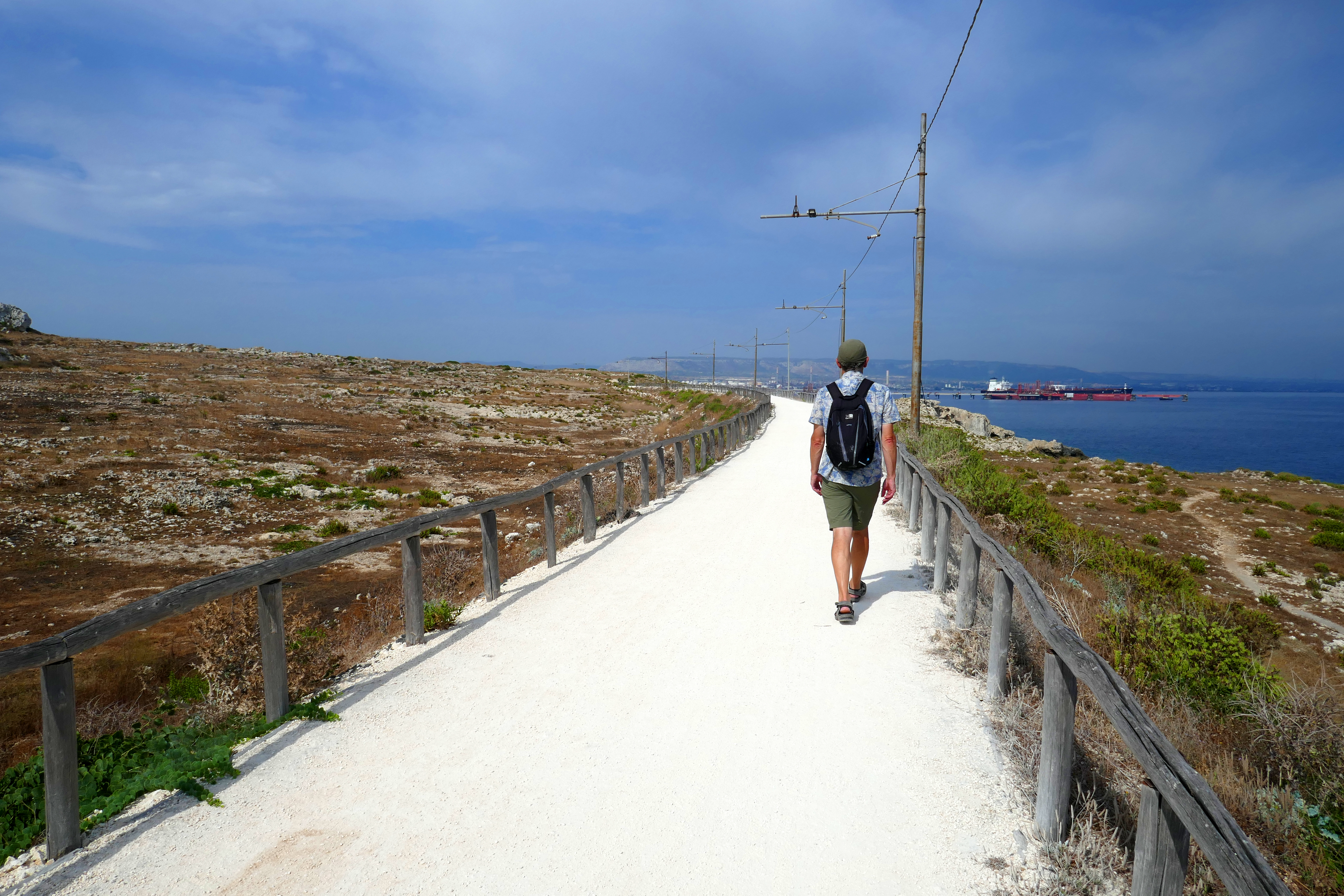
5. La Rocca from Cefalù [around 3km & 260m ascent]
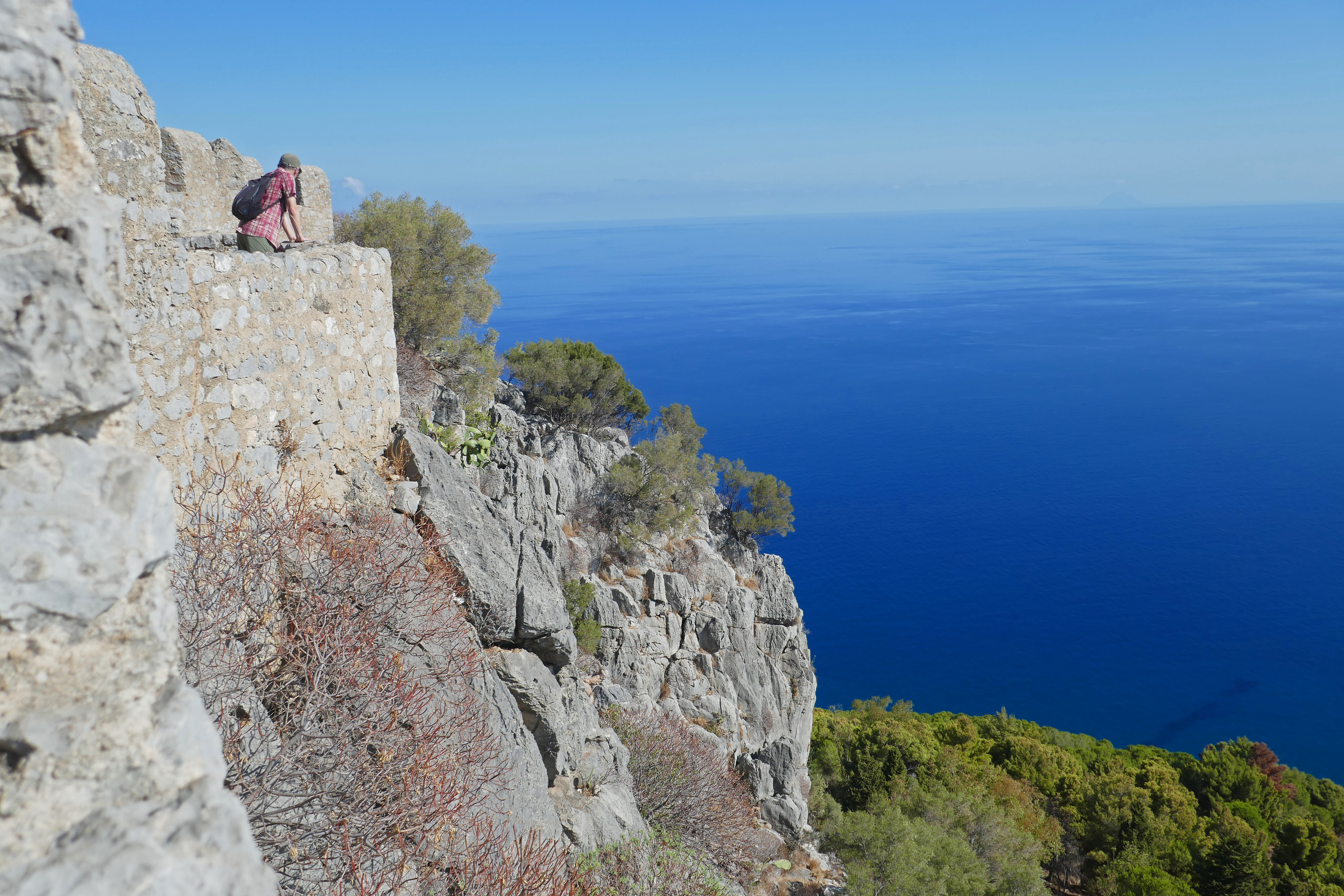
The weather was hot [again] and we were keen to be walking early so we were at the gates of La Rocca soon after the 08.00 opening and paid the €5 each entrance fee. The information we had read stated sandals were not allowed and our sturdy shoes were noted. Later we did see people being allowed on the crag in hiking sandals. Some of the steep paths are loose and stony with occasional scrambles, so good footwear is useful.
The limestone crags of La Rocca loom over Cefalù and if you are visiting this pretty town you will want to climb it. This is a walk in natural surroundings and packed with history. Being among bird song and spotting a buzzard flying overhead was delightful. Bright crimson spiderling flowers were bright in the sunshine and lizards darted around the paths.
We climbed through the medieval defensive walls and gate in welcome shade, as La Rocca shielded us from the morning sun. Higher up the steep paths took us into the sun and the ruins of what is thought to be a Norman castle. Reading information boards on the way, I learnt about communities sheltering from invaders on La Rocca, surviving with stored food and the many water cisterns that have been found here.
Circumnavigating the summit, views opened up across the bay and over the red roofs of the town, dominated by the Duomo di Cefalù. The birds-eye view of this Norman cathedral with twin towers and cloisters is worth the climb. Following the walls around the summit to other stone buildings, among trees we found the Diana Temple, thought to be the oldest building on La Rocca. This impressive megalithic monument is notable for the mortar-free walls of massive stone blocks. The building was later repurposed as one of the many cisterns.
Everyone will find their own favourite spot in this fascinating place. We spent three hours exploring La Rocca and by the time we left the number of visitors was noticeably higher, so the early start was worthwhile.
A map really isn’t necessary for this walk, once you have found the entrance.
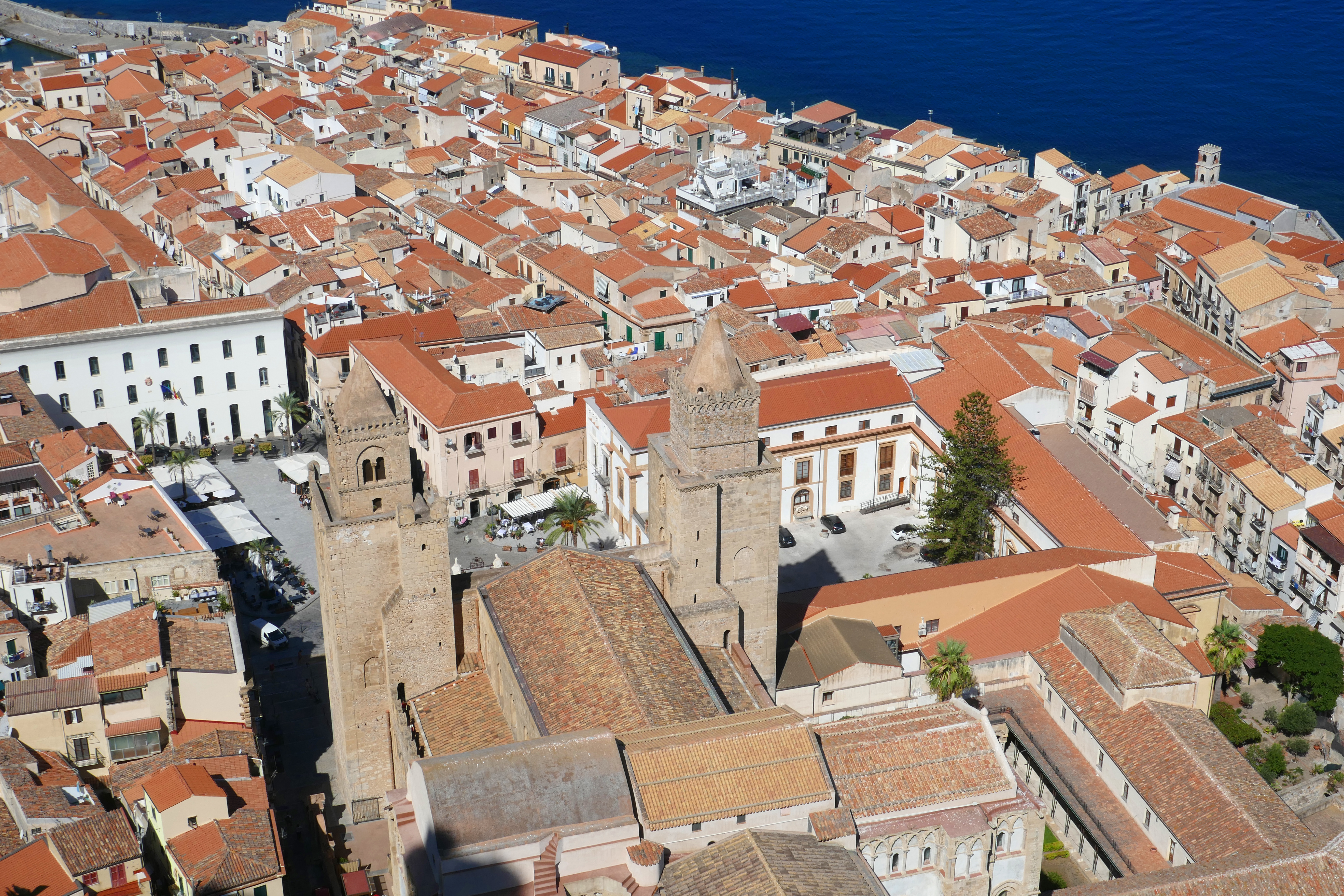


That blue if he sea!
LikeLiked by 1 person
The sea is magical isn’t it. Thank you for reading.
LikeLike