I hope my retired self doesn’t forget the workers

p1010839
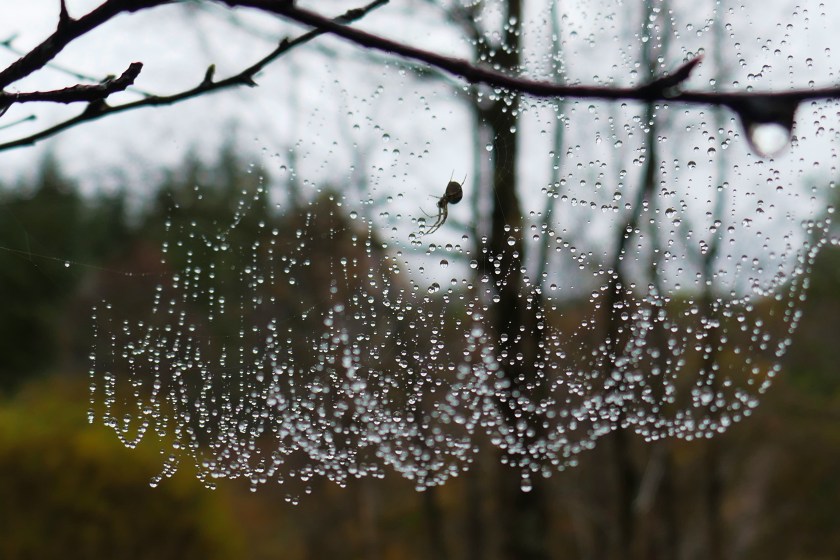
A dripping Scottish spiders web

One of my concerns about being retired is becoming one of those people [and I have met a few] who tell you about the one thing they have done in a day and then make out they are leading really busy lives.  They will tell you this in all seriousness and genuinely seem to have forgotten what life is like for the working population.  These retirees are oblivious to how the workers have to fit in dentist appointments, buying stuff on Ebay and getting the car fixed and all around the nine-to-five job.  And that these wage slaves still have to find time to get home and clean the bathroom … and yet all these retirees were these people once.  I hope that when I am retired I remember what it was like to feel that the days are running away with you and there is so much to cram in and I also hope I will be the retired person who offers to help out our working friends with tasks to make their life less stressful.

This isn’t that I won’t sometimes revel in the opportunity retirement will offer to just do not very much in a day, to not feel the need to fill my time and to be a one-task-a-day type of person.  This is one of the many benefits of retirement and I can’t wait to relax in to this state of being time-rich.  I will be able to sweep up the leaves and chat to the neighbours and then spend the rest of the day taking a walk, watching the wren out of the window, practicing some tai chi or curling up in an armchair reading.  What I want to avoid doing is telling anyone who will listen about how busy I have been to my working friends, and I hope I never say, ‘I don’t know how I had time to go to work’ just because I had to go for a blood test or I took the time to water the neighbours plants.  I hope I remember how lucky I am to be retired and I hope I do not feel the need to justify my existence by pretending I have a lot on my plate.

I will try hard not to become so relaxed that I forget the stresses of pre-retirement days but I hope that all my friends [real and virtual] will please tell me if I become that person!

A budget-friendly autumn trip to Scotland

P1020036.JPG
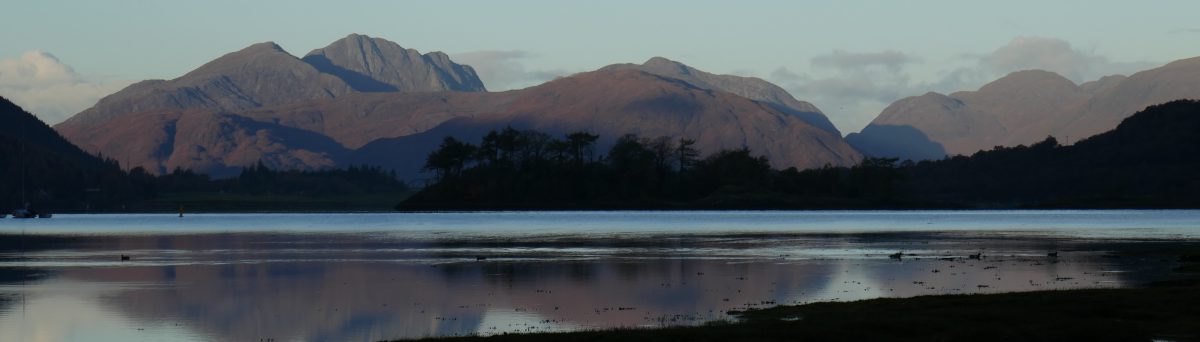
Looking across the beautiful Loch Linnhe

Scotland is the most motorhome friendly part of the UK and this, and the beautiful scenery, is why you meet so many other motorhomers when you visit this wonderful country.  In Scotland it is rare to find a height barrier [although Kinlochleven should be ashamed of the one of the B863] and there are plenty of small car parks and large lay-bys to pull up for a brew-with-a-view or an overnight stop.  We are considerate motorhomers who just enjoy the freedom of the road and although everywhere was pretty tidy, we always leave no mark on these freely provided facilities and pick up and take away any litter.

On this trip we found a great overnight stop on the Glen Lochy road, we stayed on the car park of an eclectic and warren-like shop in Ellenabeich on the Isle of Seil, just a short stroll from the cosy Oyster Bar, enjoyed a night of luxury at the Caravan Club Bunree site[£19.90], with spectacular views over Loch Linnhe and then joined half a dozen other ‘vans in Glencoe on the Signal Rock car park for a final free night.

Scotland was in its full autumnal glory, the trees magnificent in stunning ranges of colours.  We took a walk from the car park in Glen Orchy to see some of the fine native Scots Pine trees  in the hidden hillside remant of the Caledonian forest at Allt Broighleachan.  We also walked from Port Appin to find the cliffs and sea arch, now stranded high and dry since sea levels have fallen.  We found a real gem at Glencoe Lochan with great footpaths and lovely views to the distinctive Pap of Glencoe and reflections in the lochan.  We followed the West Highland Way and the massive pipeline through which water roared down to the hydroelectric plant in Kinlochleven and relaxed watching the climbers on the climbing wall in the village.  We picked up the West Highland Way again on one of our favourite parts of this long distance walk on the cobbled old road from Victoria Bridge.

We spotted a golden eagle soaring over Loch Feochan and a red deer peering out of the golden grass from the path to Loch Dochard and lots of distinctive pochard diving and bobbing on the sea lochs.

We filled up with lpg / autogas while we were away.  We have a refillable cylinder and this fuels our cooking and heating when we are off-grid.  Even in cold winter weather this only costs us a few pounds a night to keep the ‘van warm, run the fridge and provide us with the numerous mugs of tea and coffee we survive on and a freshly cooked evening meal.


Thinking about the love of our campervan

civita-001
In the far south of Italy

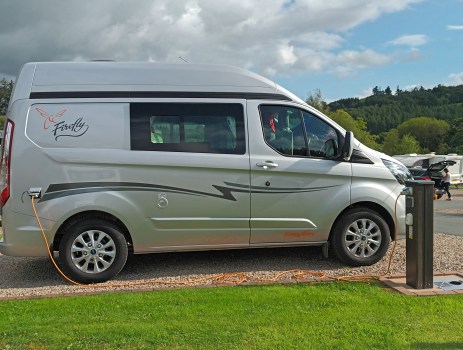
A campervan is just a vehicle isn’t it?  It is a metal box on four wheels with an engine, that is full of stuff and serves its purpose if it gets us where we want to go without breaking down.  Or is there more to a campervan or motorhome?  Is a campervan a vehicle or is it a home?   I understand my love for Mr BOTRA and my son and daughter-in-law but I am someone who claims to value relationships rather than stuff, so can I say that I love my campervan?

The thing with a campervan is that it is packed full of all the things we need for survival and we live in it; that is we eat, sleep, relax and wash, we laugh, cry and love and argue [not too often] in our ‘van.  The ‘van is packed with memories; memories of lovely places we have visited, fantastic people we have met and good times we have spent together.  The ‘van takes us closer to natural environments and wildlife [it makes a great bird hide] and we have sat and watched spectacular thunderstorms in the shelter of the ‘van, seen otters playing in the sea and been alarmed when squirrels leap on the roof.

I get upset when the campervan needs servicing or fixing in some way, this isn’t as acute as when someone I care about is ill but I admit it isn’t too far removed.  I am anxious while it is in the garage and happy when it is once again back with us.  Last night Mr BOTRA dreamt that the ‘van was stolen; for me this is the nightmare I can’t even bear to think about.

The ‘van is more than it’s outer shell; our ‘van is also full of things that remind us of places we have been to and people we love.  We don’t collect souvenirs as such and there is no room in the ‘van for things that don’t have a function, but we treasure a number of things we have bought on our travels or have been gifts from friends.  Every day we use the lovely blue glass plates we bought in France, the mugs that remind us of the amazing dinosaur footprints in Portugal and a wooden handled bread knife from Slovenia and many other things we have bought.  We have a lovely tea-towel that reminds me of the friend who gave it to us every time I use it and our biscuit tin is special because it was a gift.

We also keep a ‘van log book where we list all the campsites and overnight stops we have made in the ‘van.  This has proved to be a great idea and we constantly refer to this book, amazed at how long it is since we last visited a favourite site or just to remind ourselves what we thought of a particular place or to reminisce about a trip.

Plenty of people name their campervans and motorhomes and gift them with a personality.  We have never done this, as truthfully I have enough trouble remembering the names of people I know without adding in the names of inanimate objects.  The VW was generally referred to affectionately as the Blue Bus but these days we prefer to keep things simple; we own and live in either ‘the ‘van’ or ‘the flat’ but from this you shouldn’t assume I have a lack of emotional attachment.

If someone ever made me make the choice, I know I would sell the flat before selling the ‘van, it is the campervan that is most important to me, it is the ‘van I feel most comfortable and is my real home.

We are wondering, how long will our retirement last for?

2016-oct-berlin-with-stephen-and-jenny-26
Berlin is heaven for cyclists

A recently published map of life expectancy in Greater Manchester had a bigger impact on Mr BOTRA than it did on me.  Whereas I have long had a sense of my own mortality and tried to live every day as if it might be my last, this hasn’t really rubbed off on Mr BOTRA.  It took these figures from the University of Manchester for the short time we might have left to hit home.  The pictorial depiction of life expectancy using the Greater Manchester Metro tram map is a good way to demonstrate how deprivation affects life expectancy.  Our nearest tram stop is Anchorage and the map suggests that while I might survive until the grand old age of 74 years, Mr BOTRA will pop his clogs when he is just 69.

Of course, as a scientist, he understands that life expectancy is an average and includes all those who die shortly after birth or as young adults and the figures do not actually represent the life span he can expect to achieve.  This map and the figures are useful for public health campaigners but it doesn’t really help us plan for retirement and if we really expected to die at 74 and 69 we would have retired long ago!

As a non-smoker, cyclist and hill walker and certainly not poor, Mr BOTRA can expect to live longer than those who live a less privileged life and yet how these lifestyle choices and genes interact to decide a life-span is complex.  These thoughts of mortality got us thinking about how the urban area we live in where the air quality is poor might affect our health.  We love the vibrancy of living in the city and just hope that our regular forays to the hills and the countryside mitigate this air pollution.  Of course, we might be misguided, only time will tell.

What is a tragedy is that in England the wealthy continue to have considerably better health outcomes than the poor, as the map below shows:

Men and women aged 65 years in Manchester have the lowest life expectancy compared to other areas of the UK – men 15.9 years; women 18.8 years. This compares to 21.6 years for men in Kensington and Chelsea and 24.6 years for women in Camden. Healthy life expectancy (years of life in good health) can be as low as 54.4 years old for women in Manchester, compared to 72.2 years in Richmond upon Thames.

tram.jpg


All we need to make us really happy is something to be enthusiastic about

2011 Easter Glen Truim 025 Chanonary Point
The beautiful Chanonry Point on the Moray Firth in Scotland

One of my travel articles from this year included a visit to the pretty village of the Devon village of Clovelly,  Charles Kingley’s [the author of the Water-Babies] childhood home.  While researching his life and work I found this quote from him:

‘All we need to make us really happy is something to be enthusiastic about’.

This got me thinking about my own enthusiasms and how these contribute to my happiness.  I have a fairly wide range of things I am enthusiastic about including walking, being in our campervan, cycling, travelling, reading, spending time with Mr BOTRA and with friends, cooking good [veggie] food, eating excellent ice-cream and drinking red wine, listening to loud rock music, writing, laughing and comedy, foreign TV thrillers, tai chi and learning.  Taking part in all these [and other stuff] enhance my energy levels and feed my spirit.

I am drawn to people who have their own enthusiasms; they might not be enthusiastic about the same things as I am but I admire people who enjoy doing something and clearly get a lot of pleasure from it.  I have friends with enthusiasm for gardening, visiting Iceland [the country], ballet and Shakespeare; none of these are things that fire me up but I love to hear them talk about their own enjoyment of these activities.

I enjoy taking part in some of the above activities with others and I find that enthusiasms shared can more than double the pleasure.  We are part of a book group and the discussion always enhances my understanding of the book; camping trips with friends and walking with other people are sociable occasions that create shared experiences we can all look back on.  Our son and daughter-in-law have an enthusiasm for whale and dolphin watching and the photograph of Chanonry Point reminds me of lovely times when we have joined them on this beautiful beach watching the dolphins.

Considering the force of enthusiasm took me to Patti Smith who considers enthusiasm as a state of radiance:

‘If we walk the victim, we’re perceived as the victim. And if we enter … glowing and receptive … if we maintain our radiance and enter a situation with radiance, often radiance will come our way.’

She goes on to relate this to William Blake’s life.  He was a creative genius who was not appreciated in his lifetime but who held on to his vision and radiance or enthusiasm.  We all have knock backs and stumble and I certainly constantly let myself down; my cooking is often not as perfect as my vision when I start out with the raw ingredients; my writing is never good enough and I often fail to learn to the extent I aim to but I try and stay enthusiastic and carry out activities with love and joy while seeking self-improvement.

PS Iceland looks beautiful and I would love to visit this country but I am waiting for them to discontinue commercial whaling.

And suddenly it was autumn

P1010700.JPG
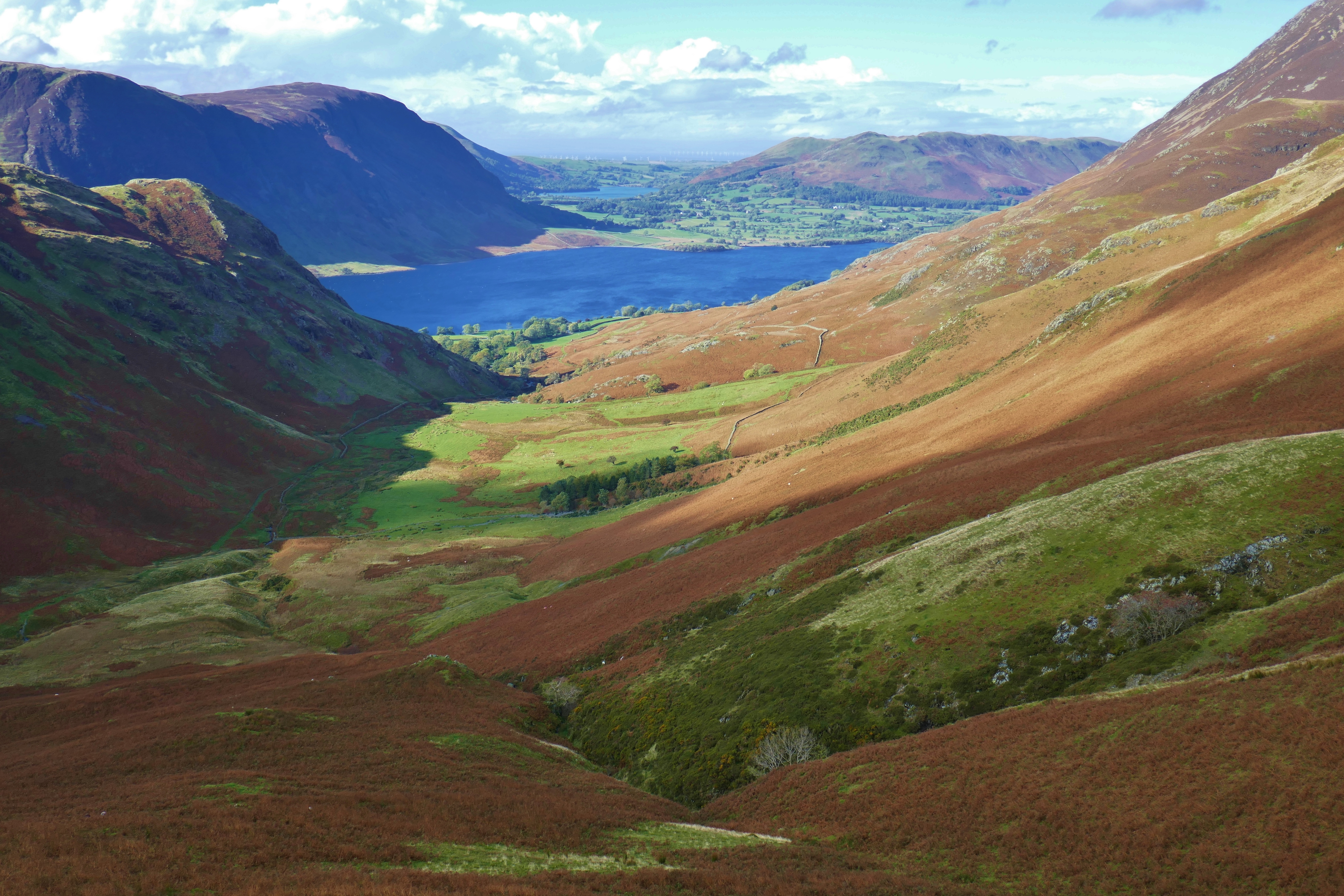
Looking over Rannerdale Knotts to Crummock Water

I am much more of a spring person than an autumn-lover; I like the optimism of the beginnings of things more than the sadness I feel at endings.  Finishing a novel can be either a disappointment or bring about a feeling of loss if I have got totally immersed with the characters, but at the start I am excited and looking forward to the ups and downs of the story.  I certainly prefer the excitement of the beginning of a holiday when all that free time is laid out before me, compared to the melancholy I fall in to on the last day, even with all those good times to look back on.  The early days when I am getting to grips with a new project before the realisation of the challenges or my own inadequacies set in are the best days.  In the past a gloom has set over me as the nights get longer but I have learnt to deal with this, always remembering that spring and those light evenings will return.  But this autumn a long weekend in the Lake District bought a glow to my cheeks and plenty of happiness to my heart.

In the October sunshine last weekend the Lake District was steeped in the deep burnt-orange glow of the autumnal bracken and the leaves on the trees were turning to browns, yellows and reds.  I couldn’t be gloomy surrounded by such colourful scenery.

We had time for a short walk up Sale Fell above Bassenthwaite Lake on the Friday afternoon and sat on a handy bench and gazed over the splendid view over the lake.  We spent the next day pottering along the river Cocker to the lovely town of Cockermouth, toured the Jennings brewery and climbing up Whin Fell above Lorton to see the sunset.  Sunday, after some heavy showers, the sun shone again and we had a splendid day climbing up the steep hillsides of Wandope above Crummock Water, via Whiteless Pike.

My life as a wage slave

2016 Oct Berlin with Stephen and Jenny (69).JPG

My working life started when I was a child of 16 years old; 40-years ago you could leave school at 16.  In those years I have slaved for wages in at least 25 different roles [see below].  I started work in the mid-70s with no computers and when the best technology could offer was a calculator.  I managed to move haphazardly through different jobs [my working life could never be called a career] keeping pace with changes through continuous learning and finishing in a role where I work remotely.

Some of these jobs have been wonderful and rewarding and I have felt I was making a difference, whereas others have been demeaning, boring or really just pointless.  The shortest period any of these jobs tied me to the nine-to-five was one month and my longest time in any single role was five years and six months.  There were times when I was working three jobs at a time to maximise income and savings for our travelling plans.

In all of these roles I have grown; I have benefited from gaining skills and knowledge and each new role has helped me to understand something more about who I am.  The period from being a Community Development and Health Worker until I left my role as a Community Centre Manager was what you might consider the apex of my working life.  As a  Community Development Worker I was an independent lone worker and my ‘team’ were the inspiring residents of the area I worked in.  These were people who were outside the focus of many public services and they taught me about resilience and the importance of never making snap judgements.  My next job in a small charity put me in a supportive team of two other skilled and knowledgeable co-workers and an inspirational and caring manager who fostered a learning environment where it was safe to be creative and make mistakes; consequently we achieved great things.  I attempted to take everything I had learnt to my next role as a Public Health Manager, where I was lucky enough to be able to recruit my own team of 20 staff and worked tirelessly to support, nurture and invest in those people so that we became a close-knit team that produced fantastic public health work and gained national recognition.

My paid work in chronological order:

  1. Receptionist at an opticians – first full-time job.
  2. Waiting staff in a hotel
  3. Payroll clerk [at 5.5 years this is the longest I have held any job] – this was the late 70s, I was working in the private sector and encountered my first computer.
  4. Payroll clerk – I twiddled my thumbs for two days a week, tough in the days before the internet.
  5. Administrator sorting and filing microfiche and plans relating to a submarine.
  6. Registrar of Births Marriages and Deaths [the best job] – no computers here just ink and fountain pens, I used to come home with blue-black ink splattered up my shirts.
  7. Customer Service clerk [after being a mum for a few years].
  8. Childminder
  9. Community Development Worker – [after a break to complete some qualifications] my first experience of working in the charity sector.
  10. Cleaner [while at university and I graduated at the age of 35].
  11. Chef in a Mexican restaurant – while studying food preparation.
  12. Youth Hostel assistant warden [in the Lake District and the Peak District).
  13. Community Development contractor (carrying out training and development sessions with community groups].
  14. Community Development and Health Worker in the NHS – my first NHS role, supporting community action across two areas.
  15. Community Development Worker in voluntary sector development – back with a charity and an inspiring and supportive team who I learnt so much from.
  16. Public Health Manager [I also achieved a post-graduate diploma].
  17. Community Centre Manager
  18. Public Health Co-ordinator
  19. GP Receptionist
  20. Hospital administrator
  21. Public Health contractor [carrying out consultations with the public].
  22. Public Health administrator [after our gap year].
  23. Hospital medical secretary – a very small cog in a big wheel.
  24. Travel writer
  25. Public Health administrator


Art in Berlin

2016-oct-berlin-with-stephen-and-jenny-72
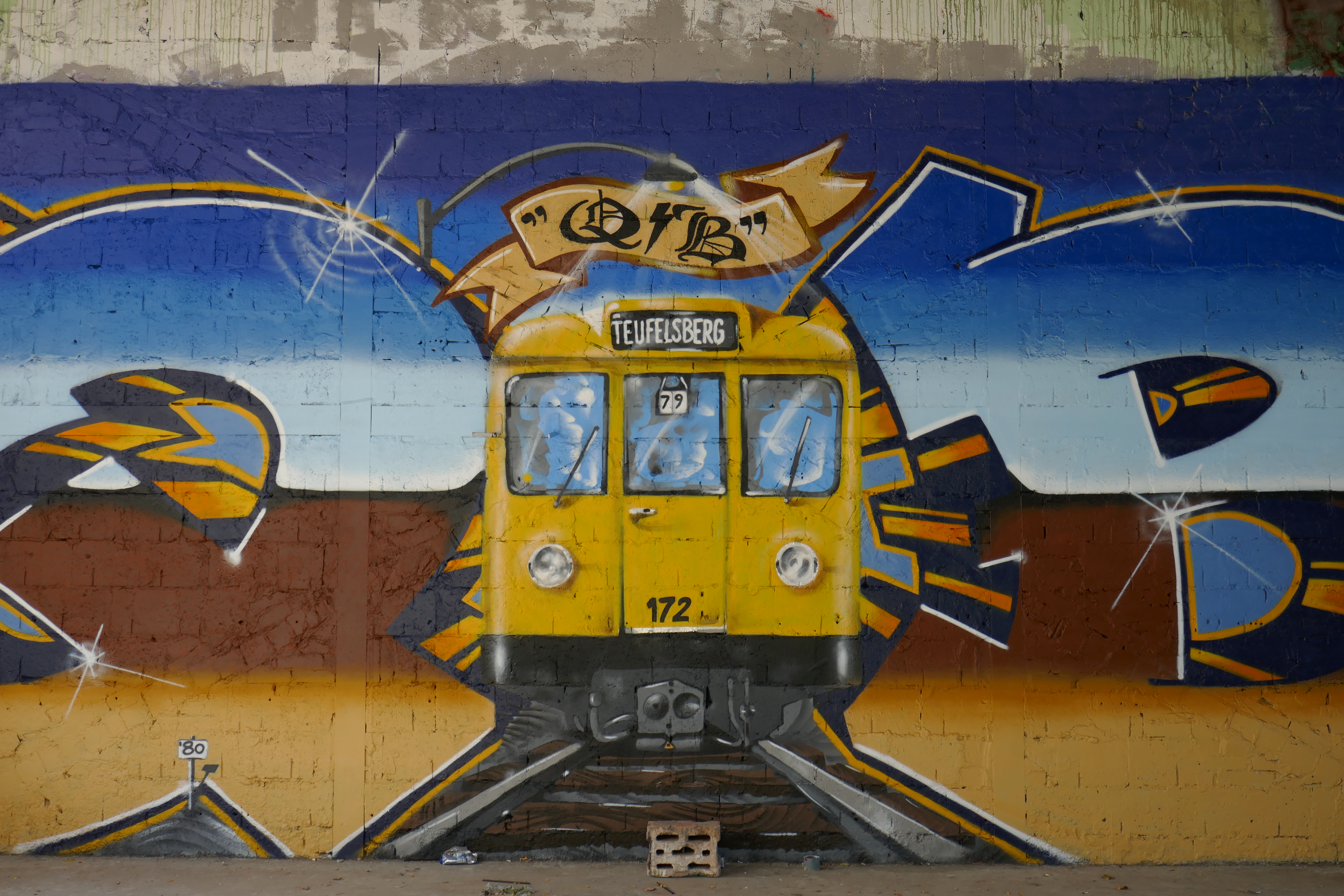
Graffiti art at Teufelberg

You can’t swing a Bratwurst without hitting an art gallery in Berlin and so it was only right that some of our time in Berlin was spent visiting just a couple of the many galleries in the city.  The art scene in Berlin is diverse and vibrant; apparently there are 440 galleries across the city so perhaps there is something for everyone.  We picked out just two places to visit on our long weekend and the two we visited couldn’t have been more different.

The Gemäldegalerie has a collection of European painting ranging from the 13th to 18th century on permanent display; including paintings by Jan van Eyck, Pieter Bruegel, Albrecht Dürer, Raphael, Titian, Caravaggio, Peter Paul Rubens and Rembrandt.  Housed in a 1980s building in the Kulturforum, the building is a simple design and the purpose designed galleries are well proportioned and light, laid out in a slightly confusing but entertaining pattern that visitors can weave around.  We spent an enjoyable few hours in the hushed and academic atmosphere of this amazing gallery.

The painting that made the biggest impression on me was Pieter Bruegel’s Netherlandish Proverbs.  This is an illustration of about 112 different 16th century Flemish proverbs and idioms.  The painting is lively and human, in contrast to much of the religious art in the gallery, and this is perhaps why it spoke to me.  It is also humorous and reveals something of the past with illustrations of sayings such as, ‘one shears sheep, the other shears pigs’ [meaning one has advantages, the other has none] and proverbs I want to introduce to my vocabulary such as, ‘the herring does not fry here’ [it’s not going according to plan].  There are others we still use modified versions of today, such as ‘to sit between two stools in the ashes’ [to be indecisive] and ‘to try to kill two flies with one stroke’ [to be efficient].

Almost everything in Berlin reveals many layers of history as soon as you scratch the surface.  Our second gallery was on top of a hill in the Grunewald [green forest] that lies around Berlin.  This is no ordinary hill; Teufelsberg is a 80 metre high mound that was created from the rubble removed from the bomb sites of Berlin after the second world war.  The hill was in what was the British sector of Berlin after the war and in the 1960s it became the site of an Anglo-American listening station topped with radomes.  After almost 30-years of listening to the DDR the station fell in to disuse after the fall of the Berlin wall.  The hill was bought by a developer but planning permission for the hotels and apartments was not forthcoming and the abandoned buildings of the listening station remain and can be visited to see the graffiti art that uses the inside and outside walls of the crumbling buildings as a canvas.  For a €7 entrance fee visitors can wander freely around the jumble of buildings [at their own risk] and admire the huge art works and stand at gaping holes in the buildings to enjoy the view over Berlin and the forest.

After spending a few hours at Teufelsberg we followed the maze of footpaths through the Grunewald to the banks of the lake, as no trip to Germany is complete without a woodland walk.  With no signposts or compass we had to resort to using the sun and asking for help to navigate our way through the dense forest.

2016-oct-berlin-with-stephen-and-jenny-75
The view from the Teufelsberg


Alice asked the Cheshire Cat … ‘What road do I take?’

1412-near-balerma-almeria-005
The Blue Bus by the Spanish coast

Sometimes it comes up in conversation and I tell people we had a gap year, living in our campervan for twelve months and travelling around the southern parts of Europe.  Most people’s reaction is, ‘I would love to do that’ with a dreamy look in their eyes and I don’t deny that it was a fantastic experience.  I have noticed that lots of people buy in to the romantic idea of the freedom of the road in a campervan and want to be part of that.  I don’t wish to trample on anyone’s dreams but if our conversation continues I often add that although I understand that everyone has specific circumstances that might explain why they can’t drive off in to the sunset, if we can do it then lots of other people can.

If the gap-year enthusiast is still with me I might mention that the trip was at least three years in the planning, that we saved a lot of money, sold everything we didn’t need, downsized the house and gave up secure jobs to do it and that fortunately Mr BOTRA and I love each other very much and so don’t find sharing the [lack of] space in a small campervan a problem.  At this point many people start to lose enthusiasm and reconsider, realising they don’t really want to go to that much trouble just to travel around in a tin box.  If they stay with me I might refer to how much we missed our son and daughter-in-law and friends while we were away and a few more fall by the wayside.  The final nail in this conversation can be when I explain the amount of effort we had to put in to find new jobs when we returned.  Of course, lots of other people do get organised and plan and execute a similar / longer / more adventurous trip and I am happy to share any useful experience I have with these folk; they are not just dreamers but are people who make things happen.

No matter what personality test I take I have always come out as a doer.  I used to co-run workshops for community groups and organisations where we took them through a visioning exercise, thinking about their community or organisation in five or ten years time, mapping that vision and then supporting them in planning the multitude of steps required to make that dream a reality.  To me this sort of planning is second nature but it became clear that some people were good at the vision but hopeless with the planning and even more struggled to get beyond the first couple of steps on the path to their dream.  Staying true to an idea through the tiny steps of the planning stage can be a struggle and needs perseverance and strength, an ability to pick yourself up when you get knocked down and a willingness to be adaptable when circumstances change along the way.

There are as many different dreams out there as there are individuals and I would love to be able to congratulate everyone who has ever had a plan and made it real.  The Financial Independence and Early Retirement community is not dissimilar to the [later life] gap year in a campervan community; they are people who have a dream or a vision of a different life and make it happen, even though the planning and saving to achieve this dream might take many years.

Although when travelling I like to see where the road takes me, in terms of life I like to have a plan and so my favourite life quote is from the great story teller Lewis Carroll in Alice in Wonderland, when Alice met the Cheshire Cat:

“Alice asked the Cheshire Cat, who was sitting in a tree, “What road do I take?”
The cat asked, “Where do you want to go?”
“I don’t know,” Alice answered.
“Then,” said the cat, “it really doesn’t matter, does it?”


Berlin without the campervan

P1010415.JPG
Bebelplatz in central Berlin brilliant with lights

Wow!  We have just enjoyed a few fun-packed days in Berlin with friends.  We walked miles, exploring the wonderful city and the surrounding forests, finding new sights, revisiting old favourites and marvelling at the changes in the city since our last visit eleven years ago.  We found culture [more of this in a later post], multiple layers of history and good food and beer.

We had timed our visit to coincide with the Reunification Day celebrations and public holiday.  We were also there during the Festival of Lights which is held over ten-days in October and uses some of  Berlin’s spectacular landmarks and buildings as a canvas for light and video films.  As well as the buildings, there are boats that are decked with lights making circuits around the river.  The festival makes wandering the streets on a fine evening even more awesome; we stood in the Pariser Platz and watched the key events in Berlin’s history drawn across the magnificent facade of the Brandenburg Gate and joined the crowds to watch an amazing and ever-changing selection of colourful pictures projected on to the cathedral.

I hadn’t taken a tripod as we were travelling with hand luggage only and so my photographs of the light show are not perfect but give an impression of the vibrant and imaginative lighting that transforms a building into something quite distinct.  The building is both a canvas for the light-art and enhances the images, while the light show alters the relationship between the people and the buildings, making people stop and look up, the bustle of the daytime stilled.

This link will take you to stunning photographs of previous years [the festival is in its eleventh year], as well as tips for taking great pics of the night-time scenes.


P1010427.JPG
The Berliner Dom alongside the Fernsehturm in Alexanderplatz during the Festival of Lights