Achieving frugal minimalism? 2018 finances reviewed

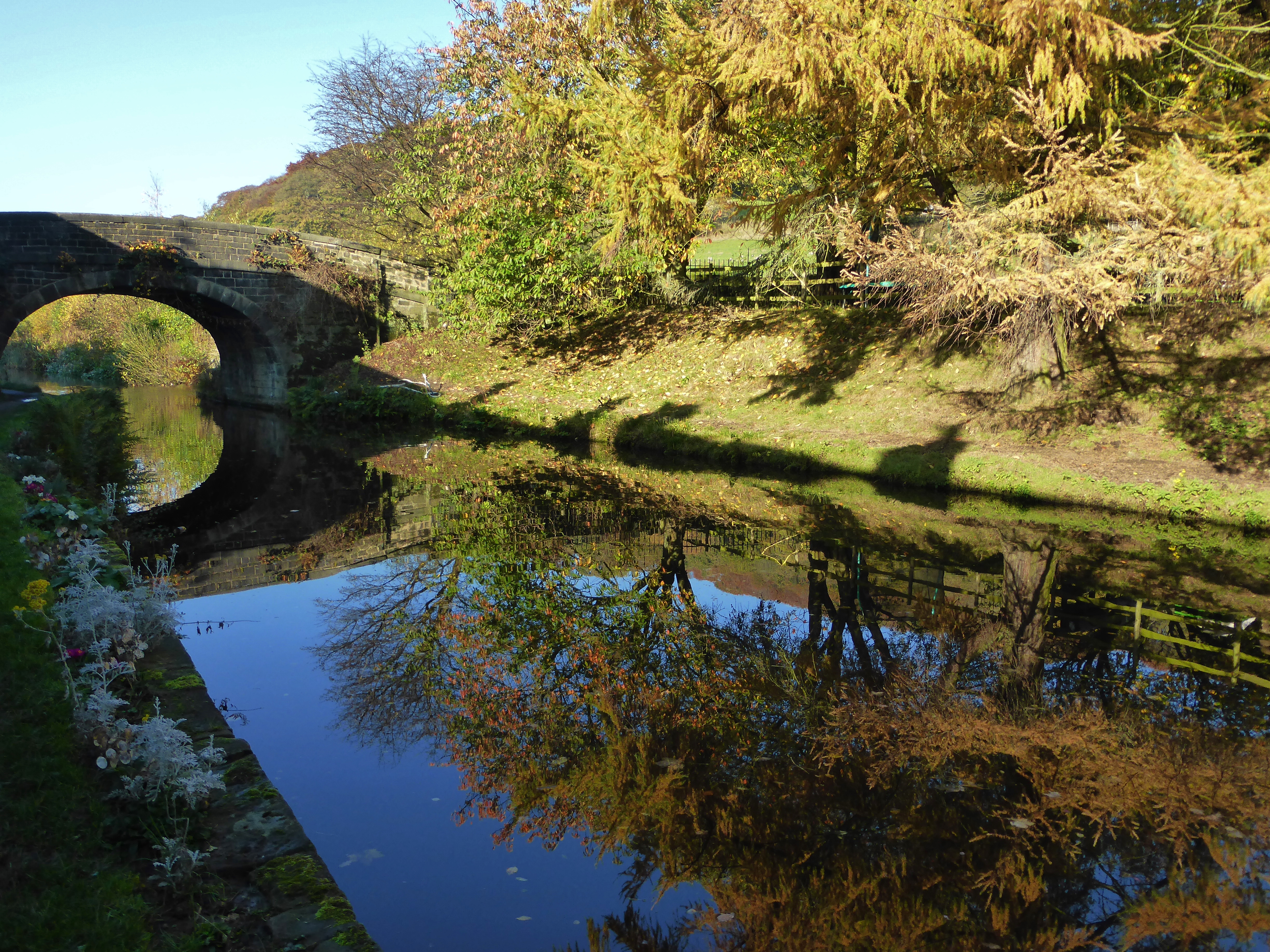
Strathdearn day (2)

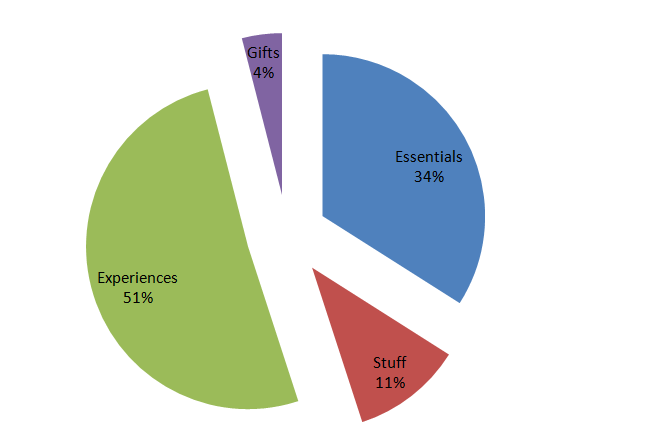
In 2017 I was feeling a trifle smug.  We had spent around £24,000 in our first year of retirement, way below budget.  That smug smile was wiped off my face earlier in the year when I reported that things were not looking so positive in 2018 and I was feeling a frugal failure.  With inflation I could have expected our spending to increase to around £25,000 in the year, instead it seems we were just saving up all our big financial hits for 2018.  In 2018 we were just average [2017 UK average household spending was £28,818).  This isn’t much comfort when we’re supposed to be being frugal and minimalist.  In our spending you won’t find any costs for haircuts, party frocks, frippery or pay TV, so what went wrong?  I’ve divided our spending this year in to essentials, stuff, experiences and giving.  The graph gives a summary.

Screenshot (1)

Essentials – total £9,654 [34% of total spending]

Food – £3,870 – We are two vegetarian who like to drink red wine and gin & mostly use the discount supermarkets.  I do know that wine and gin are not essential but we haven’t separated the costs of these from our supermarket shops during the year and together these probably represent about £400 of the total.   [2017 £3,612] 

Utilities, insurance & service charges for a 2-bed 58 sq mtrs [624 sq feet] flat – £4,841 – This year we have changed supplier for our gas and electric and moved to a cheaper mobile phone contract to save money.  The increase is only because we payed up-front for the gas boiler servicing to receive a discount  [2017 £4,621 mis-reported last year!]

Our health [including tai chi classes [?essential?]] – £943 – An expensive year thanks to some dental work [£235] and both of us needing new specs [£503] [2017 £376]

Stuff (electronics, newspapers and other kit) – £3,333 [11% of total spending]

Household items [including parts for the bikes] –  £2,364 – Although this category does include a multitude of things, including postage, one newspaper a week, books [often second-hand] and bits and bobs for repairs, it also includes stuff.  In 2018 we decided to buy a new laptop [£450] and one new mobile phone [£115], replace our ageing head torches [£70] and cycle helmets [£50]; although all replacing old and well-used items these are purchases that we don’t make easily and we had been putting off for some time.  [2017 £1,668]

Clothes & accessories – £969 – Whenever we can we buy second-hand clothing.  The almost £1,000 we have spent is mostly for replacements for walking gear that has worn out.  Even with the best quality clothing things don’t last forever and this year we have bought new walking shoes, trousers and rucksacks.  It is true that about £100 of this spending is for a couple of things that were bought because of a want, rather than a need.  [2017 £525]

Experiences – £14,095 [51% of total spending]

Holidays [our favourite spending line] – £4,681 – Despite being away on holiday for even longer, around 40% of the year [155 nights in the campervan, plus a couple of other holidays in self-catering cottages] we have spent less on this budget line in 2018.  Result!  The spending is mostly on accommodation and ferries and also includes £380 for a 2019 holiday.  [2017 £5,285]

Restaurants & cafes – £2,963 – Only a tad more than last year [2017 £2,864]

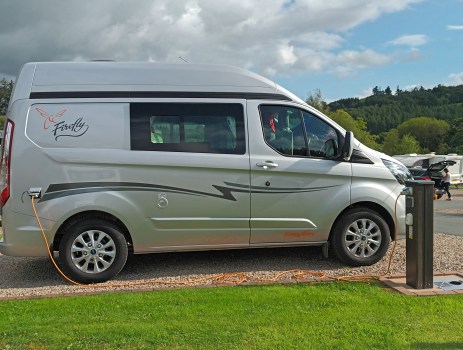
Running the campervan [servicing, insurance & parts] – £2,578  – a big increase on last year [2017 £1,636] all due to replacing brakes and tyres, failures in the air conditioning and power steering and a bit of wing mirror jousting.  What a year!  Readers might not agree that the costs for our campervan come under experiences but for us this is an important part of our lifestyle and so this is where it fits best.  Friends might be surprised that I didn’t put it under essential spending!

Diesel for the above ‘van – £1,937 – the price of diesel has increased and we drove more miles in the Blue Bus this year, particularly on our trip to Croatia [2017 £1,641]

Tickets for concerts, football & attractions – £1,114 – Wow!  We must have been to a lot of events this year!  Tickets for the football have increased in price and in Croatia we visited more paying attractions than we might have as we’re unsure whether we will travel so far again.  Although this is experiences, rather than stuff, this is definitely an area we could try and make savings in 2019. [2017 £633]

Public transport – £670 – We don’t use the campervan around Manchester and cycle and walk to do things or visit friends but sometimes [if it is raining/cold/too far] we take the tram, the bus or the train [2017 £517]

Unknown spending – £152  – [2017 £81]

Giving – £1,025 [4% of total spending]

Gifts & donations – £1,025 – we buy our family and friends birthday presents and buy Christmas presents for a shorter list [2017 £1,173]

TOTAL SPENDING FOR 2018 – £28,107 [2017 £24,196]

I’m pleased to see how much our spending is weighted towards doing things, rather than buying stuff so perhaps a tick for being minimalist if not uber-frugal.  Despite having a year that has still been a bit heavy on replacing things 51% of our spending has been on our own version of enjoying life.  We have a plan to cut down our spending on stuff in 2019 and I hope spending only 4% on giving make us look frugal rather than mean as I’d like this to remain this low.

It is impossible to make any conclusions from one year and averaged over two years our spending of £26,152 a year still seems fairly low.  This year has shown us how important over-saving or over-estimating budgets is for planning to live without any earned income.  After this expensive year my travel writing income is becoming essential, rather than extra cash.

Having spent more than our original budget of £27,000 our future annual budgets have been increased to reflect this.  We’ll see what 2019 will bring and try hard to have a low-spending year but at the moment we have no need or plans to go back to the nine-to-five!

Canada Geese: #surprisingsalford #36

River Irwell Feb 2017 (2)
A Canada goose by the river Irwell

I enjoy all the wildlife we have in Salford but one bird that brings particular joy is the Canada goose that is found in large groups around our waterways; these geese are always full of character, lively and beautiful to see.  Take a walk down to Salford Quays and the Canada geese will be there, pottering under the trees along the quay and bobbing on the water of the Manchester Ship Canal.  Stroll around Peel Park and you will often find a group of these gregarious birds on the river Irwell.  Introduced to the UK around 300 years ago as an ornamental bird, the BTO report that there are now 55,000 breeding pairs living here.  These geese have adapted well to life in the city and to warmer climates.

The Canada goose is a large goose and has a black head and neck and large white throat patch.  These geese were introduced from North America [Canada I guess] and have successfully spread to cover most of the UK.  In North America these geese migrate [as most geese do] but in the UK they are resident all year round and have never learned migration routes.  With a wingspan of up to 1.8 metre and a loud honking call it is not surprising that I have met more than one person who is too terrified to pass when one of these large geese is blocking a narrow path by the canal; they can be very intimidating.  When Canada geese have nests and young they are very protective and they will hiss and charge anyone that they think is threatening their brood.  In some areas of the UK Canada geese are so territorial they can chase off other wildfowl, therefore putting native species at risk.

These are handsome birds that generally mate for life and in spring the goslings are very cute and yet many consider them a nuisance both here and in North America.  This intolerance is probably because of their numbers, their enjoyment of green lawns and the amount of droppings they leave behind.  Canada goose droppings do cover the paths where they hang out and there are some suggestions that these droppings might be harmful to humans.  The evidence that this is the case doesn’t appear to be there but [the same as droppings for other animals] if you ate goose faeces this would probably make you ill.

Families enjoy feeding the Canada geese, swans and black headed gulls at Salford Quays and the activity and excitement when someone turns up at the water’s edge with food is vibrant and stunning.  While the birds will eat the bread most people bring, grains would be a better option if you want to help the birds through winter when there is less grass for them to eat.


Joyful world nativity scenes in Evora, Portugal: these are not just for Christmas

The lovely city of Evora in inland Portugal has no shortage of places to visit; you won’t want to miss the Roman Temple, Cathedral and Aqueduct just for starters.  One of the most memorable attractions I found here during our trip last year was the Igreja de São Francisco a popular attraction for the Capela dos Ossos [chapel of bones].  We followed the crowds to see the weirdly attractive chapel that uses skulls and limb bones creatively positioned in patterns.  The chapel was fascinating but also I could not really forget that I was looking at human bones and felt slightly uncomfortable.

In need of a little light relief, we headed for the nativity display that the church also opens to the public.  All year round hundreds of Christmas nativity sets from Portugal and around the world can be seen.  Part of a private collection, the variety, colour and sheer joy of these nativity scenes is worth an hour of anyone’s time.

Made from china, wood, clay, straw and fabric these nativity scenes are intricately made and fascinating objects, each one revealing something about the country it came from.  Each nativity scene is an interpretation of the birth of Jesus, translated into a family tableau that reflects the local experience.  These nativity scenes depict this homely scene with exuberance, giving the story a vitality and showing how Russian, South Americans, Africans and Europeans relate to the nativity.  Some of these cribs are moving in their simplicity, others made me laugh out loud they were so playful and joyful.  The nativity scenes are both modern and conventional.  Plenty of the cribs have a sheep or a lamb near the crib, some have just Mary, Joseph and the baby, others have the Three Kings, angels or shepherds huddled around the happy family.  Look closely and you will also find local food, cheese, wine or grapes in wicker baskets, cartoon-like animals and even a baby Jesus with a teddy bear!

Whether you love Christmas or not this Portuguese exhibition is just another reason to visit the beautiful Alentejo city of Evora.


Hebden Bridge Caravan & Motorhome Club site

The canal between Mytholmroyd and Hebden Bridge
The Rochdale Canal

Sitting drinking good coffee by the Rochdale Canal in Hebden Bridge, lazily watching the barges chug by is an experience I can recommend.  The Calder valley through West Yorkshire is one of my favourite parts of England and it is a frequent weekend haunt for those of us in Greater Manchester.

We were staying at the Hebden Bridge Caravan & Motorhome Club site; a simple site that is pleasantly surrounded by trees.  The site has electric hook-ups and hard-standing but no sanitary block so will only suit motorhome owners with their own facilities.

The steep-sided Calder valley was transformed by the industrial revolution as home-based weaving developed into water-powered mass production in textile mills.  The distinctive stone terraces of houses were built on the hillside in the 19th century and the canal and railway line crammed in to the narrow valley floor.

The weavers left a legacy of a criss-cross of footpaths around the valley and from the camp site you can walk in almost any direction.  Turn right and you eventually reach the moors and Blackstone Edge, a gritstone escarpment on the Yorkshire-Lancashire border.  To the west a steep path takes you to the top of Stoodley Pike adorned with its Victorian monument.  On this trip we had chosen to turn left out of the site and spend the sunny morning walking the easy six-miles along the canal to Hebden Bridge and back.  Hebden Bridge is a creative and lively town full of independent shops from where you could continue your walk to the wooded valley of Hardcastle Crags or take the steep path up the hill to the atmospheric gritstone village of Heptonstall.

Mytholmroyd station on the Leeds to Manchester Calder Valley Line is just one mile from the camp site and with stations at Hebden Bridge and Sowerby Bridge the line opens up opportunities for linear walks.  This line will also take you further afield to Halifax to see the stunning Piece Hall, built as a sales centre for the woollen weavers in the 18th century and recently renovated.  The National Children’s Museum, Eureka, that is fun for children and the young at heart.

There is so much to do from this site I am already planning our next visit; maybe we will take the train to Todmorden walking back over the moors or we might explore more of the wool industry history by visiting the timber-framed medieval manor house, Shibden Hall in Halifax, or maybe I will end up back in Hebden Bridge lazily drinking coffee.

Hebden Bridge CC site
The campsite

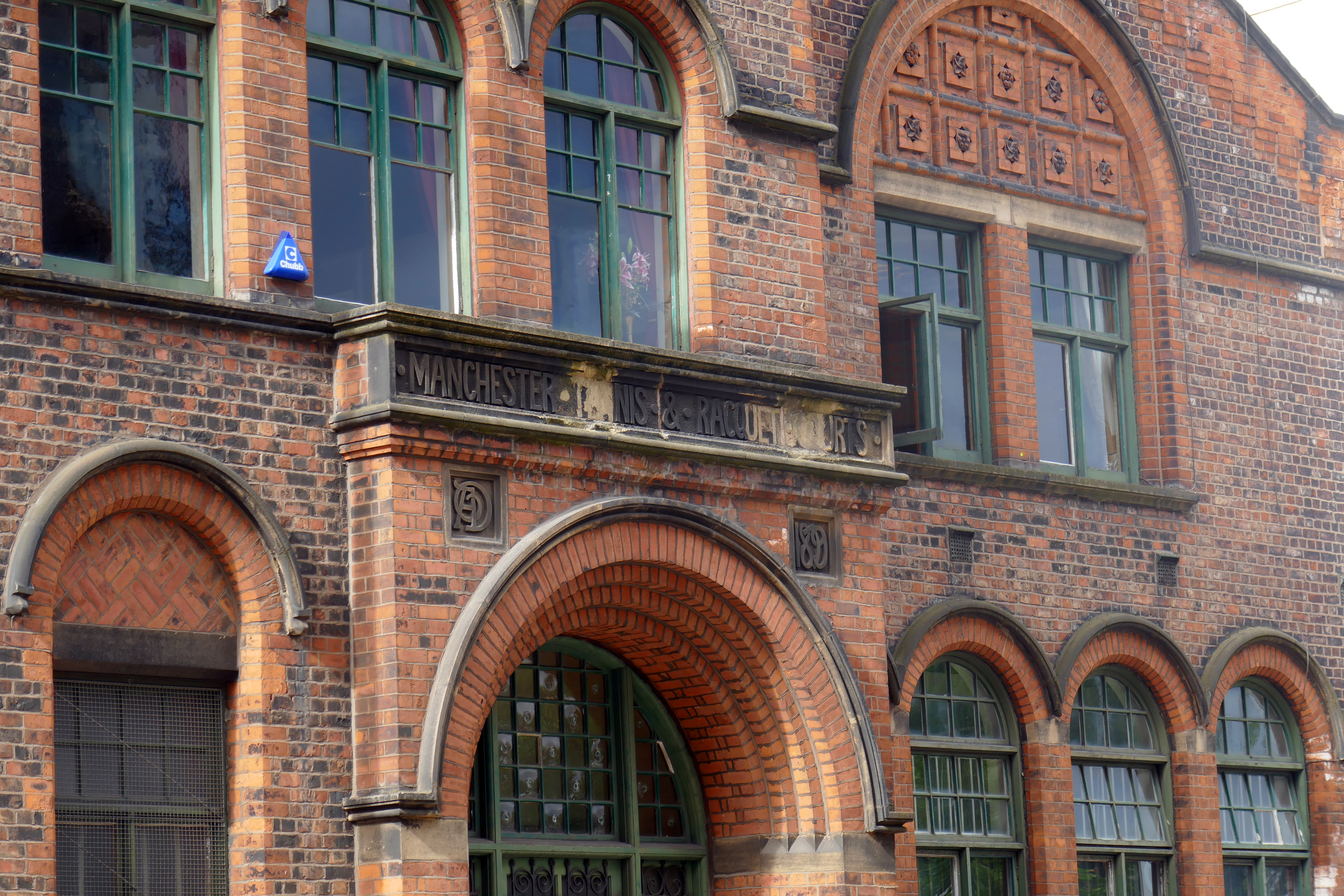
Manchester Tennis & Racquet Club: #surprisingsalford #35

Manchester Tennis and Racquet Club (2)
The front entrance of the Manchester Tennis and Racquet Club

Although called Manchester Tennis and Racquet Club this grade II listed building is actually across the Irwell in Salford but also just a short walk from the centre of Manchester.  Although the name of the club is above the grand arched entrance you could easily miss this historic building, the exterior of which is packed with faded grandeur.  The red-brick building apparently retains many of its Victorian features inside and is an interesting historical sporting venue.

At this unique venue members can play real tennis, a game that goes back as far as the 1400’s as well as squash.  You can also play the fast game of rackets which was first developed in prisons and later alleyways, played against one or more walls.  Rackets is played with wooden rackets and a small hard ball as either singles or doubles.  The indoor rackets court at Manchester Tennis and Racquet Club has been in continuous use since 1882.

Opening on this site on Blackfriars Road in 1882, the club started life nearby a few years before.  At that time it had one rackets court and a tennis court, a squash court was added later in the 20th century.

It would be interesting to take a peak inside this building sometime.


What did we spend during our 7 week campervan trip to Spain?

09.23.2018 Sierra de Urbassa walk (2)
A shepherd in the lovely Sierra d’Urbasa

You might recall we’re trying to keep within a budget and that this year achieving this has proved to be tough going with our spending feeling somewhat out of control.  I was therefore keen to keep costs low on our fantastic autumn trip to Spain from September to November.  So how did this plan go and what did we spend?

Diesel – £390 (we avoided the temptation to visit all of Spain and travelled 2,430 miles)

Supermarket / food shopping – £536 (around £100 less than we would have spent at home and we returned with dozens of bottles of wine for the cellar!)

Cafes & meals out – £326 (Coffee in a cafe is inexpensive in Spain and we do this much more on holiday than at home but we ate out in the evening less and so spent almost £100 less than we would have spent at home so a small gold star to us)

Campsites – £708 (we had a few nights wild camping to keep costs down but could have done more)

Public transport – £51 (we stayed off the motorways with tolls in Spain and managed to spend a little less than we would if we’d stayed home)

Entrance fees – £98 (similar to when we are at home)

Miscellaneous – £80 (new sunglasses, maps, washing machines, occasional wi-fi)

Ferry Portsmouth to Bilbao – £895 (ouch!  A lot of money to suffer the high seas of the Bay of Biscay)

Fixing the power steering & a new wing mirror for our van – £377 [power steering electrical fault]

Total spent £3,461

I’m feeling reasonably pleased with this total.  It really is not that much more than we would have spent if we’d stayed at home so hasn’t had a massive impact on our budget.  The lesson is that there are really no excuses not to go away again!


Playing knock Knock, who’s there in Spain: Spanish door knockers

Knock Knock, Who’s There?  Theodore!  Theodore who?  Theodore wasn’t open, so I knocked!

On the first house I lived in one of my favourite things I bought for the house was a cast iron door knocker of a cat happily sitting on top of a dog kennel.  This door knocker made me smile every time I arrived home.  The door knocker moved with me to a couple of houses but eventually it got left behind somewhere.  I’ve not had a door knocker that has made me so happy since and on our flat we don’t have one at all [electric intercoms don’t give me the same pleasure but they are practical].  Nevertheless I have retained my interest in handsome door knockers.

All over Spain we found plenty of door knockers worth stopping and admiring on their magnificent doorways.  On our latest trip I first started to give door furniture a thought while we were in the charming town of Aínsa.  Look carefully at one of the photographs above and you will see a door knocker in the shape of a pair of testicles.  Having this sort of fertility symbol nailed to your front door is apparently traditional in Spain.

After Aínsa I started to notice all sorts of decorative door knockers.  Some were fierce and unwelcoming or perhaps protective.  In the hill village of Pedraza I spotted a dragon, in Burgos I noticed a somewhat fierce dog [nothing like the cute one I had owned] and the magnificent door knocker with three snakes was in Albarracin.

As well as protective or bringing good fortune, these decorative and ornate door knockers are an outward display of wealth and status.  Attached to a front door they are often the first thing your visitors will note and are a visible indication of taste or your financial standing.  My cute cat and dog door knocker must have said oodles about me.

I’ll finish with another Knock Knock joke!

Knock knock, Who’s there?    Lettuce.   Lettuce who?

Lettuce in, it’s cold out here!


10.23.2018 Abarracin town (44)
Three snakes door knocker

23 Spanish campsites and aires

09.30.2018 Ordesa walk (19)
The stunning Ordesa Valley

We spent over two months in Spain this autumn and stayed mostly on campsites where we could use our ACSI discount card.  We had an occasional night staying on an aire.  These were all good and as we are trying to save money we could have done more.  Most campsites were a reasonable price but the one in Toledo was exceptionally expensive.  The list is below with my notes on how we found each spot.

Campsite name Comments Cost
Bakio Motorhome Parking near Bilbao Sloping parking area near the beach popular with surfers and peaceful enough, public toilets nearby £0.00
Camping Etxarri, Etxarri Aranatz, Navarra Hedged camping pitches & lots of bungalows & permanent caravans, some pitches very shaded, facilities reasonably clean, showers cramped & push button were only warm.  ACSI €19.00
Camping El Molino, Mendigorria Large organised site with some shade & some grass, clean facilities & powerful showers with adjustable temperature & hot, nice walk by river, ACSI €19.00
Camping Valle de Hecho, Hecho Terraced site with trees, near to village, scruffy year-round caravans, facilities clean, showers cramped but mostly hot, wash-up out of doors, no bread out of season €21.27
Aire, Jaca Tarmac car park with reasonable size bays near to the town, very popular, quiet by 23.00, bells & neighbouring buses noisy in the morning €0.00
Camping Ordesa, Torla Terraced site with fantastic views of mountains, facilities dated but roomy and good hot showers €21.20
Camping Rio Ara, Torla Terraced site, grassy with trees and tidy, steep access road, lovely modern facilities and good hot showers, adjustable & free flowing, supermarket & bar, good size pitches €22.60
Camping Pena Montanesa, Ainsa Large site with open views to mountains, information about walks, 2 kms from Ainsa, a lovely old town, facilities a bit scruffy but good hot showers & bread, ACSI & bottle of wine on leaving! (Ainsa has an excellent aire too) €19.00
Alquezar Camping, Alquezar Terraced sandy camping site with narrow access routes & trees for shade, small shop & cafe, some good facilities, near to lovely town & good walking, ACSI €17.00
Camping El Roble, Valderrobres Small gravel site by the road, pleasant & helpful owner, modern facilities, good hot showers, marked good-size pitches, cycle routes from site, ACSI €15.00
Camping Els Ports, Arnes Large site with marked pitches, 1 km from town on main road & some noise, facilities clean & okay ACSI €19.00
Celler El Masroig Flat parking by the wine producer with emptying point, quiet village, car park used by staff from around 07.30 €0.00
L’Orangeraie, Calig Nicely laid out small site with marked pitches, facilities clean & showers okay, friendly welcome & peaceful, ACSI €17.00
Los Pinos, Peñíscola Gravel marked sunny pitches with narrow access roads, 1.5 kms from the town, clean facilities, good hot showers & good value €12.00
Aire at Morella Pleasant gravel aire by picnic site with views to hilltop castle and town, popular €0.00
Camping Altomira, Navajas near Segorbe A terraced campsite by a small village, views from higher levels, English at reception, underfloor heating in toilets but facilities a bit dated & showers only warm, cycling nearby, ACSI €17.00
Camping Ciudad de Albarracin Terraced ACSI site with gravel pitches about 1.5 kms from old town, some in full sun, clean facilities & excellent hot continuous showers, great views & walking €17.00
Aranjuez Camping Large organised site about 1.5 kms from lovely town, English at reception, facilities dated but clean & good hot continuous showers & heated, supermarket, trains to Madrid, ACSI €19.00
Camping El Greco, Toledo Level site with marked pitches 3 km from the city, hourly bus service, 30 mins walk from town, clean facilities & good hot adjustable & continuous showers €27.90
Camping El Escorial, El Escorial Level ACSI site with lots of tree cover & some frames to give shade, scruffy, busy reception, no heating in toilets, showers hot, disco can be noisy €19.00
Camping Riaza, Riaza Level site with grassy & sunny pitches, some road noise but mountain views, near to pleasant town, facilities clean, showers continuous & very hot ACSI €19.00
Camping Fuentes Blancas, Burgos Level grassy site, some trees, 4 buses a day to Burgos, some road noise, shower block 3 is heated with good continuous hot shower, block 4 is unheated, wash-up is outdoor, ACSI €19.00
Port at Bilbao Flat tarmac area with toilets, cafe only open in the morning this time €0.00

A colourful Spanish autumn

10.10.2018 Valderrobres cycle ride (10)

Spain is beautiful … this goes without saying.  One of the things that added to the allure during our trip this year through September, October and November was the autumn colours.  They were stunning!  We spent a lot of time in Aragón and around Madrid and in so many places we visited I would stop and exclaim at the variety of the colours as the trees turned from green to shades of yellow, bronze, orange and russet.

I think of myself as a spring-soul rather than an autumn-animal so this excitement by what I generally think of as an ending, rather than the new beginning of spring, was a bit of a revelation.  Did all that sunshine turn my head or am I changing as I reach my own autumn years?

We visited so many dazzling places but a few stand out for the autumn colours.  Torla and the Ordesa National Park is an area we had previously visited many years ago in high summer.  Our trip here in early October had a different vibe.  The crowds were less, many of the campsites were closed, the nights were chilly and the Ordesa Valley had an autumnal feel with the leaves on the trees just beginning to turn.  Of course, the days were warm and sunny and it was perfect hiking weather.

We spent a few days cycling along the Val del Zafán Via Verde near Valderrobres, a route on an old railway line that runs around 105 km from Alcañiz to Tortosa.  While the pine trees and olive trees remain green, the leaves on the vines, beech, plane and sweet chestnut trees were turning golden.  The landscape, dotted with stone houses and barns, was a rainbow of colours and this made for glorious cycle rides.

Albarracin is famed for being Spain’s prettiest town and it is certainly gorgeous.  In the autumn it is spectacular as the colours of the red sandstone boulders among the dark green pine trees are complemented by the brilliant yellow of the deciduous trees.  A walk along the river around the town is worth exploring at any time of year but in autumn the turning trees change it in to a passage along a radiant corridor.

We spent a few days in the lovely town of Aranjuez and every day we walked in the gardens of the Royal Palace.  These gardens are full of trees that give welcome shade in the summer but it was the arcades of plane trees, heavy with russet coloured leaves, that were the star during our October visit.  Kicking dry leaves as you walk brings out the inner child in everyone.

Burgos is a city that is made for walking and the city centre has tree-lined pedestrian routes.  Most popular is the Paseo del Espolón where, once again, plane trees provide the shade.  Following the river, this paseo is made for strolling and in autumn sunshine the colours of the leaves is an added bonus.  We were here on a sunny Sunday and Burgos residents of all ages were out sharing a family walk.

Spring will continue to be my favourite season but I think I am learning to enjoy the back-end of the year too.

10.23.2018 Abarracin town (54)
Colourful Albarracin


Meeting a personal guide to the Spanish Civil War

10.28.2018 Morata and Chinchon (14)
The Civil War memorial above Morata de Tajuna

Looking over hundreds of olive trees, fringed by fragrant thyme and rosemary, it was hard for me to cast my mind back to the bloody scenes in February 1937.  We were south of Madrid at the site of the Battle of Jarama and between 1937 and the end of the Spanish Civil War around 15,000 people from the Nationalist and Republican sides lost their lives here.

We had driven our much loved campervan along more gravel tracks during our seven weeks in Spain than the ‘van had been on for all of it’s previous three and a half years and every time we were searching out something relating to the Spanish Civil War.  Off-road driving was starting to become the norm and the blue of the ‘van was disappearing until a layer of dust.

It was a sunny but breezy Sunday morning when we bounced down the tracks above Morata de Tajuna looking for an insignificant memorial to the International Brigades who had fought in the battle for Madrid.  It was a Sunday morning and on the tarmac roads we had passed hundreds of cyclists in large groups and on their own, all out for a ride, this is clearly a Spanish thing.

After parking up we stood looking at the slightly disappointing memorial of rocks and rusting tins and other debris.  This isn’t the stunning clenched fist memorial in the photograph and I was struggling to take much from it as we tried to read the faded plaque.  I guessed it related to the Spanish Civil War but couldn’t be sure.  Then a knight in shining armour / cyclist pulled up and said, ‘I guess you are from the British van’ in excellent English.  Remarking on his fantastic grasp of our native tongue he explained his mixed European heritage and that he had lived in the UK for around 15-years but now lived near to this hill of olive groves.  He explained that cycling around the area every week he became interested in the history and had done some research.

He told we were standing on Suicide Hill and the Republican 15th Brigade, including the British Battalion [not all of them were from Britain], were killed in huge numbers over three days of fierce fighting here in February 1937.  A few of the 500 – 600 men in the British Battalion had seen previous combat but many had never fired their weapons and ill equipped, unprepared and newly trained, these volunteers faced an attack from Franco’s elite Nationalist Army of 40,000 experienced troops that were well armed, had some air support and tanks.  The Nationalists had control of most of the main roads to Madrid and had a clear objective to cut the Madrid to Valencia road, thus circling and isolating Madrid and forcing its surrender.

The numbers and certainly names of the soldiers who died here are mostly unknown.  It is estimated 600 British soldiers fought for the Republicans at Jarama and many died on the first day of fighting.   Remarkably, although so many lost their lives, courage and conviction enabled the Republicans to more or less hold their positions and after three days of desperate fighting the two armies dug in here until the last days of the Spanish Civil War in 1939.  The name Suicide Hill started to make sense.

Our guide told us that on his regular cycle rides he passes the remnants of old trenches among these olive groves and bullet holes are still visible on the tree trunks.  This is a landscape still scarred by the war but does not receive the huge numbers of visitors seen at the World War One battle areas.  After sharing the history of Suicide Hill, he pointed us in the direction of the stunning memorial in the photograph and recommended the small and moving museum in Morata de Tajuna at Mesón El Cid and open at the weekends 12.00 – 14.00.  If you’re passing I recommend you take a look.

.