Owning a Campervan Tips the Scales: Plastic-free update #5

Croatia 2018 (38)
Market shopping makes being plastic-free easy

After 40 years I am beginning to realise I can’t save the planet on my own.  I have been really pleased to see ditching plastic and meat becoming more mainstream in the UK and I am glad that people are starting to talk more seriously about reducing flights and car use.  But as we reach the climate change crisis and I continue on my personal struggle to be better at caring for the environment it is hard to feel content with how the world is progressing.  Much of the current discussion has been about plastic pollution and the immediate negative impact this has on our wildlife and environment.  Plastic also has a massive impact on climate change from the moment the fossil fuels are extracted, through production and recycling or disposal.   With our current dependence on fossil fuels and plastic there seems little chance of reducing greenhouse gas emissions.

A lot needs to change but ditching single-use plastic would be a start.  And yet movement in reducing supermarket packaging is painfully slow and although there are small changes most continue to use plastic to prevent food being damaged in transit and to keep it fresh.  Zero-plastic shopping and avoiding throwing away colossal amounts of packaging after a shopping trip is now possible in specialist shops but this is not mainstream.  This reminds me of the days when vegetarians had to shop in local health food shops for essentials.  It wasn’t until supermarkets spotted this market that shopping got easier for vegetarians.

As a couple we are trying to be frugal as well as kind to the environment and we are in a losing battle.  Short of going back to work, the frugality isn’t an option; we are living on our savings and can’t fritter them away.  Much as I would like to support small zero-waste shops these are generally more expensive than supermarkets and not local and make staying on budget difficult.  Just at the moment it feels impossible to be both frugal and environmentally friendly and I am trying to accept that we have made changes where we can and it will never be perfect.

In the UK the average person apparently accounts for 6.3 tonnes of CO2 per year all of which contribute to climate change.  Despite my best efforts at small things, having a diesel-fuelled campervan means that my own environmental balance sheet is far from balanced.

Climate Change Wins

  1. Housing – We live in a small flat that is efficient to heat, we switch off lights, keep the temperature fairly low and put on jumpers when it is cold.  We wash everything at 30C and dry most things naturally [although we use the shared on-site tumble drier for towels to stop the flat getting damp].  We take short showers that last about two minutes, switching the shower off while we lather up to save water and energy.  [I used this carbon calculator to find out that our home has a carbon footprint of about 0.9 tonnes of CO2].  With energy and water use it is easy to match up our twin aims of frugality and saving the planet.
  2. Shopping – We buy soap and solid shampoo and use shaving cream and body lotion from Lush, not plastic free but they take the tubs back when you have five to return for recycling.  We don’t buy any make up.  Cotton handkerchiefs deal with our daily nose blowing rather than tissues.  Our washing powder comes in a cardboard box, we buy loose tea for home, rather than teabags, but this is still packaged in plastic inside the cardboard and our favourite Linda McCartney vegetarian sausages are packaged in cardboard.  We make our own hummus and bread and cook most things from scratch.  A few of these purchases are more expensive options but they fit with our budget.
  3. Eating out – We eat out but never buy lunch-to-go sort of items or plastic bottles of water or pop and don’t buy coffee-to-go.  These certainly save us money.
  4. Diet – We don’t eat meat but do eat dairy [a vegetarian diet emits around 1.7 tonnes of CO2 per year, much less than a meat-based diet] and we try and buy in season and local food as much as we can and a veggie diet is cheaper.
  5. Cleaning – We use scraps of old clothes and towels for mopping up in the kitchen and bathroom instead of paper towels and we buy toilet rolls from Cut The Crap which are wonderful and plastic-free.  We use a bar of Sunlight soap for cleaning.  On balance we probably save money here.
  6. Stuff – Being frugal we don’t buy lots of stuff, whether made from plastic or not.  We mostly buy second-hand furniture and clothes, with the exception of technical gear and shoes.  We don’t worry about being fashionable and make do and mend as much as we can.
  7. Getting around – Walking or cycling around Salford and Manchester is our default, whether going to the supermarket, the doctors or friends and this is free or cheap.  If we have to go further across Manchester we take the tram or bus.  We don’t fly long-haul and rarely fly anywhere at all [the last time we flew was to Milan in early 2017].
  8. Pets – Although we love cats, we don’t have a pet and instead I just watch them on social media and try and stroke any cat I meet, much cheaper options.
  9. Family – We had a child but only one [saving around 58.6 tonnes of CO2 a year].

Climate Change Fails

  1. Fruit and veg  – Our fruit and vegetables come mostly from Aldi and we come home with lots of plastic but our finances stay on track!  Our meals do focus heavily on things they don’t wrap in plastic but there are always items I want / need that come wrapped up.
  2. Milk  – Although not vegan we prefer soya milk.  This comes in tetra paks which are a mixture of plastic and paper and the small amount of cows milk we buy comes in plastic bottles [no milk deliveries to our flat].  The BBC told us that oat milk has the lowest impact on the environment and I did try making my own once!
  3. Food – Plenty of other food items we eat come in plastic; margarine, cheese, tofu, crisps, washing up liquid, nuts, pasta and rice and more and I have a weakness for Warburtons crumpets that come wrapped in plastic.  We aim to spend less than £300 / month on food and drink in supermarkets, cycling across Greater Manchester to buy zero-plastic rice and couscous could be done but something else would have to give.
  4. Toothpaste – I have looked at toothpaste tablets and haven’t found one that contains potassium nitrate to ease my elderly sensitive teeth.  There are ones with fluoride and the price is reasonable [£2.40 for 60 tablets] so I alternate tablets with tubes.
  5. Clothing – We remain fans of technical quick-drying and hard-wearing clothing and wouldn’t really want to go back to wool or cotton for our hill walking and outdoor lifestyle.  We buy quality items that will last, only wash them when we must, mend them and wear them as long as we can but I am sure some of them probably contain micro-beads.
  6. Scouring – For stubborn cooked-on food we have a wooden pot brush but also buy cheap plastic scourers as we don’t have a dishwasher and need to get things clean by hand.
  7. Clingfilm – I admit that we have a roll of clingfilm!  We have owned this particular roll for around 15 years.  Occasionally this is useful but we might not buy anymore when it eventually runs out.
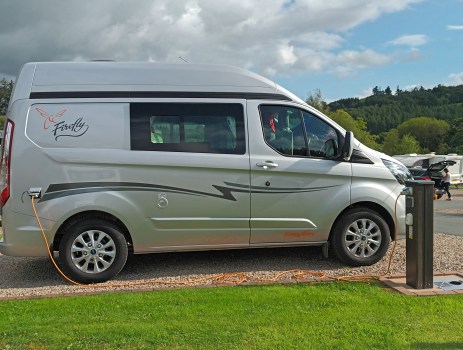
  8. Campervan – We drive a diesel campervan about 10,000 miles a year; after our flat this is the most expensive thing we own.  We only drive it for long distances and it can sit around for a couple of weeks not moving in the winter.  According to the carbon calculator this van accounts for around a massive 4 tonnes of CO2 a year.

Sell the campervan you say!  Do I really need a campervan?  Could I do without the fun of travelling to beautiful places and eating and sleeping in my own home?  It is clear that owning a campervan has a massive impact on both our budget and the environment.  It negates all the small wins, they are just tinkering around the edges.  Until we get rid of our campervan we’ll always be part of the problem and buying loose courgettes or giving up Warburtons crumpets will not shift the balance in favour of the planet.  And so for the moment I accept I am a failure.


Salford Cathedral: #surprisingsalford #45

Salford Cathedral
Salford Cathedral

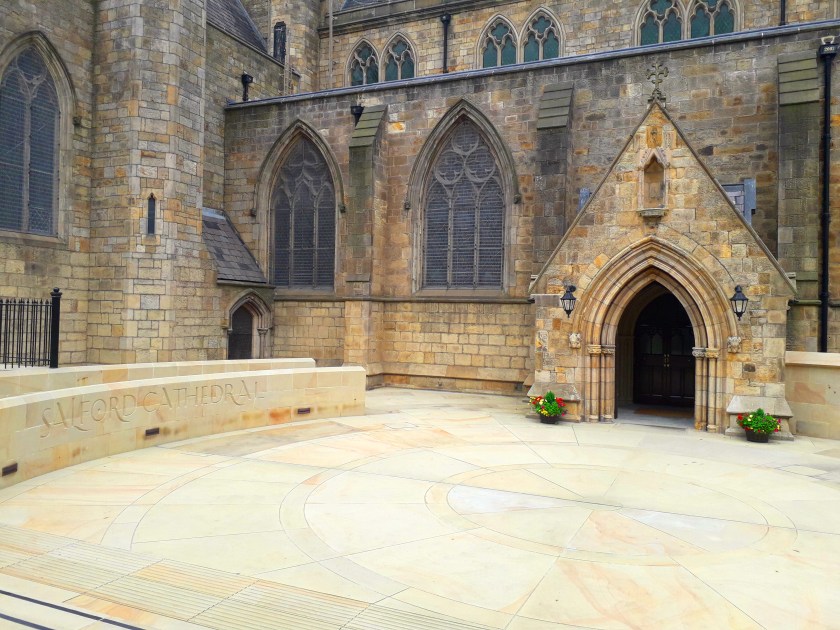
I have been watching the progress of the works around the side entrance and garden next to Salford Cathedral for some time.  We walk by the Cathedral regularly on our way into Manchester and on a recent walk I noticed the workers had finished.  The new piazza, that is now the entrance to the Cathedral, is completed and was officially opened on 6 July 2019.  This provides an entrance that is away from the pavement and busy Chapel Street and will be a lovely space for the congregation to gather after services.

Beyond the piazza is the Cathedral garden with the Onion Shelter at its centre.  Made from ten steam-bent oak wood planks, this open structure has a circle of seating.

Opened in 1848, Salford Cathedral on Chapel Street is dedicated to St John the Evangelist and is positioned north-south.  In 1854 the Great East Window was installed, a traditional and stunning stained glass window.  The stained glass was removed during the Second World War to protect it from bomb damage.  Along the base of the window are images that tell the story of the Catholic faith in England.

What was originally the Blessed Sacrament chapel became the World War One Memorial Chapel in 1923.  The Cathedral has a light and airy interior with a central modern altar in white marble.  There are interesting floor mosaics and tiling that give the building a clean finish.

While we were looking around, a young woman approached me and asked if I would take her photograph outside the Cathedral [the three of us were the only visitors].  I did willingly and asked her where she was visiting from.  ‘Mexico’, she told me with a smile and exclaimed how beautiful the Cathedral was.  We chatted some more and I learnt that she was staying in London, Manchester and Dublin and hoping to learn more English.  The new piazza gives an elegance to Salford Cathedral that it lacked before and maybe more tourists will make the trip to see it.

Salford Cathedral 2
The new piazza at Salford Cathedral


Scotland 2019 trip: 41 overnights on campsite & free camping spots reviewed

2019 Scotland
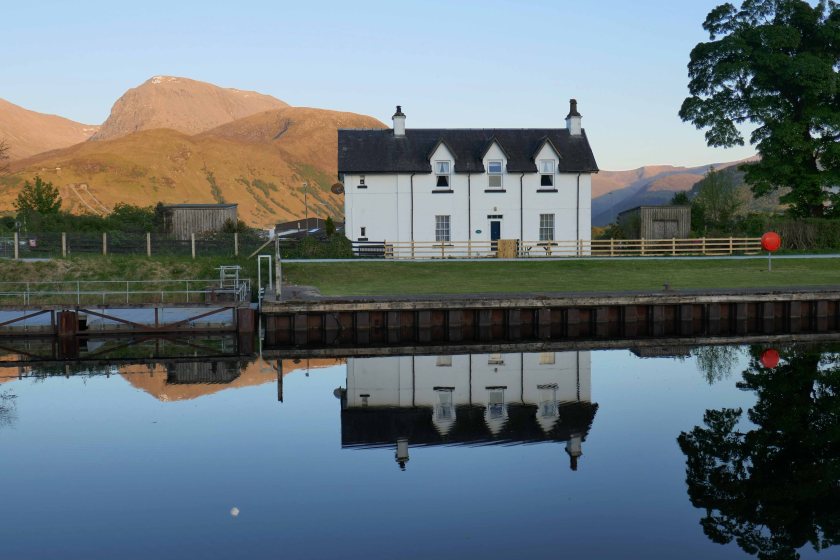
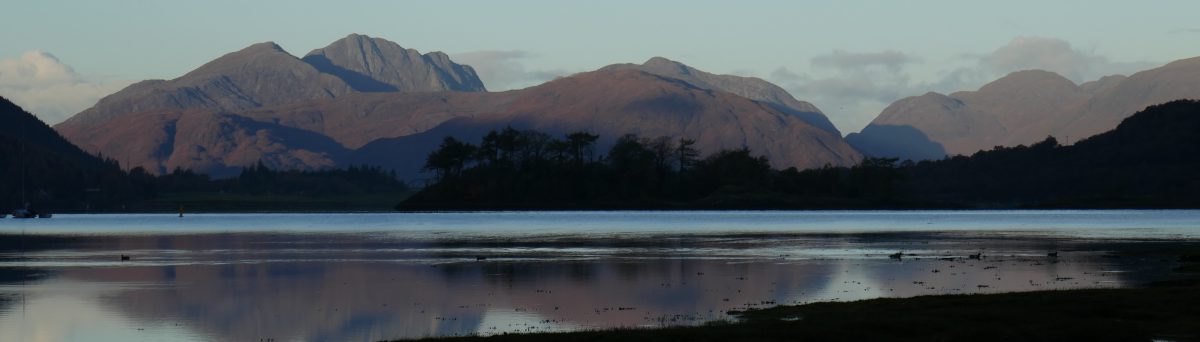
We were lucky to catch this stunning view of Ben Nevis from near Linnhe Lochside Holidays at Corpach


Campsite name How many nights Comments Cost
Glendaruel Caravan & Camping Park, Argyll 1 Pleasant & peaceful site, clean facilities, warm showers, slightly sloping pitches.  Woodland walks and red squirrels near out pitch. £20.00
Ettrick Bay, Isle of Bute 1 Grassy parking area with sea views, just oystercatchers calling, two other vans in another nearby car park £0.00
Roseland Caravan Park, Rothesay 1 High above Rothesay, open views & sunny site, very sloped pitches, clean facilities, showers £1 for 5 mins, hot water, wash-up open but covered £28.00
Ettrick Bay, Isle of Bute 1 Another van behind us this time £0.00
Glendaruel Caravan & Camping Park 1 Second visit £22.00
Big Jessie’s Tea Room, Gigha Ferry Terminal 1 Friendly family, great views over the sea & level pitch.  Vans can use ferry car park.  Ferries from 08.00 to 18.00 £0.00
Machrihanish Holiday Park, Kintyre 2 Grassy spacious & friendly site with wide-open views, 2 hours free wifi, separate bathrooms, lovely & clean with heating, showers fine, near to village with hotel. £19.50
Carradale Bay Caravan Site, Kintyre 1 Grassy site by a lovely bay, views to Arran, key for facilities which are clean but dated, no heating but showers continuous & hot, wash-up open with roof. £24.00
Lochgilphead Caravan Park 2 Level site by the town, hard-standing pitches, facilities dowdy but showers hot, adjustable & continuous, no heating in evening, wash-up under cover, industrial scale laundry. £23.00
North Ledaig Caravan Park, Connel 1 Large well-organised site, popular, sea views from all pitches, facilities heated & clean, modern showers were fairly warm, wash-up outside, £24.00
Glen Orchy car park by the waterfall 1 Peaceful, level car park that we had to ourselves. £0.00
Glencoe Mountain Resort 2 4 level gravel pitches alongside the car park with EHU, toilets & shower £1, site £15 without showers, dish wash indoor, cafe open until 20.30, showers continuous, hot & adjustable.  You can free camp in the sloping car park. £17.00
Invercoe Caravan Site, Glencoe 2 Open site with views across the loch & the Pap of Glencoe behind, facilities clean & showers hot, dish wash inside. £27.00
Glen Nevis Caravan & Camping Park 2 Large, well organised site with shop, restaurant & bar nearby, facilities old & new, indoor dish wash, showers warm enough. £26.50
Linnhe Lochside Holidays, Corpach 2 Terraced site on the loch with shop & bakery, about 1 km beyond Corpach, nice views, good hot showers & heated facilities that are clean but dated, ACSI £17.50
Loch Fleet car park, Skelbo 1 Loch view, fairly level, quiet road, car park has bins, watched seals & eider ducks, one other van. £0.00
Wick Caravan & Camping Site 1 Lovely open grassy site with patches of trees by the river & 10 mins walk from Wick, facilities dated but clean, showers small but hot, adjustable & continuous. £21.00
Birsay Outdoor Centre & Campsite, Orkney 1 Level grassy pitch & the sound of oystercatchers, facilities okay, showers warm but not hot, still only one wash-up sink. £20.20
Broch of Gurness car park 1 Sloping car park but level enough at the bottom overlooking the sea, nice to look around the broch in the evening, one other ‘van. £0.00
Orkney Caravan Park, Kirkwall 1 Busy site with hard-standing near to Kirkwall, excellent clean individual bathrooms with good hot showers, wash-up inside. £24.85
Braewick Cafe & Caravan Park, Shetland 1 Sloping site above a beach, busy at the weekends, clean modern facilities & warm, good hot showers, one kitchen sink. £18.00
Burravoe Pier Trust Caravan & Campsite, Yell, Shetland 3 Sloping site with small facilities block by the pier on the edge of Burravoe with fantastic sea views, 1 shower that is roomy & hot, 2 toilets & heating.  This is a favourite site. £10.00
Braewick Cafe & Caravan Park, Shetland 1 Met the friendly owner this time, radiators were on & great facilities. £18.00
Delting Boating Club, Brae, Shetland 2 Facilities warm, just 1 shower cubicle, hot showers, gravel & fairly level, some road noise & a little crowded, near to village with shops & chippy £15.00
Cunningsburgh Touring Park, South Mainland, Shetland 1 Tarmac car park by marina with hook up, clean facilities building, 2 toilets, 2 showers, £1 was enough for us to share a shower, good hot showers, 2 indoor sinks for wash up. £16.00
Grutness Pier, Sumburgh, Shetland 1 Level parking area by Fair Isle ferry terminal, windy night toilets, quiet. £0.00
Sumburgh Head Hotel, Shetland 1 Level area with a view of Sumburgh Head in car park, can use toilets in hotel, hook up and quiet. £5.00
Sandsayre Pier, Sandwick, Shetland 1 Near houses, car park by the pier, fairly level & quiet night. £0.00
North Roe & Lochend Hall, North Roe, Shetland 1 Car park for hall with hook up, chemical toilet, grey water disposal & water, peaceful & wonderful open views. £10.00
Braewick Cafe & Caravan Park, Shetland 1 Third time here, windy! £18.00
South Nesting Public Hall & Caravan Park, Shetland 1 Sloping area with hook up, one bathroom, peaceful, bathroom clean & fantastic hot shower. £16.00
Skeld Caravan Park, Shetland 2 Level gravel marina site, showers £1 for 11 minutes so shared, no heating, one kitchen sink, clean facilities & friendly volunteers. £19.00
South Nesting Public Hall & Caravan Park, Shetland 1 Second visit £16.00
Ardtower Caravan Park, Westhill, Inverness 2 ACSI site on the hill near Culloden, with good views, clean facilities with radio, warm showers, good sized pitches, friendly. £17.82
Rothiemurchus Camp & Caravan Park, Coylumbridge 1 In the forest, friendly welcome, clean facilities all at one end of site, showers only warm but continuous, lovely position & red squirrels. £28.00
Allt Mor car park, Glenmore 1 Wooded car park with individual bays separated by trees, 4 other vans here, fairly level, peaceful. £2.00
Glenmore Caravan & Camping Site, Aviemore 1 Large site with grass & hard standing pitches, large toilet blocks, some heating, showers warm but short burst on push button. £21.81
The Helix & Kelpies car park, Falkirk 1 Car park on the edge of the Helix Park, toilet open until 22.00, popular overnight halt, cars stopped arriving and leaving by 23.00, some road noise. £5.00
Crofton Hall CL, Cumbria 1 Immaculate site with 4 showers & 2 toilets in the courtyard, a short walk away, large pitches, showers hot & continuous. £17.50
Howgill Lodge, Appletreewick 3 Informal site with fantastic views, good hot showers & friendly welcome, a favourite campsite. £22.00
Wharfedale Caravan & Motorhome Club Site, Grassington 2 Large level site, excellent facilities, one block in the centre, friendly wardens. £26.70


2019 Scotland (2)
Camping at Big Jessie’s Tea Room

A day visiting Salford Quays with a local

I have lived a hop and a skip away from Salford Quays for over ten years now and still visiting the Quays is a favourite thing to do.  Salford Quays is my local walk, it is our first choice for drinks and a restaurant and it is where we always take our visitors.  It is a fantastic place to live near, always changing and interesting.  When I have been chained to the laptop for a morning, a stroll around the Quays brings me back to life as there is always something new to see.  As well as being a great place to live near Salford Quays is also a wonderful place to visit for a day or two.  Here’s a local’s guide to what to see and do.

Getting here

If you are coming from Manchester city centre then the Metrolink tram is the way to travel.  The trams run every few minutes from Piccadilly Station to Eccles and Media City.  After the Pomona stop make sure you look over the Manchester Ship Canal at the view back to Manchester.  I would get off at the Salford Quays stop and walk along Ontario Basin to the Lowry.

If you drive, there is a multi-storey car park for the Lowry Outlet Mall and if, like me, you own a high top campervan that won’t fit in a multi-storey car park, use the parking outside Booths, just off Broadway.

Morning coffee

You have plenty of choices for your morning coffee but I would start by sitting in the cafe in The Lowry Theatre [opens at 10.00] while you get your bearings.  This is a chance to look around the airy and modern theatre building too.  The Lowry has an excellent gift shop that sells Salford and LS Lowry related items and much more.

Lowry, a Salford painter

After coffee, head upstairs to the gallery [open from 11.00 Sunday to Friday and 10.00 on Saturday] to see some of Salford’s collection of paintings by LS Lowry.  You will see that Lowry painted more than the matchstick people and mills he is known for, although these are fascinating.  As well as the Lowry’s on permanent display the gallery has temporary exhibitions and there is always something worth seeing.

Imperial War Museum North

Cross the Manchester Ship Canal by the Millennium Footbridge, a lifting bridge of white tubular steel with changing LED lighting at night to the Imperial War Museum North.  This purpose built museum [open 10.00 – 17.00] is free to visit, although donations are welcome.  A mixture of permanent and temporary exhibitions about conflict and its effects, a visit here is always moving and informative.

Time for lunch

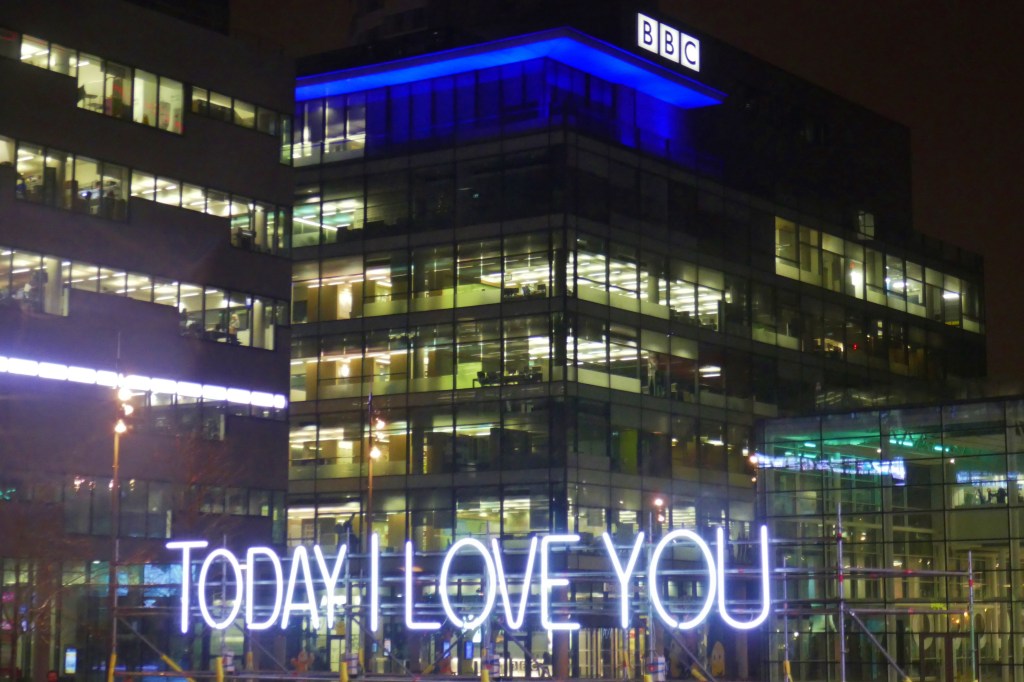
Walking by the ITV studios, where the new Coronation Street set is now housed, [tours are available at weekends] cross the curved Media City Bridge into the heart of Media City, where many BBC TV and radio programmes are recorded every day.  In the lively plaza look out for stars [we have eaten in the same restaurant as Glenda Jackson and you might see a Coronation Street actor or a favourite DJ] and head for somewhere to eat.  At the very least everyone around you will be wearing a BBC lanyard!  If you have the appetite, Catena’s pistachio and lemon cake is scrumptious.

Behind the scenes at the BBC

At present you can’t book tours to see behind the scenes at the BBC at Media City, which is a great shame.  The tours always varied, depending on what is being filmed or recorded at the time, but were a marvellous opportunity to get a feel for how the BBC produce their quality programmes, from Blue Peter to the BBC Philharmonic, Woman’s Hour to Five Live Sport.  There were also special CBBC tours for children.  The tours were lots of fun and everyone enjoyed being in the interactive studio where you get to try your hand at being a weather presenter and reading the news.

While you are in Media City take a few minutes to walk the Blue Peter Gold Badge Walk, a path honouring some of the well-known names who have received a Blue Peter Gold Badge.  This ends near the actual Blue Peter Garden which is tiny but always makes me smile.

Shopping or history or football

If you are as frugal as I am you might like the bargains in the Lowry Outlet Mall … but you might also hate the idea of shopping.  If that’s the case, walk along Ontario Basin, by the Helly Hensen Watersports Centre [and maybe stopping for a beer and watching some water sports at the pub next door].  Cross Trafford Road to Ordsall Park [looking left to see the stripped-classical 1920s Dock Office], skirting around the park to reach Ordsall Hall.  This charming building is over 800 years old and has a great hall with a definite wow factor.  Only open until 16.00 and closed on Fridays and Saturdays, you might have to rush to fit this stunning building in [or come for the weekend instead of a day!]  If it is closed you can still enjoy the attractive timber-framed building from the outside, admire the gardens and appreciate the contrast with the surrounding modern buildings.

If neither of these are your cup of tea, then walk back across the Millennium Bridge, over Wharf Road and up the hill to Manchester United Football Club’s Old Trafford ground.  You can visit the shop for the latest strip or book on a Museum and Stadium Tour in the Theatre of Dreams.

Cocktails

The early evening is cocktail hour at Salford Quays.  You might be tempted by the remarkable golden Alchemist building that overlooks the Manchester Ship Canal and this certainly has the best view in the house from its terrace.  Of course, this terrace is also the retreat of smokers and so isn’t always as pleasant as it could be.  Instead I prefer to visit The Lime Bar, a stylish long-standing Salford Quays restaurant-bar that has a classical cocktails list, friendly staff and a vibrant vibe.  Stay long enough and you might decide to eat here too and I don’t think you will be disappointed.

Sunset

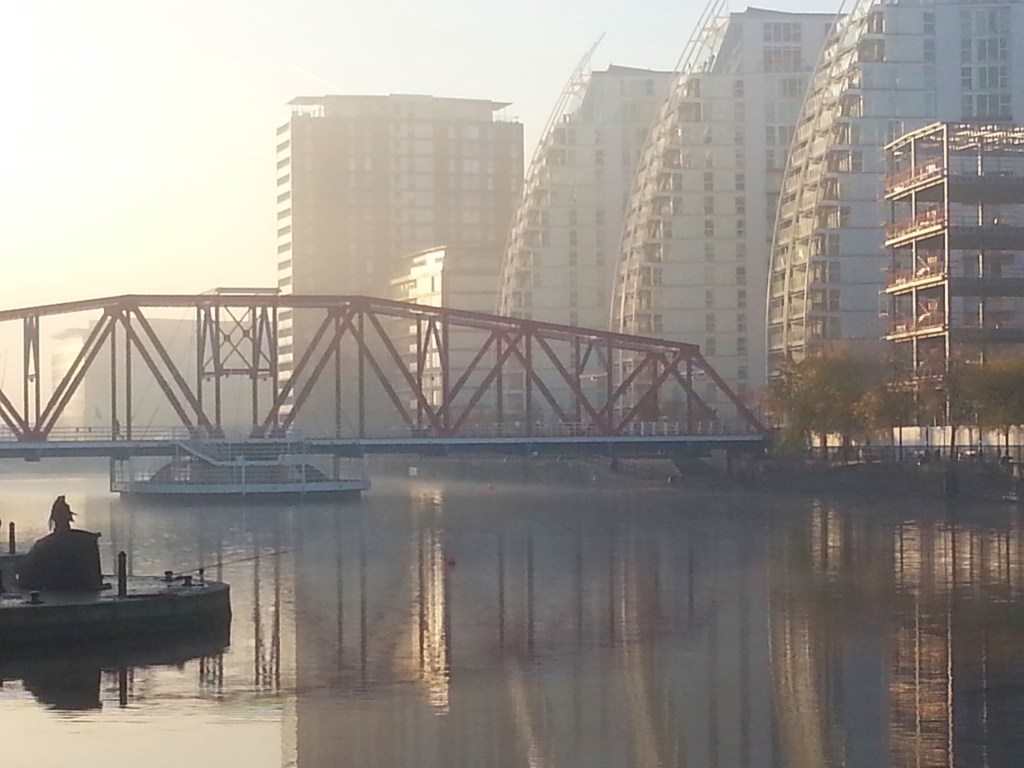
If you are lucky you will get the chance to see a Salford sunset.  Standing on the Media City Bridge and watching the sun go down over the Ship Canal is a big hit at the end of a packed day of sightseeing.

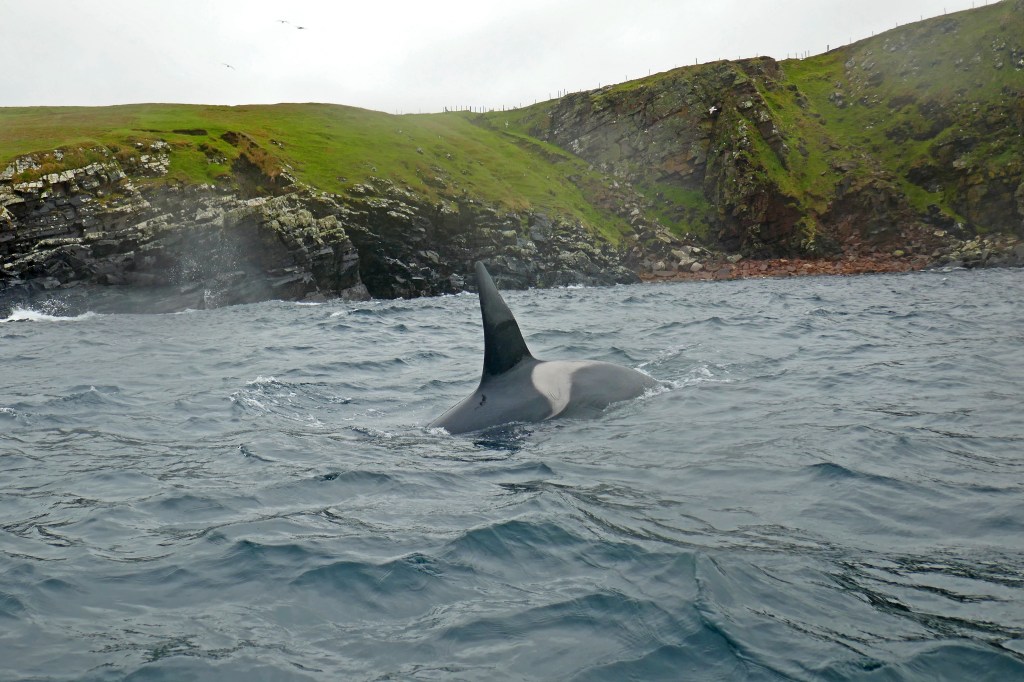
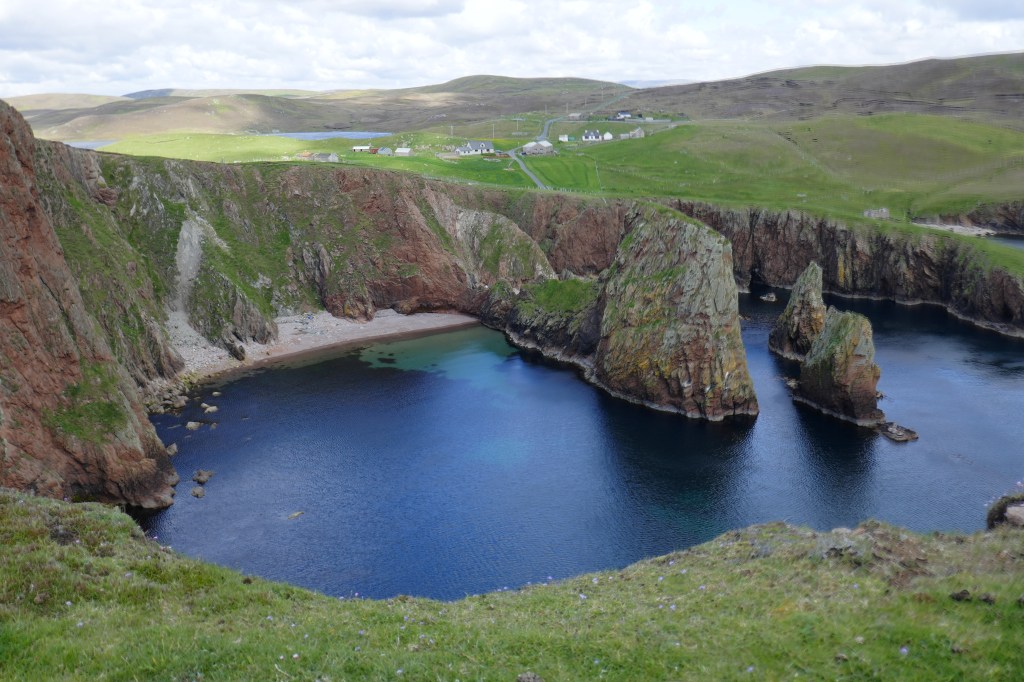
13 ferries in 2 months: What did our campervan trip to Scotland cost & how does it compare with mainland Europe?

From April to June we were touring around Scotland, from Loch Lomond to Shetland, we spent two months pottering around this beautiful country.  In previous years we have visited mainland Europe in the spring … it was orcas that drew me to Shetland.  I thought it would be interesting to compare what it cost on our campervan trip in Scotland with our previous holidays around mainland Europe.  Of course, every trip is different but I’ve had a go at looking at the costs across different spending lines, comparing it with our trip to Croatia, Italy and France for the same length of time last spring and a slightly shorter trip to Spain last autumn.  How did Scotland stack up?

Diesel – UK higher

We travelled 2,520 miles and spent £460.   [Diesel is cheaper in Europe so although our Scottish mileage is similar to our mileage in Spain last year that trip cost £389 for diesel.  If we take the Blue Bus to the southern areas of Europe the mileage is higher and the cost more].

Food for two hungry vegetarians – UK lower

In Scotland we spent £719.15 in supermarkets.  [In Croatia, Italy and France last spring we spent £958 in supermarkets, despite the wine being cheaper!]

Cafes and restaurants – UK higher

It is hard to compare like-for-like for this spending.  Sometimes in Scotland there is no tea shop for miles and when you are out walking for the day on a mountain there is no chance for a coffee, whereas in Spain and Italy we would often stop for coffee as it is good and cheap.  In Scotland we spent £527.56 during the trip.  [Eating out is often cheaper in Europe.  In Croatia, Italy and France last spring we spent £467 in cafes and restaurants]

Campsites – UK lower

We stayed on campsites for 47 of the 67 nights of our Scotland trip, the cost per night ranged from £5 to £28 – we spent £778.40 .  On Shetland we didn’t wild camp as much as we expected because a) it was cold and we wanted EHU for the heating as there is no LPG available on the island b) we like to support the community and all but one campsite we used was community run and reasonably priced, it would have been rude not to stay on these sites.  [We tend to think UK campsites are expensive but we spent £983 on campsites for the same number of nights away last year, staying mostly in Croatia, Italy and France and using our ACSI card.  Camping in Spain and Portugal is much cheaper.]

Ferries and parking – UK lower

We spent a total of £644.13 on ferries and parking – £525 of this is the return ferry to Shetland, most of the rest is Shetland inter-island ferries and ferries to Bute and Kintyre.  [The Hull to Zeebrugge ferry was £489 last year plus we spent £218 on tolls and parking]

Entrance charges and attractions – UK somewhat lower

In Scotland we spent £234.50, this included two boat trips on Shetland and a pine marten watching trip.  [Last spring we spent £279 on the same budget line]

Other spending £173.57 [includes £25 for a deep tissue massage after Ben Nevis, washing machines, maps, gifts for friends and a pair of warm trousers].

The bottom line – £3,012.10 spent in Scotland [We spent the equivalent of £4,240 [£1,228 more!] on a holiday of the same length last spring that took us to Croatia, Italy and France with a higher mileage and consequently £610 spent on diesel]

For 67 days away our average spending was £44.96 a day in Scotland.

This total isn’t much more than our average in Spain last year of £42.93 / day and the ferry to Shetland was much cheaper than Portsmouth to Bilbao.  Of course, the weather is warmer in Spain!

Our trip to Croatia, Italy and France last spring was considerably more expensive and averaged £61/day due to the longer distances, high prices of Italian campsites and supermarket shopping costing more.

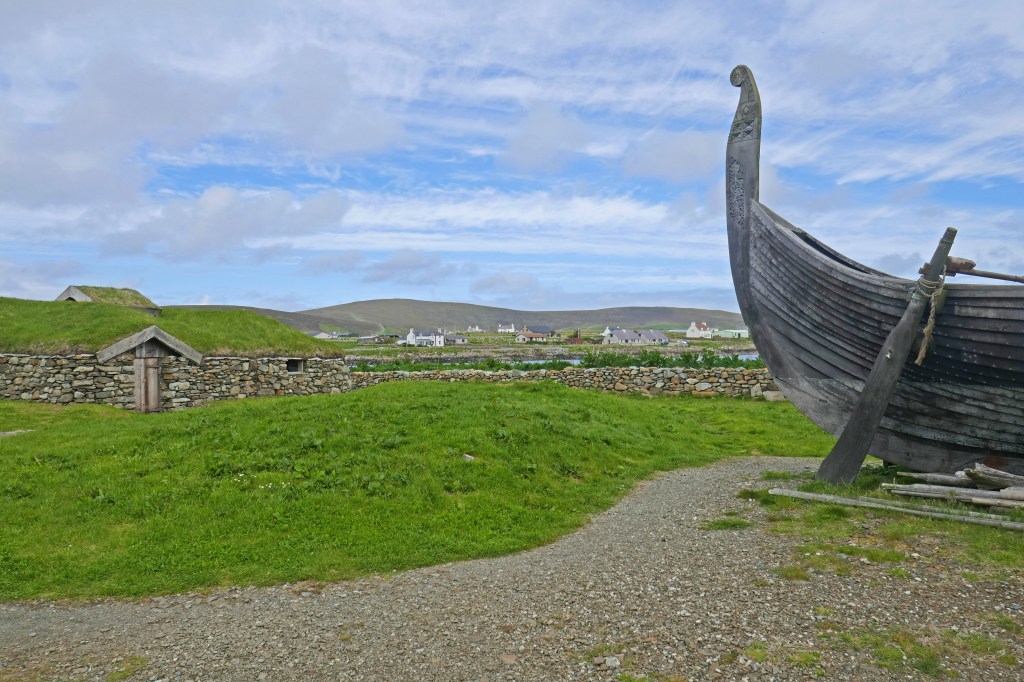
If we hadn’t taken the ferry to Shetland [and missed all the wonderful sights in these photographs – I don’t think so] we would have been quids in … but Shetland’s wonderful campsites were certainly the cheapest.


Agecroft Cemetery: #surprisingsalford #44

20181230_120125
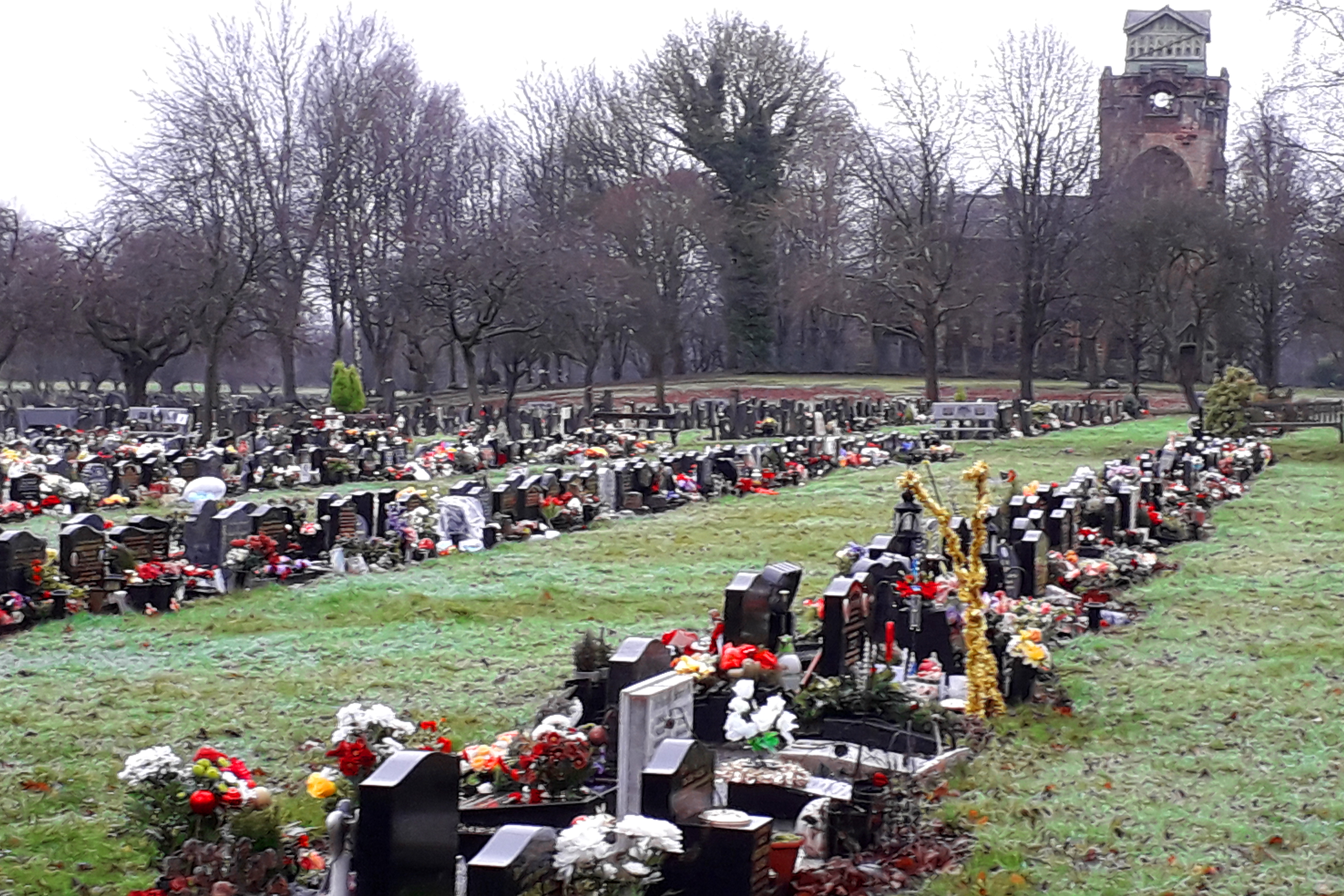
Agecroft Cemetery on a wintery day

It was a chilly winter morning when I last visited Agecroft Cemetery.  We wrapped up and walked along the River Irwell carrying a flask and biscuits in a rucksack and sat on a sheltered bench in weak sunlight looking over the gravestones.  A few other people were here tending to graves and, as always, the cemetery felt soothingly calm.

Agecroft Cemetery is Salford’s newest cemetery.  Designed by Manchester Architects Sharp and Foster and built by Gerrard’s of Swinton, the cemetery was opened in 1903.  More than 53,700 interments have been carried out within the cemetery’s 45 acres.

The cemetery has splendid ornate entrance gates on Langley Road.  Inside there are neatly arranged roads and rows of gravestones.  The buildings were all designed by Sharp and Foster; the crematorium building was converted from a Non-Conformist burial chapel in 1957 and there was also once a Roman Catholic chapel within the cemetery.  There were plans to save the disused chapel with a clock tower and many stunning features that was abandoned in the 1980s and can be seen in the photograph.  Work has been carried out to protect this derelict gothic-revival chapel from the weather.

Later I explored the graveyard, reading inscriptions on stones that took my eye.  I like to visit Salford’s cemeteries at this time of year as many of the graves have seasonal decorations and I find this makes the graveyard feel part of the spirit and movement of the seasons.  The cemetery has plenty of interesting burials, including Commonwealth war graves.  A stone memorial to the crew of a Lancaster bomber carrying a full bomb load that crashed nearby in 1944 is near the entrance.  All seven members of the crew and two civilians on the ground died in the crash.  Reports at the time said that around 80 people were injured.

The Stockport air disaster of 1967 killed 72 of the 84 people on board.  The passenger aircraft full of holidaymakers returning from Palma de Mallorca crashed near the centre of Stockport, just a short distance from Manchester Airport.  Astonishingly no one was killed on the ground.  Arthur and Elsie Kemp from Salford, who sadly died in the plane crash, are buried together at Agecroft Cemetery.

2,019 km in 2019 six month report


P1150544

It is now six months since I decided to try and walk 2,019 km in 2019.  How is this plan going?

I am on target [hooray].  I added up my kilometres at the end of June and I was relieved to see I have walked a total of 1,070 km in the first half of the year.  I am really pleased to get beyond half-way towards my target at this mid-point but it is only just over the target.  There is certainly no opportunity to let up on the walking and slob around.

Some thoughts:

  • In the 181 days from 1 January to the end of June I have averaged almost 6 km a day.
  • The longest walk on any day was at Henley-on-Thames in February when we clocked up 20 km.
  • The hardest day was 17 km up [and down] Ben Nevis.
  • Mountain walking isn’t great for clocking up the distance.  I was somewhat deflated when I realised that one very steep Scottish mountain we walked up at Easter was only 4 km up and down and yet was an exhausting day out.
  • My rule for counting the kilometres is that they only count if I have deliberately gone out for a walk.  It can just be a walk to the supermarket, the important thing is that I have chosen to walk rather than cycle or drive.  I don’t count the couple of kilometres walk to our tai chi class and back, as this is primarily about tai chi, not walking and I don’t count the short distances to the local post office or other local shops.
  • I have learnt there are a lot of days when I don’t go for a walk at all – a terrifying 30 of the 181 days or almost 17%!  Some of those days we might have cycled or practised tai chi and so not been completely lazy but others were because we were driving or just staying in.
  • I have only cycled 227 km in the last six months.  This is less than I would normally cycle as with this target I am generally choosing to go for a walk!
  • In the two months we were away in Scotland from April to June, I walked 425 km, a slightly higher average than the rest of the time.
  • I am pleased I set the target and enjoying keeping an eye on my progress but I’m not sure if I will do it again.  It is a hassle having to remember to note down where we have been every day and keep a record through the year.


Top tips for a campervan trip to Kintyre, Scotland

Kintyre
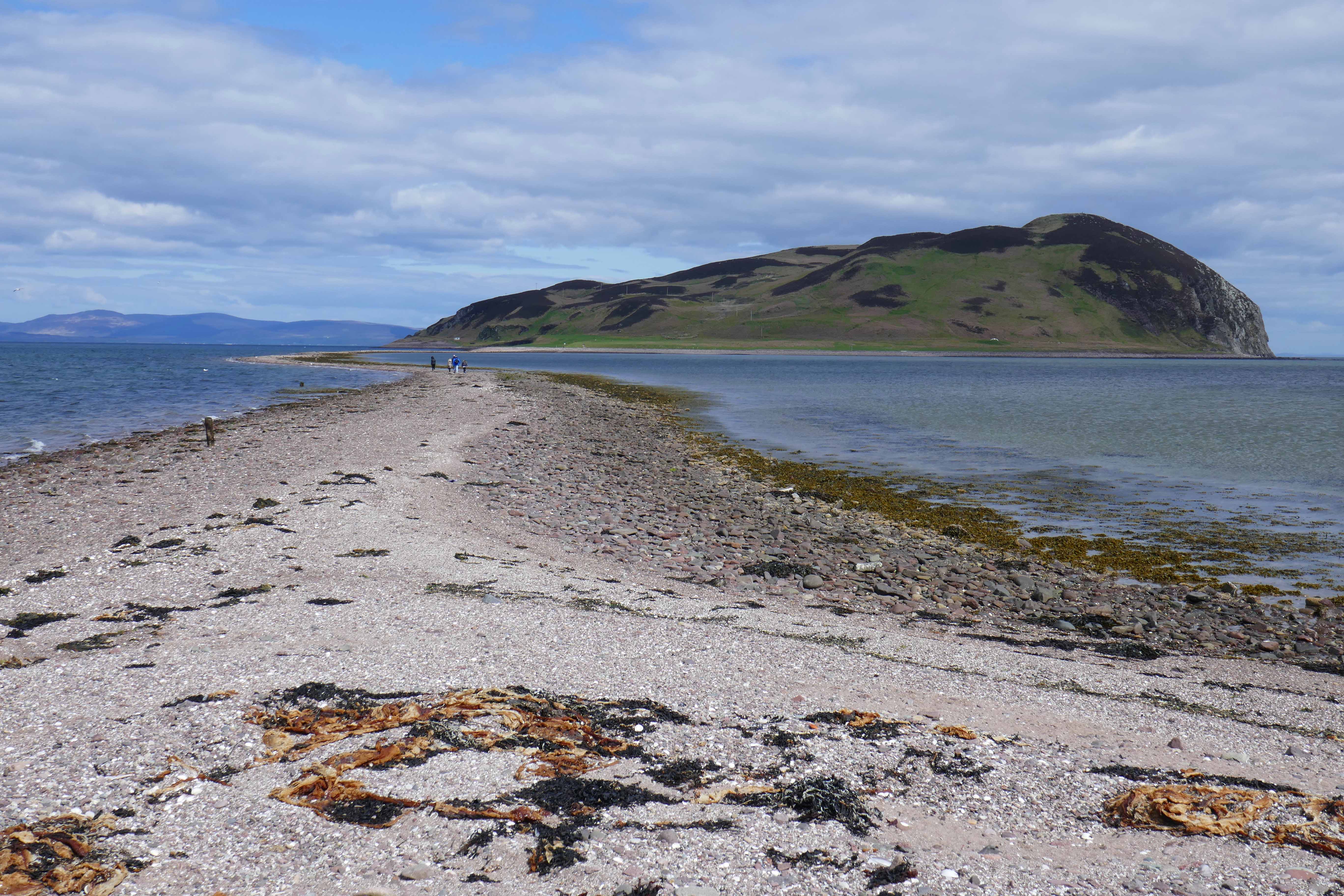
The causeway to Davaar Island

The long finger of the Kintyre Peninsula, on the west coast of Scotland feels almost like an island as the sea is never far away and when you arrive you feel truly off the beaten track.  This scenic and historic area is well worth exploring for a few days.  With quiet roads and different views around every corner it is perfect for a campervan trip.

We took the ferry to Tarbert and arriving by boat in this pretty port felt like the best way to start our tour.  We explored the town that has a pleasant buoyant atmosphere, climbing up to the castle and visited the Loch Fyne Gallery overlooking the quay.  Here among the quirky and beautiful items I found perfect gifts for friends.

Not far from Tarbert, walk through the ornate gateway to find the impressive ruins of Skipness Castle.  Built in the 13th century you can still climb a staircase for the view out to sea and to the tiny chapel at Skipness Point.

Not to missed is Big Jessie’s Tearoom.  Park up and enjoy a friendly welcome and homemade cake or lunch or breakfast with a good cup of tea and a sea view.  Campervans and motorhomes are welcome to stay overnight in the field next to the ferry car park.  You can use the ferry car park too but this can get busy.

Gigha, a community-owned island off the coast of Kintyre, is the perfect size for cycling, being around 10 km long and also happens to be a stunning and friendly place to visit.  We took our bikes on the ferry and cycled the one road from top to bottom.  The spring colour of rhododendrons and camellias and the woodland and walled garden at Achamore Gardens are dazzling.  Like us, you will probably have the bays on the northern tip of Gigha to yourself and enjoy good food, coffee and cakes along with a view at The Boathouse.

After exploring Campbeltown, check the tide times and walk out to the tidal Davaar Island.  It is safe to walk along the causeway three hours either side of low tide and you will have so much fun you need to give yourself plenty of time to get back.  The walk across the stony causeway with the sea on either side has a marvellous airy feel with fantastic views.  On the island scramble around the cliffs on the south side to find the hidden cave painting of the Crucifixion.  This was painted in 1887 by a local artist, Archibald MacKinnon.

On the fresh Atlantic coast of Kintyre is Machrihanish Bay, a beautiful sweep of sand that is three miles long.  The sky is big here and watching the sun set into the sea here is a real treat.  Find a comfy rock to sit on and take in the views of the Paps of Jura and Islay on the horizon and you will hopefully spot seals and maybe an otter.

Follow the narrow and winding road on the east coast and you come to the tiny hamlet of Saddell.  Here you can stroll around the atmospheric Saddell Bay with Saddell Castle, a 16th century tower house that is available to rent through the Landmark Trust.  Inland we found the remains of the Abbey and remarkable medieval grave slabs with effigies of the people buried there.

The Kintyre Way weaves for 161 km around this wonderful and varied peninsular.  We walked a short and easy to follow section of this trail from Carradale to Cnoc nan Gabhar for wide views over Carradale Bay and beyond to Arran.

Overnights

Big Jessie’s Tea Room, Gigha Ferry Terminal – free overnight if you don’t count the homemade cake

Machrihanish Holiday Park a great value campsite that feels spacious and has wide open views and great separate bathrooms, near to a village with a pub.

Carradale Bay Caravan Site –  a popular site on a lovely bay.


An Eye-opening Guide to Wearing Glasses with some Iconic Spectacle Wearers

beach-blur-close-up-690887 (1)

For as long as I can remember I have been visiting opticians.  I have worn specs since I was a small child and these days I am at the opticians every couple of years to have my eyes checked out.  I was born with a right eye that was called a ‘lazy eye’ [amblyopia] something around 1:50 children develop.  This right eye never opened fully and despite treatment as a child [a plaster over the ‘good’ eye and drops to encourage the left eye to do a decent day’s work] all I can see through that eye is a blur.  Because I really only have one working eye I make sure I take good care of it and I blame it for my inability to play tennis!

These days I love buying new specs.  As they are something I wear all the time it is a treat to get new ones and I choose different styles every time in the hope that someone will notice.  Over the years I must have worn every style of glasses,  rainbow-coloured plastic frames with large lenses in the 1980s,  turquoise narrow metal specs and chic black designer frames.

As I was choosing my last new specs [two pairs one for sunglasses and one for cloudy days] I got chatting to the helpful member of staff.  I had chosen a pair of metal frames that had round lenses and I asked the assistant, ‘Do they make me look like John Lennon or are you too young to remember John Lennon?’  He laughed and politely said they looked good, adding, ‘John Lennon is one of the most popular spectacle wearers customers mention, along with Harry Potter.’  Slightly put out that I hadn’t been more original, I tried on another pair with large lenses that reminded me of another famous spec wearer, Deirdre Barlow.  We are in Salford so despite the assistant’s tender years this was another familiar name; Deirdre was well known for the big glasses she wore in the popular soap, Coronation Street.

As Mr BOTRA and I walked home we mulled over other iconic spectacle wearers, perhaps I could have come up with fresher examples.  We considered how Woody Allen would seem undressed without his black Moscot specs.  Mahatma Ghandi is familiar in his round metal-rimmed glasses, similar to those of John Lennon and perhaps a more creative suggestion next time I am at the optician.  Other famous spec wearers came to mind.  It is reported that Elton John owns thousands of pairs of specs in a rainbow of colours; Dame Edna Everage sported stunning ornate frames or ‘face furniture;’ Bono is a man many of you will think of wearing shades; and [even though she changes her glasses frequently] I always picture Billie Jean King in a pair of thick plastic specs.

In the 1970s wearing glasses wasn’t at all cool, although they always made you look more intelligent!  As a child I hated being the only one among my friends that had to wear specs and for a short time as a teenager I stopped wearing them at all.  I pretty much had little idea what was going on around me during that period as the world went by in a blur but it was a time when I didn’t really care to engage with the world.  Contact lenses aren’t really a good idea when you only have the one functioning eye and specs were my only option.

Fortunately, my first job was working in an optician’s shop and the only perk was free specs; at last I could buy something more up-to-date that I was prepared to be seen wearing!  My enthusiasm for the variety of spectacle frame design began here.  Today I am happy wearing my specs and I am grateful to all these iconic spec wearers for making it fun and even trendy.


What do retirees do all day?

06.11.2018 saillans small

Two years into retirement, what do we do with our days? The paid travel writing I do to one side, here is a selection of things we get up to. There isn’t anything on the list that will blow your socks of, this is stuff that everyone does. The difference is that working people have to fit these activities into evenings and weekends. We enjoy having a lot more time!

What do retired people do all day? The list:

Daily or more than weekly

  • Blog writing
  • Listening to the radio or music
  • Reading novels [so much writing meant that last year I only read 47 books compared to 69 in 2017]
  • Keeping up-to-date with current affairs
  • Watching TV programmes and films
  • Learning languages
  • Getting out for a walk either locally or further afield – I am aiming to walk 2,019 kms in 2019!
  • Puzzles and quizzes
  • Completing surveys for small financial remuneration [with You Gov, Research Opinions and others]
  • Practising tai chi [we attend a weekly class when we are at home]
  • Going to our on-site gym
  • Social media
  • Cooking [and eating]
  • Talking to each other about our plans and ideas or politics and the news
  • Cleaning and laundry
  • Supermarket shopping – we tend to do this on foot or bicycles and shop at least a couple of times a week
  • Managing our finances

More than once a month

  • Researching and planning trips in our campervan
  • Supporting a local charity as a volunteer
  • Supporting the company that manages our flats as volunteers
  • Going camping
  • Cleaning, fixing or making things in our campervan

Monthly or occasionally

  • Meeting up with friends
  • Helping friends and neighbours
  • Attending our book group
  • Litter picking [although I’ve not done this as much as I hoped]
  • Going to music gigs, the cinema or theatre or football matches
  • Visiting local museums and galleries
  • Jigsaws
  • DIY in the flat