Happy in Arnside whatever the weather

2017 March Silverdale (6).JPG
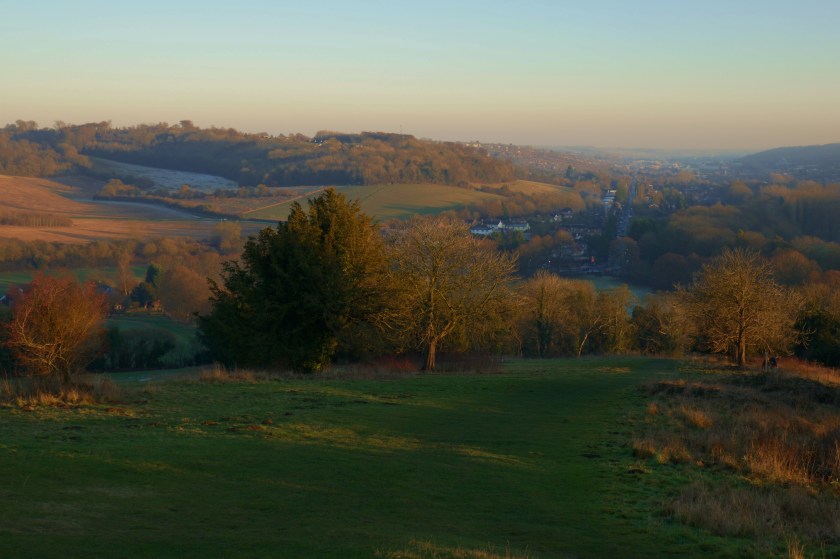
Looking towards Grange-over-Sands from Arnside Knott

Very soon we won’t be constrained by the weekend for our camping trips, we will be able to take off as soon as the sun peeps through and come home when it is damp and cold.  And yet, we do appreciate the variety of weather and seasons we get in the UK and perhaps we will still purposefully take some rainy trips out in the campervan.  We are just back from a few days in Silverdale and Arnside, one of England’s most beautiful areas whatever the weather.  The Area of Outstanding Natural Beauty has everything for a perfect holiday; atmospheric woodland, quiet bays, good tea shops, lots of wildlife and good campsites.  We climbed up Arnside Knott, which is criss-crossed with footpaths and looked down on the river Kent and a moody and magnificent Morecambe Bay from the top.  After a cafe stop in Arnside we explored the chasm of Middlebarrow Quarry, a huge disused quarry, and walked through the lovely Eaves Wood back to the campsite.

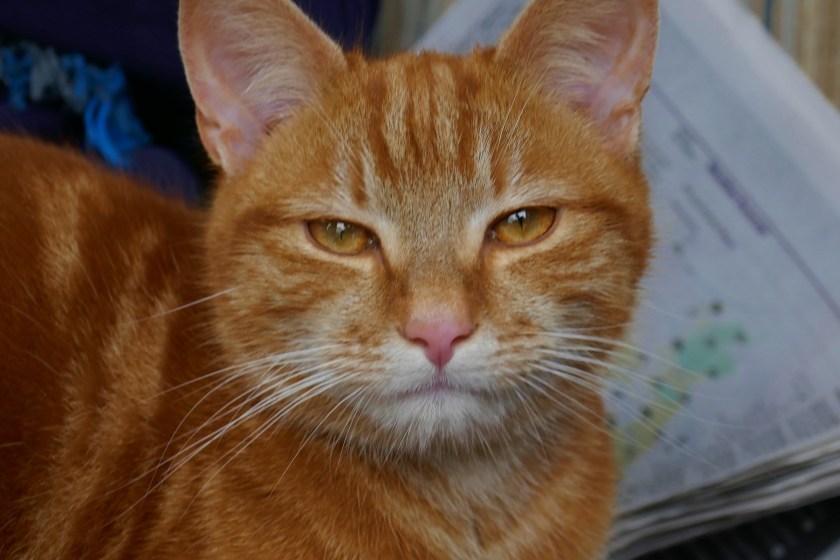
Returning to the ‘van we put our feet up with a brew and read the paper, leaving the big sliding door open as it had stopped raining and the weather was fairly mild.  We were joined by this gorgeous ginger tom with kitten soft fur and deep amber eyes.  He came in cautiously at first but after exploring all the corners of the’van curled up on my lap and purred loudly.  In the ‘van with a brew, the paper and a purring cat – I was in heaven!

2017 March Silverdale (25)
A furry visitor joined us in the ‘van


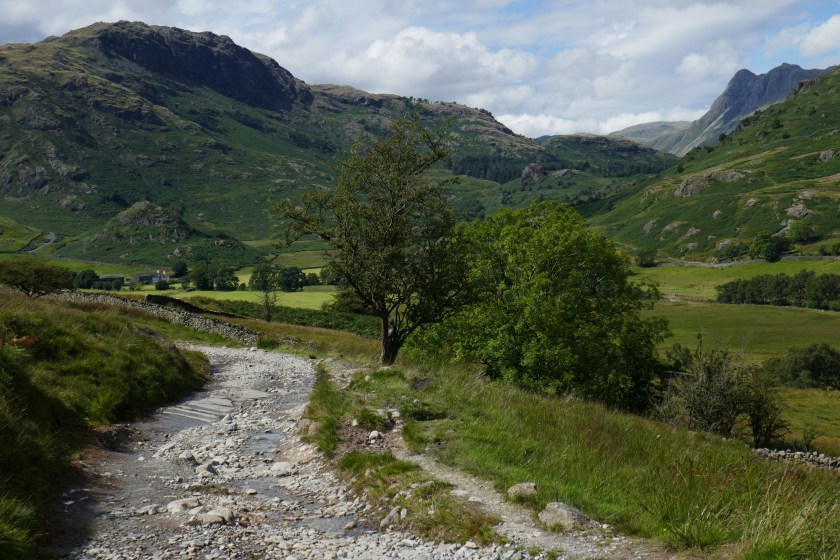
The variety and extent of our footpaths

2016 August Great Langdale weekend (22)

In England and Wales we are lucky enough to have around 140,000 miles of footpath or rights of way to explore.  This is more than the 111,000 miles [180,000 kms] in France [a bigger country].  These footpath, bridal ways and tracks may have been used by Neolithic ancestors, such as the Ridgeway or might be a medieval corpse route or coffin route, linking outlying villages with the burial ground, like the beautiful route from Grasmere in the Lake District.  As well as shorter routes between settlements there are numerous long distance paths; even urban Salford has one.

This network of paths is something we easily take for granted.  We accept that from anywhere in England and Wales you can walk out of your front door and very soon be on a footpath, devoid of cars.  We can browse the relevant excellent Ordnance Survey map and put together a walk of the length and difficulty that suits us that particular day.  We moan when a landowner tries to block a path with some barbed wire or does not maintain the gate but these things can usually be overcome.  It seems in other countries this network of rights of way does not exist.  In the USA there are many excellent trails and paths but these are in specific areas such as national parks that often have to be driven to.  Here in the UK land ownership may come with the obligation to maintain a right of way, a wonderful example of the privilege being required to work for the public good.  Since the 2000 Countryside and Rights of Way Act we also now have open access land, this is uncultivated land where everyone has the right to roam at will, that is away from footpaths.  This land is generally mountains or moorland and may also be privately owned.

Of course, while not all landowners and farmers take care of their footpaths to ensure good access, not all walkers are well behaved either and both sides clash in conflicts from time to time.  Through spring, as lambs begin to appear in our fields I am always horrified to read the usual batch of stories of dog owners who do not maintain control of their dogs within a flock of sheep appear.  The National Sheep Association gives clear advice for dog owners that should be common sense.  The incident last year when 116 sheep died due to being chased by dogs was unusual for the scale but losing even one sheep can be devastating for a farmer.

Walking is great exercise, affordable and good for our mental health.  Taking a walk gives me a chance to think and it is when my brain is most creative.  There are plenty of websites and blogs giving details of the benefits of walking and ideas for routes.  We are lucky to have this network of footpaths to be able to get out and enjoy traffic-free routes and we should fight to keep them when they are under threat.


Springtime in Yorkshire

2017 Feb East Riding (20).JPG
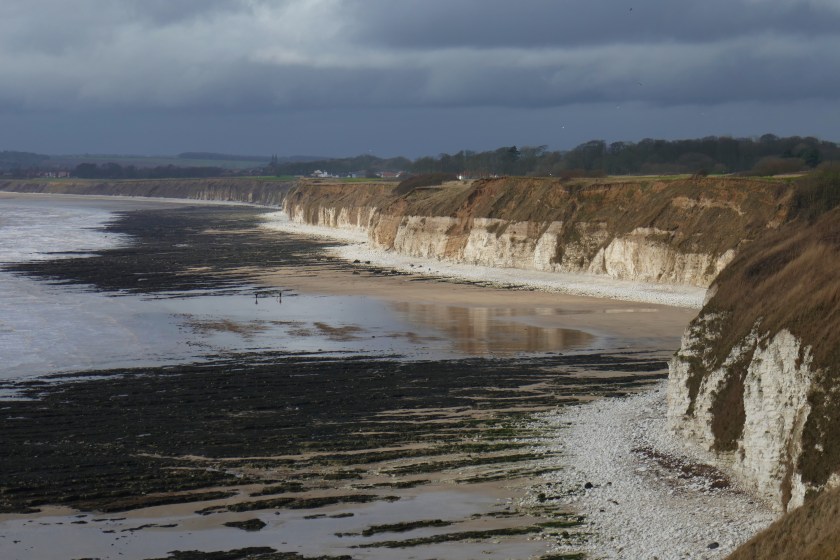
The cliffs of Flamborough Head

Walking along the wide expanse of Fraisthorpe Sands was easy as we headed north towards Bridlington.  I meandered along the beach doing a spot of beach combing, finding beautiful stones and shells, watching the oyster catchers feeding on the shoreline and a flock of sanderlings flying in formation.  A group of three horses were ridden through the waves and wind surfers were enjoying the surf.  We explored the old look-outs that had slipped on to the beach as the soft clay erodes.  A beach is never dull.  After hot chocolate in Bridlington we returned, now walking in to the wind and I was bent over to avoid the wind in my eyes.  I found a discarded plastic bag in the surf and filled it with plastic bottles and other litter as we got closer to the ‘van.

Earlier in the day we had stopped at the village of Rudston to see the stunning tall Neolithic monolith in the churchyard and the graves to Winifred Holtby and the MacDonalds of Sleat.  We had camped in an idyllic small site south east of York, no facilities or electric but a view of a small lake.  We had watched a group of tufted ducks diving and moving purposefully as we had breakfast.

From Bridlington we walked to Flamborough Head, the path hugging the line of the cliffs.  Showers rushed in as we reached the lighthouse and we sheltered in the cafe before going down to the sea.  The white cliffs were shining and stunning after the rain and we watched two seals bobbing n the bay. Following the cliff path to North Landing we spotted elegant gannets flying in formation over the surf and guillemots, fulmars and kittiwakes lined up on the cliffs.  Another shower came in and we were lucky to just catch the hourly bus back to our campsite.

After an evening of rain, clear skies came and we woke to sunshine.  We drove to Pickering and Cawthorne Roman Camp.  The ditches and banks of this vast site on the edge of the North Yorkshire Moors are impressive.  From here we followed paths through woodland, fields and moors on a nine mile walk, much of our route on the Tabular Hills Walk, an intriguing name that comes from their distinctive table-top shape.

Our trip had taken us through swathes of snowdrops and bright daffodils just starting to flower but it was a mammal that made me really feel like it was spring.  It was the first day of March while we were away and that morning we spotted our first brown hare of the year gracefully lolloping around the field we were camped in.  These fast-moving and beautiful animals came to the UK with the Romans and are always joyful to watch.  For me the March hare always feels like a real herald of springtime.

If we hadn’t blown a load of £s on a gap year would we be retired by now?

P1000920
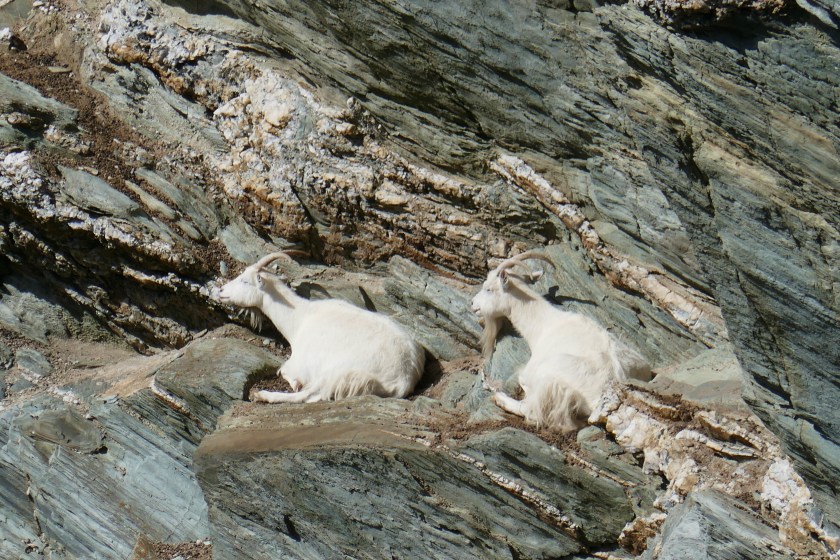
Two goats enjoying the sunshine

In 2009 and 2010 Mr BOTRA and I went away on a later life gap year.  Gap years weren’t fashionable in the late 1970s when Mr BOTRA graduated and I went straight to work at 16-years old; taking a gap year wasn’t something that working-class young people did.  So between us we had never really spent much time when we weren’t in education, working [or looking for work] or being the carer of our child.  In 2009, after saving up loads of money, selling the house and downsizing and buying a campervan, we gave up our jobs and took off for mainland Europe for a year living in that campervan.  We had a ball on what we called our ‘Big Trip’ and the fun times were recorded on our blog.  The gap year refreshed us and we were lucky enough to find employment when we returned .  Of course, if we hadn’t blown a load of cash on our gap year we could have been retired by now but I find myself wondering how important that year travelling was and if we would have made the leap into early retirement without the gap year?

What with one thing and another the gap year cost us a bit more than the savings for one extra year of retirement.  If we had done without the year away and carried on working and saving, we would have reached our target last year and now be twelve months in to retirement.  But that would have meant waiting seven years before getting the break and the truth is that I have an impatience to do things sooner rather than later and I worry that opportunities might disappear.  This anxiety and need to take action means that I am not a procrastinator.  When you have seen a parent die in their 50s you learn that putting things off can lead to regret and I prefer to take my chance.  Mr BOTRA is always the more cautious one but when we returned from our year away we both felt pleased to have done it; we knew whatever happened no one could take that year away from us.

So the gap year was fun but I am sure that without the gap year we might not be about to retire now.  Without the year away we would not have been so sure that retirement [still in our 50s] is the thing for us anyway.  The year away from full-time work made us braver, stronger and more sure that we wanted to stop work as soon as we could.  After spending a year away living in a campervan we knew more about what we were capable of and felt confident that we would be happy doing it together.  The gap year helped us to formulate our plans for early retirement and financial independence.  This clarity of the goal we were working towards made it more likely to happen.

Fingers crossed we will both have a long and happy retirement over many decades but if that isn’t how our story goes then at least we took an opportunity when it was there and had that year away.  Now roll on retirement!


Staffordshire oatcakes & The Roaches: an almost perfect combination weekend

2017 Feb Rudyard and Three Shires Head (5).JPG
Looking over the Mermaid Pool to the Roaches and Cloud in the distance

Almost anyone living near Leek on the edge of the Peak District in North Staffordshire will have been bought up to enjoy Staffordshire Oatcakes for lunch and breakfast.  Leek oatcakes are not the paper-thin oaty imposters you can buy in the supermarket, these phonies give only a hint of the deliciousness of the oatcake.  The ones to buy and savour are the thick and fluffy oatcakes that you must travel to Leek to find at the simply named ‘Oatcake Shop‘ on the edge of the town.  We generally return from this area with a dozen for the freezer to satisfy our cravings until our next visit.  Oatcakes are a local delicacy that existed before the UK had ever discovered the wrap and they are perfect hot or cold and rolled or folded with all sorts of fillings, although our favourite remains grilled cheese.

Leek is a small market town surrounded by hills and the Roaches, an outcrop of gritstone crags that rise from the heather moorland above the town.  If you don’t get to the Oatcake Shop in time to buy your oatcakes you can always call in to The Roaches Tea Room to enjoy an oatcake lunch there while taking in the splendid view over Tittesworth Reservoir.

We had a great and restorative weekend in this area.  On Saturday we walked along the disused railway line between Rudyard and Leek and I reminisced about the days when this walk was my commute to work.  On Sunday we walked from Flash to Three Shires Head where Staffordshire meets Cheshire and Derbyshire.  Flash claims to be the highest village in Great Britain and as children we learnt that it is where the term ‘flash money’ came from.  At the remote Three Shires Head criminals could easily jump from one county to another to escape arrest and this may have led to it being an ideal spot for illegal activities, one of which may have been counterfeit coins.  Three Shires Head is one of my favourite spots but on this Sunday it was noisy with the sound of scrambling bikes and the air was heavy with the smell of two-stroke oil that took me back to my motorcycling days.  I am always impressed with the skillful handling of motocross riders but the pretty and generally peaceful spot of Three Shires Head is not an appropriate place to practice this sport.

We stayed at Goatfell Farm, a Caravan Club Certified Location at Bottomhouse near Leek for £13.  This lovely and welcoming site sits in an open field and we had a glorious sunset across the fields in the evening and we tried a bit of star gazing in the clear night away from the city streetlights.


Camping under Penistone Hill near Haworth

2017-jan-haworth-4
Free camping above Lower Laithe Reservoir near Haworth in Yorkshire

I couldn’t really believe it is ten years since we had visited Haworth in West Yorkshire but Mr BOTRA’s diary doesn’t lie!  And yet despite this evidence I still think this is a place I am very familiar with and that we visit regularly.  Of course, over the years we have spent lots of time walking on the moors around Haworth but somehow it had recently fallen off the list of go-to places.  We put that right recently and spent a night with a lovely view over the valley in a lay-by on Cemetery Road underneath Penistone Hill.  In the evening light we had a stroll through the lovely village and walking up and down that steep cobbled hill window shopping.  As has always been our habit in Haworth we also walked through the church yard and gazed across the gritstone graves and the trees to the Parsonage.  There is no doubt that Haworth will always be associated with the three Brontë women, Charlotte, Emily and Anne and the novels they wrote were a significant part of my teenage years and stories I return to.  The Parsonage is currently celebrating 200 years since these three and their brother Branwell were born between 1816 and 1820 with all sorts of events.

As it has [apparently]  been so long since we had visited Haworth we chose to walk an old favourite and followed the paths to the Brontë Bridge and Falls, most certainly walking in the footsteps of the Brontë sisters as it is known this was a favourite spot.  We climbed above the falls and followed the Pennine Way on to the higher moors to Top Withins.  Since our last visit this isolated and ruined farmhouse that gives a sense of Wuthering Heights has been somewhat restored to prevent it from falling into further disrepair.  We returned on a different route over the moors that was quieter and as light snow flakes drifted around us it was a perfect place to be despite the cold.  By the path we found a recently dead hare; we normally spot these animals leaping across a field and to see one so close up revealed the beauty of the animal and the strength in those long back legs.

A brew and a slice of home-made cake back in the campervan soon restored warmth to our limbs before we drove home, vowing not to leave it another ten years before we visit Haworth again.


Chilling in the Chilterns

p1020512
Lacey Green Windmill in Buckinghamshire

We took the campervan south to the Chilterns for a few nights camping recently.  The Chilterns Area of Outstanding Natural Beauty [AONB] is a narrow strip of countryside in the south-east of England that is 46 miles long and up to 11 miles wide, stretching from Goring-on-Thames in Oxfordshire north almost to Hitchin in Hertfordshire.  Close to London, this wasn’t an area we had ever explored before but it was perfect for a short break.  The AONB website has plenty of suggested walking routes and in the dry weather we enjoyed we were able to spend every day out walking in the countryside.

In the winter it is easy to enjoy the dawn and the sunset without losing any sleep and we had dazzling pink mornings when the sun glinted off the frost on the fields and glowing sunsets when the landscape was bathed in warm light.  We also had a foggy day when we walked along the rolling downs cloaked in fog, cocooned in a world with nothing beyond the few feet we could see.  This is red kite country and these elegant birds surprised us when they soared out of the fog over the ridges.  I enjoy walking in just about any weather; we have plenty of gear for anything the British climate can throw at us and the miscellany of the elements in our island country is part of the experience.

The Chilterns is a landscape of rolling chalk hills of grassland and woodland.  In the villages we stumbled up on on our walks we admired pretty churches and cottages built using flint stones.  These blue-grey or black compacted crystalline silica rocks are found in the chalk in nodules or bands; flint is a hard rock that formed from the siliceous sponges that once lived in the waters of Cretaceous seas.  As well as a good and attractive building tool, flint was valued as a useful cutting tool.

Fog is often patchy and throughout the day the sun threatened to break through the cloud.  After walking through the murk for a few hours we emerged into glorious sunshine at Lacey Green Windmill for just a short time.  This beautiful restored 19th century windmill with four sails and a fantail was stunning in the sunshine and we stayed until the fog once again veiled the landscape in its mysterious qualities.

p1020446
The view from the Dashwood Mausoleum in the evening sun

The best of the Lancashire coast

P1020160.JPG
A sunny autumn day on the wide expanse of the beach at Formby

We took a chance on a November trip in the campervan and were rewarded for our optimism with a sunny day.  We have such a lot of stunning coastline on this island that the Lancashire coast perhaps isn’t what springs to mind when you think of beautiful parts of our coast.  This part of the seaside certainly has more than its fair share of resorts and built up areas.  But Formby Point [not strictly speaking in Lancashire but we still recognise the pre-1974 county boundaries at BOTRA towers] is a jewel in the crown that makes up for everything the planners have done on some stretches of the Lancashire shore and we are lucky that it is less than an hour from our home.

After spending Saturday afternoon walking in the gloom through wild hail and sleet in Southport, the sun on Sunday was very welcome.  In Southport we walked along the wooden planks of the pier until it closed and joined the crowds watching the carnival that is the Christmas lights switch-on in the town.

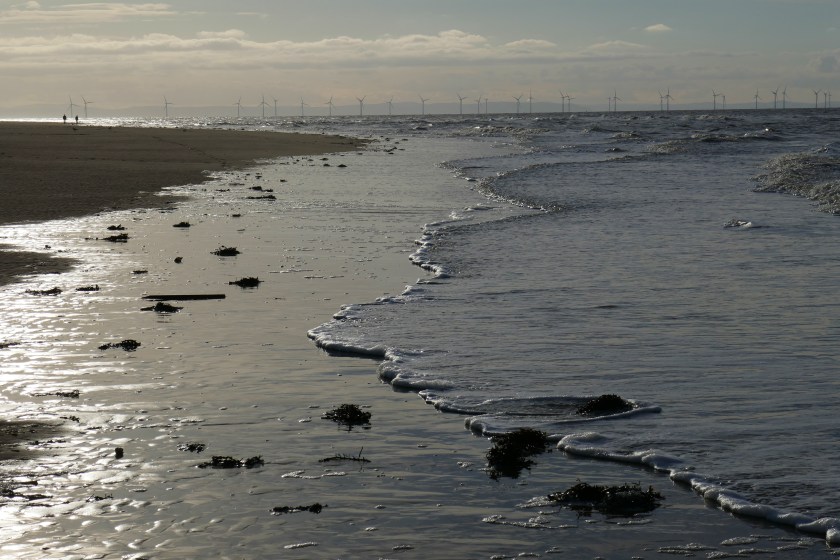
The sand dunes, pine forests and wide sweep of a beach at Formby are owned and managed by the National Trust.  This area is managed for the wildlife, not just the lovely red squirrels that entertain the visitors here, there are also newts, lizards and the rare Natterjack Toad.  It wasn’t the time of year for reptiles but the red squirrels were plentiful in the pine woods.  We walked around the asparagus fields and wound our way through the dunes.  We returned along the expansive beach, with views north to Blackpool and south to the Welsh mountains.  The beach is so immense that even on a sunny day there is space enough for everyone.


P1020168.JPG
Looking towards the north Wales coast from Formby

Thinking about the love of our campervan

civita-001
In the far south of Italy

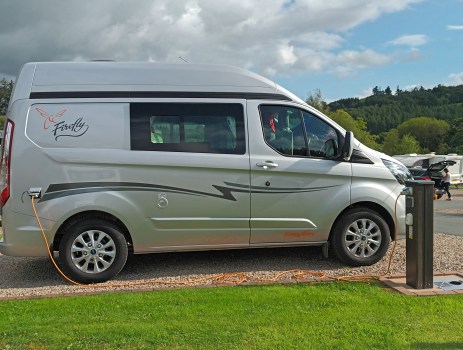
A campervan is just a vehicle isn’t it?  It is a metal box on four wheels with an engine, that is full of stuff and serves its purpose if it gets us where we want to go without breaking down.  Or is there more to a campervan or motorhome?  Is a campervan a vehicle or is it a home?   I understand my love for Mr BOTRA and my son and daughter-in-law but I am someone who claims to value relationships rather than stuff, so can I say that I love my campervan?

The thing with a campervan is that it is packed full of all the things we need for survival and we live in it; that is we eat, sleep, relax and wash, we laugh, cry and love and argue [not too often] in our ‘van.  The ‘van is packed with memories; memories of lovely places we have visited, fantastic people we have met and good times we have spent together.  The ‘van takes us closer to natural environments and wildlife [it makes a great bird hide] and we have sat and watched spectacular thunderstorms in the shelter of the ‘van, seen otters playing in the sea and been alarmed when squirrels leap on the roof.

I get upset when the campervan needs servicing or fixing in some way, this isn’t as acute as when someone I care about is ill but I admit it isn’t too far removed.  I am anxious while it is in the garage and happy when it is once again back with us.  Last night Mr BOTRA dreamt that the ‘van was stolen; for me this is the nightmare I can’t even bear to think about.

The ‘van is more than it’s outer shell; our ‘van is also full of things that remind us of places we have been to and people we love.  We don’t collect souvenirs as such and there is no room in the ‘van for things that don’t have a function, but we treasure a number of things we have bought on our travels or have been gifts from friends.  Every day we use the lovely blue glass plates we bought in France, the mugs that remind us of the amazing dinosaur footprints in Portugal and a wooden handled bread knife from Slovenia and many other things we have bought.  We have a lovely tea-towel that reminds me of the friend who gave it to us every time I use it and our biscuit tin is special because it was a gift.

We also keep a ‘van log book where we list all the campsites and overnight stops we have made in the ‘van.  This has proved to be a great idea and we constantly refer to this book, amazed at how long it is since we last visited a favourite site or just to remind ourselves what we thought of a particular place or to reminisce about a trip.

Plenty of people name their campervans and motorhomes and gift them with a personality.  We have never done this, as truthfully I have enough trouble remembering the names of people I know without adding in the names of inanimate objects.  The VW was generally referred to affectionately as the Blue Bus but these days we prefer to keep things simple; we own and live in either ‘the ‘van’ or ‘the flat’ but from this you shouldn’t assume I have a lack of emotional attachment.

If someone ever made me make the choice, I know I would sell the flat before selling the ‘van, it is the campervan that is most important to me, it is the ‘van I feel most comfortable and is my real home.

All we need to make us really happy is something to be enthusiastic about

2011 Easter Glen Truim 025 Chanonary Point
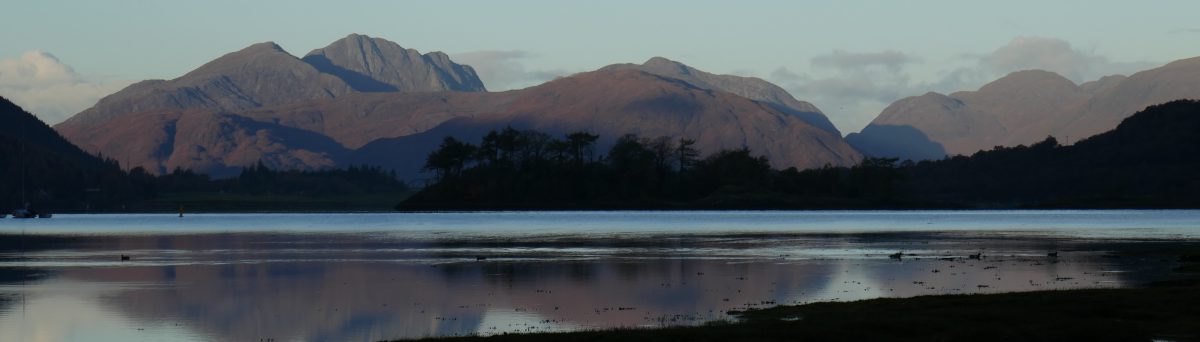
The beautiful Chanonry Point on the Moray Firth in Scotland

One of my travel articles from this year included a visit to the pretty village of the Devon village of Clovelly,  Charles Kingley’s [the author of the Water-Babies] childhood home.  While researching his life and work I found this quote from him:

‘All we need to make us really happy is something to be enthusiastic about’.

This got me thinking about my own enthusiasms and how these contribute to my happiness.  I have a fairly wide range of things I am enthusiastic about including walking, being in our campervan, cycling, travelling, reading, spending time with Mr BOTRA and with friends, cooking good [veggie] food, eating excellent ice-cream and drinking red wine, listening to loud rock music, writing, laughing and comedy, foreign TV thrillers, tai chi and learning.  Taking part in all these [and other stuff] enhance my energy levels and feed my spirit.

I am drawn to people who have their own enthusiasms; they might not be enthusiastic about the same things as I am but I admire people who enjoy doing something and clearly get a lot of pleasure from it.  I have friends with enthusiasm for gardening, visiting Iceland [the country], ballet and Shakespeare; none of these are things that fire me up but I love to hear them talk about their own enjoyment of these activities.

I enjoy taking part in some of the above activities with others and I find that enthusiasms shared can more than double the pleasure.  We are part of a book group and the discussion always enhances my understanding of the book; camping trips with friends and walking with other people are sociable occasions that create shared experiences we can all look back on.  Our son and daughter-in-law have an enthusiasm for whale and dolphin watching and the photograph of Chanonry Point reminds me of lovely times when we have joined them on this beautiful beach watching the dolphins.

Considering the force of enthusiasm took me to Patti Smith who considers enthusiasm as a state of radiance:

‘If we walk the victim, we’re perceived as the victim. And if we enter … glowing and receptive … if we maintain our radiance and enter a situation with radiance, often radiance will come our way.’

She goes on to relate this to William Blake’s life.  He was a creative genius who was not appreciated in his lifetime but who held on to his vision and radiance or enthusiasm.  We all have knock backs and stumble and I certainly constantly let myself down; my cooking is often not as perfect as my vision when I start out with the raw ingredients; my writing is never good enough and I often fail to learn to the extent I aim to but I try and stay enthusiastic and carry out activities with love and joy while seeking self-improvement.

PS Iceland looks beautiful and I would love to visit this country but I am waiting for them to discontinue commercial whaling.