A long overdue visit to glorious Wharfedale

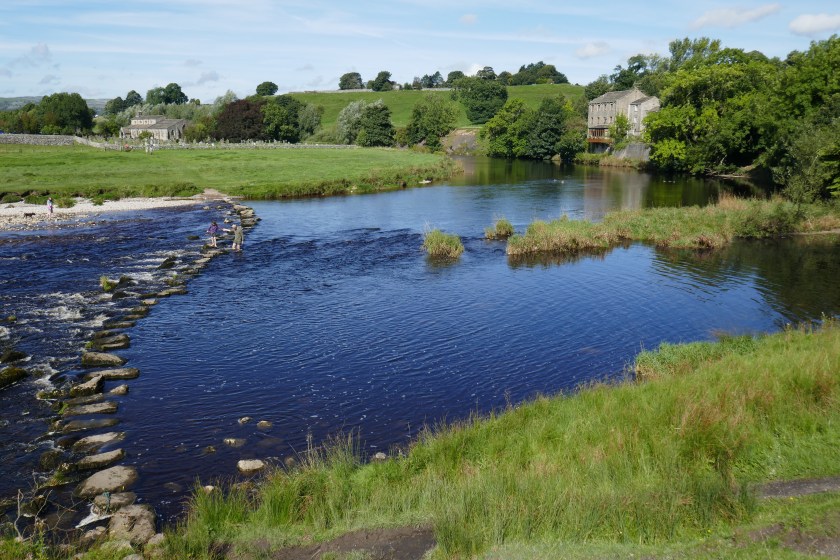
2016 Sept Wharfedale Grassington (21).JPG
The river Wharfe near Grassington

Well …  Mr BOTRA and I do know that life is rushing by us at an alarming rate but we really couldn’t believe it had been two years since we had visited the gorgeous Wharfedale in the Yorkshire Dales.  What were we thinking of?  Why had we neglected this beautiful valley for so long?  Had other beautiful parts of the UK been distracting us?  [The answer is yes to the last question].

We made up for it this last weekend and were rewarded for our return with beautiful weather for a couple of days that was perfect for walking trips.

On day one we followed a favourite walk from the campsite near Grassington, following grassy paths over Malham Moor and stopping to admire the wide open views.  We crossed the lovely Wharfe at Conistone and here decided to head for Kettlewell and pick up the bus back down the dale.  This took us to the wonderful dry limestone valley known as Conistone Dib.  The path winds upwards through a rocky gorge that would once have been a lively stream and we enjoyed climbing up the steps of old waterfalls and along the gravel stream bed.  Along the way we met a group of National Park volunteers clearing stone cairns and we stopped to chat.  As we walked away we were both thinking the same thing … how lovely it will be to have the time to volunteer in this beautiful area.

The next day was still sunny and we walked from Grassington along the river Wharfe to the pretty village of Burnsall.  Thanks to rain a couple of days before the river was full and this made crossing by the stepping stones at Linton and Burnsall entertaining for everyone who was watching.  We watched dad wading across, the river up to his thighs; he held the hand of his young daughter who was then able to jump across the stones.  Later we marvelled at the daring of a walker who ran across so fast his feet hardly touched the stones.  We returned through the valley-side village of Hebden and as we came through Grassington Park Estate Meadows we promised ourselves we would visit next July to see the flowering meadows in their full glory.

Following our hearts: does owning a campervan make financial sense?

p1010214
Our Devon Tempest campervan

This article in the Observer newspaper last week got Mr BOTRA and I thinking about whether owning our campervan saves or costs us money.  It shows how important owning the ‘van is to us that we have never given this much thought before.  As someone who has spreadsheets to plot our spending and savings to every penny, this seems like a huge omission and just goes to show that when it comes down to it our hearts rule over our heads.  We own the ‘van because we love the lifestyle, rather than to save money and even while we have been saving to retire we have never thought of not owning a campervan.

To investigate further I opened up all the spreadsheets and looked at the costs for our previous ‘van over eight camping seasons from 2007 to 2014

Insurance, services, road tax, MOT, tracker & club membership cost around £1,200 each year.  Before we had a campervan we didn’t own a car but we did spend money on hiring cars every month.

Over the years the ‘van didn’t need a lot of maintenance [it was a VW] but it did travel 70,000 miles and we had to buy the following, a new exhaust, tyres, new covers for the front seats, two replacement windows.  The cost of these averages out at £161 a year.

Our regular camping holiday in Europe for over three weeks, and including a ferry, costs around £1,350 each year [note, I haven’t counted food bought in supermarkets in this total as we would eat if we were at home].

In those years we spent an average of 25 other nights camping in the UK [from 18 to 48 nights].  These nights were mostly on campsites with some wild camping and cost an average of £17.63 / night, giving an average of £581 each year.

I haven’t calculated diesel costs in this rough and ready estimate, as we would still want to go to places …yes, I do know the ‘van is not as economical as a car but neither have I accounted for car hire and taxis in my calculations.  It is all getting complicated and I hope these things just cancel each other out.

Motorhomes don’t depreciate in the same way as cars.  When we traded in the ‘van we only lost £8,500 on the price we had paid for it, this works out at £1,062 per year.

Total cost each year has been £4,354 per year for an average of 52 nights holiday each year.

It is hard to estimate what we would have spent on holidays if we hadn’t had the ‘van but based on what we used to do I can estimate a figure.  We used to have a three week organised cycling holiday using hotels in mainland Europe [£3,000], a week in Scotland [£700], a short break in Germany [£700] and a UK short break [£400].

This gives a grand total of £4,800 on around 37 nights of holiday.

So owning the ‘van saves us £446 / year and we get 15 nights more holiday a year.  But hang on … Interest rates were considerably higher between 2007 and 2014 [5.5% in 2007].  If we had invested the £32,000 we had spent on the ‘van we could have received at least £2,000 a year in interest and would be quids in; however, with today’s low interest rates the sums add up very differently, as the article suggests.  Do we regret buying the ‘van when we did – absolutely not!

Tents & rucksacks are now part of our past

1995 July wild camping near Sgurr a Chaorachain
Wild camping in Scotland

It has been an emotional recently in the BOTRA household, with lots of reminiscing and a few tears.  All because Mr BOTRA and I have faced the truth that we are [probably] never going to sleep under canvas or take a backpacking trip again.

I don’t think we are the only motorhomers who started our camping holidays with a tent, although we might be the only ones who, when we got married, didn’t own a fridge or a washing machine but did both bring a Vango Force 10 tent to the marital home.  Given our lack of white goods and possession of two tents, an extravagant purchase early in our marriage was a lightweight Saunders Spacepacker.  This beautiful and practical tent served us well over the years as we backpacked all over Europe, firstly just the two of us and later fitting our son into its womb-like interior.  Although the Spacepacker was sold on eBay years ago (another emotional time) as part of our money saving project to buy a brand new campervan, we had hung on to the larger tent and the possibility of camping.  In reality, since we bought our first campervan in 2005, the tent has only been used by friends and relatives.

During a recent clear out of the stuff among the dust under our bed, I pulled out the tent and our two large Karrimor rucksacks and dared to suggest it was time to offer them out to the world via eBay.

Mr BOTRA, the sentimental one, became misty-eyed, remembering all the places he had carried his rucksack and a trip down memory lane, accompanied by photographs took up the afternoon.  I was the practical one, reminding him how much we enjoy the comfort and freedom of the ‘van and pointing out how else we could use the valuable storage space in our small flat.

Amazingly there is a market for old camping gear, thanks to the British passion for festivals where inexpensive gear makes common sense.  So the old, but still waterproof, tent was collected by a local man who was optimistic enough to think that a British festival might not be as muddy as we knew it would be, and our old trusty rucksacks were bought by two similar music-loving individuals.  Our savings got a small boost and the tent and rucksacks were recycled and given a new life.


Saving money on the lovely island of Anglesey

P1010184.JPG
The beautiful Llanddwyn Island on the Isle of Anglesey

Spending a few days visiting some of the wonderful nature reserves and wildlife sites on the Isle of Anglesey proved to be a very frugal holiday.  With no admission fees to pay, our only costs were small amounts for parking, leaving enough to buy the occasional [okay daily] ice-cream.

Anglesey has designated its 125 miles of coastline as an Area of Outstanding Natural Beauty and rightly so, as the coastline is beautiful and varied.  We stood in the fresh breeze on the top of Holyhead Mountain and walked around the expanse of Red Wharf Bay, spotting egrets, curlew and oyster catchers feeding on the rich feeding grounds.  On the way to Amlwch, with its fascinating [and free] museum about the geology of Anglesey, we visited the old copper mine at Parys Mountain [again no charge] and were stunned by the vibrant purple and orange colours and the huge open cast mine.  We walked around Rhoscolyn Head to find the perfect white sea arch; this is just as impressive as Durdle Door but is kept a secret, as on a sunny day we had this idyllic spot to ourselves.  I have struggled to decide which photograph to use from this trip as there are so many but opted for this view of Llanddwyn Island, a tidal island accessed from Newborough Forest [we were just sorry we didn’t spot a red squirrel but with such an expanse of trees the squirrels were no doubt having fun out of sight].

Anglesey also has international recognition for its important geological heritage as it is one of the 120 areas that are part of the UNESCO Global Geoparks network.  Travelling across Anglesey is a journey across twelve Geological periods and 100 rock types.  The colour and variety of the rocks on Anglesey are there for every visitor to discover and of course this rocky diversity results in a range of different plants too.

We stayed on a small Caravan Club Certified Location [CL] site for £13 a night called Tyddyn Osgar in the village of Brynteg.  Mr BOTRA and I don’t understand the pricing policy of these small sites and it seems to be completely arbitrary with some charging over £15 a night for nothing more than a hook-up.  This one provided a friendly welcome, one of the best campsite showers we have ever found, well-cut grass, wide-open views across to the Snowdonia mountains, a pub nearby, great cycling from the site and an offer of a lift for linear walks if we needed it … all hard to beat and ensured our trip didn’t eat in to the savings.

The old and the new from our summer campervan trips

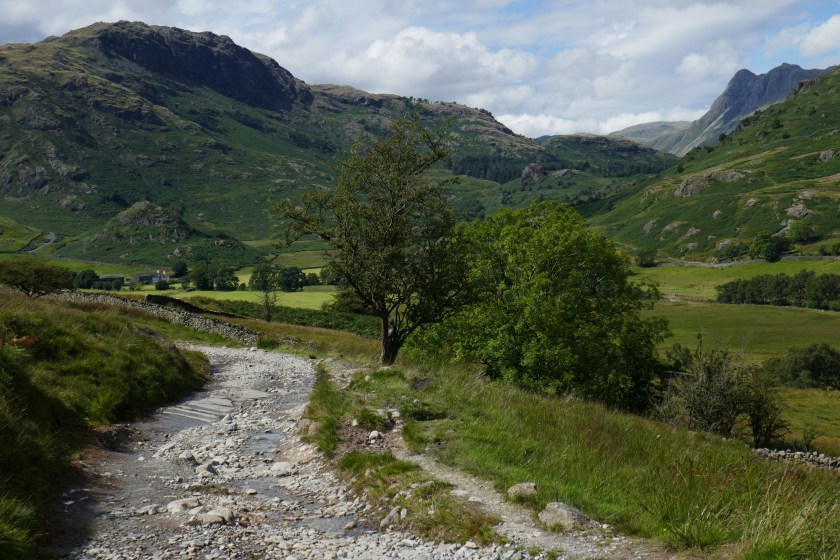
2016 August Great Langdale weekend (22).JPG
Little Langdale in Cumbria

The summer of 2016 might not be memorable in England for being wall-to-wall sunshine and yet we have managed to be lucky enough to have some excellent weekends away.  Although we have visited our much loved Lake District a couple of times, it has been a memorable summer for exploring some new areas [yes even in our small country we can still find places to discover].  Our trips to the Howgill Fells and Knaresborough were very pleasurable and we explored some beautiful places and enjoyed some good walking.

I was reminded how beautiful Great Langdale is in the Lake District on our August trip.  Time flies so quickly and I am often amazed how many years it is since we have visited favourite places.  As we drove in to the lovely glaciated valley and got our first glimpse of the distinctive hills bathed in the evening sunshine, the steep-sided hills seemed to give me a big comforting hug.  After a pint of Old Peculier in the Old Dungeon Ghyll, listening to the chatter of other walkers talking about routes and studying maps for the next day I was even happier.  The sound of the stream lulled me to sleep that first night.

The Howgills trip was one of discovery and I think it will become a favourite as the walking is good and the area is less popular than its neighbours.  In North Yorkshire, we walked about 20 kilometres in to the lovely town of Knaresborough and back.  This wasn’t mountain walking but it was beautiful through the Nidd Gorge and we enjoyed spotting the blue-green of the kingfishers flying fast over the river.  There is also more to discover on the moors between Knaresborough and Skipton and so I hope we will be back [although as I said above, years might fly before this actually happens].  It hasn’t all been walking and we also spent some time in the fascinating and packed Nidderdale Museum in Pateley Bridge.  Run by volunteers, there is something for everyone in this lovely local collection.


Our campervan helps to make friendships closer and brings new people to our lives

P1000037
Everyone needs a friend

Meeting up with what we call ‘Our Australian Friends’ earlier this year on one of their trips to the UK set me off reminiscing about all the people we have met thanks to our motorhome and how much having the ‘van enriches our lives.

We met ‘Our Australian Friends’ one cold and wet January day on the campsite in Ronda in southern Spain six-years ago, when they knocked on the steamed up window of our ‘van and in true blunt Aussie style asked, ‘do you want to come over to our ‘van for a drink before we kill each other’.  We agreed with some trepidation; fortunately they turned out not to be serial killers and we have been pals ever since.

Also on our ‘gap year’ we found someone who shared our outlook when we met a lovely Italian woman in El Rocio.  She was camped next door and lubricated by red wine, we sorted out the world in a mixture of English, Italian and Spanish.  A couple of years ago we drove to Italy to see her again and reinforced the feeling we had that here was a kindred spirit.  Since that trip she has moved house and we are sad that for the time being we seem to have lost touch.

We have also found some new people we really like spending time with from attending the regular Devon Conversions Owners Club rallies and contributing to the group’s online forum.  The happy accident of buying the same make of motorhome doesn’t necessarily lead to a flourishing friendship but it turns out it is a good step on the way.  Once the conversations meanders away from why you picked your particular model and you find other common ground, a friendship can start to unfold.

Two other motorhome acquaintances introduced themselves by getting in touch via my blog.  They were a like-minded couple and motorhomers who took the trouble to make a comment, this developed in to an email conversation, escalated into face-to-face meetings over the last few years which adds joy to our lives.

None of this is to forget our wonderful long-standing and much valued friends, some of whom have their own campervan or tent and are prepared to spend some of their holiday time with us.  These are people we have decades of history with and who suffer our imperfections without judgement [although not necessarily without comment].  We have a bucket full of good memories from these weekends and these shared experiences consolidate and sustain these friendships.

Finally, through writing this blog I have made many online connections with the Financial Independence and Retiring Early (FIRE) community.  I have learnt so much about being frugal and staying optimistic from these positive, knowledgeable and well organised folk.

By happy coincidence, I was editing this blog post when my weekly Brain Pickings email arrived in my inbox.  The wonderful article on reclaiming friendship says much better than I can how I feel about this aspect of my life.  I do hope that, thanks to our campervan and my blogs, Mr BOTRA and I will make new connections with people we like, our friendships will be strengthened and, who knows, maybe news ones will start to develop.

Finding some perfect parking spots

2011 July on Rees Jeffreys Road Fund car park at Rhaedr y cwm above Llan Festiniog
Rees Jeffreys Road Fund car park above Llan Festiniog

My introduction to William Rees Jeffreys was quite by accident one sunny Sunday a few years ago.  Travelling home after a weekend camping in Dolgellau and keen to extend the carefree holiday feeling as long as possible, my partner and I took the B4391 over the hills from Llan Festiniog.  Spotting a car park with extensive views, we couldn’t resist stopping for a brew and a stroll down the lane to pick bilberries and sit by the babbling brook.  The splendidly positioned car park had a plaque and I learnt that it was funded by the Rees Jeffreys Road Fund.

Like many brief encounters, I didn’t give Rees Jeffreys another thought until twelve months later I had another chance meeting with this enigmatic fellow.  Once again on the lookout for a good place to pull in for a drink, we turned off the M6 at Tebay and followed the road towards Kendal.  Spotting a lay-by with a view towards the Howgill Fells we pulled in and realised we were parking next to a familiar plaque.  The kettle went on and I climbed out to read that here was another car park funded by the Rees Jeffreys Road Fund.  Over my cup of tea I starting wondering what the story was behind this man, why he felt the need to pay for car parks as far apart as Wales and Cumbria and why he deserved a plaque.

Back home, an internet search revealed some information about William Rees Jeffreys; born in 1872, before Karl Benz had patented his internal combustion engine for a Motorwagen in 1886, William Rees Jeffreys was a keen cyclist and was initially motivated in his campaigning to improve roads for cyclist.  As cars became more widespread, William Rees Jeffreys held positions with the Road Board (the precursor of the Department of Transport), the RAC, the Roads Improvement Association and the Institute of Automobile Engineers.  From 1919 he was a leading light in the classification and numbering of the roads in Britain to aid the assignment of the money from the Road Fund and to help drivers navigate; the final list was completed in 1926.  Following his death in 1954 his estate provided the endowment for the Rees Jeffreys Road Fund; this gives financial support every year for education and research related to road transport and also for physical road transport projects, hence all the lovely road side parking areas.

As frugal campervan owners we always need car parks and lay-bys and those next to roads often suit our purpose of a rest stop on a long drive.  These halts give us a chance to have a hot drink at little cost and stretch our legs without going out of our way and here was an organisation providing just the facilities the motorhoming community needs; I’ve not found a WRJ funded car park yet that has a height barrier.

Interesting as the Rees Jeffreys Road Fund website  was, it lacked a list of the road side rest areas the Rees Jeffreys Road Fund had supported and I wanted to know more.  An email to the Secretary quickly led to the arrival of a list in the post a few days later which showed 68 funded rest stops; these spread from Wester Ross in Scotland to Cornwall in the south-west.  With the list, I was now able to plan holiday routes to include a Rees Jeffreys Road Fund road side rest areas.

My next opportunity to use the list was on a Spring trip to Pembrokeshire.  The delight of a following a quest is that you never know exactly where it will take you and we found ourselves in some idyllic spots just because they were Rees Jeffreys Road Fund rest stops.  Our first find was a small parking area on the B4582 near Cardigan, alongside the Crugiau Cemmaes bronze age barrow, which has stunning views over the Welsh countryside.  At Wood near Newgale we enjoyed further views over Newgale Sands and St Brides Bay from the dramatically situated sloping car park.

Our final stop on this trip showed up the limitations of the list; with no grid references or even road numbers, even with the help of online maps and street view, there were some rest stops that were very difficult, if not impossible, to locate [you will notice my list is annotated with notes].  I think we found the road side rest stop at Pont Marteg on the A470 north of Rhayader in the stunning river Wye or Afon Gwy valley.  The red kites circling above I stretched my legs, searching for the now familiar Rees Jeffreys Road Fund plaque; I never found it and so wasn’t completely sure we were in the right place.

The Rees Jeffreys Road Fund uses the interest earned on their investments each year to fund research projects and educational bursaries as well as road side rests and are happy to consider applications from any source, so if you think your local beauty spot needs a small car park let your council know about this opportunity.

Having visited Rees Jeffrey Road Fund rest stops in England and Wales, I got the opportunity to seek one out in Scotland.  Just north of Glasgow, the car park at Queen’s View between Mingavie and Drymen was funded by my old friend WRJ.  This car park enables the locals and visitors to park up and enjoy some fresh air and exercise; a quick five minute pounding of the legs will take you to the view point where it is said Queen Victoria stopped to take in the view of Loch Lomond, the more energetic can spend two or three hours walking up to the crags of the strangely named hill, the Whangie.  The car park was busy on a bank holiday weekend and needed a good litter pick to make it a really pleasant place to rest.


Most recently we visited the rest stop at Iron Gate car park, perfect for the wonderful walk up Moel Famau in Flintshire.  Mr BOTRA and I have ticked off only a few of the WRJ road side rests but the list travels with us in the glove compartment of the van and I have no doubt that my acquaintance with William Rees Jeffreys will be maintained and I will continue to be grateful for his generosity to motorhomers and other road users.

Books: portable and joyful

2013 May Wolfgagesee cycle ride 2013-05-28 001

According to Neil Gaiman, ‘Physical books are tough, hard to destroy, bath resistant, solar operated, feel good in your hand: they are good at being books, and there will always be a place for them.’  And I think he is right.

It feels that ink and paper is being replaced by e-Books, potentially saving thousands of trees, although sales have been falling.  This got me thinking, will this mean the end of the campsite book swap, a feature of most good sites?  These range from a dusty shelf in a corner of a room with half a dozen novels from the last century to a tidy book case bulging with a range of current novels.  How much longer will I be able to browse the rows of dog-eared paperbacks on the off-chance that something will take my eye?

To say I like reading is an understatement, I always have a novel on the go; with a book I am never bored, trains can be delayed, dentists can make me wait and I am entertained.  On trips away in our campervan I always have a few books tucked away in case I get through my current book; we might have a wet day and be van-bound or I might want to soak up some sunshine, either way I will want to also spend the time travelling in my head through the pages of a novel.

In 2009 my partner and I took a late gap year and travelled around southern Europe in our camper van.  One of my concerns was how to ensure I had enough reading material as I knew it was not possible to carry the 75 books I needed during the twelve months on the road in our small VW.  Think back to those days; e-Books had started to appear on the scene but were not so ubiquitous and paperbacks seemed the only way to go.  Using every space I could in the van, I found room for about 20 books of various sizes and genres, left parcels of others for our lovely son to mail out or bring in his suitcase when feasible and hoped to buy, borrow or swap the rest along the way.  With this simple plan I unwittingly opened myself up to interesting and fun experiences that I will always treasure.

Memorable swaps during our time away include the Fay Weldon I was persuaded to try by a Dutch gentleman who, in to his tidy ‘van, describing himself as a story teller with regular ‘gigs’ in different countries.  A motorcyclist gave me the fantastic Robert Harris’ Pompeii on an Austrian site not long after we had visited that beautiful area.  Another campsite swap re-kindled my interest in Graham Greene’s novels with a well thumbed copy of The Human Factor and an exciting Val McDermid crime novel set in Manchester and found on a well-stocked and English-owned camp site in southern France bought back memories of home.

My modus operandi was to wander over to an unsuspecting UK motorhome on a campsite with the handful of books I had to offer.  When the book swapping went well we would chat about books we had enjoyed for a while and I would leave with a couple of interesting novels to read.  However, these productive encounters were rare and I was astonished to find there is a non-reading community out there.  I remember one lovely couple we met in France who ransacked their caravan to find me a book to read and eventually unearthed an exceptionally tatty copy of Denis Wheatley’s The Devil Rides Out that had not seen the light of day since around 1966; I didn’t want to offend such helpful people and so took the novel off their hands.

Books were also often a good starting point for wider conversations; we met a cyclist from the Netherlands who came over to chat because I was reading Geert Mak’s In Europe: Travels Through the Twentieth Century.  Apparently this marvellous collection of travel and history writing is a best seller in the Netherlands and the evening ended up with us sharing a bottle of homemade schnapps (from another friendly camper) and putting the world to rights.  In Slovenia, I noticed the young receptionist at a camp site was reading an English novel; I was so impressed with his command of a second language and talked to him about English novels, giving him a couple of books I had finished with when we left.  Another lively conversation with a lovely couple in southern Spain who were living permanently in their RV, started when they put a pile of books out on their pitch with a sign saying help yourself.

When we reached Spain on our 12-month trip, the book swapping became much easier, as campsites which had plenty of ‘winter migrants’ from the UK would often have a shelf of books available to swap and I would be able to leave the novels I had read and take away something new to read.  These book swap shelves are generally a relaxed places on a camp site; I could spend as long as I wanted browsing the choices to find something to my taste.

Not so on one camp site in southern Spain that will remain nameless, as we may still be on their wanted list.  This site had taken the provision of reading material to another level.  They had a library room, full of books in English and many other European languages that was strictly run by a retired librarian from Scandinavia, who spent her winters on the site.  She used a computer to monitor the borrowing and returning of the extensive selection of books and relaxed swapping of books was forbidden.  This worked fine for those who were spending months on the site but didn’t work well for me as we didn’t intend to stay long enough to finish a novel.  I gave a false name and vehicle registration and we left the camp site with one stolen novel, although in my defence I did donate two books in exchange to their library.

Choosing to take an e-Book on our long-term trip might have meant I read the books I wanted to read but I would have missed the opportunity to interact with new people, try some authors I would never have considered and experience the unexpected.  Not to mention what would have happened when I spilt my coffee over my e-Book!
 

How we stay within budget while on holiday in our campervan

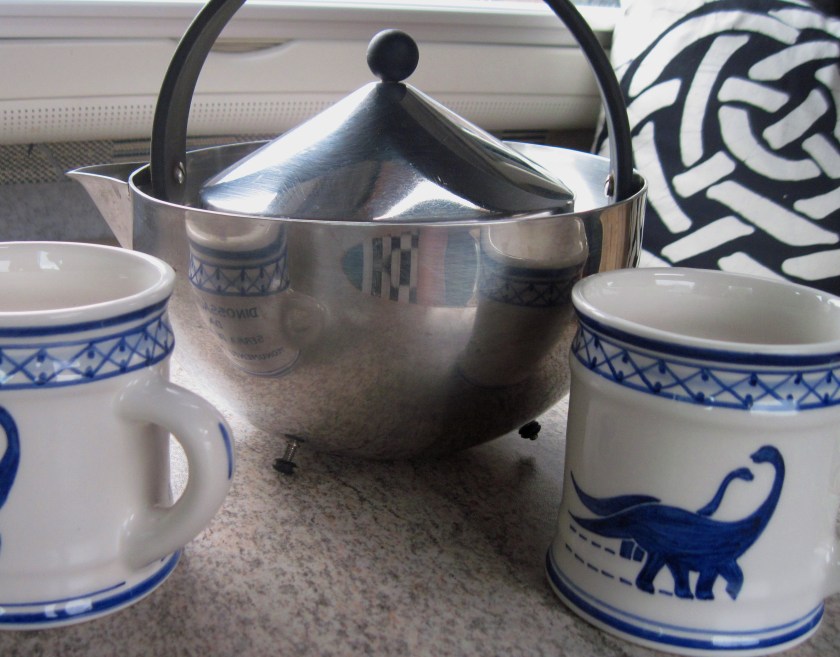
2011 August van pictures 014
Cups of tea in the ‘van are cheaper than a cafe

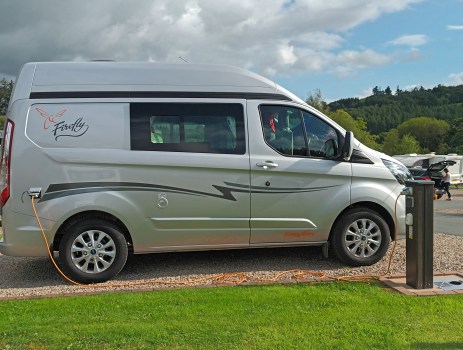
How we all spend our money is a personal thing and holidays is no different; we all have our different priorities.  It is hard to argue that a campervan or motorhome that cost just over £40,000 is a budget option and I know that we only have our newish ‘van thanks to an inheritance that meant our savings for retirement could stay on track while we also funded a new ‘van which we expect to last us at least ten-years and many miles.

All that said, we do try and make the trips in our ‘van as frugal as possible by following these tips.

Campsites – the cost of an overnight on a campsite can be very high and, if you use campsits, is a major cost for ‘van owners.  We reduce our costs by wild camping and using Britstops when this makes sense and seeking out cheaper sites with fewer facilities at other times.  We also make use of the Caravan Club and Camping and Caravanning Club small farm sites, although we do think these can sometimes be over-priced.  Most of our camping is out of season when sites are cheaper and we can make good use of the ACSI card scheme in Europe, paying between €11 and €19 for a site.

Liquid Petroleum Gas – Our ‘van has a LPG refillable bottle that makes using gas for cooking and heating very cheap.  At around 50p / litre LPG is much better value than using replaceable gas bottles.

Cooking in the ‘van – this is where a campervan really comes in to its own and makes our trips affordable.  Eating out is expensive and we only do this as a treat.  The ‘van has a two burner hob and an oven that run on LPG and we have an electric hotplate to use when we are paying for a hook-up so cooking in the ‘van is both enjoyable and easy.

Planning meals – when we are travelling we plan meals for three or four days in advance and shop in supermarkets.  Our fridge will hold enough food for this long and we always have some tins in the cupboard if we don’t get to a supermarket when the fresh food has run out.  This way we are not tempted to eat out, we’re not tied to shopping everyday and we make sure we don’t waste and throw away food.

Onboard brews – unless we are in Italy, when having coffee in a cafe is part of the holiday experience, we will often make our morning coffee in the ‘van and always make cups of tea.  We carry good quality ground coffee and have a double-walled insulated cafetiere and a beautiful enamel milk-warmer so that we can make good coffee anywhere and we use a teapot to make a decent cuppa.

Cheap or free activities – Fortunately we are still two reasonably fit individuals who enjoy walking and cycling; both free activities (although the gear can be expensive).  We do visit attractions occasionally but this is often because I am writing a travel article.  I’ve just looked to see how this looks in practice and on our year travelling we spent just 5% of our expenditure on entrance fees and cable cars (just over £1,000).

Diesel – we own a 5.6 metre long campervan, rather than a large motorhome and we bought the most economical model of the Renault Master available so that our diesel bill isn’t too high.

Fixing things – when things break in the ‘van we don’t immediately buy new, we see if we can fix it.  We always carry some basic tools and equipment for fixing things on the ‘van and it is amazing what you can fix with a zip tie and a roll of duct tape.

Mr BOTRA the bicycle mechanic – self-taught, Mr BOTRA can fix most things on the bikes and this has saved us hundreds of pounds over the years.  From experience, we now always travel with the tools to fix the bikes and some basic spares after needing to replace my pedals on a trip to Germany; we hadn’t packed the pedal spanner and had to pay a local bike shop to do the job.

Buying second-hand – whenever we can we like to buy the gear we need second-hand.  Not only is this cheaper but we feel we have given something a new lease of life and we have helped the environment by recycling.  Outdoor gear is well-made and lots of people buy walking clothes that they either grow out of or hardly use and there are lots of bargains out there on Ebay.


Heading to the hills on the hottest day of the year [so far]

P1000412.JPG
Looking up to Cautley Spout in the Howgills

Perhaps to make up for the wet weekend in the Lakes just 10-days before, we were lucky enough to be camping in the beautiful Howgills for the ‘hottest day of the year’.  With temperatures of 30°C forecast in the valleys we obviously headed for the hills to catch any breeze.  The Howgills are to the east of the Lake District fells and are grassy rounded hills of grit stone and  slates.  We had a splendid day, walking up Cautley Spout, a high tumbling waterfall, to The Calf, the highest point of the fells at 676 metres above sea level.

While, no doubt, parts of the Lake District were busy with visitors on such a lovely day, the Howgills are always quieter and we only met a couple of other groups walking during the day.  Once we were off the main route and the gravel path of the Dales High Way we had the place to ourselves and could enjoy the airy views over Cautley Crag without interruption.

Over the few days we were there we explored all corners of this rural area; we ate delicious chocolates from Kennedys in Orton, to the north of the fells, had fun trying our hand at weaving at the historic Fairfield Mill near Sedbergh [Mr BOTRA thought he could definitely enjoy doing more of this] and found orchids and butterflies in the beautiful Smardale Gill nature reserve.

Of course, it was just luck that we were on holiday on such a lovely day; we can’t wait until next year when we’ll be free and easy and able to set off camping as soon as we spot a good weather forecast.