Picture the scene. It is dark and the wind is whipping around the campsite and heavy showers rush across the site in flurries. The showers and toilets are cosy and warm but there is a frozen camper standing at the outdoor washing up sinks wrapped in fleeces, cagoule and a hat. As they run the tap the water is whipped across the sinks as it is caught by the wind and under their breath the washer-up is cursing the campsite owner that has saved money by constructing dish-washing sinks that are open to the elements.
We like to camp all through the winter and in all sorts of weathers. In winter we like to spend some time at a campsite with warm facilities that we can use in comfort and many sites fit this bill but let us down when it comes to washing up. An all too common design for campsite dish-washing facilities is to have a roof but be open to the elements. This has the advantage that you can stay dry in the inevitable rain [unless it is windy too] but even wrapped in layers the biting cold of the wind is tough for whoever is on washing up duties.
I understand outdoor washing up sinks in hot countries but in England, Scotland and Wales it seems optimistic at best. Yes, of course we can wash up in the campervan and given these outdoor facilities we often do but this isn’t the point. When we are on a campsite with facilities we like to use them and rather resent having to boil the kettle in the ‘van for hot water and do the dishes in our tiny sink when there are perfectly adequate sinks provided if only they were indoors. We start to wonder why we pay for sites, we might as well be wild camping on these inclement nights [and often do this too].
There must be an off-the-shelf campsite facilities block that all these different campsites purchase as we see these outdoor sinks so often. Or have these campsite owners never been camping themselves and so have never experienced the dish-washer agony? We are so relieved when we arrive at a site, check out the facilities and find a room [with a door] [and ideally a window to watch the world from] for washing up in. This luxury on a campsite is worth paying for!
A selection of campsites [not exhaustive] we have found where the dish-washing facilities are indoors:
Mr BOTRA and I have visited Scotland at Easter most years since 1981 [apologies if I’ve told you this before but it does tell you something about me]. I love going to Scotland and having been so often I am used to the variable Easter weather and the need to pack for every season. On previous trips we have had both heavy snow and warm sunshine [shorts and t-shirts needed] and every weather in between. This year’s holiday was no exception.
We used to go to Scotland for a week but now we are retired [yippee] we can go for longer. An early stopover was the lovely Sunnyside Campsite in Arisaig; we scrambled over the rocky bay in evening sunshine watching an orange sun go down behind the islands of Rum and Eigg. Only a few days later we reached the top of Fionn Bheinn [933 metres high] in low cloud and snow and getting no outstanding view for our efforts. This was particularly annoying because walking up the mountain we had been mostly in sunshine and had needed sunglasses to deal with the glare from the snow. It took a long time to get out of the cloud on the descent but once we had visibility again we relaxed throwing snowballs down the steep slope. We moved across to the Black Isle and on a dull cloudy day decided on an easy walk up Cnoc Fyrish a small hill [just 453 metres high] with a folly above Alness. As we climbed up the paths it started to rain and even on this small hill the rain became snow as we got higher. At the summit [again no view] we were in a winter wonderland and we played in the deep snow and built a snow robot that waved at us as we left the hilltop. A few more days later we were in shirt sleeves as we walked over the Corrieyairack Pass. Next a cold snap rolled in and we were wrapped in every layer we owned and still felt the sharp chilly wind as we looked around the impressive Linlithgow Palace on our way south.
We had perfect weather for a stunning short walk from Blair Atholl in to Glen Tilt. From the car park we followed attractive paths through woodland, stopping to watch agile red squirrels high above our heads. We emerged at a view point with a panoramic view along the glen. It was so peaceful and sunny here we kicked off our shoes and practiced our tai chi forms on the soft grass and in the fresh air before walking back down to the village with its splendid white turreted castle.
This year [as a birthday gift for our son] we booked a wildlife guide for a four-hour wildlife watching trip for us and son and daughter-in-law to give us a better chance of confidently spotting golden eagles. We spent a morning with John from Highland Nature based at Nethybridge and we experienced dramatically changing weather in the four hours we were out. John proved to be an excellent guide who took us to Strathdearn along the river Findhorn and revealed all manner of wildlife to us. As we set off it started to snow heavily and there was little visibility as we watched red squirrels scampering up and down the pine trees. We stopped to see golden plover and other waders by the river before continuing to the head of the valley. Stopping in the car to watch some sikka deer on the hillside we were entertained by a large horse in the field next to the road that was desperate for some attention. We wound down the windows to get a better look at the sikka deer and the large working horse insisted on putting its head through the window, blocking our view! We also spotted red deer on the hillsides and a group of feral goats sheltering in woodland. The mistle thrush I managed to catch a photograph of [above] was singing on a fence post as we drove down the single-track road. At the head of the valley John spotted a mountain hare on the hillside and we watched it through the scope quietly nibbling the surrounding grass that was showing through the snow. The snow shower eventually moved on and the valley was transformed by blue skies and sunshine in to a magnificent landscape blanketed in snow, bright in the sunlight. We saw a couple of golden eagles [helped by the younger and alert eyes of our daughter-in-law] making their way over the mountains, as well as a red kite, a goshawk and a peregrine falcon. On the river we watched a dipper marking its territory with song and the common gulls that nest here wheeled overhead. It was a fascinating and wonderful morning and I learnt so much from someone that is regularly out watching the local wildlife.
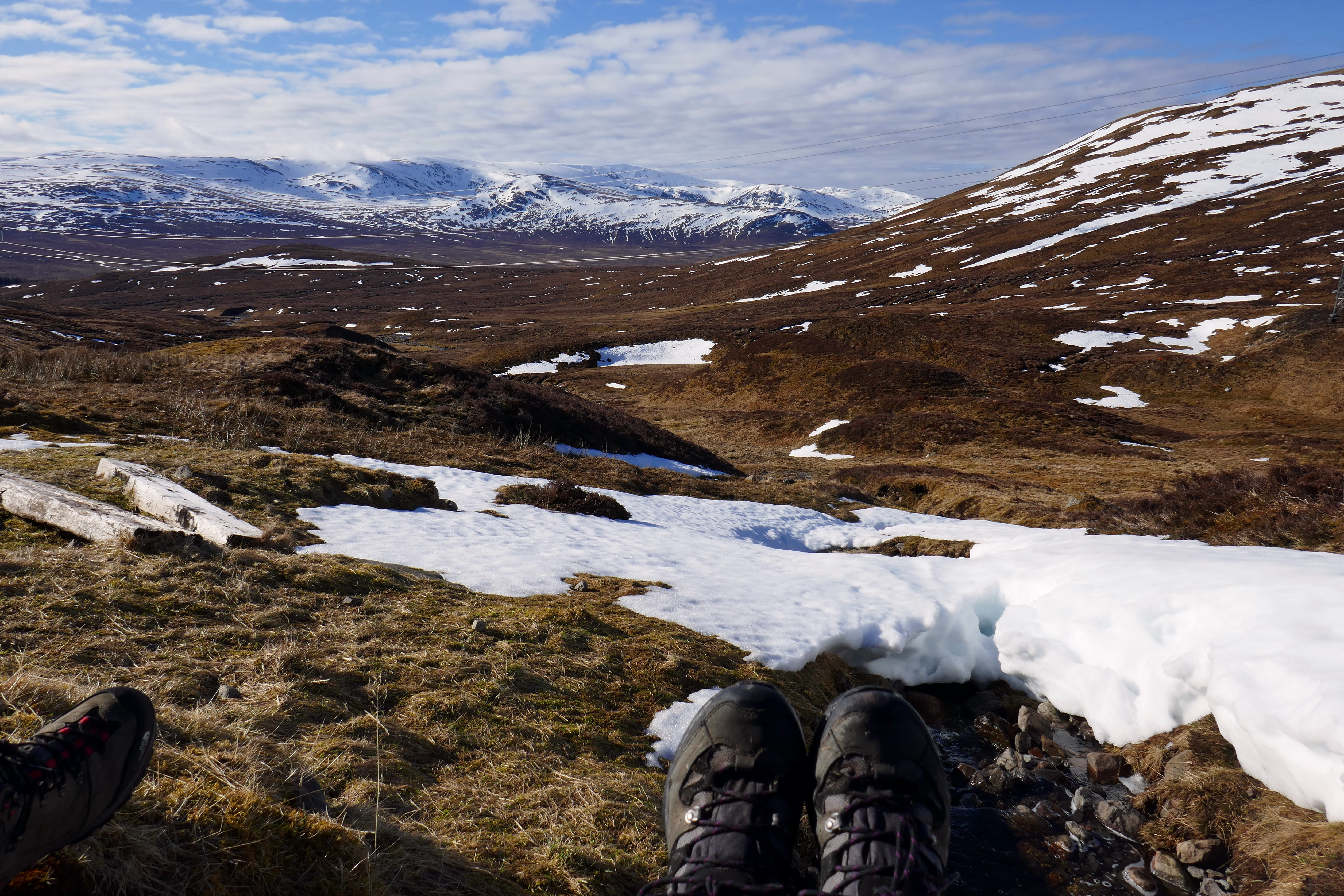
Okay, I admit it, I laughed when Anthony sank to his waist in the soft snow near the top of the Corrieyairack Pass, silly me as minutes later it was me that was floundering in the deep snow. Frustratingly, the snow would take our weight most of the time and then without warning one of us would cross a particularly soft and deep patch and down we would sink. Walking on this unpredictable surface was hard work and really not what we needed on a long day of 33 kilometres of walking but the sun was shining and I was achieving an ambition so didn’t complain.
We were tackling the Corrieyairack Pass, a remote old route that stretches across the Monadhliath Mountains in Scottish Highlands. In 1731 General Wade was responsible for constructing military roads across Scotland to enable troops to move quickly around northern Scotland and the Corrieyairack was part of his route from Fort Augustus, on the shore of Loch Ness to Laggan and Ruthven Barracks. It is now so long ago that I can’t remember when I first noticed this old road on a map but from the moment I did I knew I wanted to walk this route one day. This was the day.
We had left our campervan at 07.00 on a glorious morning, the mist hanging in the valleys and the promise of sunshine in the air. Our cheerful taxi driver told us stories about living in this part of Scotland and joined us in gasping at the beauty of the mountains reflected in the loch as he drove us to Garva Bridge where we intended to start our walk. From here it is 28 kms to Fort Augustus and 500 – 600 metres of climbing. The tarmac road continues a little beyond Garva Bridge to Melgarve where there is a tidy bothy with a fire and a wooden sleeping platform and a room called General Wade’s office. Cars are not allowed beyond Melgarve and we got in to the stride of the walk from here enjoying the isolation and peacefulness and the feel of the sun on the back of our necks as we took turns in spotting red deer on the hillsides. We had packed our rucksacks for survival in wintery weather but it was so warm we could have walked in shorts and sunhats.
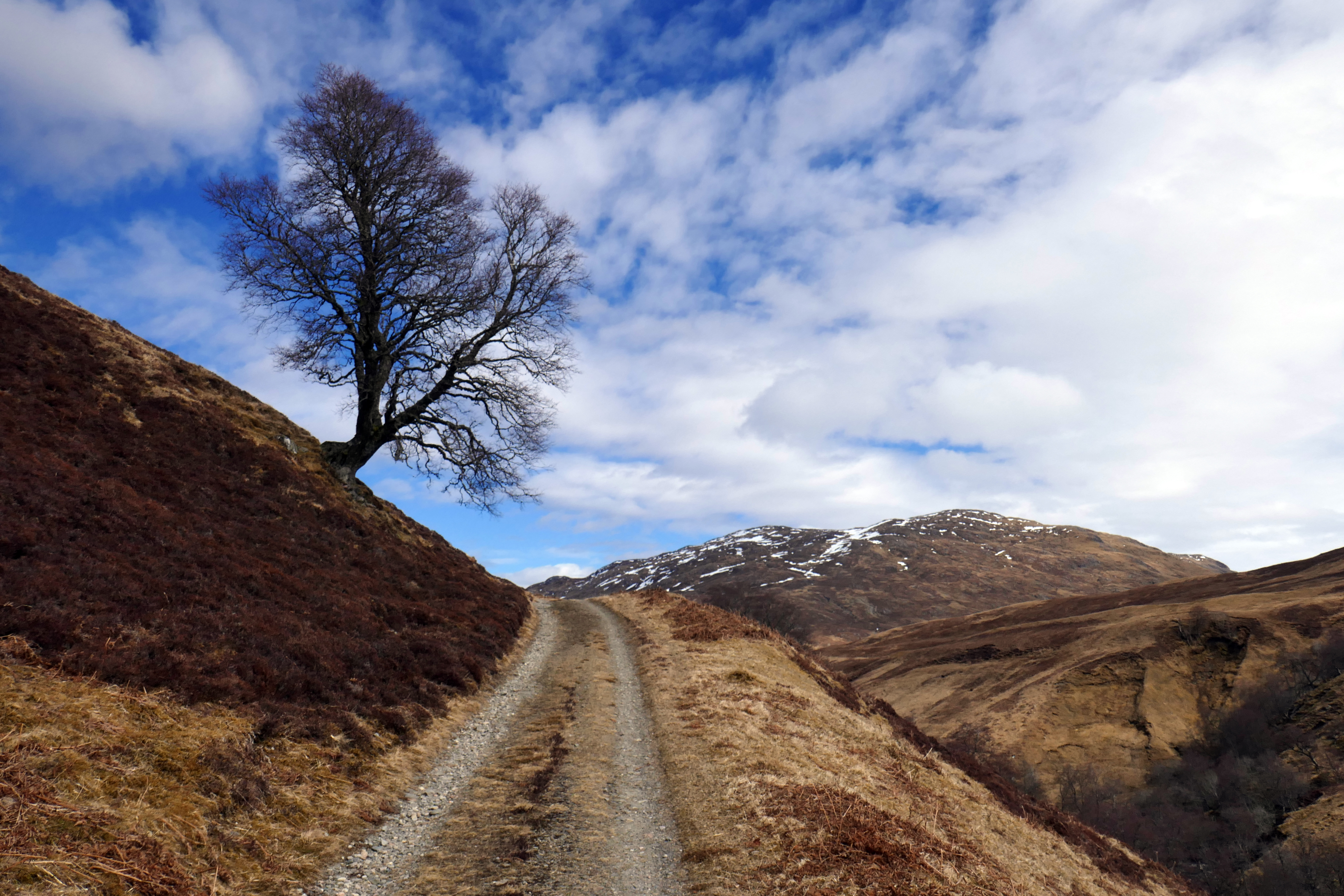
Today the Corrieyairack is also crossed by pylons and these giant structures punctuated most of our route. At each stream I found what remained of the old stone General Wade bridges; a few of them are intact but many are gone. At Allt a’Mhill Ghaibh we had been expecting to have to paddle over the burn and were pleased to see a new wooden bridge had been constructed. By the corrie that gives the pass its name the route becomes steeper and General Wade constructed the road in a series of zig-zags. In early April weather after heavy snow the week before these were under a few feet of snow and so we tackled the hillside directly rather than taking the easier graded zig-zags.
The top of the pass is at 770 metres (2,526 feet) above sea level and this exposed spot caught the wind and the snow was frozen and shone blue with ice crystals. We needed some of those layers we had been carrying here while we admired the view. This was breathtaking; snow-clad mountains stretched from left to right to our north and we struggled to take it all in, looking for any familiar shapes among the multitude of mountains. I posed for a photograph grinning at having achieved the top and tried to take in the beauty and the remoteness of where we were.
We had some difficulty route finding from the top with so much snow underfoot but in the clear conditions we headed left and eventually picked up signs of the familiar old road running parallel with the pylons. After the excitement of climbing up the pass our slightly longer descent could have felt a bit of an anti-climax but the Corrieyairack had kept some surprises for us.
We were delighted to spot three mountains hares in total; one sat by the old road, its long ears twitching alertly as we froze and watched before it scented us and hurried away. The hares were still in their white winter coat and soon disappeared in the snow. Once we were off the snow the route finding was once again easy and here there were wooden posts beside the track to mark it. With no one around we sang old songs as we descended and the panorama of mountains slowly disappeared. We stopped to rest by one of Wade’s stone bridges and on the bridge at Allt Lagan a’ Bhaihne we met the only other people we had seen since Garva Bridge, four cyclists on their way over the pass. I asked them where they were from, ‘Holland, said one, ‘You keep saying that,’ said another sitting opposite and explained, ‘We’re not from Holland we’re from the Netherlands.’ They asked about the snow conditions at the top and told us about their Scottish coast-to-coast route.
On the lower slopes of the Corrieyairack we saw red grouse flying low across the heather and nearer to Fort Augustus strips of heather were being burnt, the acrid smell didn’t encourage us to stop and rest. The end was in sight as we got our first glimpse of Loch Ness spreading out to the horizon. It was now the early afternoon and starting to cloud over after the bright blue start to the day as we passed the pink Culachy House.
The last section in to Fort Augustus is a pretty walk by the river and through a peaceful old burial ground. We arrived in Fort Augustus very tired and in our weary confusion failed to notice the bus stop and therefore watched the 15.12 bus to Inverness drive by. At Fort Augustus’ main bus shelter we checked for the next bus and found we had over an hour to wait. As we were dallying a tourist from Taiwan approached us for help and even in our befuddled state we managed to sort out her public transport needs (ask any of my friends, I missed my vocation as a travel agent). We watched three boats climbing up the series of locks on the Caledonian Canal and decided we had time for a drink before catching the next bus. On entering the nearest pub the bar man recognised two exhausted walkers and suggested a pint each, how could we refuse. In Inverness we feasted on chips in the amazing and popular Charlie’s Cafe, a real greasy-spoon of a place with motorbikes on display above the tables and started to revive.
The 18.45 train from Inverness got us to Newtonmore at 19.45 and we walked back to the campsite in the dusk. Every single muscle in my legs ached but despite the pain I was happy, I had at last walked over the Corrieyairack Pass.
Practicalities:
The Walk Highlands website has a description of the route.
We stayed at Invernahavon Campsite near to Newtonmore. They have some lodges and cute wooden caravans as well as pitches for tents and motorhomes.
We walked a total of 33.5 kms. Garva Bridge to Fort Augustus is 28 kms (Melgarve at the 6 km point, the top of the pass at 12 km, the hut at Blackburn at 18 km and you reach the road at 24 km). This took us eight hours to walk, other people could certainly do it in less time. From Newtonmore Railway Station we had a further 5.5 kms to walk back to the campsite, this took us an hour.
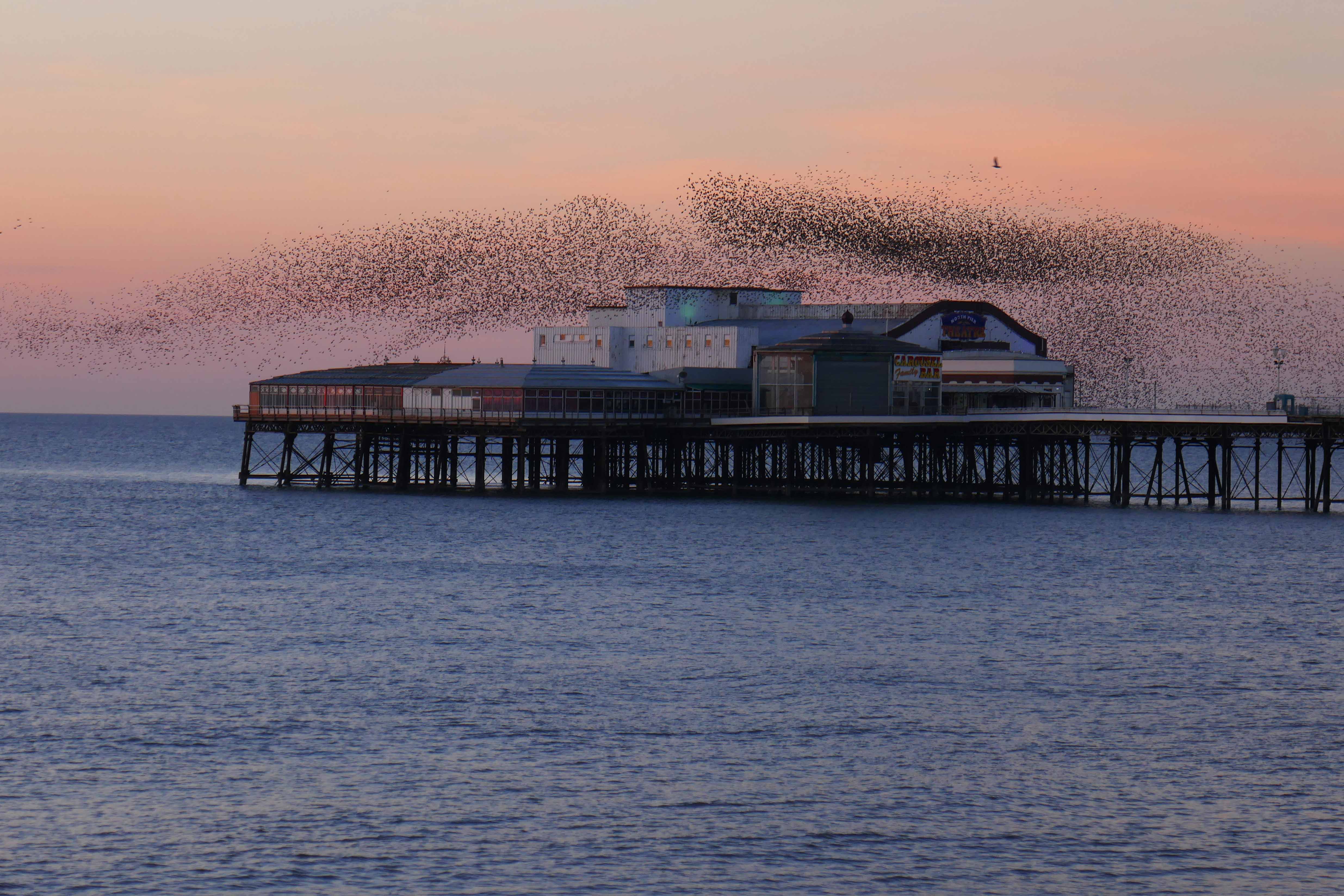
The murmuration of starlings over Blackpool’s North Pier
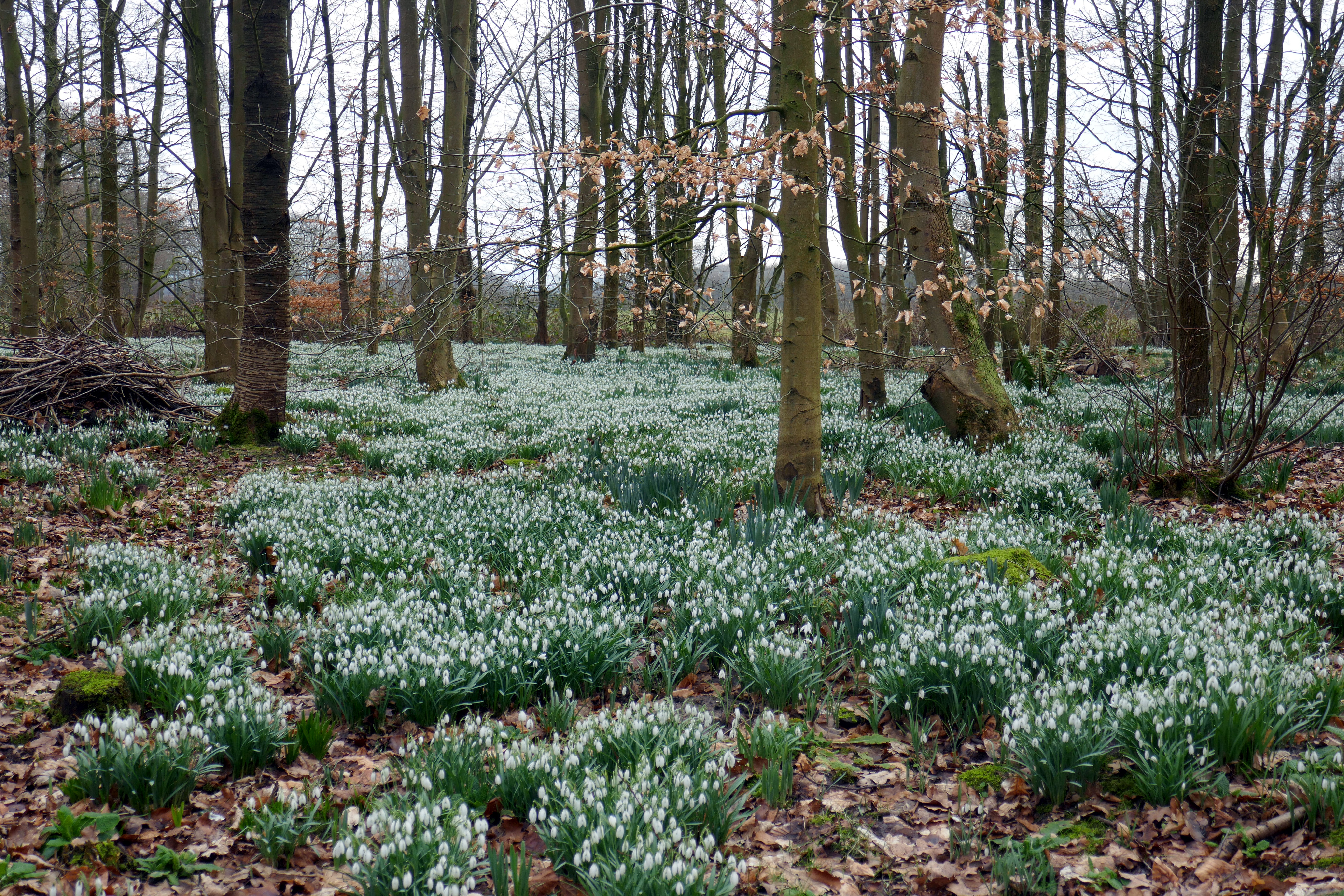
Continuing the theme of a winter that is full of sunshine [yes I know we’ve just had a very wintry week] we have managed to get away in our blue campervan at various times this last few months in the sunshine. In truth walking through the carpets of snowdrops at Bank Hall in Bretherton near Preston you don’t need the sunshine to make you feel good; the bright white snowdrops bring their own light and it is impossible to be unhappy surrounded by flowers that mean spring is just around the corner. We chose another sunny day to visit the wonderful Cobble Hey Farm on the slopes of the Bowland Fells looking over Garstang. Here a beautiful woodland garden has been created that shows the full range of different varieties of snowdrops; snowdrops with yellow stems, tall snowdrops and early flowering snowdrops are all here. In the barn we also met our first spring lamb.
Before Storm Emma arrived we spent a couple of sunny days around Blackpool. It was cold in the clear weather and we had a much better time than we expected. The Fylde coast around Blackpool is brimming with attractions from trams to public art, from history to the pleasure beach. We walked along the front taking in all the old and the new, munching freshly-made doughnuts from a seafront stall. Despite all Blackpool’s sights, the best show by far was the evening spectacular of the murmuration of starlings over the North Pier. Thousands of starlings swooped in unison around the pier and the Irish Sea creating black clouds in the sky before roosting. The starling’s captivating display was even more impressive than the stunning sunset that had hundreds of cameras clicking.
Away from the brashness of Blackpool we visited Fleetwood, a traditional seaside resort that I remember from childhood visits. I have always loved the Knott End Ferry, The Mount and the sense of a bygone age that Fleetwood has. I had relatives who lived in Rossall near Fleetwood and my family would house-swap with them for a week in the summer; they got a chance to meet up with relatives still living in north Staffordshire, we got a cheap week by the seaside. In 1969 I also stayed there for a week with my Grandmother while she house and dog sat. I treasured time with my Grandmother but this was a memorable trip for two particular reasons; firstly my Grandmother allowed me to stay up and watch the landing of Apollo 11 on the moon and secondly I found a wallet stuffed with money on the wide and generally empty Rossall Beach. My Grandmother took me and the wallet to Fleetwood Police Station where the Police Officer emptied the sandy and wet notes on to a sheet of newspaper laid across his counter so they could dry out. A few weeks later the grateful owner sent me ten shillings [a small fortune for a nine-year old] as a reward.
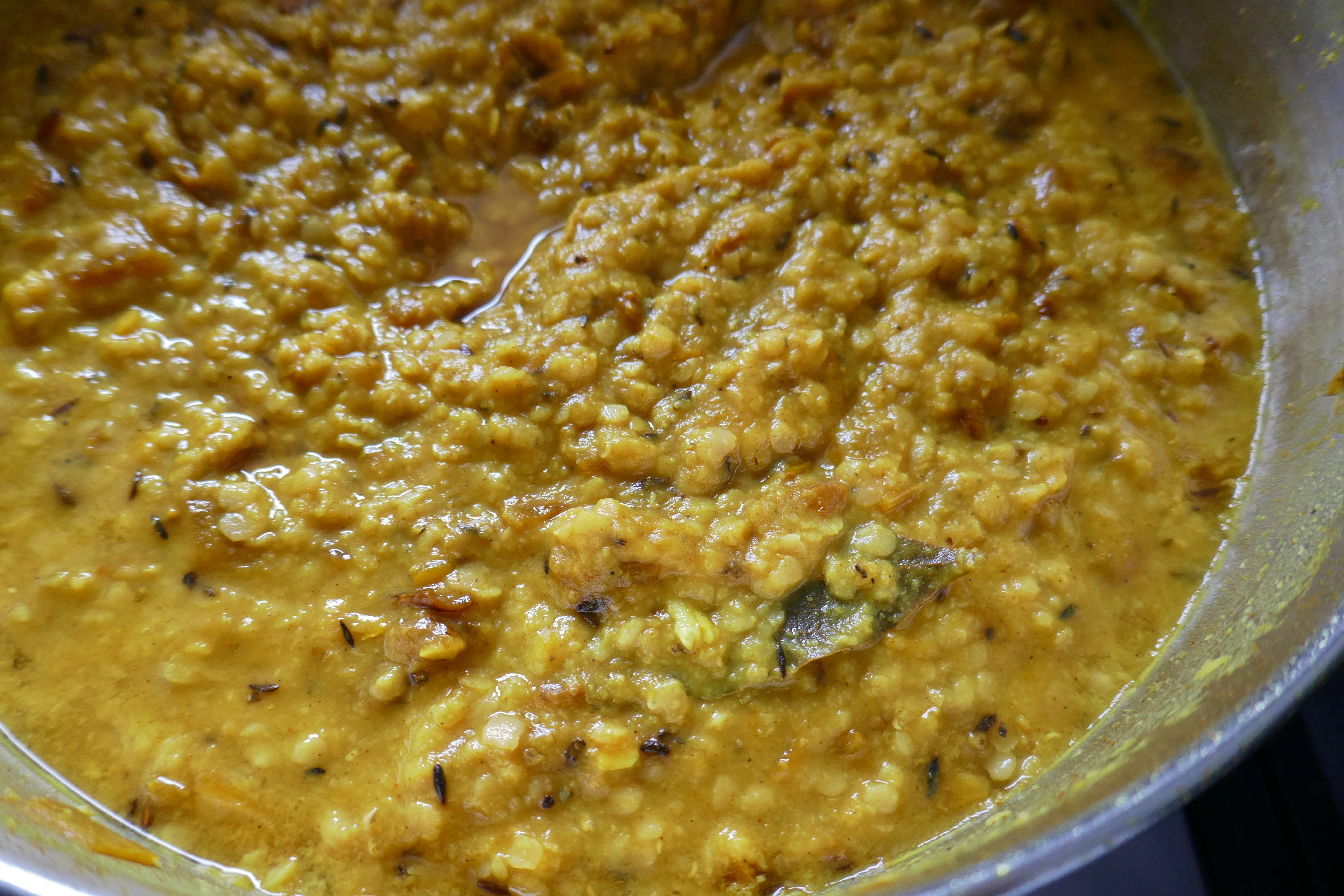
While the weather is below freezing I want to eat warming comfort food that is quick to make and delicious to eat. My go-to recipe in these circumstances is lentil curry. The recipe is below but it is a versatile dish that you can make your own and add to as suits you. This is made from ingredients we always have in the store cupboard either at home or in the campervan and for me lentil curry is the ultimate comfort food, you can eat it from a bowl with just a fork [or even a spoon], it is warming and spicy and tasty and memories of all those other lentil curries from the past linger around it.
Dhal / lentil curry for two
Boil a pan of water with a pinch of salt and add two good handfuls (maybe 200 grams) of dried red lentils and a couple of bay leaves. Boil and skim off any white scum as they boil and top up the water if necessary until the lentils are soft [about 20 minutes]. For this recipe you don’t have to boil the lentils dry.
Remove the bay leaves and put the lentils to one side [I put them in a bowl in the campervan and reuse the same pan for the next stage].
Fry a finely chopped onion in vegetable oil until it starts to catch and brown slightly and then add spices to suit you. At home I use a teaspoon each of ground tumeric, ground cumin and ground coriander, a couple of crushed garlic cloves, a pinch of chili flakes or a fresh chili chopped and maybe a little fresh ginger if I have some in. In the campervan I usually only have a garam masala mix and fresh garlic to hand. Fry these for a minute or two and then add the lentils to the pan. You are now more or less finished but you can garnish the curry with fresh coriander if you have this available.
For variety I sometimes add a couple of chopped tomatoes to the onion or a chopped courgette. Sometimes I add some finely chopped spinach at the end and this adds some colour.
I serve this wonderful simple food with either plain boiled rice or naan bread or home-made chapattis, the choice is yours. Not only is this quick to make it is also a cheap eat. In the campervan naan bread keeps the washing up to just one pan which is a win-win. Enjoy!
We all prioritise what we spend our money on to have the life we want. You won’t be surprised to read that I have always prioritised holidays over pretty much all discretionary spending. Despite living on an average or low income for 40-years we have always travelled. Firstly, some background … when I first started work and living alone I had little money to spare so marriage to Mr BOTRA was a big plus financially [and in many other ways]. Even with below average salaries we were much better off living as a couple. We had our son in the Thatcher years and so received only a few weeks maternity pay, had to fight for one week of paternity leave, received no Family Tax Credits and the only state help we received was Family Allowance that was frozen in the late 1980s. And yet we managed to afford holidays, how did we do this?
Through all those years we prioritised holidays over living in expensive houses, buying new furniture and cars and posh frocks. This was our choice and whereas we would probably be better off now if we had made different decisions no one can ever take all those holiday memories away from us. We had a ‘big’ holiday every year and these were often adventurous holidays abroad. After paying the mortgage and the utilities, holidays were our next priority and we saved a set amount every month that was earmarked specifically for holidays. This amount was put in to a dedicated savings account and such was our determination to explore foreign places that we never dipped in to this money for other financial emergencies.
Our holidays were never expensive and luxurious trips, it was always the travelling that we were interested in. We enjoyed camping and before our baby was born we bought a high quality tent and acclimatised him to camping from being a toddler. We chose wisely, buying a Saunders Spacepacker lightweight back-packing tent, widely recognised as the best available in the 1980s and beyond. We could carry this and our ‘gear’ for our trip in two big rucksacks. When our son outgrew our shared Spacepacker we bought him his own.
Travelling and seeing new places was what mattered to us, taking walks costs nothing and our holidays were about hiking in the mountains and enjoying fresh air and new experiences. The budget rarely ran to eating out; the exception was our trip to what was then Czechoslovakia and is now the Czech Republic and Slovakia in 1992. Back then eating out was so cheap in those countries we could indulge. We slipped up when we visited the Black Forest in Germany the following year, assuming the same budget as we had spent in Czechoslovakia and finding out that Germany was much more expensive than eastern Europe! With no credit card to prop us up we had to stay within budget and it was a tight fortnight. We discovered Germany’s budget supermarkets, spent the days walking, playing in the parks and visiting free museums and pitched up on a scruffy, anarchic and most importantly cheap campsite; it was an interesting trip.
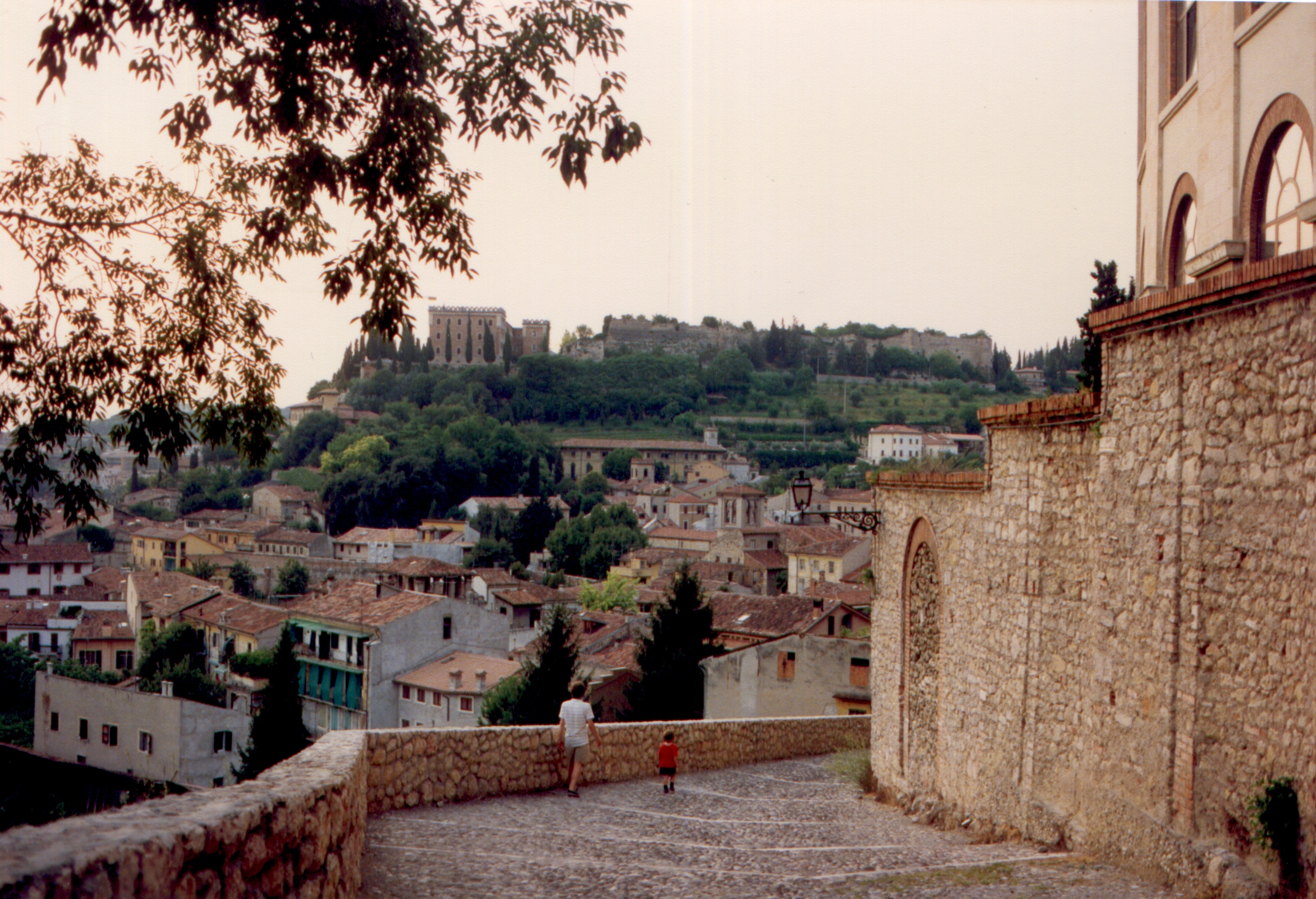
It was 1991 when we first went abroad to Italy [see the photograph above] and this trip set the pattern. We took the train to Verona, which had been on my list for many years and I thought I had arrived in heaven. Camping Castel San Pietro above the town turned out to be the perfect place for two young parents and their five-year old child. Set inside ancient walls this was a relaxed, welcoming and slightly quirky campsite. From here we made our way on public transport to the Dolomites and spent our days walking in the dramatic and unbeatable mountain scenery.
As well as these train and backpacking holidays we would visit Scotland every Easter, sharing the cost of a large self-catering house with friends made it affordable and we would have numerous weekends away with the tent in the UK. These were the days before Facebook but if we had been able to post about our holiday activity you would have thought we had loads of money!
These adventures and trips to all corners of Europe would not have been possible without that discipline of regular saving over twelve months. We didn’t consider ourselves natural savers and we certainly didn’t save for anything else at this time, there was very little spare. Our desire to travel gave us the motivation and we continued this monthly saving plan even as we became more financially comfortable.
Think Save Retire recently blogged about earmarking your money a well-timed post as I was drafting this. Completing Steve’s statement clarified for me that holidays have always been our priority and made me realise how we continue to make sure that our money supports that priority.
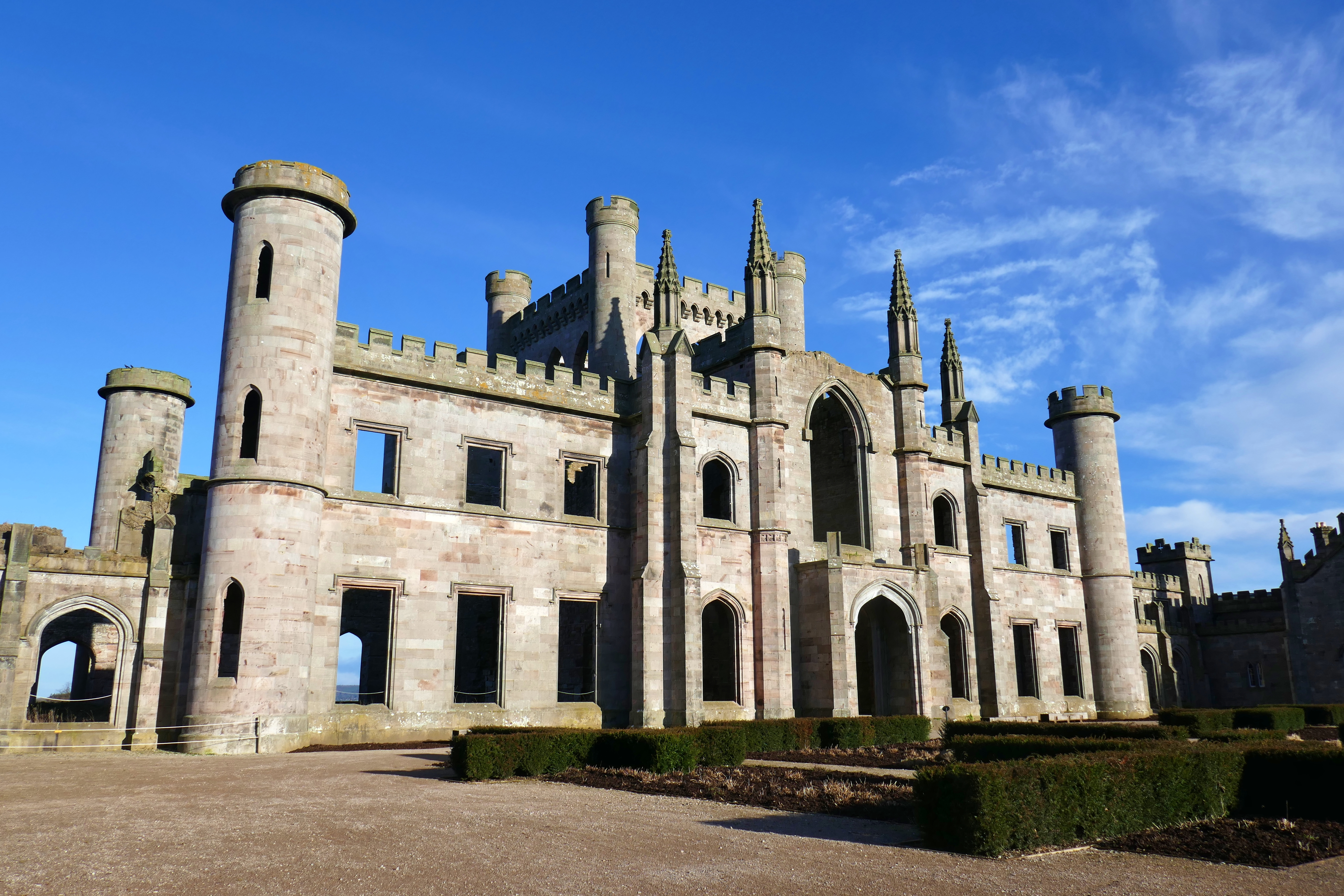
Retirement has completely changed my experience of winter and given the season a different character that is new and refreshing. I have always dreaded the winter and would become quite low in November as the days got shorter and colder. But now we are retired and no longer tied to just two days of freedom we can take off for a day trip or camping tour as soon as sunshine is forecast. This flexibility means that winter starts to feel like a succession of fantastic frosty and sunny days and is suddenly much more enjoyable and fun. Last week we spotted another window of opportunity to make the most of the blue skies and we headed north. After some mooching around the border city of Carlisle with its red sandstone castle and marvellous museum, we visited the dramatic ruin of Lowther Castle whose roof was removed in the 1950s to save the estate from crippling taxation. The castle and gardens have been recently opened up and are a fantastic place for a day out at any time of year.
We returned south via another ruin, Shap Abbey. Set in an idyllic and peaceful valley the remains of this ancient abbey are open to the public, although only one tower remains from the original buildings. From the village of Shap we had views to the Lake District fells dusted in snow and in the sunshine the north-west of England showed off its most beautiful side.
We popped in to Preston for old times sake and were pleased to see the hot potato and parched peas stall [the original street food] was still doing business in the Flag Square. Continuing south to the town of Ashbourne in Derbyshire we had a great day walking in more sunshine. Then the weekend arrived and with it the drizzle. We met friends for a pub lunch and a walk and had a lovely afternoon thanks to excellent waterproofs but it would have been better if the fine weather had blessed those working folk too.
The forecast was for a cold and sunny few days and so with nothing in the diary we were able to hop in to the ‘van and take a couple of nights in the Peak District to make the most of the fine weather. We stayed at the Caravan and Motorhome Club Chatsworth campsite which is in a peaceful walled area in Chatsworth Park. We gave the stately home a miss and walked through the glorious countryside but if you did want to visit it is very near to the site.
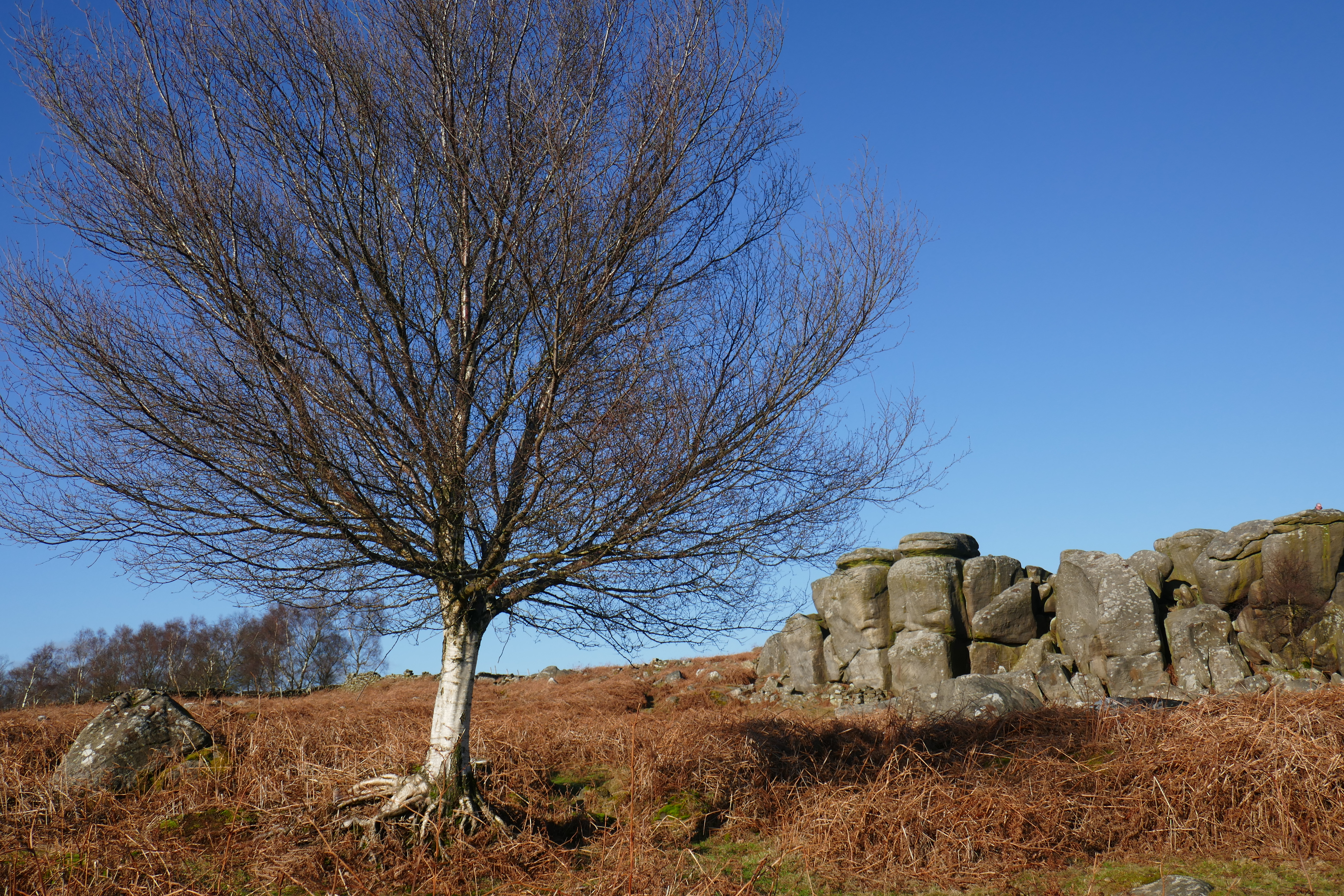
On a sunny and frosty morning we walked out of Chatsworth Estate to Baslow, where after a coffee, we climbed through woodland and out on to the open moorland behind the Robin Hood Pub on to Birchen Edge. These Peak District edges are glorious places to walk, with views over the crags in to the valleys below, I always enjoy the lofty feeling of walking along these distinctive features. On Birchen Edge we passed Nelson’s monument, a tall thin stone pillar on the rocks. This was erected by a local business man thirty years before the more famous monument to Nelson in Trafalgar Square. Our walk took in not one but two of these stunning Derbyshire edges. After a boggy section of moorland we followed the track towards Baslow Edge, finding the Wellington Monument that celebrates the 1815 Waterloo victory. We walked along the top of Baslow Edge and as the sun started to set we returned to our pitch via one of the many paths under the crags.
We also took in a lovely walk around Longstone Moor, a beautiful limestone ridge that is criss-crossed by paths. This area was once a thriving lead mining area but is now a quiet and less visited spot among the bustle of the Peak District. The area around Baslow is lovely but it does get plenty of visitors and finding space to yourself is near to impossible on a fine day. On Longstone Moor we met no other walkers and we had a sense that the space and fresh air was just ours to enjoy. We did find the crowds when we popped in to the Packhorse Inn for a swift half. This charming pub in Little Longstone had welcoming warm fires and is happy to serve walkers with muddy boots.
Prompted by a fellow Devon ‘van owner I have given some thought to the baffling array of guides out there for motorhomers to use, buy or download to help you find a campsite in mainland Europe. Very few motorhomers have unlimited amounts of space to store numerous guides and unlimited amounts of money to purchase them so how do you choose what to spend your hard-earned on? When travelling we generally plan on a day-by-day basis and out-of-season and in more remote areas you can’t always rely on just coming across somewhere suitable to stay [either a campsite or wild camping pitch] without a bit of planning. Below is a guide to the resources we have found most useful when we travel abroad. Each guide or app has its plus points as well as its limitations.
Guides, apps and websites
Since I wrote this post in 2018, finding a campsite has changed dramatically. We now use Search for Sites app and the ACSI Card books and app {see below], almost excusively.
ACSI Card – Available from Vicarious Books in the UK, this is great value for out-of-season touring (from September to June) and this is our first port of call when we are looking for a campsite so that we can get maximum value from it. You pay for the card and books and campsites in the scheme charge a set fee for a pitch with electricity. The number of sites in the scheme various by country. There are few in the UK but plenty in France.
Caravan and Motorhome Club Guides – We used to have these guides for our European trips. The entries and campsite reviews are from members and can be quirky and brief. We like to read between the lines of these reviews and do find these books of assistance, even though the information is not always up-to-date.
Aires and Camperstop Guides – We used to carry some of these guide books with us, relevant to the country we were travelling in. The books are fairly comprehensive and kept as up-to-date as a book can be and give an honest review of each aire, its facilities, its outlook and how comfortable it is. Nowadays we rely on apps and the internet.
In France we will look for municipal campsites in small towns as these are generally good value and near to the town centre for [the essential] bakeries and bars.
Home-based research & recommendations
In addition to the above we will research areas we are fairly certain we will be going to, particularly national parks and mountain areas where there are often few campsites and we are looking for the best situation for walking. This might be Google searches, Rough Guide / Lonely Planet information, some Cicerone Guides include campsites and we sometimes ask a question about an area on a motorhome forum or Facebook page where there are generous well-travelled people with a wide range of knowledge.
You also can’t beat personal recommendations from other campers you meet on the way and these have sometimes taken us to interesting places that we never expected to visit when we set off.
To book or not & the one house rule
Until 2020, we generally never booked campsites when we were abroad as it was rarely necessary. Since 2020, owning a campervan has become more popular and campsites have become busier. Even in May, June and September we have come across full campsites in France, Germany and the Netherlands, particularly during public holidays. We now try and keep some flexibility and book sites a day or two in advance. In 2024 in France, we never managed to get a pitch on the popular campsite in Bayeux, despite turning up on a wet Sunday and then trying to book ahead online. If you really want to stay in a particular site, it may be worth booking.
Our house rule is to start looking for somewhere for the night by around 17.00. This is just because we did get caught out in Mecklenburg in northern Germany on one trip. There were plenty of campsites around the Mecklenburg lakes and none of them were full as it was only June. The mistake we made was to be too busy enjoying a lovely sunny evening and leaving looking for a campsite until after 18.00 and German campsites don’t keep the evening hours that are common in southern Europe [and even Poland where we had just come from]. At each campsite we arrived at reception was closed and the barriers were down. We eventually got a pitch on a site that we could drive in to but we didn’t have the key for the toilets and had to hang around for another camper to show up to use them, which was somewhat disconcerting for other campers!
Beautiful Blackwell Arts and Crafts House above Windermere
In retirement our winter trips are being dictated by the weather forecast rather than the weekend and this freedom is liberating. With some cold sunny weather forecast last week we baked a cake, packed some warm clothing and set off for the Lake District. Windermere is easy to get to from Salford and we were soon soaking up the views along the lake from Orrest Head, pottered by the Windermere and seeking a cosy pub to warm up in.
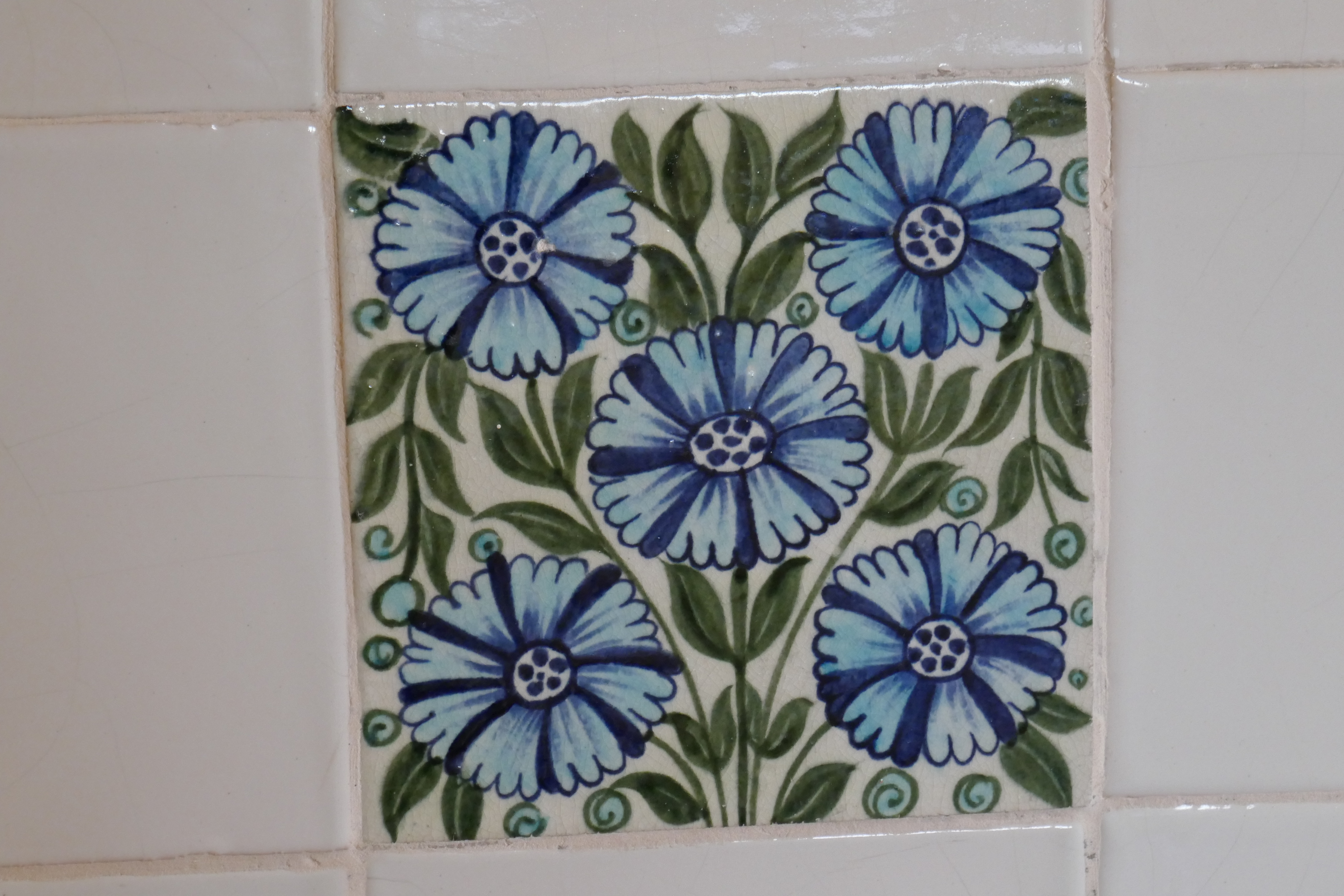
In the afternoon we visited the lovely Blackwell Arts and Crafts House. We had been here before many years ago and since then the staff and volunteers have been busy and many improvements have been made. Built by M H Bailie Scott as a holiday home for Edward Holt, this is a beautiful example of an Arts and Crafts house that retains many of its original features that, in keeping with the movement, are both decorative and practical. The door handles are leaf-shaped, the window catches are interesting. There is attractive stained glass and plaster work too but just as important, the atmosphere is relaxed, rather than stuffy and visitors are encouraged to linger.
After being a holiday home the house became a school and then offices before being bought by a Trust in 1999 and it opened to the public in 2001. The White Drawing Room has slender columns with decorative capitals, a sunny aspect over the lake and is a room where the sunlight dances around the room.
The Arts and Crafts Movement began in Britain in the 1880s and spread across Europe and America. As the V&A writes:
‘It was a movement born of ideals. It grew out of a concern for the effects of industrialisation: on design, on traditional skills and on the lives of ordinary people. In response, it established a new set of principles for living and working. It advocated the reform of art at every level and across a broad social spectrum, and it turned the home into a work of art.’
The Arts and Crafts Movement has strong links with the Lake District. The three founder members, William Morris, Edward Burne Jones and Phillip Webb were supported by George Howard from Naworth Castle near Carlisle and he used William Morris’ wallpapers in many of his properties. John Ruskin, a Lake District resident, strongly influenced the Arts and Crafts Movement. He considered machine-made items to be dishonest and that craftmanship was linked to dignity.




 Back on the road again