Arran: My first encounter with this lovely island

P1120252
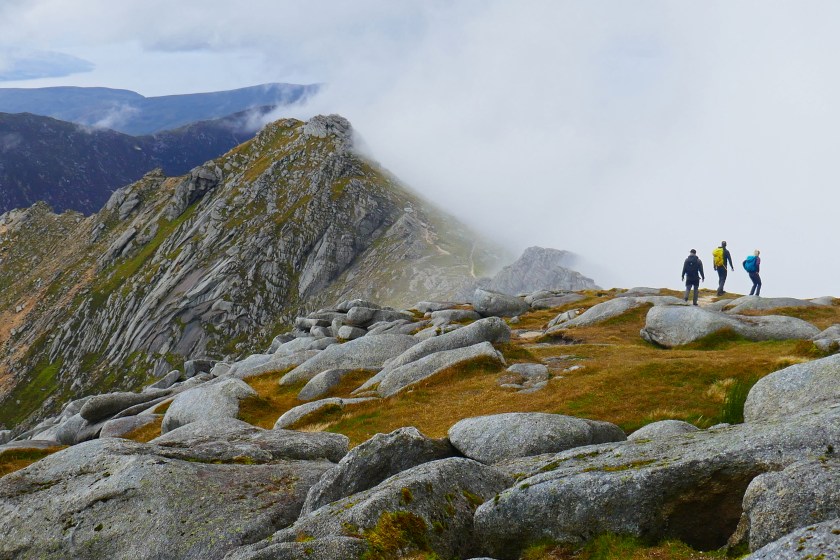
The dramatic landscape of Goat Fell on Arran

The internet suggests there are up to 5,000 islands around Great Britain, although the exact number seems to be hard to be sure of and there are certainly plenty of these I have never heard of, let alone visited.  Another source gave a figure of 82 islands that measure more than 5 sq km.  This is still a higher number than I might have guessed at and one that made me ashamed of how few of our islands I have taken the trouble to get to.  It was time to visit an island and an autumn trip to Arran, off the south-west coast of Scotland was planned.

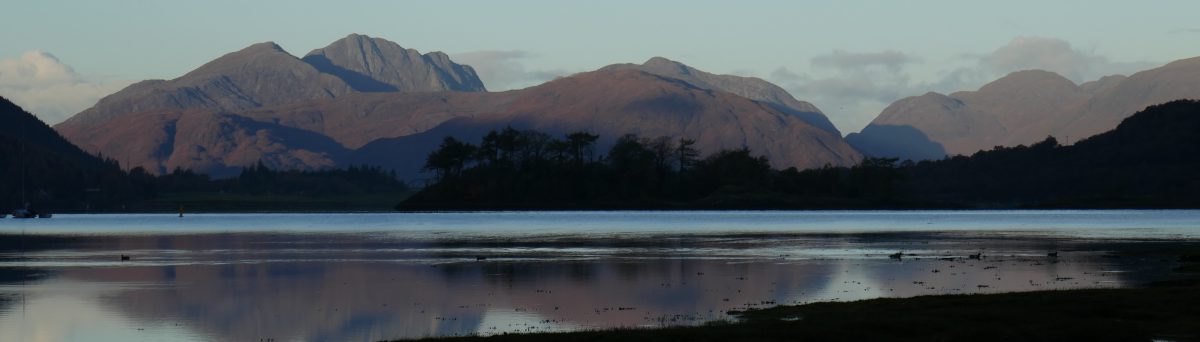
Goodness knows why I have never been before as we found so much that delighted us on Arran.  The craggy mountains around Goat Fell are perfect walking country; Glen Sannox is simply stunning; the stone circles at Machrie Moor are impressive and fascinating; the coastline near Blackwaterfoot  and the walk through boulders to the basalt cliffs of The Doon is stunning and the sheltered bay at Lochranza is picture perfect.  I loved pretty much everything about the island.

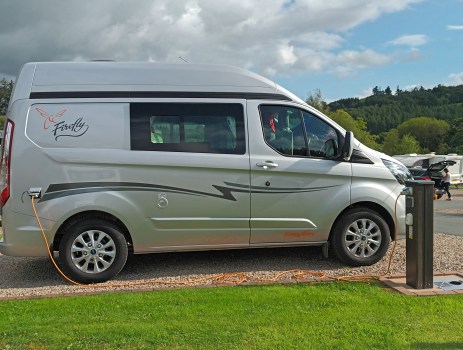
Thanks to the Road Equivalent Tariff (RET) on Scottish ferries, getting to Arran is now more affordable and it was just over £45 return for our 5.4 metre long campervan.  We needed to have a frugal holiday due to our expensive year but also like to support campsites and so we stayed on three of the islands campsites [see below] and did a few nights wild camping too.  Wild camping is popular on Arran and some places can get busy at weekends as Arran is a perfect place to visit in a campervan.

We didn’t visit any tea shops, although I am told they are excellent, but we did support the Arran economy and bought excellent local cheese in the cheese shop, local beer at the brewery, good local oatcakes and delicious local bread in the Blackwaterfoot Bakery.  These all went very well together and didn’t last long.

Arran was a great start to my plan to visit more of the islands around Great Britain.  The big question is where to go to next?

Campsites we used on Arran

Lochranza Campsite – a beautifully situated site that is well kept.  The site is grassy with some hard-standing pitches if it is wet and there are open views.

Seal Shore Camping  – this site at Kildonan has lovely views out to sea and clean facilities.  The site is sloping but while we were there they were building some more level pitches.  The site is next door to a bar.

Middleton’s Caravan and Camping Park – This level grassy site at Lamlash is handy for the shops, places to eat and shoreline in Lamlash.  The facilities are clean and it has good hot showers.


Sedan: Add it to your wish list

Sedan (3)
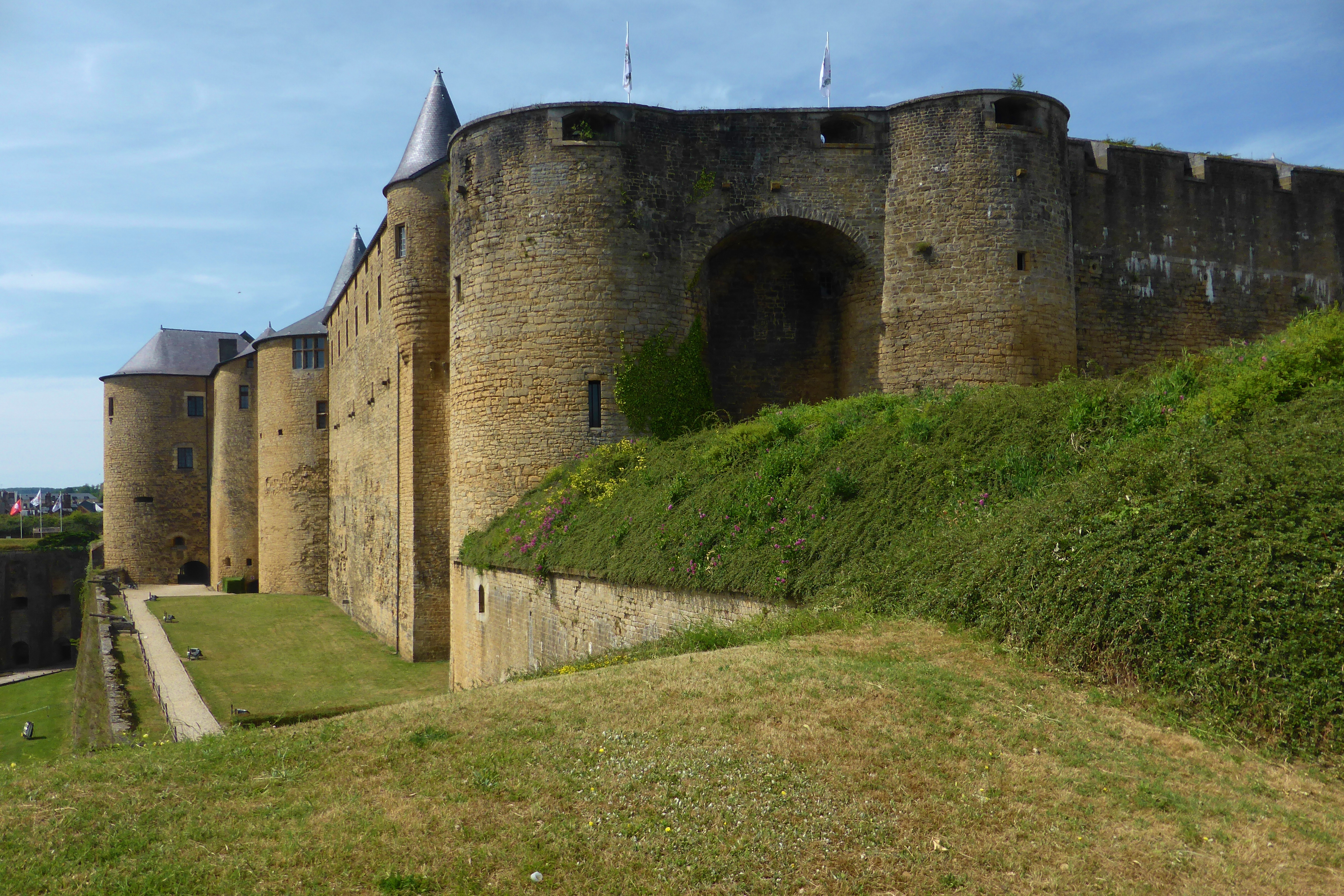
The massive fortification in Sedan

For anyone with a campervan, motorhome or a caravan there are two good reasons for visiting Sedan in northern France.  Firstly for around €9 a night you can stay at the municipal campsite.  This municipal site is easy to find and is pleasantly placed by the river Meuse, with moorings for boats alongside the site and an open aspect that helps it feel more rural than urban.  We were greeted warmly by the member of staff who gave us a map of the town and told us enthusiastically about the castle and told us we could pitch where we liked on the grassy site.  The ground is a little uneven but nothing the levelling blocks couldn’t deal with.  The sanitary facilities were not the most up-to-date but were clean and the showers were good and hot and we don’t need much more than that and you can’t expect much more for the price.

Sedan is handily placed for us to reach our ferry at Zeebrugge but we arrived with enough time to visit the second reason to visit Sedan.  It has what is claimed to be the largest medieval fortified castle in Europe.

It is about a 15 minutes’ walk to the castle from the campsite and it is as magnificent and immense as you could hope, with an impressive curtain wall around the castle and courtyard and lovely views over the town from the corner bastions and the ramparts.  We explored the dark corners, alleys and stairwells that were designed to confuse the enemy and from the information boards learnt how the castle had grown over time.  I was particularly fascinated by the view into the interior of a round tower that had been enlarged over the years and seeing the interactive scale model of the castle in 1870 during the Franco-Prussian First Battle of Sedan.  The Second Battle of Sedan was in May 1940 during the German invasion of France.

After exploring the castle, we strolled around the town that has a history of cloth-making; some think that upholstery from Sedan gave the Sedan chair its name.  We found narrow streets and charming shops, lovely botanical gardens and bridges over the river Meuse.  Sedan also has an open and covered market on Wednesday and Saturday mornings.


A Motorhomers Friend: William Rees Jeffreys

2011 July on Rees Jeffreys Road Fund car park at Rhaedr y cwm above Llan Festiniog
A gorgeous view from a Welsh Rees Jeffreys rest stop

My introduction to William Rees Jeffreys was quite by accident one sunny Sunday in the summer of 2011.  Travelling back to Manchester after a weekend camping in Dolgellau to walk the Mawddach Trail to Barmouth.  Keen to extend the carefree holiday feeling as long as possible, my partner and I took the country road from Llan Festiniog over the hills.  Spotting a car park with a view, we couldn’t resist stopping for a brew and a stroll.  The splendidly positioned car park had a plaque and always one to check out such things I learnt that the car park had been funded by the Rees Jeffreys Road Fund.  It certainly was an excellent place for a motorhomer to stop; no height barrier, an extensive view, a babbling stream and Rhaedr y cwm waterfall and enough bilberries to fill a pie all within a few 100 metres.

Like many brief encounters, I didn’t give Mr Rees Jeffreys another thought until twelve months later I had another chance meeting with this enigmatic fellow.  Once again on the lookout for a good place to pull up in the Blue Bus and have a brew, although without the good weather, we pulled off the M6 at Tebay (Junction 38) and followed the road towards Kendal.  Spotting a lay-by with a view across the M6 and the railway line to the Howgill Fells we pulled in and realised we were parking next to a familiar plaque.  The kettle went on and I climbed out, despite the drizzle, to read that the Rees Jeffreys Road Fund had also funded the construction of this road side parking.  Over a brew I starting wondering what the story was behind this man, why he felt the need to pay for car parks as far apart as Wales and Cumbria and why he deserved a plaque.

Back home, an internet search revealed some information about William Rees Jeffreys.  He was born in 1872, before Karl Benz had patented his internal combustion engine for a Motorwagen in 1886.  William Rees Jeffreys was a keen cyclist and was initially motivated in his campaigning to improve roads for cyclist.  As cars became more widespread, William Rees Jeffreys held positions with the Road Board (the precursor of the Department of Transport), the RAC, the Roads Improvement Association and the Institute of Automobile Engineers.  From 1919 he was a leading light in the classification and numbering of the roads in Britain to help drivers navigate.  The road classification project was complete in 1926.

Following his death in 1954, William Rees Jeffreys generously wanted to continue improving facilities for road users and his estate provided the endowment for the Rees Jeffreys Road Fund.  This gives financial support every year for education and research related to road transport and also for physical road transport projects, hence all the lovely road side parking areas.

Motorhomers always need car parks and lay-bys and those next to roads often suit our purpose of a rest stop on a trip, giving a chance for a brew and a quick stretch of the legs without going out of our way and here was an organisation providing just the facilities the motorhoming community needs.  So, interesting as the Rees Jeffreys website was, it lacked a list of the road side rest areas the Rees Jeffreys Road Fund had supported and I wanted to know more.  An email to the Secretary quickly led to the arrival of a Rees Jeffreys Road Fund roadside rests list in the post a few days later.  This typed list showed 68 rest stops they had supported, from Wester Ross in Scotland to Cornwall.  With the list, I was now able to plan holiday routes to include a Rees Jeffreys Road Fund road side rest areas.

2025 update – the Rees Jeffrey’s Road Fund website now has photographs and information about finding some of the roadside rest areas. It is certainly worth taking a look.

My next opportunity to meet my double-barrelled friend was on an early March trip to Pembrokeshire.  The delight of a quest like this is that you never know exactly where it will take you.  We had the small Cardigan Caravan and Camping site to ourselves and after star-gazing in the clear night sky; we woke to sunshine, white frosty fields and a frozen tap at the outside washing up facilities.   A warming breakfast slowly got us going and we drove the short distance to the small parking area on the B4582 for the Crugiau Cemmaes barrow.  The parking did not really merit the title car park but it had the usual Rees Jeffreys Road Fund plaque and did mean that we visited the round barrow, thought to be Bronze Age, and enjoyed the clear views over the Welsh countryside.

It is evident from the typed list that some local authorities have cottoned on to the availability of funding from the Rees Jeffreys Road Fund better than others and Pembrokeshire is clearly one of those, with six rest stops on the list, only matched by the Isle of Wight.  However, it soon also became clear that the list had some limitations; with no grid references or even road numbers, some were tricky to find.  Even with the help of online maps with street view, I never found the rest stop located at St David’s Road, Haverfordwest.

Not a person to give up on a friendship easily, the exploration continued further south with a couple of nights near Saundersfoot.  The generously sized lay-by at Wood near Newgale on the A487 was easier to find, although the extreme slope meant that even walking up and down the van was challenging.  Ditching the idea of brewing we enjoyed the wide view over Newgale Sands and St Brides Bay with fruit juice!

Heading north back through Wales, I sought out the only roadside rest listed in Powys.  Pont Marteg on the A470 north of Rhayader in the stunning river Wye or Afon Gwy valley was easy enough to find.  The beautifully sited car park had room for the Blue Bus and provided the opportunity I sought to stretch my legs and watch the Red Kites circling above.  It looked like a Rees Jeffreys Road Fund road side rest but a thorough search didn’t reveal the familiar plaque, so I couldn’t be sure.

The Rees Jeffreys Road Fund has over £7 million in the bank and uses the interest earned on this investment each year to fund mostly research projects and educational bursaries.  In 2017 no new car parks or road side rests were built but funding was given to encourage wild flowers on road side verges.   In 2016 The Rees Jeffreys Road Fund published a report on the need for a Major Road Network across England.

Having visited Rees Jeffrey Road Fund rest stops in England and Wales, I thought it was time to seek one out in Scotland.  Only twelve locations feature in the list for Scotland, so I wasn’t overwhelmed by the choice but a trip up to Oban and Mull at Easter was coming up and I got the list out and checked the map for possibilities.  I soon spotted that just north of Glasgow a rest stop was listed at Queen’s View on the A809 between Mingavie and Drymen that would work well with our route.  Only 45 minutes from the centre of Glasgow, the car park, funded by my old pal WRJ, enables the locals to park up and enjoy some fresh air and exercise.  From the car park a quick five minute pounding of the legs will take you to the view point where it is said Queen Victoria stopped to take in the view of Loch Lomond, the more energetic can spend two or three hours walking up to the crags of the strangely named hill, the Whangie.

The list of road side rests doesn’t give a year when a particular site was funded but the Queen’s View car park must have been some time ago, as even given the extremes of Scottish weather, the tarmac would benefit from renewing.  On a bank holiday, it was also busy and this spot didn’t provide the peaceful respite from driving I have come to associate with our esteemed friend.

We also visited the Iron Gate car park in Flintshire on foot, as part of a snowy walk over Moel Famau and so now have 62 of the 68 roadside rests funded from the endowment of William Rees Jeffreys left to visit.  The list travels with us in the glove compartment of our campervan and I have no doubt that my acquaintance with William Rees Jeffreys will be maintained and I will continue to be grateful for his generosity to motorhomers and other road users.


Campervan vegan lemon cup cakes

Vegan lemon cup cakes

Like many other campervans our Devon Tempest has just a small combined oven and grill that runs on gas.  While the grill is useful for comforting toast, I use the oven much less.  I sometimes whip up some garlic bread or make pitta breads but we don’t heat up ready meals in the ‘van [preferring to cook from scratch] and I usually cook meals on the hob.  I know there are those who cook a full Sunday roast in their oven but for others the oven is just the place to store the frying pans.  Recently I decided to get my money’s worth out of this piece of campervan equipment and make cakes.

We were taking a camping trip in the Peak District and were being joined for the weekend by working friends who were due to arrive on Friday evening.  As the two retirees with time on our hands we had arrived a day early and were in charge of the first evening cooking rota.  We wanted to spoil our hard-working friends and as well as a selection of curries we were keen to provide a pudding, but with one friend joining us who is a vegan, a shop-bought cake was not an easy option.

I spent a happy hour on the Friday morning having my very own bake-off in our tiny kitchen, not really expecting it to be too successful.  I have made vegan cakes at home and they are generally easy to throw together, not requiring the time consuming techniques you need for traditional sponge cakes.  In the ‘van I used reusable silicone cup cake cases to make a dozen lemon cup cakes and was pleased when they came out looking great.  Decorating cakes is not my strong point, I don’t have the patience for delicate work, so I cheated with ready-made icing to give the cakes the finishing touch to make them look special.

That evening the cakes were all wolfed down in no time and there is now no stopping me in terms of campervan baking, look out Martin Dorey!

Recipe for Vegan Lemon Cakes – makes a dozen cup cakes or one loaf

  • 255 gms plain flour
  • 1 teaspoon baking powder + 1 teaspoon baking soda
  • 65 gms sugar + pinch of salt
  • Zest + juice of 1 lemon [around 60 mls]
  • 120 mls vegetable oil
  • 1 1/2 tablespoons of water
  • 240 mls of vegan yoghurt [milk-based plain yoghurt is fine  if you are not vegan]
  • 1 teaspoon vanilla essence
  • 50 gms melted vegan margarine

Preheat the over to 160C or similar.  Grease & line a 1 lb loaf tin if you are using this.

Sift the flour with the baking powder & soda and salt in to a bowl.  Add the lemon zest & sugar.

Add water, oil, yoghurt, lemon juice & melted margarine, combine quickly so that the flour is mixed in but do not over mix.

Pour your mixture in to your cup cake cases or loaf tin & bake until firm [about 40 minutes for the loaf tin, around 15 mins for the cup cakes].

Remove from the tin or cup cases & cool.  A simple topping is a glaze of 100 gms icing sugar mixed with the juice of a lemon [add this while the cake / cakes are still warm] or with other icing or topping of your choice.


Fortuna favours the bold: In Murcia Spain

2411 Fortuna Cueva Negra 031
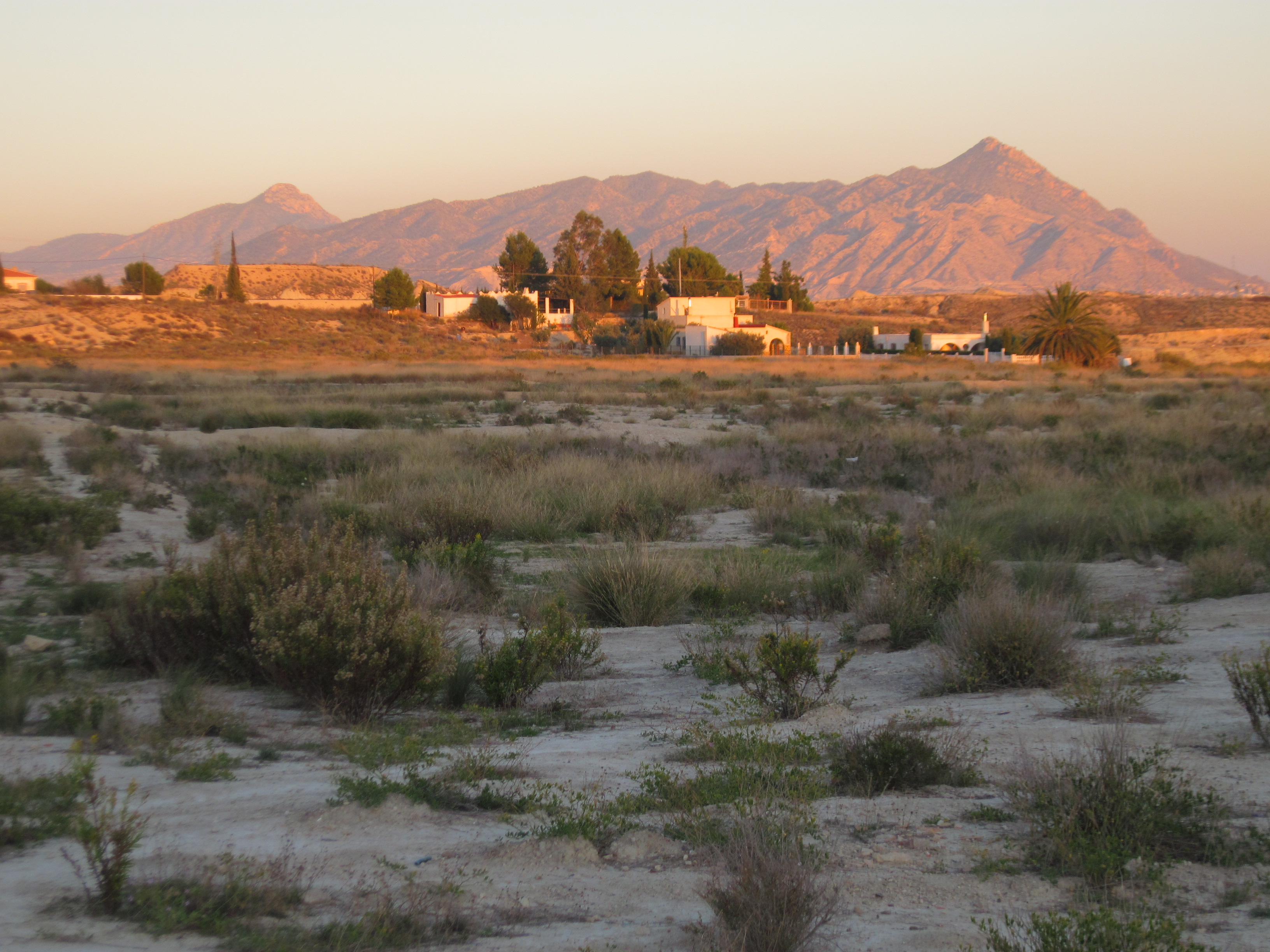
Evening sunshine at Banos de Fortuna

Fortuna was the Roman goddess of luck and fate and she must have been smiling on us benevolently the day we decided to meander up to Baños de Fortuna, approximately 25 kms north-east of Murcia some years ago.  In pursuit of the Spanish coast, many people overlook small inland Spanish towns and yet we constantly find such places are well worth a stay and offer a different perspective to Spain that is a million miles away from the Costas.

Baños de Fortuna is a village developed around a hot spring and on the edge of the Sierra de la Pila.  It is three kilometres from the small town of Fortuna with a population of over 9,000; enough to ensure it has a supermarket and a weekly Saturday market, as well as a useful tourist information office eager to give out leaflets.  Situated in a dry and arid landscape that will bring to mind cowboy films, this part of Spain has warm and sunny winters that suit us northern Europeans.

The Romans must also have thought that Goddess Fortuna was smiling on them, when they found running hot water near Fortuna.  Banos de Fortuna has now developed into a small settlement, with two campsites and a spa resort.  We chose Camping La Fuente, a very well provisioned and excellently presented site; the main attraction being a large naturally heated swimming pool.  The site has generous gravel pitches, many with their own bathroom and all with sun-shades during the summer.  Laid out in crescents and small terraces you never feel that you are surrounded by lots of other campers, even when it is busy.  Around the pool are a bar and reasonably priced restaurant with terrace, the staff are helpful and knowledgeable and the campsite facilities include a hotel and bungalows.  At around 08.30 every morning we heard the welcome horn of the bread van that tours the campsite and tempts you with crusty bread and Spanish cakes.

Campsite guests can use the pool for a reduced daily rate and with a temperature of 35C some campers will spend most of the day lounging and chatting in the warm spring water, relieving their aches and pains and putting the world to rights.  A dressing gown, flip flops and swim wear is almost all the clothing you need if the pool is your prime reason for staying at Camping La Fuente and clearly many people visit to relieve their mobility problems.  The site is popular with German visitors and is busy through the winter months and it might be worth ringing ahead and booking if you plan to be here from January to March.

Fortuna continued to smile on us and during our week long stay in November.  We enjoyed sunshine and temperatures in excess of 20C each day; warm enough for shorts and to sit outside and enjoy a breakfast of fresh bread rolls from the bread van, greeting early morning swimmers on their way to the pool.

Lovely as the baths are, it would be a shame to come here and not explore the area.  We enjoy walking and cycling and found this was a campsite with plenty of opportunities to indulge in both.  Just a few minutes’ walk from the campsite is the spa resort, this has been renovated and the hotel buildings have been painted in bright colours that pick out attractive plaster work details.  There are benches and shady gardens of palm trees dotted around the spa and a smart souvenir shop which are certainly worth a wander around.

Using a photocopied map from the campsite reception and Spanish instructions, we set off to climb the 585 metre high hill visible from the site.  The walk was graded on the map as being of medium difficulty and it proved to be a steep and interesting climb through aromatic scrub of fragrant rosemary, lavender and thyme, with occasionally yellow and white splashes of paint on jagged rocks to assist our route finding.  The last few metres were a scramble that required hands and knees, but we were rewarded with extensive views across the dry, semi-desert landscape, dotted with brilliant green areas of cultivation and a peace and quiet you don’t find on many British hills on a sunny day.  We managed to navigate a less precipitous route back down the northern flank of the hill, eventually finding a trail through bushes and past tall agave plants.

The main road to Fortuna is a fairly busy one and the fast rumbling lorries from nearby quarries mean this isn’t a pleasant route for a leisure cyclist.  However, there is no shortage of quiet minor roads that make for very pleasant cycling.  The road to Capres from Banos de Fortuna is a little used, but well-surfaced road that climbs steeply up to the village for around five kilometres.  We rested on benches outside the low white church in Capres while we ate our picnic, the only thing to disturb us were the sounds of sheep grazing among the trees above the church, watched over by a sleepy shepherd.

La Cueva Negra, north of Fortuna, is also worth a trip.  This large cave, as the name suggests, has black walls which are covered with graffiti inscriptions, some dating back to those Fortuna seeking Romans.  There is plenty of parking here and public barbeques and it is clearly a popular spot at weekends, although on a November weekday we had it to ourselves.  We walked up to the cave and watched the Crag Martins and Black Wheatears flitting around the rocky cliffs as we looked down over an expansive landscape of low modern villas and citrus and olive trees.  On the same cycle ride we took in the Ermita at Cortao de las Peñas on the edge of the Parque Regional de la Sierra de la Pila, a roadside monument painted white, that is an extension of the surrounding cliffs.

A different day’s cycle ride found us exploring the area to the east of Fortuna and the nearby town of Abanilla.  We cycled through a confusing criss-cross of lanes, through lemon and orange groves and small housing estates, past industrial farming units and along irrigation channels.  This area is less hilly and more suitable for the lazy cyclist.  Although arid, many crops are grown in this area, as well as citrus fruits, peaches and olives, you will spot almonds and market gardening.  Abanilla is a pretty little town, with an attractive town centre and steep narrow streets and steps leading to pleasant plazas.  This is not an area where you will find stunning crowd-puller attractions, but we always enjoy the chance to explore small towns that are off the tourist circuit and ignored by the guide books.  Our 35-kilometre cycle ride saw us returning via La Huerta and on the eerily quiet A-21, through a landscape of dry gorges with peregrine falcon’s calling overhead.

Once you have exhausted all the nearby attractions, or if even the hot springs can’t ease your saddle sores, there are places of interest to visit in your campervan.  We had a splendid day driving along the Rio Segura valley north of Murcia to Archena, another ancient spa town and Cieza, where the huge fields of peach trees must be a riot of colour in spring.  To the south east is Orihuela, a charming town on the banks of the Rio Segura with fine buildings, a hillside castle, swathes of palm trees and a fascinating underground museum, the Museo de la Muralla, where you can see the remains of the old city walls and Arab baths

Hopefully, the Goddess Fortuna will smile on me and let me visit more of this interesting area of Spain at least once again.

La Villes-aux-Dames and Tours

06.19.2018 Tours (12)
La Ville-aux-Dames mural on one of the schools

In 1974 the good people of La Ville-aux-Dames near to the city of Tours in France decided [very appropriately] to give only women’s names to their streets and roads.  I loved finding La Ville-aux-Dames [the town of women] but didn’t expect the town to have taken the female theme to such amazing heights.  Even on the lovely campsite, Les Acacias in La Ville-aux-Dames all the chalets are named after women; you can stay in Edith Piaf, Maria Callas and others.  Taking a stroll around the local area I found not only are the roads named after women, the local schools are too; as well as Avenue Jeanne d’Arc, Square Mary Queen of Scots and Rue Colette I found École élémentaire Marie Curie.  Some names were less well known to me and had me checking them out; Gabrielle d’Estrées advised Henry IV and had three children by him and I learnt that Anna de Noailles wrote three novels and poetry.

The mural in the photograph above is on one of the local schools and has images of nine French women;  Marie Curie, George Sands, Colette, Lucie Aubrac [history teacher and resistance member] and Berthe Monsit [impressionist painter] and others.  I was delighted to think that all the children who attend this school will know who these women are and what they achieved, adding a bit of balance to the male-dominated history my own schooling involved.  Just walking around the streets was an education.

The name is testimony to the abbey for nuns that was here and it is said the name La Ville-aux-Dames comes from the old name for the area, Villa Dominarum, the Latin for ladies town.  Surrounded by excellent agricultural land the local people produced milk for Tours and the inhabitants became known as ‘Caillons’ after their curd cheese.  In November La Ville-aux-Dames’ Marche des Caillons, a sponsored walk, attracts over 400 people.  Today the inhabitants of La Ville-aux-Dames call themselves Gynepolitains from the Greek words for women and town.

The campsite proved to be fantastic for visiting the lovely city of Tours.  On the confluence of the Rivers Loire and Cher we had no expectations of this city and so its beauty and charm was a surprise.  We cycled the seven kilometres in to Tours along the Loire cycle route and chaining up the bikes pottered around fairly aimlessly.  We knew of no ‘must see’ sight so we were free to just wander and admire with no pressure.

Starting at the cathedral we had coffee and cake in a lovely cafe and then followed lively streets to the old city.  Here there are pretty squares surrounded by 15th century timber-framed houses with amazing narrow extensions on the back for staircases; these looked very Disney-esque and heath robinson.

In the big market hall we explored the lovely stalls and bought fresh vegetables and local cheese and yogurt for our evening meal.  We ate at a cheap and cheerful burger and kebab cafe in a lively square and finished up with sweet peppermint tea.  Walking back to our bikes by the River Loire I fell in love with the elegant fountain [below] in the Place Anatole in front of the library.

06.19.2018 Tours (8)
Beautiful and vibrant Tours

Campsites during our trip to Croatia, Italy & France

06.15.2018 Le Poet Celard (3).JPG
The lovely campsite at Le Poet-Celard

During our trip through Germany and Austria to Croatia [with occasional excursions in to Slovenia] and on to Italy and France we stayed on 37 campsites.  Each site has some notes about our experience of the site:

Campsite nameNumber of nightsCommentsCost
Camping Freizeitzentrum, Sagemuhle, Trippstadt, Germany1Large site by a small lake with bar & restaurant, lovely clean faclities, very hot water & indoor wash up, grassy pitches on well drained soil & open site, very good bread rolls£19.50
Hofgut Hopfenburg, Munsingen, Germany2Open site above the town with hard-standing walking from site in woodland, facilites excelletn, clean, warm, very hot showers, indoor wash-up, drying room, fresh bread, great site for €15.  For a fuller review read here.£15.00
Alpencamping Mark Weer Austria2Green site with grass & trees & friendly welcome, walking & cycling, clean facilities, good hot showers, bread rolls & lots of info£17.00
Camping Goldeck Seeboden, Austria1Grassy terraced site with clean facilities, building work going on & entrance steep, facilities dingy & cold but warm water, air of neglect£19.00
Camp Slapic, Duga Resa near Karlovac, Croatia3Nicely laid out site with open & shady pitches by river, English spoken at reception, lovely modern facilities, bar & restaurant, walking & cycling & railway station 5 mins away£19.00
Camp Marina Lozovac Sibenik, Croatia2Small site with marked pitches & some shade, clean facilities, roomy shower/wet rooms & hot water that runs continuous 2 kms from national park & excursions from site£15.00
Autocamp Peros Zaton Nin, Croatia1Small site, friendly welcome, grassy with trees, facilities basic but the water is hot & showers fine, peaceful, a few kms to Nin a lovely old town£17.00
Bluesun Camp Paklenica Starigrad, Croatia4Large site by the sea with bungalows & chalets, stony ground, level & pine trees for shade, modern facilities & good hot showers with no push buttons & roomy cubicles near the town£17.00
Hostel Plitvice Rastoke Camperstop, Slunj, Croatia1Car park with fantastic views over the river gorge to the town and EHU.£15.00
Camp Slapic, Duga Resa near Karlovac1Different pitch, the site now has bread in restaurant£19.00
Vugec Plac Camper Stop Samabor, Croatia2Small site for 4 vans, flat & grassy with 1 bathroom & sitting area / itchen & pool, all new & clean, hedged & gated in peaceful area with open views, good hot shower, friendly owner£20.00
Terme Olimia Camping Podcetrtek, Slovenia1Clean facilities, shaded pitches, aquapark not open so fairly peaceful but some road noise£17.00
Camping Terme Ptuj Slovenia1Grassy site, pitches in circular areas, busy with group from Netherlands, good hot showers£19.00
Camping Amarin Rovinj Istria, Croatia2A large grassy sloping site with trees, facilities basic but clean & hot water, fresh bread & shop water taxi & bus to Rovinj£17.00
Motovun Motorhome Parking Motovun, Croatia1Sloped gravel parking area for 12 vans, some trees only 1 shower & 1 toilet per sex, good hot showers & water by pitch£25.00
Camping Park Lijak Active Sempas near Nova Gorica, Slovenia1Grassy site with views of hills, friendly welcome, facilities modern & clean, water in showers only just warm enough, €5 tourist tax£17.00
Belvedere Pineta Campng Village Grado Italy3Large site by lagoon in pine woods, good size pitches, cycling routes from the site, no toilet seats or toilet paper, €17 on ACSI (we used some free camping cheques) good hot showers, supermarket, restaurant & bleach, wi-fi €5 a day£0.00
Lago 3 Comuni Alesso, Italy2Small site with pleasant bar, small pitches, showers push button & barely warm but facilities clean by a lake & mountain views£21.00
Sosta Barcis, Italy1Level car park by lake & cycling from site, small town with some shops, toilets nearby & water & electric on pitch, some music noise until 01.30 it was Saturday£14.00
Camping Lago Arsie, Italy2Level grassy site by lake with shop & restaurant, good size pitches, very little shade, helpful reception, showers hot but showerheads a burst of water rather than a shower, facilities modern£19.00
Camping Valle Verde Predazzo, Italy3Excellent & peaceful site in mountain valley, given a map of 10 local walks & cycle routes, facilities clean, toilet paper & paper towels, good hot showers£19.00
La Sosta, ponte di Legno, Italy1Car park on the edge of the mountain town with cafe & hook up, slight gradient, toilet with cafe, water on pitch£15.00
Camping Presanella Temu, Italy1Lovely views from this grassy site, clean facilities, cycle route from site, free wi-fi, hot showers but no heating in facilities£28.00
Camping Covelo, Iseo, Italy4Small site between lake & railway line, cramped pitches, friendly & helpful staff, good hot showers & clean facilities, near to town, extra €2 for lakeside£19.00
Montgenevre Aire, France1Large gravel aire with views over the village & mountains at 1,859 metres£13.00
Le Glandasse, Die, France2Large friendly site by the river popular with Dutch, marked pitches, showers small & push button, clean & almost warm enough, no toilet paper£13.00
Champ la Chevre, Lus-la-Croix-Haute, France1Sloping site with few level pitches but open views to the mountains & by village, indoor pool, good hot showers & clean facilities£15.00
Les Chapelains, Saillans, France2Small site by a town, friendly welcome, marked pitches, facilities open & showers only lukewarm & push button£15.00
Les Clorinthes, Crest, France1Level site with trees, friendly welcome & near to the town, facilities clean, showers push button & could be warmer£17.00
Le Couspeau Camping, le-Poet-Celard, france2Terraced site with wide open views across to hills, friendly welcome, 5 hrs of free wi-fi, all facilities, peaceful location, modern facilities & good hot showers, restaurant & bar£15.00
Camping de Mars, Cordelle, France1Overlooking the Loire, peaceful spot, facilities a bit dated & showers tepid, friendly rabbit, paid with free camping cheques so only paid tourist tax£1.10
Couleurs du Monde, Montrichard, France1Level site next to supermarket & 1 km from Montrichard & the Cher River, wrist bands obligatory, facilities clean but water tepid, popular with English£15.00
Les Acaacias Camping, Tours, France2Level site with some road noise, friendly & helpful welcome, good facilities, showers roomy & warm enough, 7 kms cycle route to Tours£17.00
Camping Les Plages de Loire, Rochefort-sur-Loire, France1Flat site by small town between Le Louet & Loire, facilities mixed, showers have been updated but were not very warm & push button, wash up is somewhat grim, pitches marked but narrow£13.00
Les Paludiers, Batz-sur-Mer, Le Croisic, France2Large rambling site with marked pitches, some very sloped, showers were roomy with sinks & warm enough in good weather, helpful reception£17.00
Municipal Campsite Corlay, France1Grassy area by play ground with hook up for 4 vans, toilets, basins and showers that were hot & good but a bit scruffy, no one came to be paid£0.00
Riva Bella, Ouistreham, France2Flat site near town & supermarkets with indoor pool but also peaceful corners, modern facilities, roomy showers with wash basins that had warm water£17.00
Camping La Fontaine des Clercs, Montreuil, France1The pleasant aire was full so we used this terraced site with some small pitches & dated facilties, free wi-fi, showers tepid but very hot water in sinks, popular & busy£19.90

Life in the day of a travel writer

06.22.2018 Batz sur Mer and Le Croisic (4).JPG
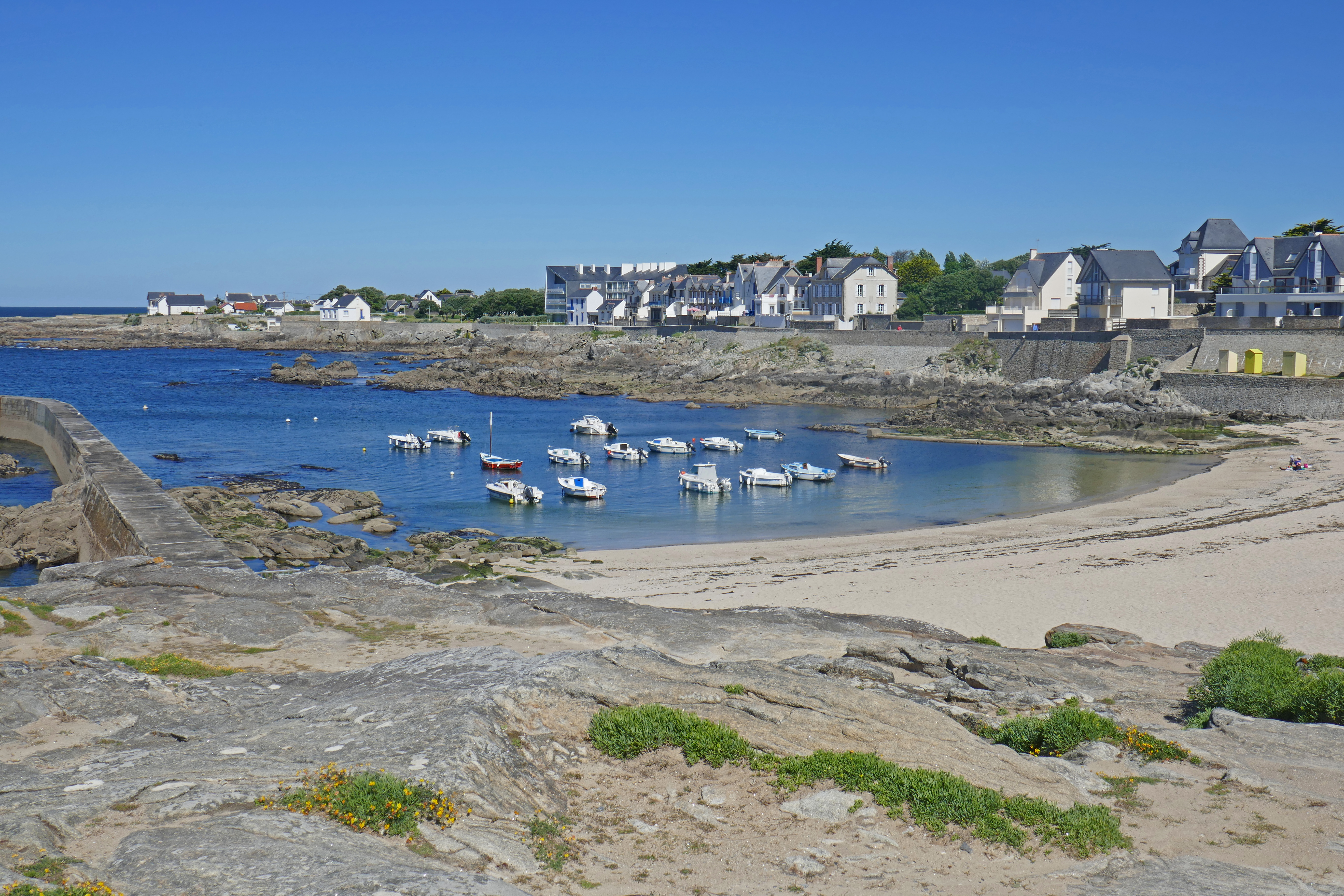
The beautiful bay at Batz sur Mer


Is being a travel writer non-stop glamour, always in business class on the plane and being wined and dined at the launch of a new hotel?  Well it isn’t like that for this campervan travel writer and I wouldn’t have it any other way.  I only write about my travels because I enjoy sharing the wonderful places I have visited and want to inspire others.  Each trip I make is a real trip that we have paid for ourselves and are trips that anyone with a ‘van could make.  I am not interested in writing about luxury tours that I wouldn’t make if someone else wasn’t paying.  I guess if you are a travel writer or editor invited on to press trips for the PR then your days might be glamour-packed but for the travel writer without a commission this is a long way from reality.  First and foremost the trips we follow in our campervan are our holidays, the payment I get for writing about it is a bonus that comes after the event.  Below might give you some idea about how much work it takes to create an article.

The work starts even before you pack a bag

Research – This can start months before we set off on a trip.  I read travel books and articles, watch TV programmes and follow other travel bloggers and sometimes a story or a place grabs me and sparks off an idea for a trip that I will run with.  Sitting at my laptop I research exciting places to visit in an area, stories that might interest readers, campsites and walking or cycling routes.  I will also look at ideas for the best photographs of the area.  This is generally internet research but I also read guide books and walking guides to learn from other people’s travels and find out about places we might enjoy visiting.

The weather – As I said these are real holidays and trips and so we get all sorts of weather but travel magazines want to see blue sky and sunshine.  In the days leading up to a trip or THE important venue during the trip I check the weather forecast obsessively – a dull day means I have to be more creative with my photography and rain plays havoc with photographs and my camera.  Magazines require good quality and colourful photographs that will inspire readers and my writing is nothing without good photographs to illustrate the words.

We arrive

Being there – This is the holiday, the easy [thanks to the planning] and certainly the most enjoyable part.  We are there and visiting the place of interest or following the walk I have planned.  At this point I am truly on holiday, as with no commission in my pocket I have no idea if an editor will buy my story.  I am in the moment and appreciating and absorbing the colours, smells and feel of a place while also taking hundreds of photographs and cursing street furniture, signs and other visitors that get in the way.  Of course I am still a writer and so I am always on the look [or listen] out for that extra something that will help make a place come alive for readers.

That evening

Sifting the photographs – I try and sort through my photographs while the day is still fresh in my head, deciding which are worth working on and which didn’t come out as I hoped.  I am a writer not a photographer and make no claim of expertise in this area.  By going through the photographs immediately I can check their quality and if they are all a disaster we might have chance to go back for a second try.

Edit the best of the photographs – Using Photoshop I try and do this on the same day, otherwise I end up with a backlog of hundreds of photographs to edit.  This can take hours!  Sometimes Mr BOTRA reads to me while I edit 🙂

Writing up notes about the things I have seen – I am a bit old fashioned here and always write my notes in long-hand in a journal at first, the pen and paper experience seems to help me to think.  I will type up these notes either that day or later and use these notes as a framework for a story.  I note down smells and sounds, as well as what we have seen and snippets of conversations that I liked, all this helps to bring the place back to me once I start writing.  I also need to keep notes of the cost of campsites and entrance fees as these are often required by magazines.

Back-up photographs and notes – I am terrified of the photographs I have worked so hard to get going missing and so I am a bit obsessive about backing up.  Photographs are left on the SD card and as well as the laptop are copied to a pen drive and a hard drive, just in case the camera and / or the laptop goes missing or gives up the ghost.

File away useful leaflets and information – I also keep leaflets from venues and for walks so that back home I can check the correct name and spelling and maybe opening times, rather than just rely on the internet.

More backing up – If wifi is available I will upload the best photographs to the web as well as the obsessive back-up procedure.  Sometimes campsite wifi can be very slow.

Back at home

The writing and editing and writing and editing …. I don’t normally start writing my articles until I am home, although ideas will have been meandering around my brain during the trip and added to my notes.  This is not a nine-to-five job for me and so I have the luxury to be able to be a slow writer and generally spend around two weeks on a 2,000 word article, constantly checking facts, seeking the right words to describe a place and adding the reference information.

Choosing photographs – From the hundreds of photographs I have taken this gradually has to be whittled down to the 30 photographs that I think would look best in a glossy magazine.  This can be a painful as well as a time consuming process.

If you still want to have a go at being a travel writer I can highly recommend it and there is some useful guidance here.

In contrast

At the end of our trip around Croatia, Italy and France we had a few day in Brittany that won’t appear in any of my travel articles.  We were meeting friends and socialising in the the lovely resorts of Batz-sur-Mer and Le Croisic and later in the pretty inland town of Corlay in Brittany.  It was these few rest days that inspired me to write about the work involved in being a travel writer, as the down time I had made me realise how much free time I have when I’m not doing all of the above!


Why I love cooking with my RidgeMonkey grill

2018 March Devon Conversions meet Melton Mowbray (29).JPG
Aubergines cook well in the RidgeMonkey

I bought a RidgeMonkey grill / sandwich toaster after a recommendation from another campervan owner [thanks Andrew Ditton] and what a revelation it has been, almost transforming my campervan cooking overnight.  We generally have home-cooked food in our campervan, eat out in restaurants only on special occasions and only buy occasional veggie sausages for a fast food meal, so cooking is an important activity in our campervan.  Previously I have struggled, even with a lidded frying pan, to get my cooking really hot when trying to brown or char peppers, aubergines, asparagus and other vegetables.  They would cook but the pan never got quite hot enough to get them beyond soft and cooked to that attractive golden brown finish.  Making Spanish omelette was problematic too as they took a long time to cook through.  All these problems have now been solved by splashing out [£22] on a RidgeMonkey sandwich toaster.

This wonderful item is sold to anglers as a sandwich toaster, enabling them to make a hot meal while on the riverbank but it is so much more than that.  I am sure it will make toasted sandwiches but I use it for vegetables, omelettes, warming crumpets, hot cross buns or baking fresh pitta bread and I feel sure over the years I will find so many more uses for this practical and versatile piece of kit.  Other people report using their RidgeMonkey to create a full English breakfast and roast potatoes, the list of things you can cook in this wonderful pan is only as long as your imagination.

The RidgeMonkey opens in to two identical halves, both with a non-stick finish and each is just over 2 cms deep.  The dimensions of the XL are 20.5 x 18.8 cms, so it isn’t enormous and I would suggest you buy this size as it works well for cooking for one or two.  The long handles stay cool and fasten and clip together allowing you to turn it over and cook items such as omelettes or hot cross buns on both sides without turning them over.  This mechanism also locks in the heat and means I can enjoy golden brown aubergine [and other veg].  With a non-stick finish the RidgeMonkey is easy to wash and they now come with a selection of utensils that won’t scratch the non-stick finish.

Crumpets
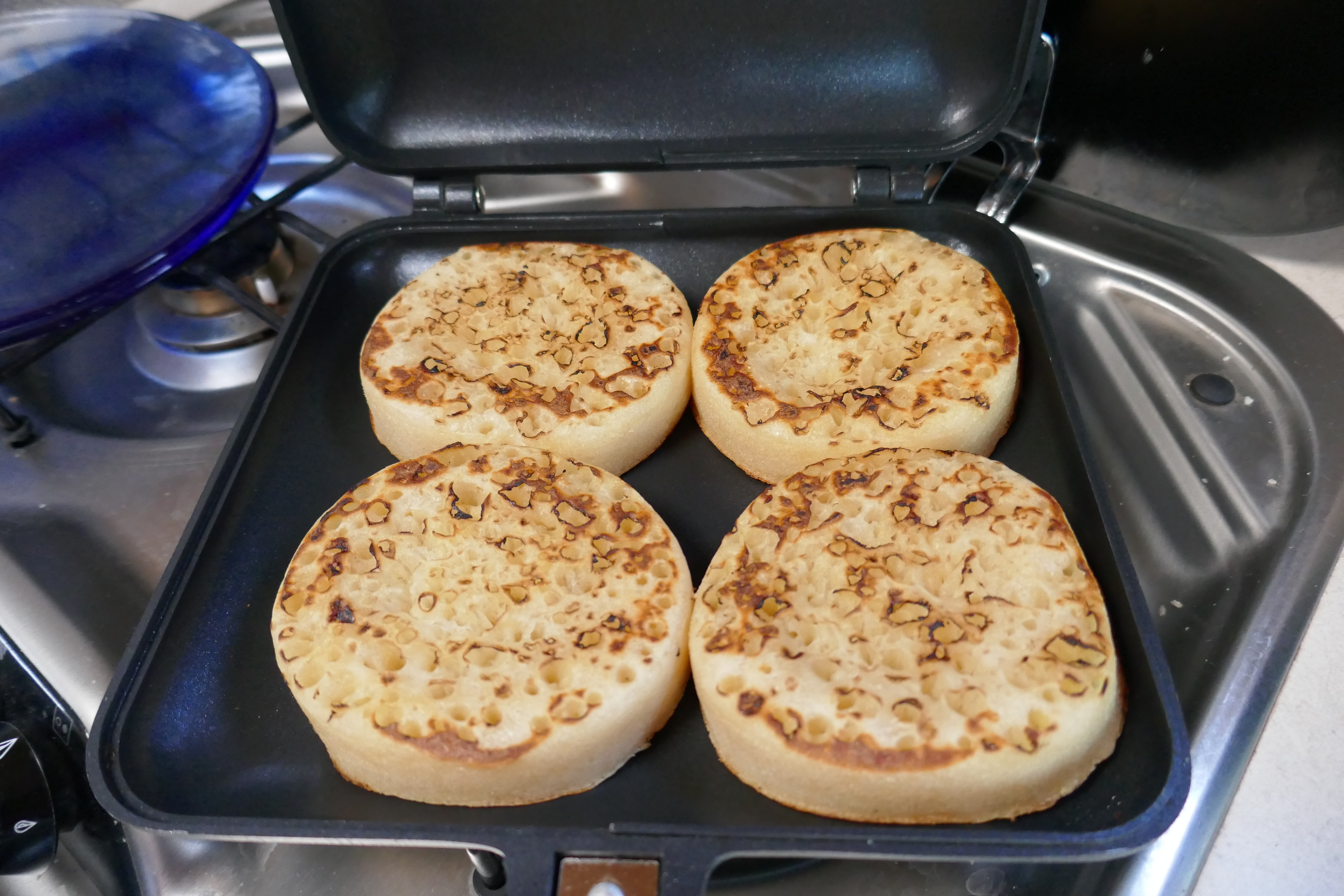
Crumpets in the RidgeMonkey taste better than ever

‍

Reasons travellers love the internet

2011 August van pictures 014
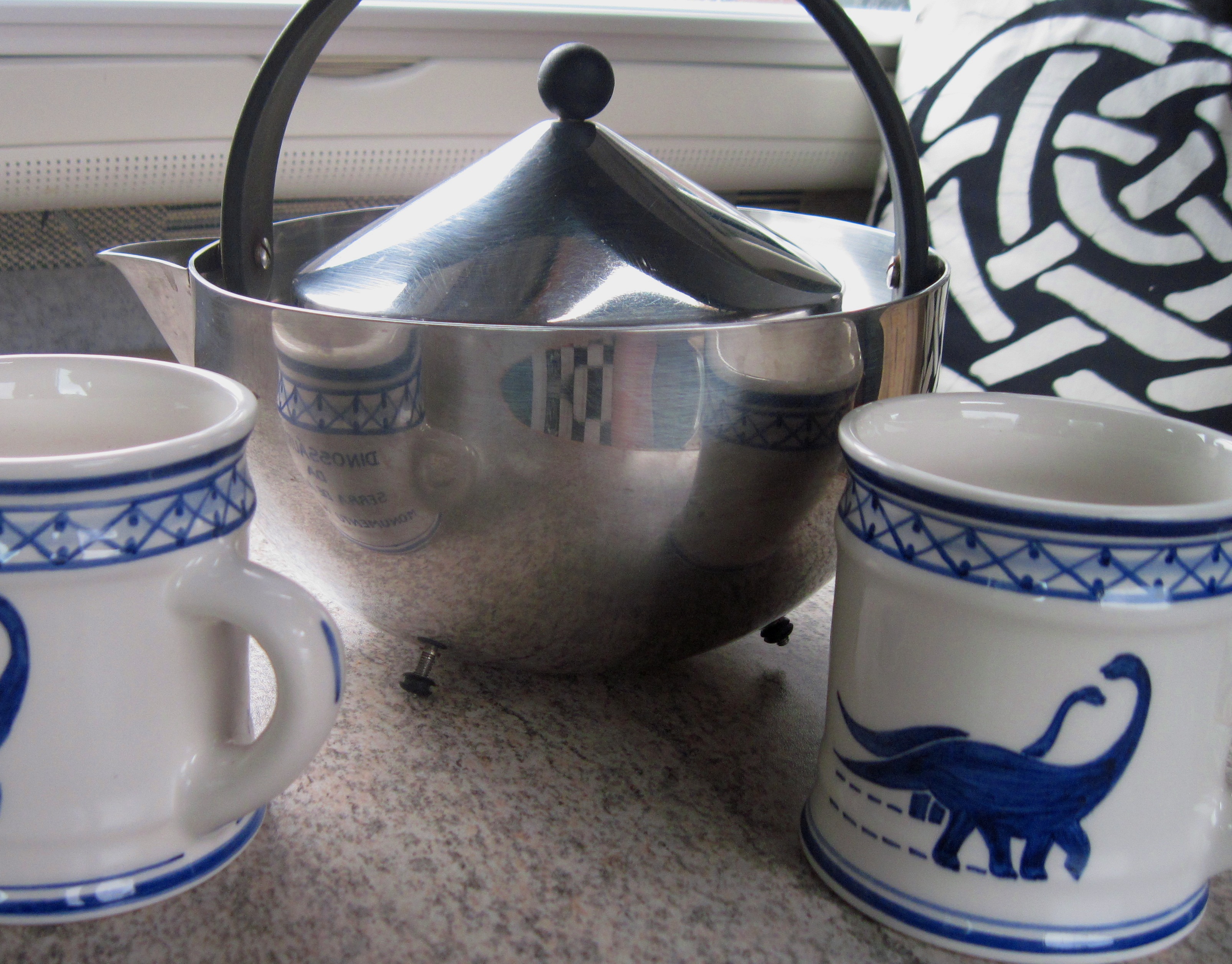
We use our Portuguese dinosaur mugs every day in our campervan

For the first thirty-years of my life I was waiting for the internet to become available; I wasn’t clever enough to put my finger on just what it was I needed but when it arrived I knew the internet was going to become an indispensable part of my life. I know we all managed without it through the dark years but so many things would have been so much easier if it had come along just a bit earlier. I use the internet for many things but for me as a travel writer it is particularly useful for planning and writing about travelling and holidays. Here’s a list:

Campsites – Through the 1980s and 1990s we took our young son on backpacking holidays around Europe; trips that required a bit of planning. Months before our trip we would write to various tourist information offices requesting leaflets about the area. We might find some details about local campsites in these or in a Rough Guide but we would have little idea how good or bad the sites were until we arrived. I have lost track of the number of times we have trekked out of a town to a campsite only to find it is either full, unfit for human habitation or closed. While this can generate fun travellers tales after the event at the time it was always stressful as we sorted out overnight accommodation for a family of three.

Train timetables – A few kilos of the weight in our packed rucksacks was due to the hefty European timetables book. This is a marvellous publication that opens up all sorts of possibilities and I always loved browsing through it but it isn’t very portable. Just think if we could have checked train times on our phone! We always travelled to Europe by train and booking these trains required joining a long snaking queue at Manchester Piccadilly around eight-weeks before we travelled to select the complex combination of trains and couchettes we needed to get us to Italy, Spain, Germany or Czechoslovakia.

Local bus times – We might receive some general information about local buses in the brochures from the tourist information centres but, as we often had little idea where we were actually going or what there was to do in an area, we had to spend a chunk of our holiday time seeking out this information in person. Hanging around information centres was an aspect of our holidays that was always particularly boring for a small child. I remember booking our trains back from what was then Czechoslovakia; this involved firstly finding the right office and then hanging around for many hours with mostly little idea of what was going on as systems were checked and connections calculated.

Buying maps – Before the internet I either bought maps locally or had to take a trip all the way south to Stanfords in London to buy maps for foreign places (although you could ring and talk to the marvellous and knowledgeable staff, send a cheque and buy that way). Not having a map is not an option for me, I like to know where I am. I still get a thrill from being able to search online and buy maps from the comfort of my own home.

Top attractions – Today there are so many websites to check out what there is to see in a city, there is no danger of missing the top sites [I doubt anyone wanders around Milan failing to find the Teatro alla Scala anymore]. For those ‘must see’ attractions with long queues you can now book timed tickets in advance. We would miss this convenience now wouldn’t we?

Staying in contact – Trying to get to grips with the bureaucratic nightmare of an Italian post office takes any fun out of sending postcards; even finding the right queue for stamps to the UK is mystifying. When eventually we had purchased the correct stamps we would spend hours writing these postcards [trying to think of something different for each one] before sending them home; if we were lucky they might arrive before we did. Today friends and family can read my blog or we can send texts or emails as we travel.

Learning the lingo – We bought a cassette tape and book to learn Czech as this wasn’t a language our local library kept in stock, otherwise we borrowed language tapes for a few weeks at a time to try and get to grips with a language. Today I can learn as many languages as I want via Duolingo for free, how cool is that.