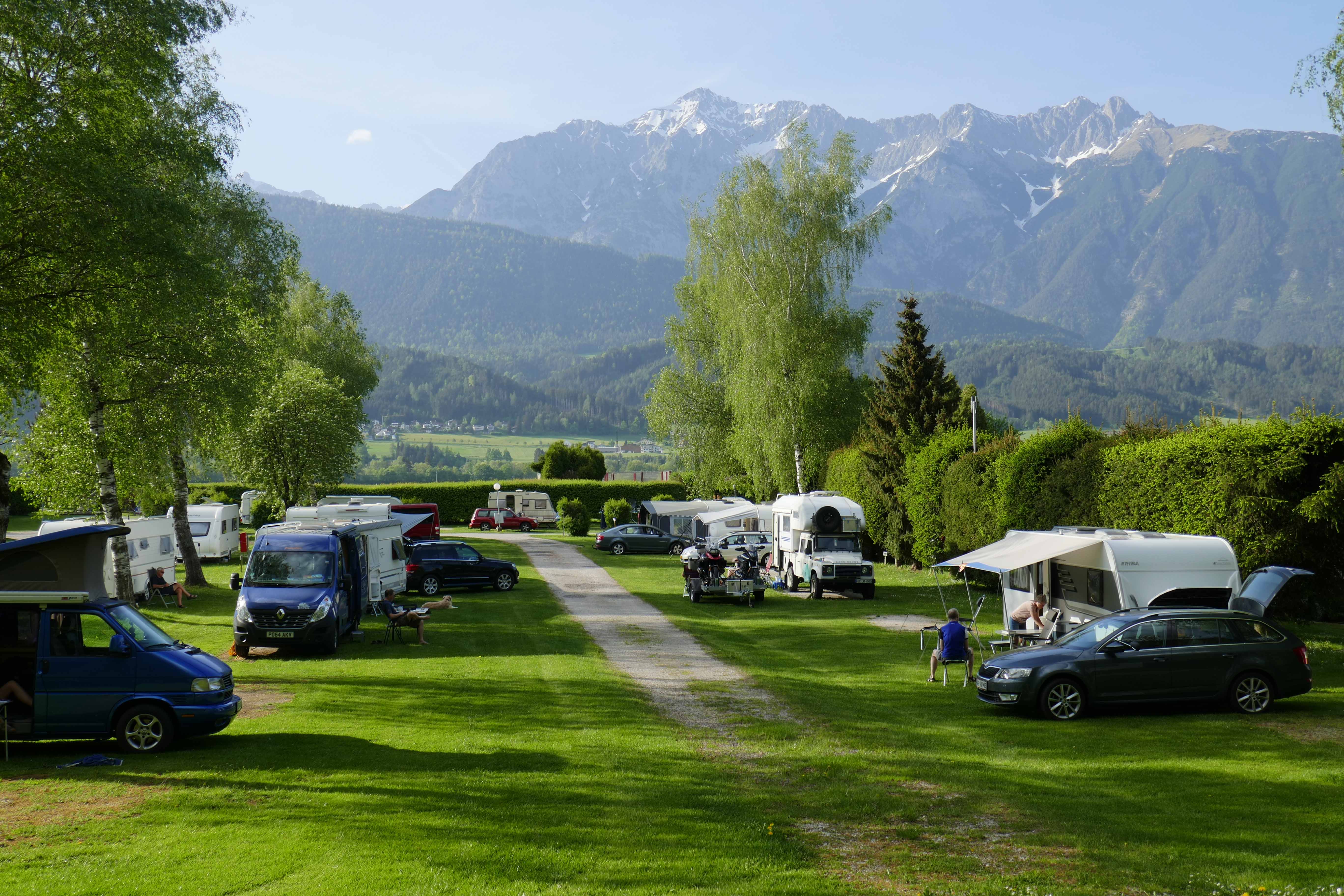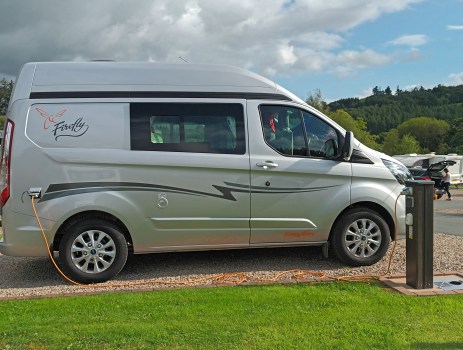
You return to your campervan after a long walk on a cold or wet day and what you need is something warming to eat that only takes 15 minutes max to prepare and cook. In our Blue Bus, pasta is a great go-to dish for these evenings.
I love the taste of fennel but I wonder if it isn’t so popular in the UK. I bought some in our local supermarket recently and the cashier didn’t even know what it was and when I asked admitted he had never eaten it. For me, fennel brings back memories of Italy and the beautiful food that country produces. I also love the fresh spicy liquorice taste and the crunchy texture. You might read that it is good for you but don’t let that put you off, it just tastes great.
This dish can be vegetarian or vegan, depending on your own preference. If you don’t like fennel you could use asparagus, broccoli spears or courgettes in this recipe too, they all also cook quicker than you can pour a couple of glasses of wine!
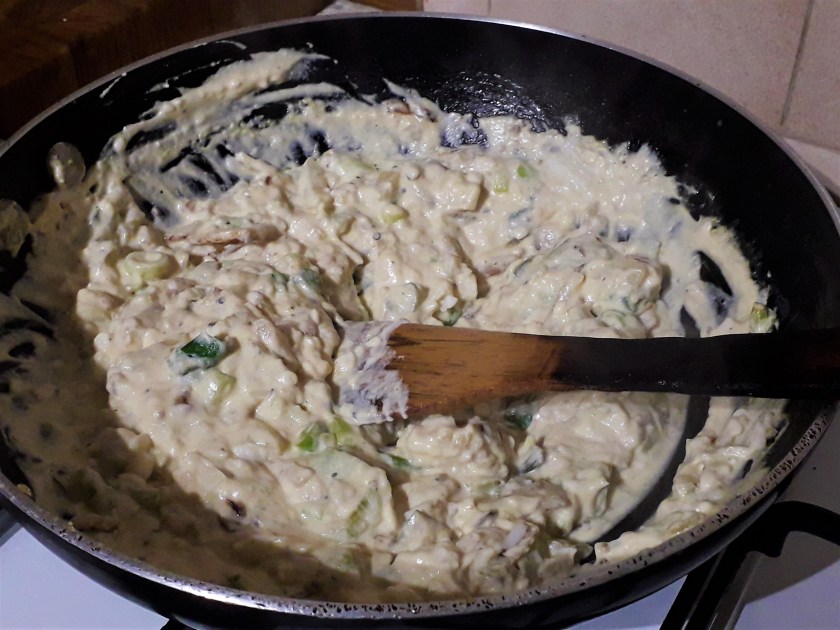
Fennel & Cream with pasta [for two]
1 bulb of fennel
3 or 4 spring onions
3 garlic cloves
1 tablespoon of olive oil
200 – 300 ml of sour cream or vegan cream, grated
100 gm or so of cheese [I used half a packet of vegan Greek white cheese I had in the fridge but anything will do]
Wash and then slice the fennel thinly [I use pretty much all of it, including the outer bulb, the stalk and leaves – just cutting out the hard inner core].
Heat the oil in a wok or large frying pan [or your Ridgemonkey grill] and add the fennel. Stir and cook until the fennel is softened.
Meanwhile put your favourite pasta on to boil as this is fast food.
Add the spring onion, black pepper and garlic to the fennel and stir. then add the cream and warm through.
Finally add the cheese and then season [with the cheese you probably won’t need any salt].
When your pasta is cooked, drain and add to the creamy mixture, stir in well and serve.
After a long day walking I would serve this up with a bunch of rocket if we had it and a glass of red wine [we always have this].
I would like to thank Jackie and Mark [and of course their canine companions] from the excellent blog World Wide Walkies for this nomination for a Sunshine Blogger Award. They gave up work, bought a caravan and four cavapoos, sold most of what they owned and began travelling full-time, mixing up living in their caravan with rentals. They have a tremendous sense of adventure and their posts are always entertaining and thoughtful.
The Sunshine Blogger award is given by bloggers to bloggers who inspire positivity and creativity in the blogging community.
The Rules
Thank the blogger(s) who nominated you for a blog post and link back to their blog.
Answer the 11 questions the blogger asked you.
Nominate up to 11 new blogs to receive the award. Leave a comment on their blog to let them know they received the award and ask your nominees 11 new questions.
List the rules and display the Sunshine Blogger Award logo in your post and/or on your blog.
My answers
1. What is the inspiration behind your blog and who do you want to reach?
The inspiration for my Back on the Road blog is two-fold. It firstly gives me a chance to document some of our travels in our campervan, the Blue Bus, and secondly gives me time to practice my writing technique and try out ideas, without the constraints and word limits of magazine editors. I hope to reach other people who are interested in living a purposeful and frugal life and who enjoy reading about beautiful and interesting places.
2. Which is your favourite blog post and why?
This is a tough question! I like to write posts that are useful so my top tips for different destinations are great posts that I am pleased with as they get a lot of hits. Everyone likes a drama and so the stats say it is my blog post about our Greek incident – not something I like to remember! I like to tell stories and one of my favourites is the Tale of the Postman, because the incident marks my early retirement and a new life and it is a story of a helpful postman that you might not expect to encounter in Salford.
3. Tell us an interesting or unusual fact about yourself – do you have a hidden talent or claim to fame?
I write another blog about memorial benches I find on our travels and write a mixture of travelogue and the story of the person that is remembered in the bench. This blog was featured on Radio Four recently.
4. Name your favourite song, book and movie.
Song – It is so hard to choose but pretty much anything by Black Sabbath would be in the running.
Book – Today it is Death and Penguin by Andre Kurkov [this choice might be something different tomorrow]
There is no bucket list. I am happy that I am able to explore new and familiar places independently.
6. What piece of advice would you give to your younger self?
Don’t waste your time marrying that first husband, he will treat you badly and try and break you.
7. Living or dead, which three people would you invite to your dinner party and why?
Although I wanted to say three good friends would be my choice, I thought I would play the game. If I was inviting people I didn’t know round for dinner I would get Geezer Butler, bass player with Black Sabbath, Chris Wolstenholme, the bass player with Muse and Stuart Maconie together. We could start with music and see where the conversation went.
8. Is your ideal holiday lying on a beach, climbing Mount Everest – or anything else?
My ideal holiday is being pretty much anywhere with my partner Anthony in our campervan. I like to be somewhere warm but never lie on the beach. My ideal day is walking in the mountains among wild flowers and bird song, the warm sun on my arms and no one else around.
9. What would you do if you won the Lottery?
I did blog about what I would do if I had loads of money and writing my thoughts certainly helped me work out what I might do. I would give some to my favourite local charities, some to our son and daughter-in-law and then spend some on travel, in particular going to visit our lovely friends in California and Australia.
10. How do you relax? Do you have a guilty pleasure?
I don’t feel guilty about enjoying myself and relaxing. I have loved getting lost in books since I was a child and this a favourite relaxation. My biggest fear is running out of books to read while we are away in our campervan!
11. Dogs or cats?
This was the easiest question to answer! I have had the pleasure to live with six different cats in my life.
My Nominees
I follow lots of blogs and can’t nominate them all. I am also aware that after the first flush of excitement has worn off about being given the Sunshine Blogger Award, you might realise it involves writing another post! I tried to give this task to people who will grasp the opportunity with enthusiasm but if any of you want to skip the post that is, of course, your call. I do hope you all think about following some of my favourite bloggers.
OurTour Motorhome Blog – Julie and Jason have reached financial independence and are travelling in their motorhome. As well as blogging they have published several books. Their posts are both practical and fun and always honest about the ups and downs of living in a van.
The Urban Wanderer – Sarah is a Manchester-based blogger whose outdoor travel and lifestyle blog always has something new and interesting to share. Her enthusiasm will win you round and encourage you to get outside and have a mini adventure.
Gail and Keith Blog – Gail and Keith share their motorhome travels, delicious recipes [with mouth-watering photographs] and even tips on wine with a flair and energy. Their blog gives you a feel for life on the road.
Bon Voyage Blog – Jane and Tim are determined not to let life pass them by and are travelling full-time in their motorhome. Their blog is honest, thoughtful and interesting as they share what they have learned as they travel.
Tea & Cake for the Soul – Jo is a hardworking freelance writer and blogger, a music, cake and tea lover who enjoys reading, writing and upcycling. Jo’s blog, like mine, is a mixture of travel and lifestyle. She has tips on surviving the menopause alongside trips along the Basingstoke Canal.
(Get Your) Legs Down – To non-caravanners the title of Richard’s blog might seem unusual. This beer-drinking caravan owner writes what he calls, ‘random ramblings’ but are useful and informative diary-style blog posts about his trips away in his caravan. He has also written openly about his grief following the sudden loss of his partner, Trev, after 27 years together.
Eyes in the back of my Head – Joyce likes to surprise her readers with sensitive and well-observed posts about a whole range of topics. Joyce shares stories from her travels in her motorhome, about life with her dog, reading, nature and astrological psychology and is always a kind and generous blogger.
In Pursuit of a Dream – Deb and Steve are a caravan owning couple, originally from the north, now living in the south and working as wardens for the Caravan and Motorhome Club. Their posts are often funny and always compelling as they follow their dream to, ‘Work less, live more, see more and meet more.’
Brian Jones’ Diary – I have been enjoying reading the journey of this newish blogger. Brian is 60 years old and transitioning into retirement. He writes sincerely about the things that are important to him at this time in his life, his health, family and friends, finances and how to enjoy life in this transition phase.
Gum Trees and Galaxies – This Australian dog-owning couple have adventures in their teardrop camper. The name sums up their trips out to the bush to escape the light pollution and stargaze. As well as camping stories they are enthusiastic about books and their blog has reading tips and #BooksnapSunday.
My 11 Questions
What is your favourite thing about blogging?
What would be your top tip for a new blogger?
Assuming you are still with us, do you think you will still be blogging in five years time?
If you could have something named after you (either your real name, nickname, or blog name) what would it be?
If you could have one super power what would it be?
What is your favourite road trip film?
What is your first drink of the day, tea, coffee, smoothie, water or something else?
What song would you like played at your funeral?
If you could go back in time, what event or period would you go back to?
I was a chef in a previous life and love cooking and eating, what is your signature dish / favourite thing to cook / eat?
Where in the world do you feel you most belong?
I look forward to reading your answers. Thank you all and happy Sunshine blogging!
There are many places that travel writers refer to as one of Spain’s ‘best kept secrets,’ in truth when you visit pretty much any of these so called hidden corners you realise that they are no secret to the Spanish. The Spanish value and conserve attractive villages and on a weekend you rarely have any of them to yourself.
That isn’t to say these places are not worth visiting! We were in northern Spain in our campervan and had been seeking out some of Spain’s Los Pueblos más bonitos, their most beautiful villages. The walled town of Pedraza in the province of Segovia in the Castile and Leon region is one of these villages and was just off our route one wintery Sunday. We decided it would make a perfect detour for an hour or so.
Not wanting to get the Blue Bus stuck in the narrow streets that led to the large car park by the castle, we opted for the small parking area below the substantial walls. It was already busy as we pulled in but this was before lunch time and there was still manoeuvring room.
Glad to find a space, we tucked in without turning around, an amateur error! Almost immediately a small Spanish car came in behind us, so close its bonnet was under our bike rack! An old VW ‘van then tucked in within centimetres of our bonnet and as the car park filled up around us we slowly realised getting out was going to be challenging. We decided to explore the lovely town and hope that all these people were just here for a half an hour stroll.
The Plaza Mayor is the focus of the town with arcades of shops and restaurants, where people were beginning to gather for a long Spanish Sunday lunch. We admired the San Juan church and its lovely square tower on the side of the square and walked to the imposing 13th century castle that has been restored.
After exploring the streets of Pedraza, admiring the view from near the castle and browsing in some of the shops, we returned to a still crowded car park. Cars had packed themselves on both sides of the narrow parking area and turning a 5.4 metre ‘van was now impossible.
The entrance to the gravelly car park was at the bottom and it then sloped steeply up to a gateway which was blocked with hazard tape. We realised we either had to stay here until the Spanish rolled out of the restaurants or, as this was in the direction we were pointing, we could try and use the higher taped-up exit. While I provided extra eyes and waved my arms around, my partner shunted the ‘van backwards and forwards out of our space. Once free he eased between the cars, skidding on the steep gravelly gradient. I ran ahead and quickly hauled the post out of the ground and moved the tape aside. Our Renault skidded through, trailing rubber and we were out!
As I attempted to replace the tape, excited Spanish drivers, having spotted there was now a 5.4 metre space in the car park and a new entrance, tried to drive past me. I was worried someone in authority would suddenly arrive and tell us this exit shouldn’t be used and had to muster my most assertive Spanish to return the tape across the gateway.
We broke two campervan rules on this day. Driving into a busy and tight car park is best avoided and if you do, always turn the ‘van around while you can!
We stayed at:
Camping Riaza, a level site in the Segovia province north of Madrid. There are mountain views from the site and some road noise. A pleasant small town with shops and bars is a short walk away and there is information about local walks. The facilities are clean and the showers are continuous (no push buttons here) and very hot.
We are all heading somewhere aren’t we? Isn’t that destination we are aiming for what the journey is all about? Well, not in my life or on my campervan trips; for me the journey is the main event. I might have a destination in mind but arriving there isn’t vital if something better turns up on the way and I don’t want the journey to end. For me, a trip is a whole event and is about more than getting somewhere and I concentrate on enjoying every moment, discovering all sorts of thing on the way.
We can never turn back time and change the journey we have made up to now. What we can do is choose the direction we are heading in, the speed we travel at and where we linger on the way. Henry Miller’s quote tells us that by having one place as a destination we could be missing the bigger picture.
In life our target place might be financial independence, a bigger house, a new campervan or a happy-ever-after wedding. They might seem it at the time, but these things are never the end of a journey, they are just lay-bys off the road. Your journey will continue through retirement or marriage or the reality of paying for a bigger house.
Ever since I was young and found the travel section in our local library I have wanted to be a traveller. Even then, as a young teenager, I was drawn to those travel writers who didn’t necessarily have a fixed destination but wandered, and reflected on how the journey had changed them. As a teenager I felt that the small village I lived in was suffocating me and knew it wouldn’t be big enough to contain me. I wanted something that was beyond what I knew and I was sure that there were places where I would find new ways of seeing and being.
My early travelling
I was so excited about my first trip abroad to Austria on a school skiing trip. Safely dipping my toe in a foreign country by travelling with friends and trusted teachers taught me a number of things that have been important in future journeys. I learnt patience as we waited out rail strikes at stations and missed train connections across Europe. I discovered real coffee and delicious Austrian white wine and I gained confidence after managing to use my school-learnt German to buy a roll of film for my camera and coffee and cake in a cafe. I also learnt that being homesick, even over 24-hours away from home at the age of 13-years, was never going to be part of my vocabulary.
Confidence vs anxiety
There is nothing like having a problem in a foreign country and having to communicate with people whose language you hardly speak beyond the usual please and thank you to raise the adrenaline levels and bring on anxiety. Up to now, every time we have had to deal with a problem in another country it has related to our campervan. Less urgent things have included buying new tyres and the most extreme incident was the accident in Greece. In every case I have lost sleep worrying about how it will work out and each time we have survived these incidents. I can’t say these incidents haven’t taken their toll but I have learnt what we can deal with together.
Learning tolerance
Even on the best campsite you are in close proximity to your fellow human beings and you quickly learn to live with your neighbours foibles or risk being frustrated and unhappy. We have had next-door campers who have been so noisy we have had to nicely ask them to be quiet. Pitch invasions are common; often it is a walk by but sometimes it is even someone else’s stuff. I have met barking dogs and humans who all but bite! I am generally happiest on empty campsites with no one around but I have learnt to love [or at least tolerate] the breadth of human life and want us all to rub along as best we can.
A New Way of Seeing Things
Travelling to new places exercises our wonderment muscle. Away from home the flowers and trees are different, the weather is new, the houses are unfamiliar, the things in the shops are excitingly different. And so everything takes longer. I will linger over the shopping [something I rarely do at home] and stop to study and photograph flowers and insects. I am curious about the local history and stand in awe at new sights. Coming home, after all that exercise, my wonderment muscle will keep on working and I see all those familiar things as if for the first time.
I am happy that for the moment my journeys continue and my perspective on life keeps shifting.
‘One’s Destination is Never a Place, but always a New Way of Seeing Things,’ is a quote from Henry Miller.
If you want to think more, many other bloggers have mused on this quote.
It was so quiet I could hear the snow making that spooky creaking noise as I placed each foot carefully. The snow was so deep it came above my knees in places and melted into my walking boots and I had no idea why I hadn’t put my gaiters on. The wind was whipped through my layers of clothing and the hail was hitting my face so hard it hurt. I simultaneously felt totally alive and sure I was about to die of hypothermia!
Only one fine day was forecast for the week between storms Ciara and Dennis. ‘Let’s go to the Lake District for the day,’ I suggested, thinking it would be good to make the most of the fine weather after two weeks of being trapped by DIY. The weather was still expected to be cold and breezy so I pictured us wrapping up for a brisk walk through some attractive sheltered woodland, but I left the planning to my partner. As I have mentioned before, he is trying to walk up all the Wainwright Fells and so after consulting his lists and our maps, parked the Blue Bus near the church at Troutbeck. We weren’t early birds and our favoured car park by Trout Beck was busy even on a week day in February and we had to resort to the lay-by up the road.
He pointed up the valley to a snowy ridge and told me we were here to climb Froswick; it was clearly a hill! There also was not even a hint of sheltered woodland, this was a completely exposed route. Only 720 m high, Froswick is on the ridge between Thornthwaite Crag and Ill Bell, both of which we have climbed. Any sensible person would have included Froswick on a walk up one of these bigger neighbours and hardly even noticed the extra exertion. For some reason Froswick had been missed on all of our trips to the surrounding hills and remained without a tick on the list.
In the valley it was a pleasant enough February day but we set off well wrapped up against the cold we expected as we climbed higher. The ground was sodden after the heavy rain during the first storm and we jumped over becks and sloshed across bogs on the path from Limefitt Park, following Hagg Gill.
The hardy Herdwick sheep were sheltering where they could and the other walkers we met were all climbing The Tongue, the distinctive hill that sticks out into the valley. As we climbed higher the landscape became white and the gusts got stronger, the clouds chasing across the horizon and blue sky just occasionally peeping through. Walking in deep snow is hard work and I was plodding on with my head down, using my walk leader’s footprints to show the way. I was wearing five layers of clothing and yet could still feel the chill of the wind on my skin!
Looking up from the plodding, I could see the clouds were still high and the top of Froswick was in sight. I was beginning to think we would get to the top, although I was tired and cold but common sense kicked in and after a brief huddle over the map we jointly decided it would be most sensible to abandon the hill that day.
Descending in deep snow is lots of fun, and much quicker than going up, but it was still almost four in the afternoon by the time we were back at the ‘van. Although we did have our head torches, walking on wet ground is easier in daylight and it is doubtful whether we would have got to the top and back down before dark. Knowing when to turn back is an important skill for hill walkers.
I have no doubt we will be back to attempt to walk up Froswick on another day, I just hope it is a bit warmer.
We spent a month driving through France and then touring Greece. Here are the campsites we stayed at until our dream trip was cut tragically short.
Campsite name
Comments
Pont a Mousson Aire, France
Busy aire by river Moselle and pleasant town, full even in April, shops nearby, toilets and shower until 20.00
Les Cent Vignes Municipal Site, Beaune, France
Tidy site with hard-standing near the town centre, facilities clean, showers warm, hot water for wash-up, water on pitch and 6 amps.
Le Bourget du Lac aire near Chambery, France
Marked pitches, next to campsite, no EHU, can use campsite facilities, open views
Camping Du Bourg, Digne les Bains, France
Good views, chalets, friendly welcome, showers have very hot water but shower head hopeless! Facilities clean but basic, 10 mins walk to town
Camping Val Fleuri, Cagnes sur Mer, France
Marked good-sized pitches, pool, 4 km from sea, facilities clean & modern & showers hot, although push button. Bread brought to pitch in the morning.
Campeggio dei Fiori, Pietra Ligure, Italy
800 m from the sea but peaceful. Marked pitches, hot water, showers small, 15 mins walk to shops
Le Fonti, Cervarezza Terme, Italy
Large site with lots of bungalows, pitch had spectacular views over the valley, sanitary blocks modern with doors, friendly welcome, roomy hot showers & hot water in sinks
Camper Club Mutina, Modena, Italy
Well laid out sosta with some grass & trees, clean facilities & good hot showers, 30 mins cycle ride to centre & given a map at reception
Camping Village Mar Y Sierra, Stacciola near Mondolfo, Italy
Terraced site & shaded pitches, lovely views across a valley to a pretty Italian town, peaceful. Facilities clean & modern, showers cramped but hot, adjustable & continuous
Camping Acrogiai, Riza, Greece
Had a pitch facing the sea, lots of statics, right on beach, pitch sloped, facilities clean & spacious, water lukewarm, 2 small yapping dogs run around freely!
Camping Apollon, Delphi, Greece
Terraced site with stunning views across the bay. English spoken at reception, bread, marked pitches with some trees, hot water for wash-up & showers, clean facilities, good
Afrodites Waters, Ancient Corinth
Very friendly welcome and given fruit & honey. Small gravel site with marked pitches but little space, 2 toilets & shower & wash-up, water lukewarm, 10 mins walk to Ancient Corinth
Nicholas II, Epidavros
On the seafront and under trees, facilities shabby but clean, water only lukewarm for wash up but very hot for showers
Camping Apollon, Delphi
As good as the first time!
Camping Sikia, Kato Gatzea, Pelion Peninsular
Simply the best campsite. Friendly owners, beautiful facilities, peaceful coastal location with lovely views from pitches, great walking from the site, lovely bistro.
If I was a travel agent I might send everyone to Austria!
As Thomas Cook disappeared from our high streets I thought about the travel agent’s role and wondered if it will exist for much longer. This got me thinking … is this a job I should have taken up as a teenager? I could see myself sitting behind a desk with a PC and a stack of brochures, getting paid to inspire customers with ideas for their dream holiday. I would explore with each person what makes them tick, what type of holiday they want, what their interests are and try to fit the people to their ideal destination. Instead travel advice has become something I do freely and perhaps too enthusiastically. I am always chipping in to help [or overwhelm] friends, colleagues and strangers in the planning of their trips.
A typical example is a friend who was taking her first trip to the West Coast of Scotland and asked if I had any places I would recommend. Quite sometime later she left with a long list of what I considered were just a start on my top tips of places to visit in this beautiful part of the world, from the grandeur of Glencoe to the stunning Torridon. When it comes to travel I can never be accused of being unenthusiastic!
Another friend was beginning to plan a trip to Slovenia and asked if I had any recommendations. Never short of ideas, I emailed her a list from my own experience in that gorgeous country and last year I was able to help a fellow travel writer with suggestions for places to camp on a a trip across Germany from the Czech Republic.
In this last month I was asked for ideas for campsites in the Lake District. I had to make myself stop after I had listed ten recommendations, each with a link to the website, a review of each site including its pros and cons and what they can do from the site. At our tai chi class recently I was recommending at length some nearby gardens for snowdrops to a fellow class mate. My enthusiasm knows few bounds and I don’t always spot the signs that I am overwhelming people!
I can’t help putting my two penn’orth in on social media too and this is a fantastic place for the frustrated travel agent. I spot a question about somewhere I have visited and I pile in with ideas and tips for campsites and special places to visit. People ask so many questions about places that are new to them on the various motorhome and campervan groups and lots of fellow travellers will willingly and enthusiastically pipe up with their own recommendations. I don’t need to yearn to be employed as a travel agent these days, I can just spend my days [when I am not travelling] cruising social media looking for people that are longing for my input!
It isn’t all one-way traffic, I am a taker as well as a giver and I am inspired by other people’s trips. I note down new places to visit, ideas for walks and campsites and countries to explore that I find on social media. I also avidly read other travel writers who generously share their favourite places and secret corners to visit via blogs, MMM and Campervan magazines and books.
It is too late for me to be a real travel agent but I can keep sharing my love for travelling with others so that they can also enjoy amazing trips and on the high street Hays Travel seem to be making a success of taking over Thomas Cook, so the travel agent certainly isn’t gone yet!
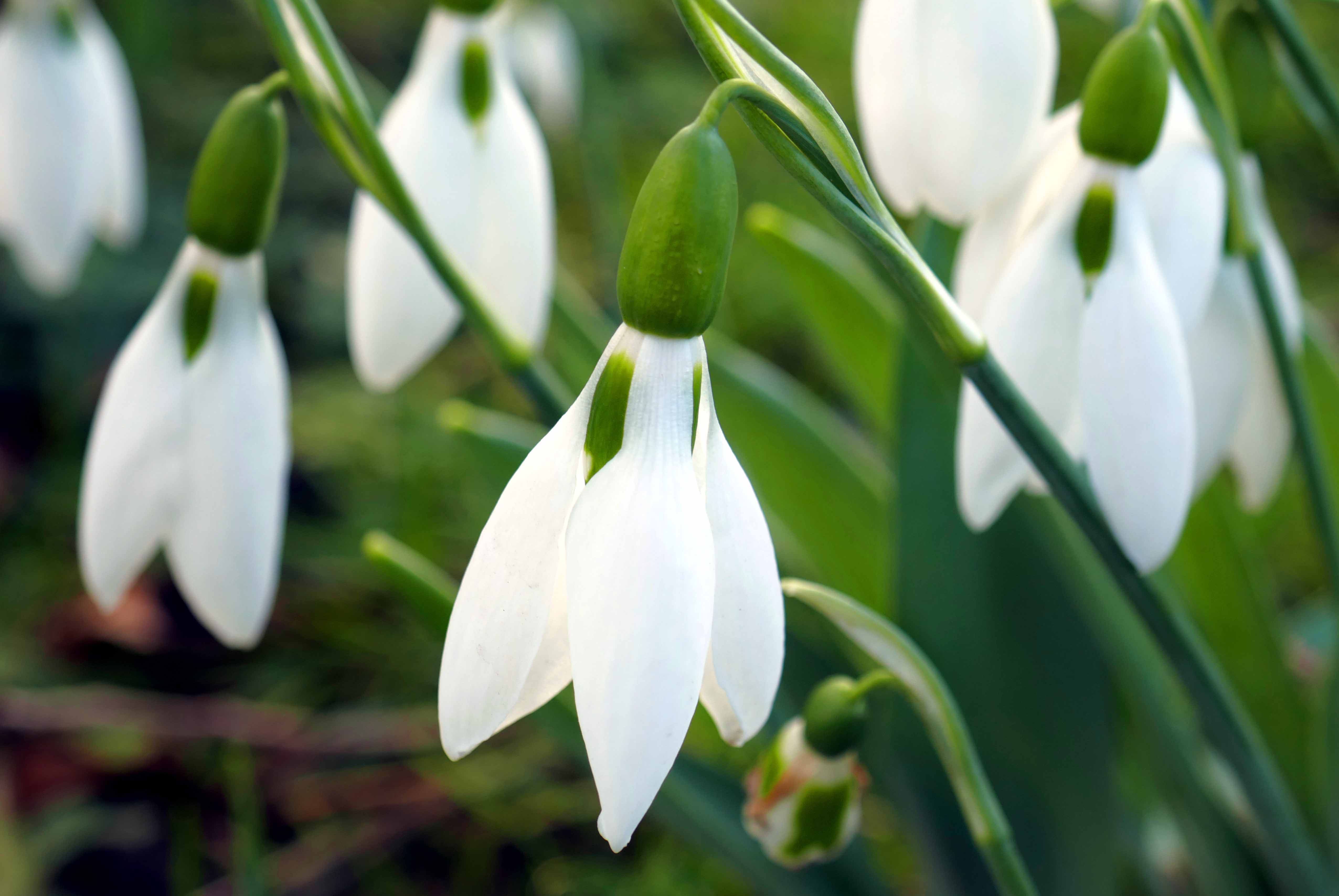
One of the stunning varieties of snowdrops at Cobble Hey Farm
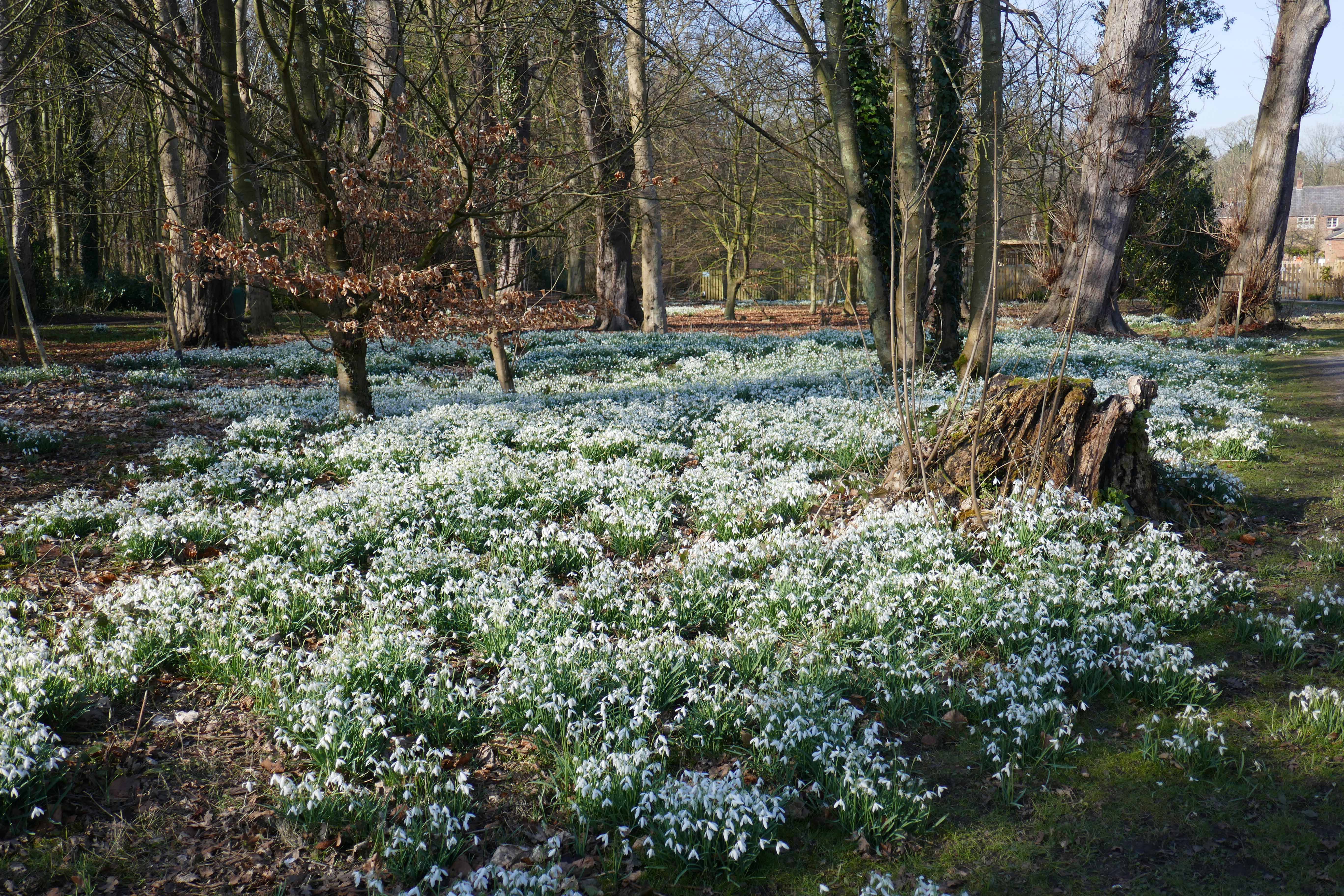
If, like me, you look forward to the days getting longer and warmer, you will be noticing the brighter morning light and that the sunsets are just that little bit later. The seasons are beginning to change! It is the emerging of snowdrops that for me really signals that winter will eventually end. Every year I anticipate the arrival of these tiny white flowers that are both hardy and delicate and represent the transition from the quiet of winter to the blossoming of spring.
There are some wonderful snowdrop gardens across the country and you will have your own favourites but here are my top picks of places to see snowdrops in Lancashire.
Cobble Hey Farm, high on the slopes of the Lancashire Bowland Fells, is the place to lose yourself in snowdrops. Edwina, the gardener, has created a unique woodland garden over 20 years in this wild spot and among winding paths and a stream there are collections of different varieties of snowdrops. The common snowdrops have naturalised under the trees and there are plantings of rarer snowdrops interspersed with occasional pink Hellebore and daffodils. Wrap up as it can be cold on this fellside and explore this cheerful garden. I found myself looking more closely at snowdrops than I have ever done before as I wandered around the garden, finding ivory-coloured snowdrops, large-flowered snowdrops, tall varieties and others with daffodil yellow-stems.
If you have time you can walk on the farmland and maybe see the lapwings and there might be new lambs in the barn and goats in the field. When you need to warm up there is a cafe here too.
Lytham Hall, Ballam Road, Lytham, FY8 4JX
We took the bus into Blackpool and another out to Lytham from Beechwood Carvan Site but you can park in Lytham if you prefer to drive. Like us, you will want to see the windmill on Lytham’s green, look over the sands and maybe browse the shops or visit one of the many cafes but on a February weekend you will eventually want to walk out of the town to Lytham Hall to follow their snowdrop trail
It was a fine day on our last visit and we were greeted by smiling and helpful volunteers and directed into the gardens. Lots of people were strolling through the extensive woodland gardens around the handsome 18th century brick and stone mansion. Occasionally someone would stoop to get a close-up view of one flower in the carpets of bright white droplet flowers.
Lytham Hall was a grand family home and then offices until the 1990s when the 78-acre estate came up for sale. British Aerospace (a local employer) donated the almost £1 million asking price and Lytham Hall is now run by and for the local community and has a range of different events in the house and gardens. They also run a popular cafe in the house.
Bank Hall, Bretherton, PR26 9AT
South of Preston and surrounded by trees is the hidden gem of Bank Hall. The gardens here are open for Snowdrop Sundays through February. Bank Hall has not been lived in since 1971 and deteriorated considerably. It’s appearance on TVs Restoration programme and the hard work of a local group are turning its fortunes around and now renovation of the hall is ongoing. The woodland grounds can be visited on regular open days and wander here in February and you will find rafts of perfect white snowdrops naturalised over hundreds of years in a spectacular carpet.
With two bright green leaves and a dropping white bell-shaped flower, snowdrops are European natives that may be a Roman introduction to the UK. The Galanthus family, from the Greek meaning milk flower, has around 20 different species, varying in height, size and flowering season, some growing to 12 inches high and others flower in autumn.
We stayed at:
Beechwood Caravan Site, New Lane, Thornton-Cleveleys, Lancashire, FY5 5NJ – a small, reasonably priced site that has good bus links with Blackpool and Fleetwood.
If this isn’t enough snowdrops then Hornby Castle in the Lune Valley also has a snowdrop weekend.
Read my full travel article about seeking snowdrops in Lancashire published in MMM in January 2019.
My first live music gig was the four-piece Herman’s Hermits. I don’t know if my parent’s couldn’t get a babysitter or decided to widen my cultural horizons but they took me along. I can remember being thrilled looking down on four guys on a big stage! I soon moved on to making my own musical choices and wasn’t even a teenager when I went to see the band Slade play on a memorable November 17 1972 at The Victoria Hall in Hanley. This atmospheric venue, affectionately called The Vicky Hall was packed with fans and with Suzi Quatro and the amazing Thin Lizzy as the guests it was a night that hooked me into live music, a passion that continues to the present and led to a New Year’s resolution.
This resolution wasn’t in 2020. It was back in 2002 that I realised we weren’t seeing as much live music as we used to. This was understandable; a combination of having a young son and little money had got us out of the habit of going to see bands. Organising and paying a babysitter for a night out meant they didn’t come as often as they did when we were teenagers. But by 2002 our son was old enough to leave on his own and my New Years resolution was to get us back into the groove and see at least one music concert a month.
In 2002 we were living in Preston, both working in average paid jobs and we had enough spare cash to commit to this target, although seeing a band wasn’t quite as expensive as it is today. My year of 12 gigs cost us £421.60 for the two of us. These gigs varied from free pub bands to a day at a festival. The music varied from jazz and folk to rock music, We were at Leeds Festival to see Muse but this was also the first time I saw Black Rebel Motorcycle Club and became a fan. 2002 was also a memorable year as I saw the Indigo Girls twice, once in Manchester and once, unforgettably, in the open air in Berkeley California with my lovely friend who had moved to that area.
The cost of concerts these days varies wildly. A day ticket for Leeds Festival has pretty much doubled since 2002 but I saw the Indigo Girls again in 2018 and paid just £25. I have no doubt you would pay more than £25 to see Bob Dylan today and tickets to see Kate Rusby these days hover around £30. The Manic Street Preachers are one of the best live bands I have seen [2002 was my first experience & I’ve seen them a further four times] and this summer they are playing in the stunning Halifax Peace Hall for £45.
We still get to as many live gigs as we can but have slipped out of the habit of going so often while we have concentrated on frugality. Perhaps one year I will want to dust off this resolution and repeat it.
My Year of Music
Band
Date
Venue
Cost
Indigo Girls [American folk rock]
31/01/2002
Manchester University Students Union
£14.00
The Sue Parish Band [jazz]
01/02/2002
The John O’Gaunt, Lancaster
£0.00
The Hamsters [blues rock / parodies]
09/03/2002
The Platform, Morecambe
£8.50
Joanne Shaw Taylor Band [blues rock]
26/04/2002
The Kite Club, Blackpool
£6.00
Bob Dylan
09/05/2002
Manchester Arena
£25.00
Kate Rusby [folk]
07/06/2002
Accrington Town Hall
£12.00
Indigo Girls[American folk rock]
13/07/2002
Greek Theatre, Berkeley
£15.00
Leeds Festival [rock music] – The Libertines, Midtown, Otis Lee Crenshaw, The Hives, Ben Kweller, Sum 41, Ash, Muse, Black Rebel Motorcycle Club
Although I love exploring almost anywhere in Spain, it is inland Spain that draws me and continues to surprise and amaze me. In inland Spain we have found great walking, fascinating history and spectacular sights. It isn’t that we haven’t visited the Spanish coast; in 2009/10 we toured along the entire Mediterranean coast of Spain and the Atlantic coast to Portugal. This was over winter and the coast certainly had the better weather, fantastic amenities and plenty of open campsites. Now we travel at a warmer time of year we have tended to search out a different Spain away from the sea and have discovered some gems.
Below is a list of some of the wonderful places we have stayed at to help anyone else in their search and planning for a trip to Spain away from the costas.
Aranjuez south of Madrid
The only reason we had pitched up in Aranjuez was its easy connection by train to Madrid, so the lively and interesting town of Aranjuez took us by surprise. With an ornate palace, large formal gardens modelled on Versailles, an attractive shopping centre and fascinating historical sites nearby there is more to do here than take the train into Madrid [although this is highly recommended]. Aranjuez was somewhere we stayed longer than we expected.
From the campsite, walk towards the town, cross a footbridge over the rio Tajo and you are in the Jardin del Principe. These shady gardens, where red squirrels play and peacocks preen, are divided into different themed areas. Another garden, The Jardin del Parterre, by the Palacio Real, an opulent pink and cream building, has fountains that spring to life to a timetable. If you haven’t seen enough of gardens you can explore the Jardin de la Isla, a wooded garden with paths lined with box hedging, lofty plane trees, more peacocks and some extraordinary fountains.
A short drive away is Chinchón, a Los Pueblos más bonitos de España set among acres of olive trees. The big attraction in Chinchón is the circular Plaza Mayor surrounded by charming three storey wooden buildings with balconies, many of these laid out with tables for romantic dining. The town is famous for garlic, wine and anise that can be more than 70% ABV and you can buy in one litre bottles.
We stayed at Aranjuez Camping – A large organised site about 1.5 km from the town with clean heated facilities and a supermarket
The popular Ruta de las Pasarelas descends to the gorge where we paddled in the shallow water and ate our dobladillo before continuing on the sections of metal walkways that are bolted onto the cliffs at different heights. It is slightly eerie walking high above the river on a mesh platform and we stopped often to enjoy the spectacular rocky scenery, spotting a kingfisher darting along the river. The final viewing platform suspended high above olive and fig trees and agave plants gives you a chance to look back along the canyon. After climbing back up to the town it is not unreasonable to have a cool beer in a cafe overlooking the gorge before exploring the narrow cobbled streets further.
The pleasant road to AlbarracÃn passes through a green and craggy valley where we stopped to see some of the Roman aqueduct that alternates between canal and galleries cut through the cliffs.
The campsite at AlbarracÃn is a short walk from the town but has a stunning view of AlbarracÃn, huddled against the hillside, the castle walls climbing up the slopes. In the mornings the sun came over the hill behind our ‘van and picked out every details of Albarracin. The town is quite lovely, narrow pretty streets to get lost in and new interesting viewpoints around every corner. Many of the houses have decorative bars on the windows, timber framing and interesting door knockers, I spotted one made up of three snakes. In the main square we had coffee in a small cafe before climbing up to the walls, the south facing hillside a sun trap and busy with butterflies on the remaining autumn flowers. The walls are dotted with towers and crag martins fly in and out of the cracks between the stones. The views back over the roofs of AlbarracÃn and to the castle are picture-box beautiful. We walked by the cathedral and castle and then climbed down to the green and cool path by the river that curves around the rocky outcrop the town sits upon and followed this back to where we had started. Back at the campsite, we watched the sun go down behind the town.
We took a walk through the maritime pine woodland where the trees have long needles, black bark and large pine cones and through the bouldering areas that many climbers come to the area for. We found caves with rock art of figures and climbed up to a mirador with views across the red sandstone gorge. On the way back to AlbarracÃn we walked by abandoned farmhouses and came across a shepherd following his flock over a ridge.
We stayed at Camping Ciudad de Albarracin – A terraced site about 1.5 km from the town, with gravel pitches, some in full sun and clean facilities.
Valderrobres and the Matarraña area and the Parc Natural dels Ports in Aragon
We visited this hilly area for the cycling and had a fantastic time exploring the rural tracks and old railway line that is now a cycle route. Popular with Spanish visitors, we met few other foreign tourists in this area and felt as if we had come off the beaten track and found a gem of an area. You are near to Tortosa and not far from the coast and this makes it an excellent excursion from the costas to get a feel for Spain with a different vibe.
The Matarraña is a rural area with fields of olives and almonds and, being well-known for its pork, there are plenty of industrial pig units. Picturesque hilltop towns dot the landscape, each one dominated by a church.
We liked Camping El Roble in Valderrobres, although getting onto the cycle path did involve firstly paddling over the river. There are stepping stones and if you can manage these while carrying a bike then you are a better person than me. Once on the camino natural or track it is an easy ride into Valderrobres where there are shops and cafes and a castle. We cycled from Valderrobres steeply uphill to Beceite but found that the track became too rough for our hybrid bikes and so we joined the road. In the sleepy village of Beceite we took a narrow road to the Embalse de Pena that undulated through olive and almond trees, occasionally we saw someone checking the olive trees that would soon be ready to harvest. From the reservoir the road became more pot holed as it followed the river through pine woods, passing occasional abandoned buildings until we joined the road back to Valderrobres after 18 km of pleasant cycling.
Our second cycle ride from Camping El Roble was around 28 km. This time turning left on the camino natural we headed for Torre del Compte following the rio Matarraña through olive trees and by abandoned houses and stone huts. Reaching a road we cycled steeply up to Torre del Compte where we found a cafe for coffee before checking out this small pretty town. The road to the Via Verde took us downhill passing an Iberian burial chamber. We reached the old railway line that is now the Val del Zafán Via Verde [literally green way] and found a picnic spot for lunch before continuing 7 km to Valderrobres old station. The Via Verde has a good gravel surface and a steady gradient uphill all the way but with a head wind it was a bit of an endurance test. Valderrobres station is some distance from the town; an undulating minor road took us there. We stopped at the castle and then walked down through charming narrow streets, many of them stepped and lined with stone houses with small balconies and deep eaves, some painted an attractive powder blue.
We moved a short distance to Arnes for some more cycling in the dels Ports. It was a bank holiday weekend and on the Friday evening the site filled up with Spanish families and groups of young people here for walking and climbing. Arnes is a small town of warm stone buildings and a short walk from the campsite. There is a bakery and grocery store for basics.
Cycling out of the campsite we were soon on the Via Verde and enjoyed 34 km of traffic-free cycling to Bot and back. The track to the Via Verde goes steeply down to a bathing pool on the rio Algars, where we spotted a cray fish in the shallow water, before ascending to Arnes station. Here we joined hordes of happy cyclists, all enjoying the sunshine and countryside. The track is gently downhill and has a lot of tunnels with varying amounts of lighting, so your own lights are a must, although other cyclists will help you out if, like us, you have forgotten to bring yours! The cafe at Bot was doing a roaring trade.
On another day we drove from Arnes to the village of El Pinell de Brai, home to the ornate Catedral del Vi, built in 1922 and designed by a student of Gaudi [where we parked our campervan]. This wonderful church-like building is decorated with tiles of images of wine drinkers. We bought a couple of bottles of excellent wine from the shop, then set off on a glorious day of walking on the 12 km long Vall Closa walk which is way-marked from the village. This takes you through a battle ground from the Spanish Civil War and has information boards in English which I found fascinating. If the history of the area doesn’t interest you, then you can just enjoy the craggy and wooded scenery, although I challenge anyone not to be moved by the woodland memorial to dead soldiers.
We also drove to Corbera d’Ebre, parking on the main street. Here is the 115 Dies [days] museum which tells the story of the Battle of the Ebro over 115 days from 25 July to 16 November 1938. The museum explains the complications of the Spanish Civil War very well with interactive maps of how the front line moved each day and static displays of armaments, uniforms and an abandoned house. The information was in Castillian and Catalonian but we had a booklet with English translations. Later we walked up to the old town which was destroyed during the fighting and left as a ruin as a symbol of remembrance. For a small fee we wandered the ruined streets and into the roofless church, thinking about the people that had called these houses home and how they felt seeing them destroyed in just a few days. The Alphabet of Freedom are letter sculptures dotted among the ruins. After this sombre visit we drove the short distance to the charming riverside town of Miravet, picturesquely topped by a castle.
We stayed at Camping El Roble, Valderrobres – A small gravel site by the road with a friendly and helpful owner, modern facilities, good hot showers and marked good-size pitches.
Camping Els Ports, Arnes – Large site with marked pitches and good facilities, 1 km from small town, the site is alongside a main road & there is some noise.
The free aire by the cellar in El Masroig – a small car park. You can buy wine from local wine producers during shop hours.
Sierra de Gredos, Central Spain
It was September and although the days were warm and sunny, the mornings were chilly in the Sierra de Gredos and this encouraged lazy starts to the day. We spent a pleasurable day cycling along the old drove road by the campsite, following the rio Tormes. This old road varied from tarmac to gravel and was mostly fine for cycling for some distance through woods and pasture. As the track became steeper we resorted to walking, walled fields of long horned cattle either side of us. At a viewpoint we had lunch watching griffon vultures soaring overhead. Returning to the valley we cycled up a 15% steep road to the villages of Navarredonda de Gredos and Barajas, where we had a deserved beer in a bar and talked to the local fire fighters. Returning to the campsite we stopped at Las Chorreras, refreshing waterfalls and shallow pools among a confusion of granite boulders, perfect for paddling or bathing.
We drove to the end of the road and the large car park at La Plataforma in the Sierra de Gredos. We were here to walk the 13 km return trail to the stunningly situated Laguna Grande, the most popular hike in this area. The well-graded ascending path through the desolate high pasture is mostly made of stone sets and passes two fresh water springs. The Gredos is home to 5,000-8,000 ibex and these are easy to spot and we saw a short-toed eagle that circled and landed on a crag.
We stayed at Camping Gredos, Hoyos del Espino – A sloping peaceful site where you are surrounded by the smell of pine trees. Excellent hot showers.
Segovia, Central Spain
If Segovia only had the aqueduct it would still be worth visiting. This impressive monument is Segovia’s must-see sight but wandering through this mostly traffic-free city we found much more. We explored the Jewish quarter and visited a former synagogue and cemetery. We followed the old walls and climbed to El Pinarillo, a delightful green space with unrivalled views back to Segovia and the Alcazar. The cafeteria in the Alcazar has panoramic views over the countryside and we treated ourselves to tapas and beers there, watching birds of prey soaring over our heads. At the Cathedral we paid for the tour of the Torre which was in Spanish so we missed the detail but it gave us access to the tower and there was a film with English sub-titles.
We stayed at Camping El Acuedecto, Segovia – On the edge of the city, marked pitches, buses to city, clean facilities & roomy showers.
Salamanca, north-west Spain
You need to know that I fell in love with Salamanca! The day we arrived, our campsite reception told us there were fireworks in the city that evening, so we were soon cycling along the river into the city. It was the annual fair and in the city there was music, processions and at 22.00 we stood in the crowds watching fireworks over the river. Salamanca had welcomed us so warmly, I was smitten.
Over the next few days we explored again and again, seeing the Roman Bridge, the Cathedral and the elegant Plaza Mayor in daylight and relaxing and soaking in the buzz of this wonderful city that was busy with tourists, locals and students. Salamanca is a delightful mix of narrow winding streets and bright plazas. Around every corner are classical sandstone buildings that glowed pink in the bright sunshine and we sought out shady colonnades in the mid-day heat. The university buildings are monumental in scale with intricate carvings and reliefs, some of them fun to find. Under the colonnade of the Plaza Mayor we found Cafe Novelty, with more than 100 years of history this cafe has a statue of a former customer inside.
Away from the bustle, we rested in a cool green garden among the old walls and visited the calm of Convento de las Dueñas which has an unusual two-tiered five-sided cloister. We came out with a box of delicious almond cakes made by the nuns which we shared with our neighbours on the campsite.
We stayed at Camping Don Quijte, Salamanca – A popular site with large level sandy pitches and a good cycle route to the city
Parque Natural del Canon del Rio Lobos, northern Spain
This stunning canyon offers different opportunities for walking. We began by following Las Gullurias trail, a 9 km walk through fragrant woodland of juniper, lavender and thyme and over limestone. The vegetation changed to thick pine trees as we approached the view point or mirador. With a precipitous drop we had a spectacular view over the canyon, our eyes dazzled by the caves, pinnacles and limestone in different colours. The calls of griffon vultures echoed around the canyon as they swept onto ledges to feed young. After lunch we walked down to the floor of the canyon and the Ermita San Bartolome, scrambling up to peer through a rocky ‘window’ in the limestone that gave a view further up the canyon.
From the campsite we walked to Ucero Castle, crossing the river and taking a narrow stony path that broadened out to a soft grassy route. Looking back we had expansive views of the limestone pinnacles and the canyon. The castle sits above Ucero and has multiple walls and a tower that is fairly intact.
On another day we walked beyond the Ermita towards Hontaria del Pinar. This part of the canyon is more lush, the crags are less dramatic but the canyon here is quieter and it has a beauty of its own. The narrow rocky path follows the river, sometimes over stepping stones and occasionally there were pool covered in water lilies. We watched large flocks of crag martins, with some house martins, high on the cliffs and as the air warmed griffon vultures appeared.
We stayed at Camping Carion del Rio Lobos, Ucero – Lots of shade under the trees, clean facilities
Monfrague National Park, Extremadura, western Spain
Monfrague National Park is rightly celebrated for bird watching and we certainly saw plenty of birds during our trips to this park. We also enjoyed a number of walks in the national park. The information centre and parking is in Vilareal de San Carlos and you can pick up a map in English here. We drove to the viewpoint at Salto del Gitano to see the vultures circling around the impressive limestone crag and walked up to the Ermita and Castillo de Monfrague, an excellent viewpoint over the river and the national park.
We enjoyed two hikes, the 7.5 km green route and the 9 km yellow route. Both started at Villarreal de San Carlos. The circular green route took us to the top of Cerro Gimio and was a lovely way-marked trail. The narrow path contoured the rounded hills and traversed the hillside, winding up and down through trees. The craggy top of Cerro Gimio was a great viewpoint over the rio Tajo and we perched on the serrated ridge enjoying an airy lunch stop. On the return section the trail took us along wooden walkways hanging over a gorge and through a shady canyon where we paddled to cool our hot feet.
The yellow [amarillo in Spanish] route was a contrasting walk. We saw lots of deer on this route that had less shade as we hiked mostly through low-growing shrubs. The path traverses the hillside above the river Tietar. At Fuente Los Tres Caños, a shady picnic spot, there was a welcome cool spring. Around La Tajadilla there are plenty of opportunities to see griffon vultures and black vultures.
We stayed at Camping Parque National Monfrague Malpartida de Plasencia – A large site a short drive from the national park. The pitches have some shade and the facilities are good.
Caceres and Los Barruecos Monumento Natural, Extremadura, western Spain
Caceres is a popular city packed with sights and we enjoyed exploring it for a day. Starting with coffee in one of the many cafes in either the sunny Plaza de San Juan or the elegant Plaza Mayor is a great way to begin your day and people watch for a while. The Ciudad Monumental, the old walled city, is a traffic-free maze of narrow streets that are a pleasure to walk through. Entered through impressive sandstone gates, inside are ornate buildings and winding lanes that offer new vistas at every corner.
About 20 km west of our campsite in Caceres is Los Barruecos Monumento Natural, a spectacular landscape of granite boulders that have eroded into weird shapes. We parked our campervan and before exploring the granite boulders we visited the old wool washing station that is now a museum displaying the works of Wolf Vostell, a Spanish-German post-war artist who had strong connections with the area. Here the installations ranged from a ‘class room’ of old TVs and other pieces that use cars, motorbikes, TVs and concrete to make a statement about the 1980s and 1990, all housed in beautiful old barns built for the 18th and 19th century wool washing complex. Outside there is an extraordinary sculpture of cars in a totem pole arrangement with bits of aeroplane and adorned with a storks nest.
We followed the 7 km long green route around the two reservoirs, a walk that offers little shade on a hot day. A kingfisher flew over the reservoir, we saw lapwings, little egrets and a heron, we were followed around by crested larks and spotted one hoopoe. Near the cafe we watched azure winged magpies. Many of the granite boulders have been given names and we searched out interesting shapes in the rocks. Under a blue sky, the reflections in the still water of the reservoirs were stunning and we felt like we had been transported to a Pink Floyd album cover.
We stayed at Camping Cuidad de Caceres – Terraced site that is popular & large, each pitch with bathroom, some road noise.
Hecho, Aragon, Spanish Pyrenees
The Ordesa Valley is spectacular and justly popular and is a favourite place to visit for us but the nearby Hecho valley is a quieter and also worth a visit for some hiking.
Hecho is a pretty stone-built village with a maze of narrow streets, tightly packed houses with geraniums on the balconies and lots of cats to stop and fuss. There is no sense of a main street and cafes, shops and a small supermarket are dotted randomly around the village. From the village we walked on the GR15 to Collada Fuen d’a Cruz along a stony ravine busy with butterflies and crickets. Views to the rocky crags opened out and we could see the village of Siresa and its abbey below. We climbed steeply to the coll through pine trees on a well marked path with signs for distances and times.
On another day we cycled to Siresa, the next village, and onto Plan de Santana, where we left the bikes and took the old Roman road on the GR11 above Boca del Infierno. This was a surprisingly lovely wide path with open views, edged with colourful flowers and butterflies. It is a path to linger on and soak in the beauty of the landscape, the flowers and the wildlife. In the woodland we came to a ruined castle before descending to the river. Returning on the lane we had great views into the rocky chasm created by the river, the more adventurous can walk through the canyon. Back in Hecho we had a glass of local beer at a sunny cafe.
We stayed at Camping Valle de Hecho, Hecho – a terraced and slightly neglected site in trees, close to the village and good walking from the site.
AÃnsa, Aragon, south of the Pyrennes
AÃnsa is an exquisitely preserved small town with narrow cobbled streets, views to distant mountains and an interesting line in door furniture including knockers shaped like a penis and testicles.
The campsite gave us a booklet with numerous local walks and we followed one to San Vicente de la Labuerda. The booklet led us to expect an easy two-hour stroll but as the day wore on we realised the time was for one way only. The undulating tracks were mostly through fragrant pine trees, often alongside steep sided gorges and we spotted red squirrels in the trees. We were almost giving up when we had a distant view of a chapel and the views opened out on the final section to San Vicente de la Labuerda, a 12th century abbey. As we sat in the shade of the abbey’s gate having our lunch we watched a lammergeier flying low over a deep gorge, soaring and casually twitching wing feathers to change direction. We decided to return via Labuerda, picking up the path along the wide and beautiful river Cinca.
We drove a short distance for the short but dramatic trail along the Entremon Gorge, another walk in the campsite booklet. The narrow and in places airy path has a precipitous drop in to the flooded gorge below. In most cases there was a wire hand rail to help but not always.
We stayed at Camping Pena Montanesa, Ainsa – Large site with open views to mountains, information about walks, 2 km from AÃnsa.
The Ojos Negros Cycle Route, Valencia
We enjoyed a mixture of cycling and walking around Navajas. Anyone visiting here will want to walk to the steep-sided gorge for the waterfalls and fountains at the Salto de la Novia near the town. We visited after a heavy rain storm and the river was muddy brown and the waterfalls spectacular. We followed the goats, clambering over the opposite hillside to the falls for the view. We also explored the wooded hill on the edge of the town around the Ermita de la Esperanza and found the 11th century Torre Arabe.
The Ojos Negros is 67 km of cycle route inland from Valencia and could be accessed directly from our campsite. The cycle route climbs steadily uphill and has a good surface of either tarmac or gravel. We cycled to Jerica and to Caudiel, a total of 15 km one-way. In Jerica we walked through pretty narrow streets to the Torre Mudejar, an unusual tower with Islamic origins; crag martins flew around the curious walled tower. Caudiel is a hilltop town and climbing up to the church and square we were delighted to find a brass band playing and dancing to celebrate a saints day. After watching the spectacle we set off back, resting to enjoy the view over the Pantano del Regaja reservoir on the way.
We stayed at Camping Altomira, Navajas near Segorbe – A terraced campsite by a small village with views from higher levels and an excellent restaurant.