A Nostril of Sunshine in the Lake District

P1160437
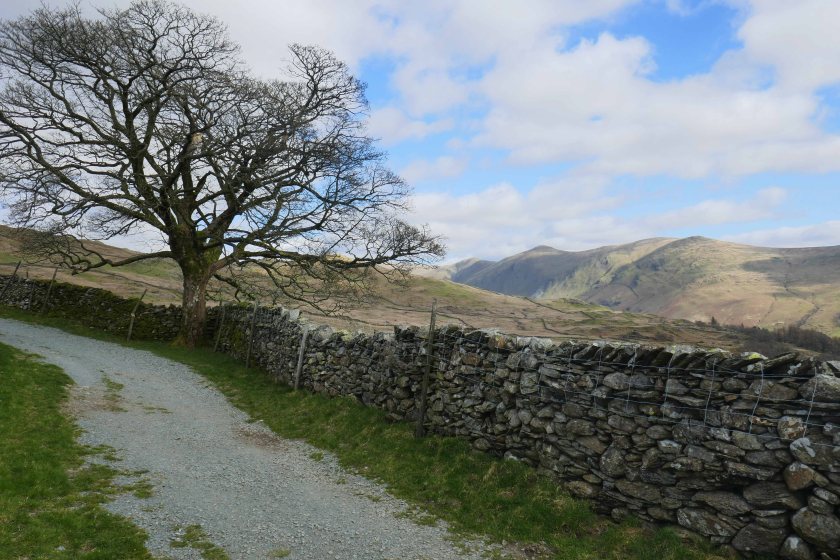
On Nanny Lane

‘Did I see a nostril of sunshine out there?’ the shop assistant asked as he deftly wrapped three packs of Grasmere Gingerbread up for me.  This was our second visit to this tiny and charming shop alongside Grasmere church is just a few days.  A cross between a biscuit and a cake, Grasmere Gingerbread is one of the best things produced in the UK but it does taste better fresh and is only available from Grasmere [or by mail order] hence the multiple visits.  I had never come across the expression ‘a nostril of sunshine’ before and smiled at the use of it.  Imaging it meant a gap in the clouds I nodded and agreed that yes there was a bit of blue sky out there just at the moment.  Perhaps this is a local saying, although when I tried searching for it on the internet I was only offered information about blocked noses!

The heavenly nose had been clear and wide open for us during our week in the Lake District.  We had enjoyed fine days that were just perfect for walking.  After the family outing from Haweswater we took the youngsters up to Orton Scar for a breezy walk among the limestone pavement and to see the view from the Queen Victoria Jubilee Monument.  We had lunch at Kennedy’s in Orton looking through the windows into their chocolate factory then waved as the son and daughter-in-law returned home.

On our first visit to Grasmere we walked up the steep grassy slopes of Heron Pike from Greenhead Gill, returning by the pretty Alcock Tarn, Grasmere lying below us.  Our final visit to Grasmere was on foot from Ambleside, always a favourite walk that takes you around Loughrigg and Rydal Water and back along the old coffin route.

In between these Grasmere visits we hiked up Wansfell Pike from Troutbeck and followed the undulating walled ridge to Baystones.  We chose the route up Nanny Lane, an old track that I thought was a more enjoyable and interesting ascent than from Ambleside.  Nanny Lane is well maintained and we put a small donation into the honesty tin at the gate in Troutbeck for its upkeep; heavy rain can do severe damage to these steep hill tracks and I like to see this lovely lane cared for.  The views from Wansfell Pike and Baystones are hard to beat.  We could make out the remote Kirkstone Pass Inn tucked in between the mountains, the blue length of Windermere shimmered in the sunshine and bustling Ambleside lay in the green valley below.  I can’t help but love the Lake District!


On my own on a family walk: Kidsty Pike, High Street & Mardale Ill Bell

P1160405
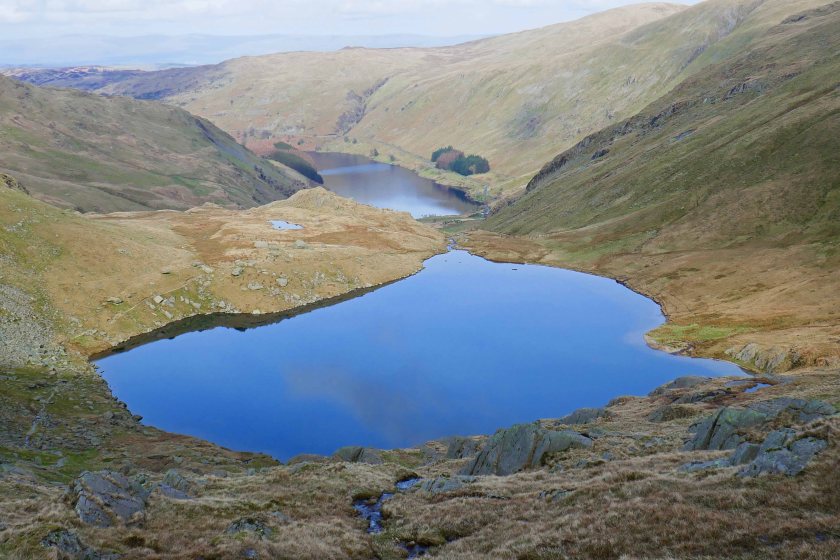
Small Water below Nan Bield Pass

We had planned this weekend in a Lake District cottage with our son and daughter-in-law some time ago.  In my head we would spend time together and enjoy a couple of days good walking that I hoped would become part of our treasured family memories.  So why did I find myself walking on a Lake District mountain all on my own?  The day had started off so well; the weather forecast was perfect, we had shared a leisurely breakfast in the comfy cottage we were staying in and we had managed to find a parking space at the end of Haweswater Reservoir.  Boots on, all four of us had strode out around Haweswater Reservoir to the top of Kidsty Pike.  We sat on the summit eating our lunch while we watched the deer in Riggindale, the u-shaped valley below us.  The eagled-eyed in our group also made out a fox sidling across the hillside around the group of deer.  The day was set up to be a flawless and delightful.

There were three Wainwright baggers on this walk, these are people who are trying to walk up all of the 214 Lake District hills described by Alfred Wainwright in his pictorial guides and I was not one of them.  Our son and daughter-in-law were the first to leave Kidsty Pike to ascend High Raise, just off the main route and already bagged by Mr BOTRA some years ago.  We agreed we would all meet again on High Street, the broad-backed hill that was on our planned route.  What could go wrong?  As they headed up the hill we realised we had forgotten to remind the youngsters that we would be detouring by The Knott, a small nobble of a hill that Wainwright had decided to include in his list and needed ticking off!

We also forgot how fast the two younger family members are when they don’t have to wait for us.  We firstly dawdled over setting off and then stopped to chat to another walker about the local wildlife for quite a few minutes, getting engrossed when she told us she had recently seen otters on the River Greta.  Tearing ourselves away from a chat, we left the main path for The Knott but becoming concerned about missing the others, I turned back hoping to meet up with them as I headed towards High Street.  I was now on my own, Mr BOTRA was somewhere behind me rushing up and down a small hill.  In front of me I saw that our son and daughter-in-law were already heading up the slopes of High Street.  Some family walk this was turning out to be!

Rejoined by my partner we pounded up High Street as fast as my short legs can take me, waving every now and then in the hope that the two of them would look back.  At no point was our pace any match for two people 30 years younger.  They were apparently surprised not to meet us on the summit of High Street and decided that we must be in front of them!  They rushed on without even stopping to look at the view and never once looked back.  We followed behind, occasionally catching glimpses of them as they strode over Mardale Ill Bell.  They chose to use their descent from Nan Bield Pass as good practice in fell running for the National Three Peaks Challenge they hope to complete this summer.  We gave up any hope of catching them and sat down to rest and enjoy home made fruit cake and the spectacular views before tackling the tricky rocky descent.

In the end we were an hour behind the two of them.  On the positive side, we all did get the opportunity to tackle the mountain at our own level and the weather forecast was right, it was a glorious day.  It wasn’t quite the family together time I had planned but it will be a day we remember!


Any flying is good flying in Eastbourne?

Eastbourne

‘Any flying is good flying,’ the paraglider pilot told me when we both stopped to talk about his sport.  He had landed below Beachy Head and was wrestling with ballooning fabric to fold away his kit, a task that looked trickier than packing away a tent or an awning.  Jumping off Beachy Head, even with a paraglider strapped to your back looked terrifying to me as I peered cautiously over the 550-foot high chalk cliffs.

It was the hottest February day on record and really a perfect day for my first visit to Beachy Head.  We had walked up the cliffs from Eastbourne, a town that turned out to be much nicer than I had been led to believe.  On the seafront we had chosen All Decked Out cafe, after walking by a couple of seafront cafes that only provided disposable cups; nothing spoils a mug of coffee as much as that plastic taste!  The friendly owner at All Decked Out not only had china cups but good coffee and delicious cakes and we sat enjoying these with a sea view over the shingle beach from their outdoor terrace.  It was an idyllic start to a splendid day and hard to believe it was February.

We walked along the tidy sea front to Holywell, passing the Martello Tower on the way.  Called The Wish Tower  we learnt that this is number 73 of 74 Martello Towers on the south coast built in the early 1800s to defend the country against Napoleon.  We also read information boards about the devastation of the bombing of Eastbourne during the Second World War.  From Holywell we were soon in the countryside and the South Downs National Park.  Climbing and contouring around the cliffs through yellow flowering gorse bushes and holm oak trees on paths through the cropped grass we met the happy paraglider.   Every time we stopped to rest I could enjoy the stunning views back to Eastbourne with its shining white pier in the brilliant blue sea.

We found the sobering memorial to Bomber Command that reminded us how dangerous it was to be part of the crew in a plane during the Second World War.  The memorial, unveiled in 2012, is dedicated to the 55,573 airmen who lost their lives.

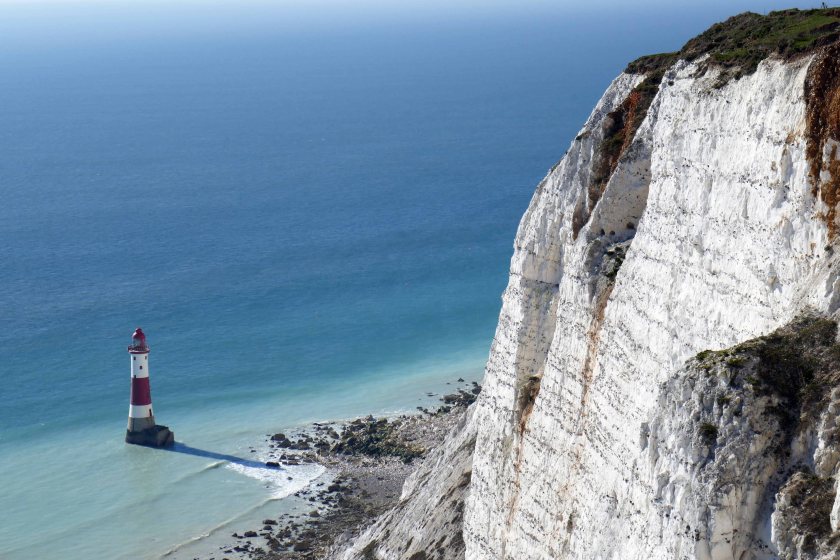
At Beachy Head we could see west to Seven Sisters and the red and white striped lighthouse was far below us.  The ideal spot to take your photograph on the edge of the cliffs was eroded, this is such a popular spot.  We were not only lucky with the weather, we also had a close encounter with a peregrine while we had our picnic lunch.

Heading inland on the footpath towards East Dean, with views to Birling Gap.  We turned right too soon, having misread the map, and so lengthened our walk by a mile or so as we had to retrace our steps.  No one else had chosen this route and we were accompanied only by sheep in the green fields; this wasn’t the crowded south of England that I had imagined.

Back in All Decked Out the friendly member of staff remembered us as she served us ice-cream and we chatted about how good the walking is from the heart of Eastbourne.  What a memorable day!


Worth One’s Saltaire: A day out in Yorkshire & a trip down memory lane

Saltaire
The alpaca statue looks across the park to Saltaire

Walk through the grid of terraced streets in the Yorkshire village of Saltaire and you will pause frequently to admire a decorative window, catch the rhythm of the rows of houses, appreciate a well-tended front garden or just chat to a friendly cat.  Certainly, every now and then you will stop when a glimpse of the impressive Italianate Salt’s Mill appears between the houses, takes you by surprise and makes you gasp.

Saltaire is a fascinating purpose built village and textile mill.  Built on the outskirts of Bradford in the middle of the 19th century and set on the river Aire, the name Saltaire comes from the river and the mill owner, Titus Salt.  The huge mill is a masterpiece and the neat rows of terraced houses were a cut above other worker’s housing, having fresh water and sanitation.  The self-contained village was furnished with a hospital, alms houses, an institute, church and shops.

I first visited Saltaire in the 1990s, not long after the abandoned mill had been bought and renovated by a local entrepreneur, Jonathan Silver.  Jonathan Silver was successful in saving and reinventing this beautiful building, creating a retail, cultural and commercial complex that continues to be run by his family and to thrive.  Today Saltaire is a World Heritage Site and is a popular destination for visitors as well as somewhere people live and work.

In 1995, as a geography student, I was fascinated by Saltaire and keen to use this urban landscape in an assignment but struggled to get a handle on a narrative focus for the essay.  On a February day I took the train to Bradford and decided to walk the six kilometres or so to Saltaire, thinking this would give me a chance to visit Titus Salt’s statue in Lister Park and maybe find inspiration.  As I was photographing the Victorian statue on the edge of the park it began to snow, huge flakes that were soon covering the roads and pavements.  My feet were soaked and I was cold to my bones by the time I reached Shipley but my best ideas come when I am walking.  Chancing upon the view looking down on the mill and the village I had an epiphany.  Even though I had visited before at that moment the scale and the grace of Salt’s Mill blew me away.  Seeing the mill facing the rows of terraced streets and the moorland beyond, its position in the landscape fell into place and I knew what I was going to write.  If you want to read my undergraduate ideas about the two contrasting authors of the landscape of Saltaire, I have shared my essay here  but please remember I was a young 35-year old and this was written early in my writing journey.

Last week we decided to recreate what had become for me a legendary trip in better weather.  After catching the Leeds train from Victoria railway station in Manchester we were soon walking between the grandiose Victorian buildings of Bradford in the sunshine.  Lister Park was full of people enjoying the unseasonable weather.  When we reached the viewpoint where I had experienced my inspiration I stopped and thought about the younger me and how important that moment had been.  Despite quite a build up the view over Saltaire was even more amazing than I remembered.

Much has changed in Saltaire since the 1990s but what hasn’t altered is the quality of the sticky toffee pudding in Salt’s Diner, an interesting and charming cafe inside the mill.  On that cold snowy day I warmed up in the Diner with a bowl of this wonderful sweet pudding in a pool of toffee sauce and for old time’s sake I did the same again last week.  Today diners can admire David Hockney prints while they eat from crockery that depicts a David Hockney sketch.  Just eating at Salt’s Mill is an experience!  After tea and cake we browsed the books in the bookshop, had a look in the gallery and merely admired the expensive home ware.

Keen to get out and enjoy the sun, we explored the rows of terraced streets, walked by the canal and through the tidy Robert’s Park colourful with crocuses.  I stopped to take a photograph of the noble alpaca statue looking back to the mill and the village.  Titus Salt has alpaca wool to thank for his enormous wealth; he used it to weave fine cloth for luxury clothing.  By deciding to create an industrial community in Saltaire, rather than spending his wealth on an estate with a mansion, Titus Salt ensured he is remembered as a Victorian philanthropist.  Although he was foremost a successful and wealthy businessman who may have seen the mill and village as a way of maintaining paternalistic control, he certainly also had a sense of duty that led him to build an infrastructure that would help workers and their families to thrive.

Victoria station
Lovely tiling at Victoria Station in Manchester


How to make the most of a few winter days on the peaceful part of the Lancashire coast

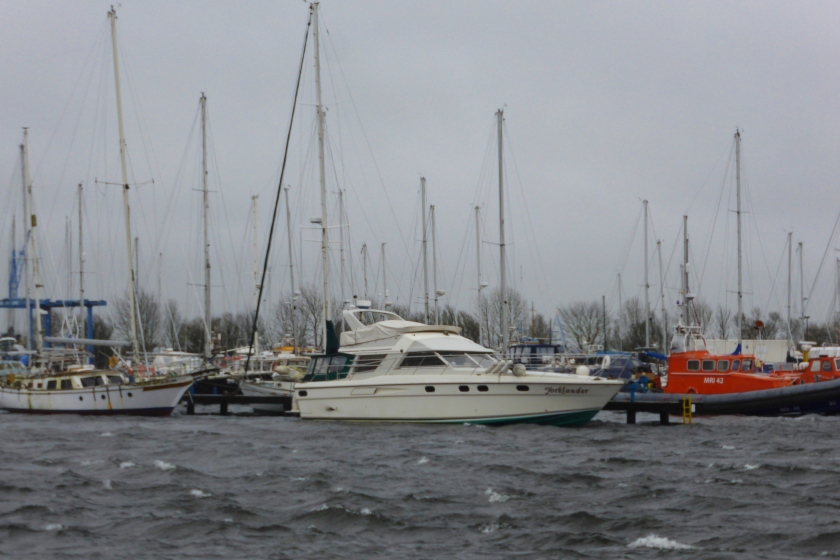
Boats on the marina at Glasson Dock
Boats at Glasson Dock

All we could hear was the honking of geese from the nearby fields, the occasional cry of a curlew and the breath of the wind at Near Moss Farm Touring Caravan Park.  We had hoped for a couple of days of peace and quiet and this site certainly delivered.

Near Moss Farm is on The Fylde, the west Lancashire coastal plain between the Ribble and Lune estuaries.  The Fylde is best known for the seaside resorts of Blackpool, Lytham and Fleetwood but the northern coast is more farming than funfairs and is a different world to the bright lights of the towns.

Near Moss Farm is a Certified Location for Caravan Club members and a touring park; parts of the site are exclusively for adults.  The pitches are all hard-standing and this tidy and well-kept site has a heated sanitary block.  You will get a warm welcome from the friendly owners who also manage a fishing lake and three self-catering cottages.

The Fylde is pancake-flat with big skies and long views; this makes it perfect for cycling, so long as the prevailing westerly wind is behind you.  A relaxing round trip of about 16 miles takes you from Near Moss Farm along sleepy lanes to the charming village of Knott End-on-Sea and back.  In summer a small ferry crosses the Wyre estuary from Knott End-on-Sea to the delights of Fleetwood.

We were here in winter and so it was not ideal cycling weather.  Instead we walked along the nearby coastal dykes looking over the salt marshes criss-crossed with channels,.  The Irish Sea was to one side and farmland on the other and we spotted egrets, handsome shelducks, as well as swans and geese.

We also drove the short distance to Glasson Dock on the Lune estuary, still a working harbour and marina that was built as a port for Lancaster.  Both the marina and Conder Green car parks have height barriers but there is plenty of road parking in and around the village, including on Tithe Barn Hill with views over the estuary.   Once you have explored the lock and swing bridge, admired the boats in the marina and found the Port of Lancaster Smokehouse you might want to stretch your legs.  We followed National Cycle Route Six, a popular and flat off-road route to Lancaster, and enjoyed more bird spotting along the river Lune.

Driving to Morecambe before we headed home we took a breezy walk along the sea front that put colour in my cheeks.  Coffee in the magnificent grade two listed Art Deco Midland Hotel made this a pretty much a perfect walk.  Built in 1933 I first visited the Midland Hotel in the 1990s; in those days this gorgeous hotel was memorable for its faded glamour.  Today it is fully restored and once again a stunning bit of luxury.

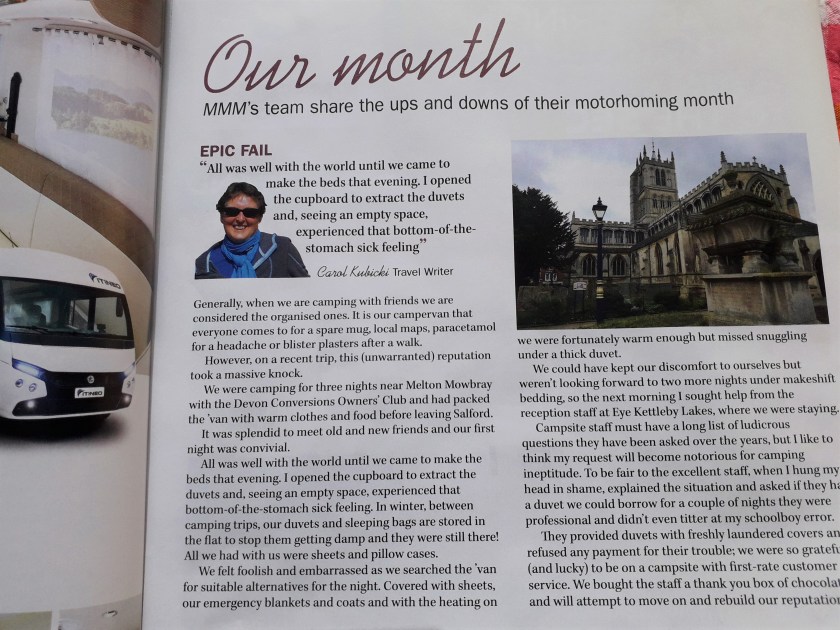
Our Epic Fail: Shared with MMM readers

20190206_142844.jpg
Humiliating myself before the motorhoming community

Generally when we are camping with friends we are considered the organised ones.  It is our ‘van everyone comes to for a spare mug, local maps, paracetamol for a headache or blister plasters after a walk.  However, this last month this (unwarranted) reputation has taken a massive knock.

We were camping for three nights near the Leicestershire market town of Melton Mowbray with the Devon Conversions Owners Club and had packed the ‘van with warm clothes and food before leaving Salford.  It was splendid to meet old and new friends and our first night was convivial.

All was well with the world until we came to make the beds that evening.  I opened the cupboard to extract the duvets and seeing an empty space experienced that bottom-of-the-stomach sick feeling.  In winter, between camping trips our duvets and sleeping bags are stored in the flat to stop them getting damp and they were still there!  All we had with us were sheets and pillow cases.

We felt foolish and embarrassed as we searched the ‘van for suitable alternatives for the night.  Covered with sheets, our emergency blankets and coats and with the heating on we were fortunately warm enough but missed snuggling under a thick duvet.

We could have kept our discomfort to ourselves but weren’t looking forward to two more nights under makeshift bedding so the next morning I sought help from the reception staff at Eye Kettleby Lakes, where we were staying.

Campsite staff must have a long list of ludicrous questions they have been asked over the years but I like to think my request will become notorious for camping ineptitude.  To be fair to the excellent staff, when I hung my head in shame, explained the situation and asked if they had a duvet we could borrow for a couple of nights they were professional and didn’t even titter at my school boy error.

They provided duvets with freshly laundered covers and refused any payment for their trouble; we were so grateful (and lucky) to be on a campsite with first-rate customer service.  We bought the staff a thank you box of chocolates and will attempt to move on and rebuild our reputations.

Published in MMM March 2019 edition.


Winter walk on the Wirral

2018 Boxing Day Wirral Walk with Matthew and Rachel (6)
The Marine Lake at West Kirby

West Kirby’s Marine Lake is a large artificial coastal lake, surrounded by water on three sides and large enough for various sailing events.  Walking around the lake is a wonderful way to get that out-at-sea feeling without a boat and from land the walkers following the wall look like they are walking on water; it always makes me smile!

On a fine wintry day we set off from Hoylake on the end of the Wirral Peninsular.  When the tide is out, look out towards the Irish Sea here and you are faced with a vast beach.  At low tide a popular excursion is to walk out to the rocky Hilbre Island.  The shore is lined with big houses, each one with a telescope in a picture window for bird watching.  You might see dunlin, knot, bar-tailed godwit, red shank, grey plover or tiny sanderlings along this shore.  On the day we visited the waves were breaking a long way from the shore and the birds were hard to make out, we may have seen knot or dunlin, it was difficult to be sure.  More easy to recognise were the egrets and herons.

Walking around to the Dee Estuary we joined other walkers on the coastal path to West Kirby and its marvellous Marine Lake.  After lunch in one of West Kirby’s many cafes we headed up to the impressive hilltop war memorial.  This powerful monument was built in 1922 and is superbly crafted, with an obelisk and life-size bronze figures, ‘Humanity’ and ‘Soldier on Defence.’  West Kirby’s memorial is a poignant and dramatically set monument that is a fitting tribute to those who died in the First and Second World Wars.  The views from the memorial are panoramic, taking in the north Wales coast and across to Liverpool with the Irish Sea at your feet.  I think this must be a perfect spot to watch the sunset.

We found a path down from the memorial that eventually took us to the cycle route by the railway line and we followed this back to Hoylake.  We walked between six and seven miles; your own distance will depend how much you wander over the sands.  This isn’t a long hike but it is a perfect winter day out, fitting in well to the short days, with plenty of interesting things to see and loads of variety in changing weather and tides.


A Winter ‘s tale from a campervan

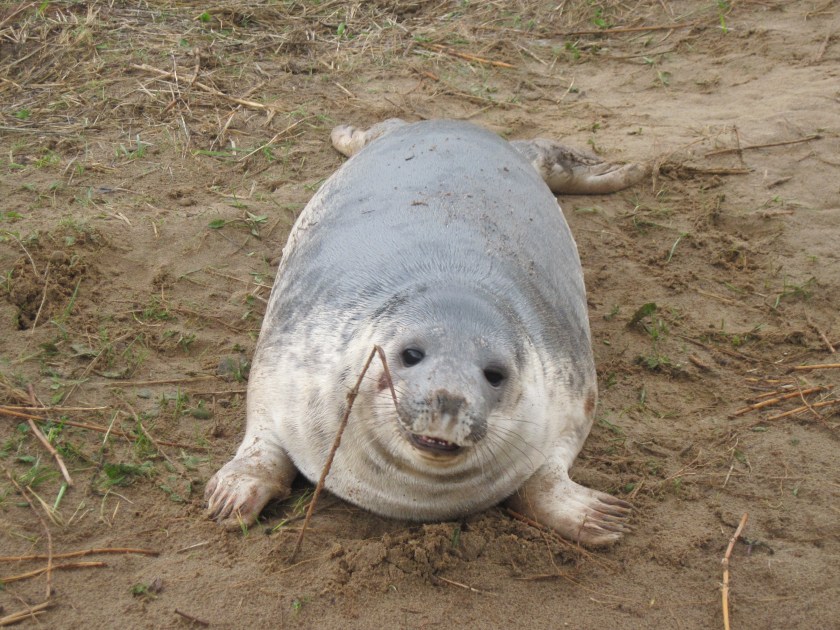
2012 Nov Norfolk and Lincs trip Seals Donna Nook (135)

In our first campervan we only had one winter camping trip.  It was a memorable February weekend of below freezing temperatures that found us shivering under the duvet after the leisure battery lost power and our diesel heater no longer worked.  Moving on to our Devon Sundowner [for some reason] we were keen to try winter camping again and I persuaded my hardy partner to go along with a late November trip that would perhaps quieten the ghost of that cold February weekend.

We chose to go to the coast of North Norfolk and Lincolnshire and the Fens, thinking the south-east of Britain might be warmer and drier; we’d never visited that part of the country before, as our natural compass takes us north from Manchester and we were keen to visit some of the many RSPB and Wildlife Trust reserves in that area to see the migrating geese and other wildfowl.

In the Sundowner our on-board facilities were limited to a toilet, a kitchen sink and a kettle.  I found that campsites open during the winter that hinted at the promise of warm showering facilities were few and far between in the area we were exploring; so although we like to be free spirits, we decided to research, plan and book campsites for each night of the trip.

Friends raised eyebrows when we told them we were taking the ‘van camping at the end of November and their incomprehension only increased when the five-day weather forecast was predicting storms and heavy rain for the weekend we were away.  These storms did arrive and hit Cornwall very hard and we were relieved we had chosen the east side of the country for our holiday, where it was breezy, but no one had to leave their homes because of rising flood water.

Arriving on a campsite in the dark left me in a slightly disconcerted state, I like to orientate myself, check where the sun will come up and what the ground is like and after the first night we vowed to try and arrive before dark in future, although in late November this means arriving by 16.00.  However, my perturbed state didn’t stop us making the 10-minute walk through the village to the cosy Burnham Green pub.

The next morning we woke to faultless blue skies and were immediately sold on winter camping for all time, no matter that the shower cubicles were so cold, only the most hardy would consider baring all in there [apparently there have been renovations since our visit].  I reasoned that we were so wrapped up against the chilly air, no one would ever notice we were grubby and we were just keen to get out on to this bright November coastline.

Titchwell Marsh RSPB reserve is an excellent spot, providing the opportunity to stretch the legs alongside fresh water and salt marshes to the vast stretch of beach.  I am not a natural bird watcher but I like to know the RSPB and other charities are out there managing habitats for birds and I enjoy what I see.  Oystercatchers are my favourite, as they are easy to spot and always so lively and vigorous and I also enjoyed watching the red shanks feeding in the mud, easily spotted with their red legs and the more ponderous godwits and then spotting the different ducks, including Teal and Widgeon.  If you are lucky and patient here you will see a drift of Snow Buntings on the beach, but it was too wintry to stay still for too long.  The reserve staff also feed the birds in the woodland near the visitors centre and I got just as much pleasure watching the garden birds coming and going at the bird tables while we warmed up with a mug of hot chocolate; this reserve certainly has something for everyone in the winter months.

After lunch we drove the few miles along the North Norfolk coast to Wells-Next-The-Sea to walk along the sands, comparing the size of the beach huts that are lined along the beach to the dimensions of our Blue Bus and wondered why no one was using them on this glorious November afternoon.

We succeeded in reaching the camp site on the edges of Swaffham before dark and were pleased to find much warmer facilities where we were prepared to shower and scrub off the accumulated grime of the last couple of days.

Although this trip was focusing on wild life, the next day we made a short pilgrimage to the Burston Strike School.  Whatever your politics, I dare anyone not to find this small building inspirational.  It is the site of the longest strike in British history, starting on 1 April 1914, when two popular and devoted teachers at the village school, Kitty and Tom Higdon, were dismissed by the school committee for lighting a fire to warm the children and dry their wet clothes.  Of the 72 children, 66 marched around the village to protest about their dismissal and refused to attend the school, instead they continued their education with Kitty and Tom in temporary accommodation, supported by trade unions from across the country.  In 1917 sufficient funds were secured to build a new school building and bricks in the walls are carved with the names of the trade unions that had provided financial support; a small museum is now housed in this building.  The Burston strike school continued to be the place of education for the village children until 1939.

Redgrave and Lopham Fen is the largest river valley fen remaining in England, with pools, reeds, scrub and woodland it will be a buzzing and lively place in summer, with butterflies, insects and flowers.  In winter it is sultry and peaceful; the reserve is well laid out with five different marked trails to follow.  We watched a tree creeper flitting up and down a tree trunk and a flock of gold finches and enjoyed the sense of space and stillness this strange landscape offered.

We chose to stop in Thetford Forest to have our lunch, an impressive area of mixed woodland and heath, criss-crossed by roads.  High Lodge is the main visitor centre for the forest, with a cafe, shop, toilets, access to numerous footpaths and cycle tracks, all with a large car park and even in winter it was lively with cyclists and walkers.

We arrived at the small camp site at Littleport in rain that didn’t stop until the next morning; we were catching the tail end of the storm that had hit the West Country and we hunkered down in the van with a bottle of red and never made it to the nearby pub by the Great Ouse.  The site owners let us pitch on the track, as there was no hard standing available, which saved churning up their grass or worse the embarrassment of needing a tow to get out.  Our neighbours, two stalwart fishermen, slept in a tent and were disturbed all night by the wind and rain, we had sleeping bags and duvets and slept soundly until daylight.

The sunshine returned after the storm, although the strong wind stayed with us a little longer and we were feeling blessed for having such good weather for our winter venture.  We now pointed the Blue Bus north towards Lincolnshire, into a fascinating landscape of vast flat fields of vegetables, driving over drainage ditches and through an environment where the sky dominates, rather than the land.

Frampton Marsh is accessible down narrow lanes that take you to the RSPB coastal wetland reserve on the edge of The Wash; once at the modern visitors centre there is a good size car park.  Frampton Marsh has enough brent geese to satisfy anyone and I also saw plenty of acrobatic lapwings, always a cheery sight.  I easily spotted little egrets in the shallow pools, their white plumage bright in the sunshine and watched curlews feeding on the wet grassland areas.  Despite the strong winds, we walked down the lane to the dyke, where we had a clear view across the salt marshes to the North Norfolk coast.

Slightly further north, Gibraltar Point National Nature Reserve is a popular and well known reserve near to Skegness; this area of dunes, salt marsh and beaches is a beautiful wild spot with many walks and managed by the Lincolnshire Wildlife Trust.  As the sun dipped towards the horizon, we had a windswept walk through the dunes to the beach here, before tearing ourselves away and driving through the bright lights of Skegness to our refuge for the night, The Nurseries at Mumby, before dark.  Karl and Dianne have been enthusiastically developing the camp site since they moved to the old nurseries house in 2010 and have created a lovely site.  They are both very welcoming and we were thrilled when Dianne appeared with two chunks of homemade cake to go with our brew.

Karl and Dianne are both also full of information about things to do in the area and while chatting to Karl, he mentioned the nearby seals and pups and we soon had the map out planning a trip to Donna Nook on our way home.  Donna Nook is a long sandy bay which during November and December each year is the place of choice for over 1,000 grey seals to give birth to their pups and mate, ready for next year.  There are two  car parks and they get busy, particularly at weekends but we were surprised how popular it was even on a wet Monday morning.  The beach is managed by Lincolnshire Wildlife Trust and they ensure visitors get excellent views of the seals while staying safe and avoiding the danger of getting bitten by an angry grey seal.  Photographers will love the opportunity to get so close to adult grey seals and their pups.  The white fluffy pups lie in the sand and cannot help but look cute with their big eyes and whiskers, the male grey seals are large and cumbersome and manage to both flop and be aggressive at the same time.  You can see pups being born, suckled and having their first taste of swimming in the shallow pools; it really is a special wildlife experience that concluded our holiday on an unexpected high.

As we drove back to Salford we reflected on our few nights winter camping; the van had been cosy and warm, the wildlife had been spectacular, the weather had been kind and we had coped with some chilly sanitary facilities with the hardiness of northerners.  This trip was a few years ago and gave us confidence so that today we don’t think twice about getting away whatever the weather.
Hebden Bridge Caravan & Motorhome Club site

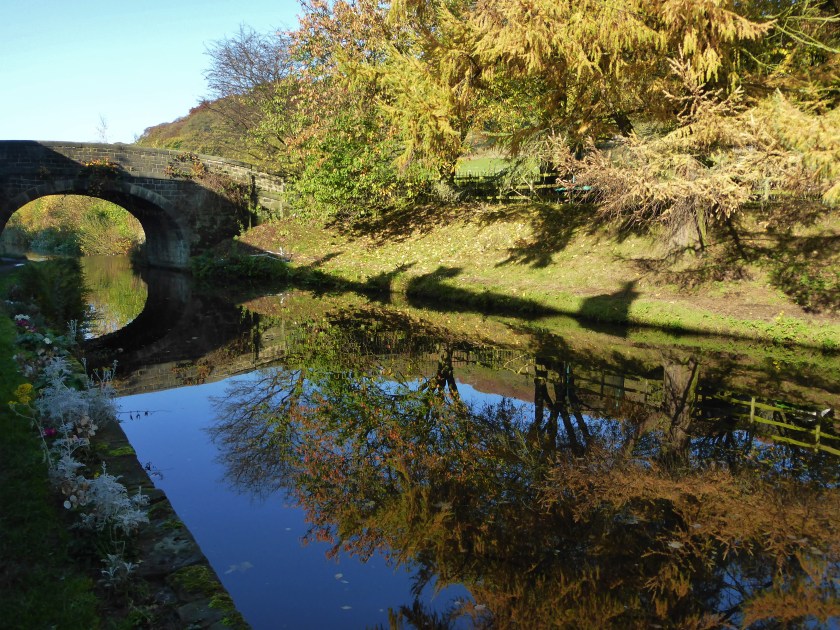
The canal between Mytholmroyd and Hebden Bridge
The Rochdale Canal

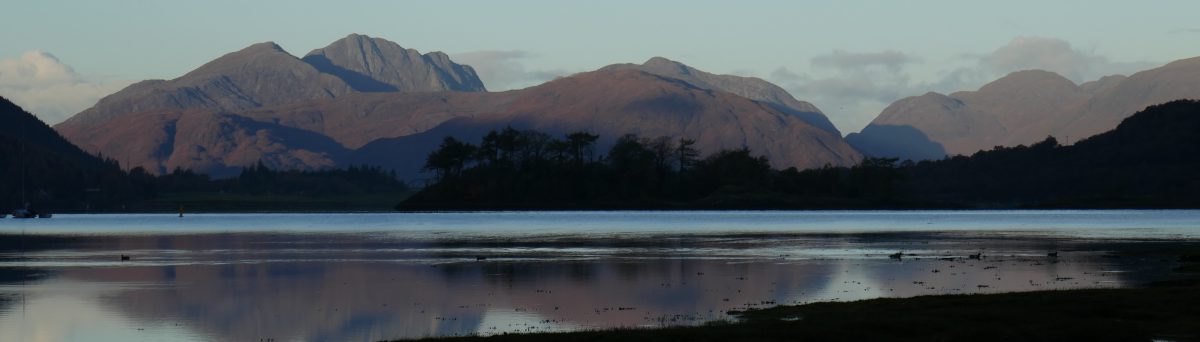
Sitting drinking good coffee by the Rochdale Canal in Hebden Bridge, lazily watching the barges chug by is an experience I can recommend.  The Calder valley through West Yorkshire is one of my favourite parts of England and it is a frequent weekend haunt for those of us in Greater Manchester.

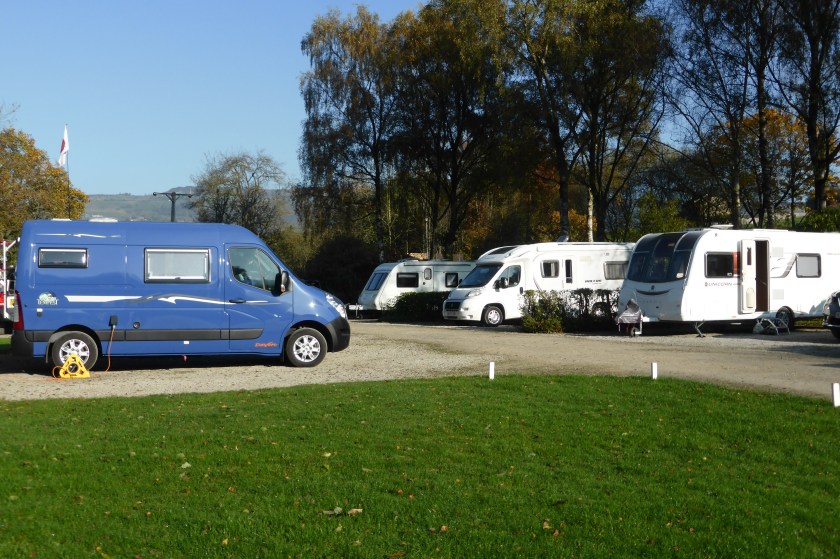
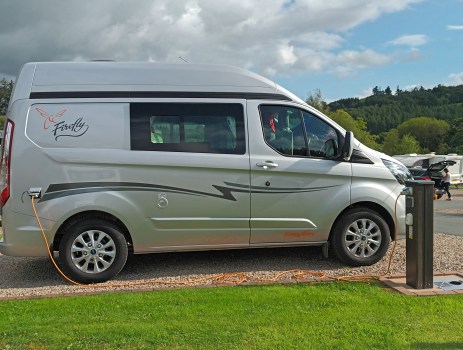
We were staying at the Hebden Bridge Caravan & Motorhome Club site; a simple site that is pleasantly surrounded by trees.  The site has electric hook-ups and hard-standing but no sanitary block so will only suit motorhome owners with their own facilities.

The steep-sided Calder valley was transformed by the industrial revolution as home-based weaving developed into water-powered mass production in textile mills.  The distinctive stone terraces of houses were built on the hillside in the 19th century and the canal and railway line crammed in to the narrow valley floor.

The weavers left a legacy of a criss-cross of footpaths around the valley and from the camp site you can walk in almost any direction.  Turn right and you eventually reach the moors and Blackstone Edge, a gritstone escarpment on the Yorkshire-Lancashire border.  To the west a steep path takes you to the top of Stoodley Pike adorned with its Victorian monument.  On this trip we had chosen to turn left out of the site and spend the sunny morning walking the easy six-miles along the canal to Hebden Bridge and back.  Hebden Bridge is a creative and lively town full of independent shops from where you could continue your walk to the wooded valley of Hardcastle Crags or take the steep path up the hill to the atmospheric gritstone village of Heptonstall.

Mytholmroyd station on the Leeds to Manchester Calder Valley Line is just one mile from the camp site and with stations at Hebden Bridge and Sowerby Bridge the line opens up opportunities for linear walks.  This line will also take you further afield to Halifax to see the stunning Piece Hall, built as a sales centre for the woollen weavers in the 18th century and recently renovated.  The National Children’s Museum, Eureka, that is fun for children and the young at heart.

There is so much to do from this site I am already planning our next visit; maybe we will take the train to Todmorden walking back over the moors or we might explore more of the wool industry history by visiting the timber-framed medieval manor house, Shibden Hall in Halifax, or maybe I will end up back in Hebden Bridge lazily drinking coffee.

Hebden Bridge CC site
The campsite

Arran: My first encounter with this lovely island

P1120252
The dramatic landscape of Goat Fell on Arran

The internet suggests there are up to 5,000 islands around Great Britain, although the exact number seems to be hard to be sure of and there are certainly plenty of these I have never heard of, let alone visited.  Another source gave a figure of 82 islands that measure more than 5 sq km.  This is still a higher number than I might have guessed at and one that made me ashamed of how few of our islands I have taken the trouble to get to.  It was time to visit an island and an autumn trip to Arran, off the south-west coast of Scotland was planned.

Goodness knows why I have never been before as we found so much that delighted us on Arran.  The craggy mountains around Goat Fell are perfect walking country; Glen Sannox is simply stunning; the stone circles at Machrie Moor are impressive and fascinating; the coastline near Blackwaterfoot  and the walk through boulders to the basalt cliffs of The Doon is stunning and the sheltered bay at Lochranza is picture perfect.  I loved pretty much everything about the island.

Thanks to the Road Equivalent Tariff (RET) on Scottish ferries, getting to Arran is now more affordable and it was just over £45 return for our 5.4 metre long campervan.  We needed to have a frugal holiday due to our expensive year but also like to support campsites and so we stayed on three of the islands campsites [see below] and did a few nights wild camping too.  Wild camping is popular on Arran and some places can get busy at weekends as Arran is a perfect place to visit in a campervan.

We didn’t visit any tea shops, although I am told they are excellent, but we did support the Arran economy and bought excellent local cheese in the cheese shop, local beer at the brewery, good local oatcakes and delicious local bread in the Blackwaterfoot Bakery.  These all went very well together and didn’t last long.

Arran was a great start to my plan to visit more of the islands around Great Britain.  The big question is where to go to next?

Campsites we used on Arran

Lochranza Campsite – a beautifully situated site that is well kept.  The site is grassy with some hard-standing pitches if it is wet and there are open views.

Seal Shore Camping  – this site at Kildonan has lovely views out to sea and clean facilities.  The site is sloping but while we were there they were building some more level pitches.  The site is next door to a bar.

Middleton’s Caravan and Camping Park – This level grassy site at Lamlash is handy for the shops, places to eat and shoreline in Lamlash.  The facilities are clean and it has good hot showers.