Free camping above Lower Laithe Reservoir near Haworth in Yorkshire
I couldn’t really believe it is ten years since we had visited Haworth in West Yorkshire but Mr BOTRA’s diary doesn’t lie! And yet despite this evidence I still think this is a place I am very familiar with and that we visit regularly. Of course, over the years we have spent lots of time walking on the moors around Haworth but somehow it had recently fallen off the list of go-to places. We put that right recently and spent a night with a lovely view over the valley in a lay-by on Cemetery Road underneath Penistone Hill. In the evening light we had a stroll through the lovely village and walking up and down that steep cobbled hill window shopping. As has always been our habit in Haworth we also walked through the church yard and gazed across the gritstone graves and the trees to the Parsonage. There is no doubt that Haworth will always be associated with the three Brontë women, Charlotte, Emily and Anne and the novels they wrote were a significant part of my teenage years and stories I return to. The Parsonage is currently celebrating 200 years since these three and their brother Branwell were born between 1816 and 1820 with all sorts of events.
As it has [apparently] been so long since we had visited Haworth we chose to walk an old favourite and followed the paths to the Brontë Bridge and Falls, most certainly walking in the footsteps of the Brontë sisters as it is known this was a favourite spot. We climbed above the falls and followed the Pennine Way on to the higher moors to Top Withins. Since our last visit this isolated and ruined farmhouse that gives a sense of Wuthering Heights has been somewhat restored to prevent it from falling into further disrepair. We returned on a different route over the moors that was quieter and as light snow flakes drifted around us it was a perfect place to be despite the cold. By the path we found a recently dead hare; we normally spot these animals leaping across a field and to see one so close up revealed the beauty of the animal and the strength in those long back legs.
A brew and a slice of home-made cake back in the campervan soon restored warmth to our limbs before we drove home, vowing not to leave it another ten years before we visit Haworth again.
We took the campervan south to the Chilterns for a few nights camping recently. The Chilterns Area of Outstanding Natural Beauty [AONB] is a narrow strip of countryside in the south-east of England that is 46 miles long and up to 11 miles wide, stretching from Goring-on-Thames in Oxfordshire north almost to Hitchin in Hertfordshire. Close to London, this wasn’t an area we had ever explored before but it was perfect for a short break. The AONB website has plenty of suggested walking routes and in the dry weather we enjoyed we were able to spend every day out walking in the countryside.
In the winter it is easy to enjoy the dawn and the sunset without losing any sleep and we had dazzling pink mornings when the sun glinted off the frost on the fields and glowing sunsets when the landscape was bathed in warm light. We also had a foggy day when we walked along the rolling downs cloaked in fog, cocooned in a world with nothing beyond the few feet we could see. This is red kite country and these elegant birds surprised us when they soared out of the fog over the ridges. I enjoy walking in just about any weather; we have plenty of gear for anything the British climate can throw at us and the miscellany of the elements in our island country is part of the experience.
The Chilterns is a landscape of rolling chalk hills of grassland and woodland. In the villages we stumbled up on on our walks we admired pretty churches and cottages built using flint stones. These blue-grey or black compacted crystalline silica rocks are found in the chalk in nodules or bands; flint is a hard rock that formed from the siliceous sponges that once lived in the waters of Cretaceous seas. As well as a good and attractive building tool, flint was valued as a useful cutting tool.
Fog is often patchy and throughout the day the sun threatened to break through the cloud. After walking through the murk for a few hours we emerged into glorious sunshine at Lacey Green Windmill for just a short time. This beautiful restored 19th century windmill with four sails and a fantail was stunning in the sunshine and we stayed until the fog once again veiled the landscape in its mysterious qualities.
The view from the Dashwood Mausoleum in the evening sun
A sunny autumn day on the wide expanse of the beach at Formby
We took a chance on a November trip in the campervan and were rewarded for our optimism with a sunny day. We have such a lot of stunning coastline on this island that the Lancashire coast perhaps isn’t what springs to mind when you think of beautiful parts of our coast. This part of the seaside certainly has more than its fair share of resorts and built up areas. But Formby Point [not strictly speaking in Lancashire but we still recognise the pre-1974 county boundaries at BOTRA towers] is a jewel in the crown that makes up for everything the planners have done on some stretches of the Lancashire shore and we are lucky that it is less than an hour from our home.
After spending Saturday afternoon walking in the gloom through wild hail and sleet in Southport, the sun on Sunday was very welcome. In Southport we walked along the wooden planks of the pier until it closed and joined the crowds watching the carnival that is the Christmas lights switch-on in the town.
The sand dunes, pine forests and wide sweep of a beach at Formby are owned and managed by the National Trust. This area is managed for the wildlife, not just the lovely red squirrels that entertain the visitors here, there are also newts, lizards and the rare Natterjack Toad. It wasn’t the time of year for reptiles but the red squirrels were plentiful in the pine woods. We walked around the asparagus fields and wound our way through the dunes. We returned along the expansive beach, with views north to Blackpool and south to the Welsh mountains. The beach is so immense that even on a sunny day there is space enough for everyone.
Scotland is the most motorhome friendly part of the UK and this, and the beautiful scenery, is why you meet so many other motorhomers when you visit this wonderful country. In Scotland it is rare to find a height barrier [although Kinlochleven should be ashamed of the one of the B863] and there are plenty of small car parks and large lay-bys to pull up for a brew-with-a-view or an overnight stop. We are considerate motorhomers who just enjoy the freedom of the road and although everywhere was pretty tidy, we always leave no mark on these freely provided facilities and pick up and take away any litter.
On this trip we found a great overnight stop on the Glen Lochy road, we stayed on the car park of an eclectic and warren-like shop in Ellenabeich on the Isle of Seil, just a short stroll from the cosy Oyster Bar, enjoyed a night of luxury at the Caravan Club Bunree site[£19.90], with spectacular views over Loch Linnhe and then joined half a dozen other ‘vans in Glencoe on the Signal Rock car park for a final free night.
Scotland was in its full autumnal glory, the trees magnificent in stunning ranges of colours. We took a walk from the car park in Glen Orchy to see some of the fine native Scots Pine trees in the hidden hillside remant of the Caledonian forest at Allt Broighleachan. We also walked from Port Appin to find the cliffs and sea arch, now stranded high and dry since sea levels have fallen. We found a real gem at Glencoe Lochan with great footpaths and lovely views to the distinctive Pap of Glencoe and reflections in the lochan. We followed the West Highland Way and the massive pipeline through which water roared down to the hydroelectric plant in Kinlochleven and relaxed watching the climbers on the climbing wall in the village. We picked up the West Highland Way again on one of our favourite parts of this long distance walk on the cobbled old road from Victoria Bridge.
We spotted a golden eagle soaring over Loch Feochan and a red deer peering out of the golden grass from the path to Loch Dochard and lots of distinctive pochard diving and bobbing on the sea lochs.
We filled up with lpg / autogas while we were away. We have a refillable cylinder and this fuels our cooking and heating when we are off-grid. Even in cold winter weather this only costs us a few pounds a night to keep the ‘van warm, run the fridge and provide us with the numerous mugs of tea and coffee we survive on and a freshly cooked evening meal.
We are happy with any excuse to visit Teesdale and explore this lovely valley a little bit more and so set off for Cotherstone (pronounced to rhyme with fun not phone) in a cheerful mood, looking forward to meeting up with old friends and making new ones. Yes, this was the autumn get together of the Devon Owners group.
We were staying at the lovely and welcoming Doe Park Caravan Site just a ten minute walk from Cotherstone. For someone so hopeless remembering names there were so many Devon ‘vans [and their owners] at this meet it was hard to keep up with who was who, we kept the attendance list close by all weekend and apologise to everyone whose name we got wrong.
Our welcome was warm and very genial. Normally when we arrive on a campsite the first thing we do [being addicted to a cuppa] is put the kettle on and have a cup of tea. Parking on our pitch on Friday afternoon we managed to get the kettle on, but it was over an hour before we had a long enough break in neighbours popping over to say hello and could actually make that brew.
Of course, we did some walking and while many people walked or cycled into the delightful Barnard Castle, we decided to go the other way to Eggleston, which has a lovely hall and gardens, with a tea shop and a pretty garden trail that passes colourful borders, a ruined chapel and fruit trees laden with apples and plums. Autumn is settling in now and we walked high above the river, finding huge puffball mushrooms and picked blackberries from the hedgerows. We returned along the Tees Railway Path from Romaldkirk which is perfect for walking or cycling.
On the way home we stopped in Kirkby Stephen on the edge of the lovely Howgill Fells and walked up Smardale Fell. We were walking in blustery sunshine and could see showers flitting across the Pennines and watched rainbows briefly arching over the hills.
Well … Mr BOTRA and I do know that life is rushing by us at an alarming rate but we really couldn’t believe it had been two years since we had visited the gorgeous Wharfedale in the Yorkshire Dales. What were we thinking of? Why had we neglected this beautiful valley for so long? Had other beautiful parts of the UK been distracting us? [The answer is yes to the last question].
We made up for it this last weekend and were rewarded for our return with beautiful weather for a couple of days that was perfect for walking trips.
On day one we followed a favourite walk from the campsite near Grassington, following grassy paths over Malham Moor and stopping to admire the wide open views. We crossed the lovely Wharfe at Conistone and here decided to head for Kettlewell and pick up the bus back down the dale. This took us to the wonderful dry limestone valley known as Conistone Dib. The path winds upwards through a rocky gorge that would once have been a lively stream and we enjoyed climbing up the steps of old waterfalls and along the gravel stream bed. Along the way we met a group of National Park volunteers clearing stone cairns and we stopped to chat. As we walked away we were both thinking the same thing … how lovely it will be to have the time to volunteer in this beautiful area.
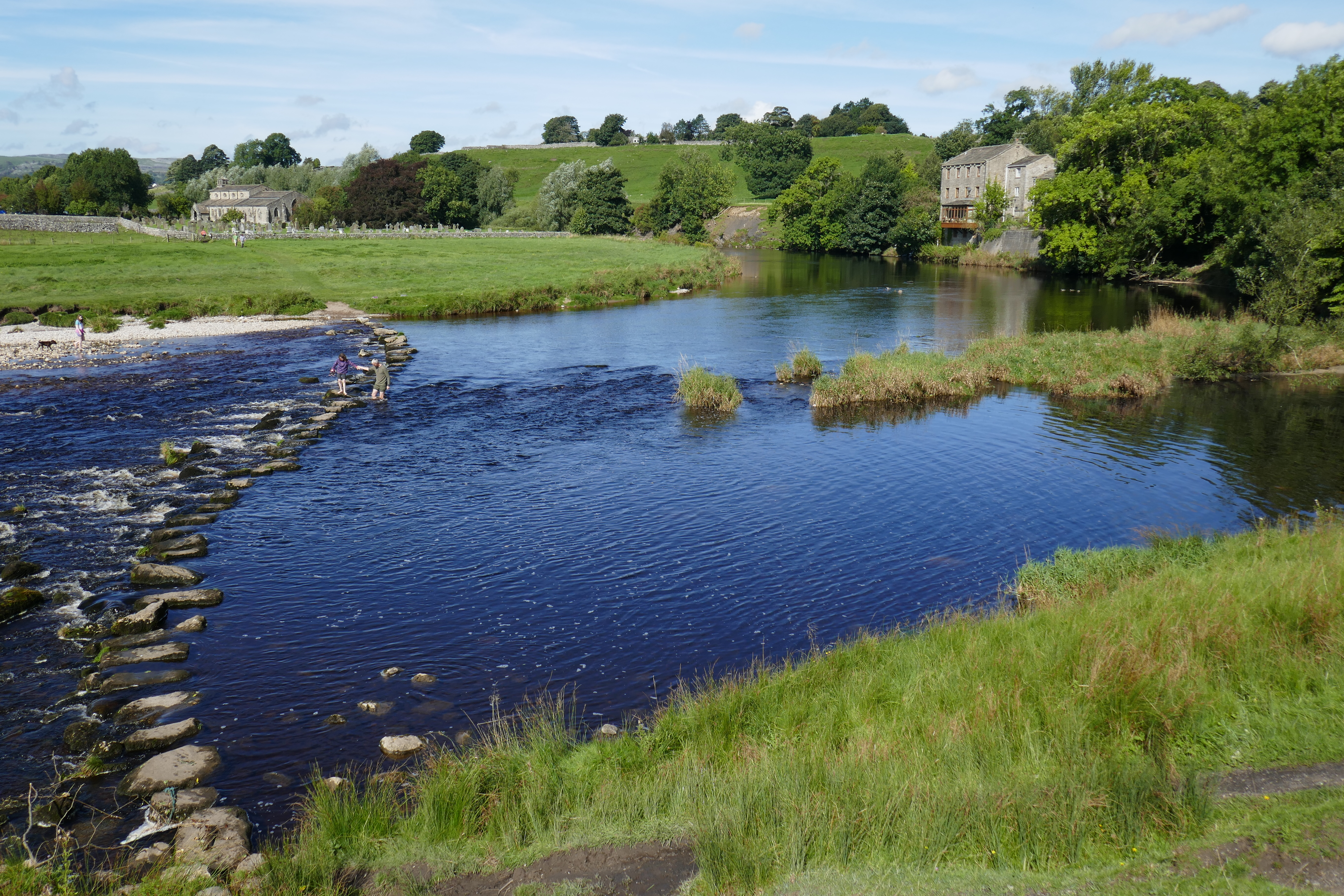
The next day was still sunny and we walked from Grassington along the river Wharfe to the pretty village of Burnsall. Thanks to rain a couple of days before the river was full and this made crossing by the stepping stones at Linton and Burnsall entertaining for everyone who was watching. We watched dad wading across, the river up to his thighs; he held the hand of his young daughter who was then able to jump across the stones. Later we marvelled at the daring of a walker who ran across so fast his feet hardly touched the stones. We returned through the valley-side village of Hebden and as we came through Grassington Park Estate Meadows we promised ourselves we would visit next July to see the flowering meadows in their full glory.
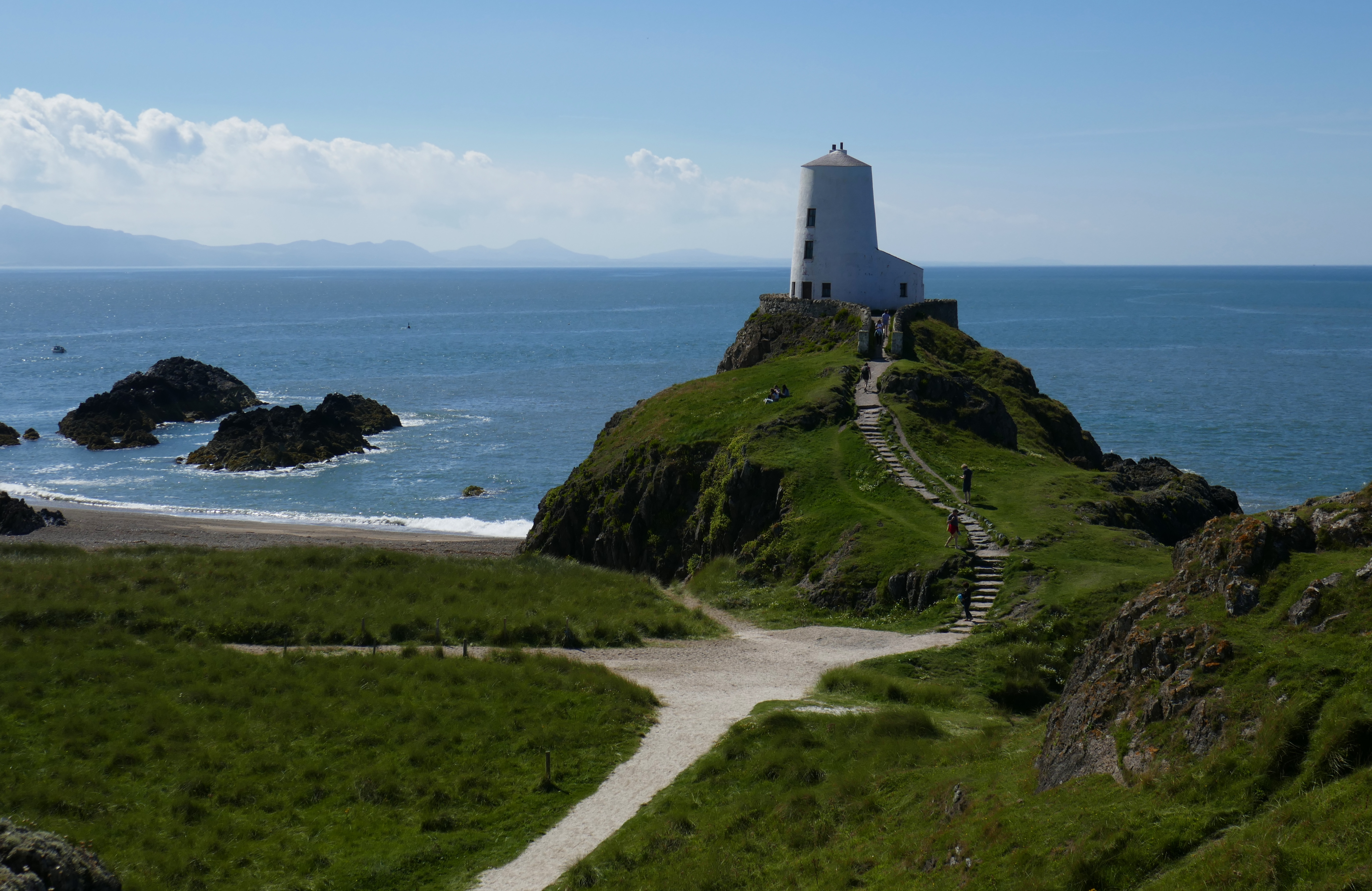
The beautiful Llanddwyn Island on the Isle of Anglesey
Spending a few days visiting some of the wonderful nature reserves and wildlife sites on the Isle of Anglesey proved to be a very frugal holiday. With no admission fees to pay, our only costs were small amounts for parking, leaving enough to buy the occasional [okay daily] ice-cream.
Anglesey has designated its 125 miles of coastline as an Area of Outstanding Natural Beauty and rightly so, as the coastline is beautiful and varied. We stood in the fresh breeze on the top of Holyhead Mountain and walked around the expanse of Red Wharf Bay, spotting egrets, curlew and oyster catchers feeding on the rich feeding grounds. On the way to Amlwch, with its fascinating [and free] museum about the geology of Anglesey, we visited the old copper mine at Parys Mountain [again no charge] and were stunned by the vibrant purple and orange colours and the huge open cast mine. We walked around Rhoscolyn Head to find the perfect white sea arch; this is just as impressive as Durdle Door but is kept a secret, as on a sunny day we had this idyllic spot to ourselves. I have struggled to decide which photograph to use from this trip as there are so many but opted for this view of Llanddwyn Island, a tidal island accessed from Newborough Forest [we were just sorry we didn’t spot a red squirrel but with such an expanse of trees the squirrels were no doubt having fun out of sight].
Anglesey also has international recognition for its important geological heritage as it is one of the 120 areas that are part of the UNESCO Global Geoparks network. Travelling across Anglesey is a journey across twelve Geological periods and 100 rock types. The colour and variety of the rocks on Anglesey are there for every visitor to discover and of course this rocky diversity results in a range of different plants too.
We stayed on a small Caravan Club Certified Location [CL] site for £13 a night called Tyddyn Osgar in the village of Brynteg. Mr BOTRA and I don’t understand the pricing policy of these small sites and it seems to be completely arbitrary with some charging over £15 a night for nothing more than a hook-up. This one provided a friendly welcome, one of the best campsite showers we have ever found, well-cut grass, wide-open views across to the Snowdonia mountains, a pub nearby, great cycling from the site and an offer of a lift for linear walks if we needed it … all hard to beat and ensured our trip didn’t eat in to the savings.
The summer of 2016 might not be memorable in England for being wall-to-wall sunshine and yet we have managed to be lucky enough to have some excellent weekends away. Although we have visited our much loved Lake District a couple of times, it has been a memorable summer for exploring some new areas [yes even in our small country we can still find places to discover]. Our trips to the Howgill Fells and Knaresborough were very pleasurable and we explored some beautiful places and enjoyed some good walking.
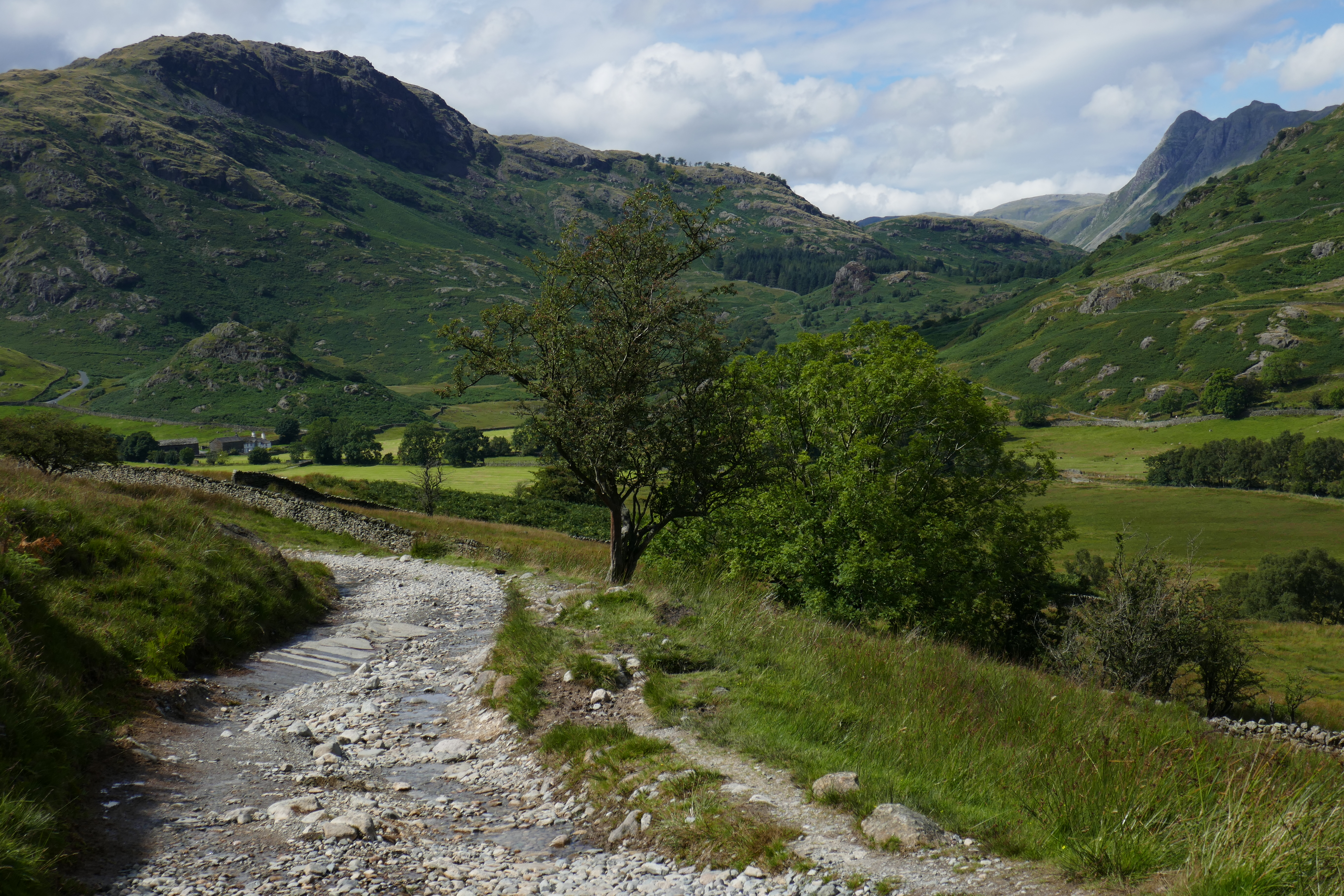
I was reminded how beautiful Great Langdale is in the Lake District on our August trip. Time flies so quickly and I am often amazed how many years it is since we have visited favourite places. As we drove in to the lovely glaciated valley and got our first glimpse of the distinctive hills bathed in the evening sunshine, the steep-sided hills seemed to give me a big comforting hug. After a pint of Old Peculier in the Old Dungeon Ghyll, listening to the chatter of other walkers talking about routes and studying maps for the next day I was even happier. The sound of the stream lulled me to sleep that first night.
The Howgills trip was one of discovery and I think it will become a favourite as the walking is good and the area is less popular than its neighbours. In North Yorkshire, we walked about 20 kilometres in to the lovely town of Knaresborough and back. This wasn’t mountain walking but it was beautiful through the Nidd Gorge and we enjoyed spotting the blue-green of the kingfishers flying fast over the river. There is also more to discover on the moors between Knaresborough and Skipton and so I hope we will be back [although as I said above, years might fly before this actually happens]. It hasn’t all been walking and we also spent some time in the fascinating and packed Nidderdale Museum in Pateley Bridge. Run by volunteers, there is something for everyone in this lovely local collection.
Rees Jeffreys Road Fund car park above Llan Festiniog
My introduction to William Rees Jeffreys was quite by accident one sunny Sunday a few years ago. Travelling home after a weekend camping in Dolgellau and keen to extend the carefree holiday feeling as long as possible, my partner and I took the B4391 over the hills from Llan Festiniog. Spotting a car park with extensive views, we couldn’t resist stopping for a brew and a stroll down the lane to pick bilberries and sit by the babbling brook. The splendidly positioned car park had a plaque and I learnt that it was funded by the Rees Jeffreys Road Fund.
Like many brief encounters, I didn’t give Rees Jeffreys another thought until twelve months later I had another chance meeting with this enigmatic fellow. Once again on the lookout for a good place to pull in for a drink, we turned off the M6 at Tebay and followed the road towards Kendal. Spotting a lay-by with a view towards the Howgill Fells we pulled in and realised we were parking next to a familiar plaque. The kettle went on and I climbed out to read that here was another car park funded by the Rees Jeffreys Road Fund. Over my cup of tea I starting wondering what the story was behind this man, why he felt the need to pay for car parks as far apart as Wales and Cumbria and why he deserved a plaque.
Back home, an internet search revealed some information about William Rees Jeffreys; born in 1872, before Karl Benz had patented his internal combustion engine for a Motorwagen in 1886, William Rees Jeffreys was a keen cyclist and was initially motivated in his campaigning to improve roads for cyclist. As cars became more widespread, William Rees Jeffreys held positions with the Road Board (the precursor of the Department of Transport), the RAC, the Roads Improvement Association and the Institute of Automobile Engineers. From 1919 he was a leading light in the classification and numbering of the roads in Britain to aid the assignment of the money from the Road Fund and to help drivers navigate; the final list was completed in 1926. Following his death in 1954 his estate provided the endowment for the Rees Jeffreys Road Fund; this gives financial support every year for education and research related to road transport and also for physical road transport projects, hence all the lovely road side parking areas.
As frugal campervan owners we always need car parks and lay-bys and those next to roads often suit our purpose of a rest stop on a long drive. These halts give us a chance to have a hot drink at little cost and stretch our legs without going out of our way and here was an organisation providing just the facilities the motorhoming community needs; I’ve not found a WRJ funded car park yet that has a height barrier.
Interesting as the Rees Jeffreys Road Fund website was, it lacked a list of the road side rest areas the Rees Jeffreys Road Fund had supported and I wanted to know more. An email to the Secretary quickly led to the arrival of a list in the post a few days later which showed 68 funded rest stops; these spread from Wester Ross in Scotland to Cornwall in the south-west. With the list, I was now able to plan holiday routes to include a Rees Jeffreys Road Fund road side rest areas.
My next opportunity to use the list was on a Spring trip to Pembrokeshire. The delight of a following a quest is that you never know exactly where it will take you and we found ourselves in some idyllic spots just because they were Rees Jeffreys Road Fund rest stops. Our first find was a small parking area on the B4582 near Cardigan, alongside the Crugiau Cemmaes bronze age barrow, which has stunning views over the Welsh countryside. At Wood near Newgale we enjoyed further views over Newgale Sands and St Brides Bay from the dramatically situated sloping car park.
Our final stop on this trip showed up the limitations of the list; with no grid references or even road numbers, even with the help of online maps and street view, there were some rest stops that were very difficult, if not impossible, to locate [you will notice my list is annotated with notes]. I think we found the road side rest stop at Pont Marteg on the A470 north of Rhayader in the stunning river Wye or Afon Gwy valley. The red kites circling above I stretched my legs, searching for the now familiar Rees Jeffreys Road Fund plaque; I never found it and so wasn’t completely sure we were in the right place.
The Rees Jeffreys Road Fund uses the interest earned on their investments each year to fund research projects and educational bursaries as well as road side rests and are happy to consider applications from any source, so if you think your local beauty spot needs a small car park let your council know about this opportunity.
Having visited Rees Jeffrey Road Fund rest stops in England and Wales, I got the opportunity to seek one out in Scotland. Just north of Glasgow, the car park at Queen’s View between Mingavie and Drymen was funded by my old friend WRJ. This car park enables the locals and visitors to park up and enjoy some fresh air and exercise; a quick five minute pounding of the legs will take you to the view point where it is said Queen Victoria stopped to take in the view of Loch Lomond, the more energetic can spend two or three hours walking up to the crags of the strangely named hill, the Whangie. The car park was busy on a bank holiday weekend and needed a good litter pick to make it a really pleasant place to rest.
Most recently we visited the rest stop at Iron Gate car park, perfect for the wonderful walk up Moel Famau in Flintshire. Mr BOTRA and I have ticked off only a few of the WRJ road side rests but the list travels with us in the glove compartment of the van and I have no doubt that my acquaintance with William Rees Jeffreys will be maintained and I will continue to be grateful for his generosity to motorhomers and other road users.
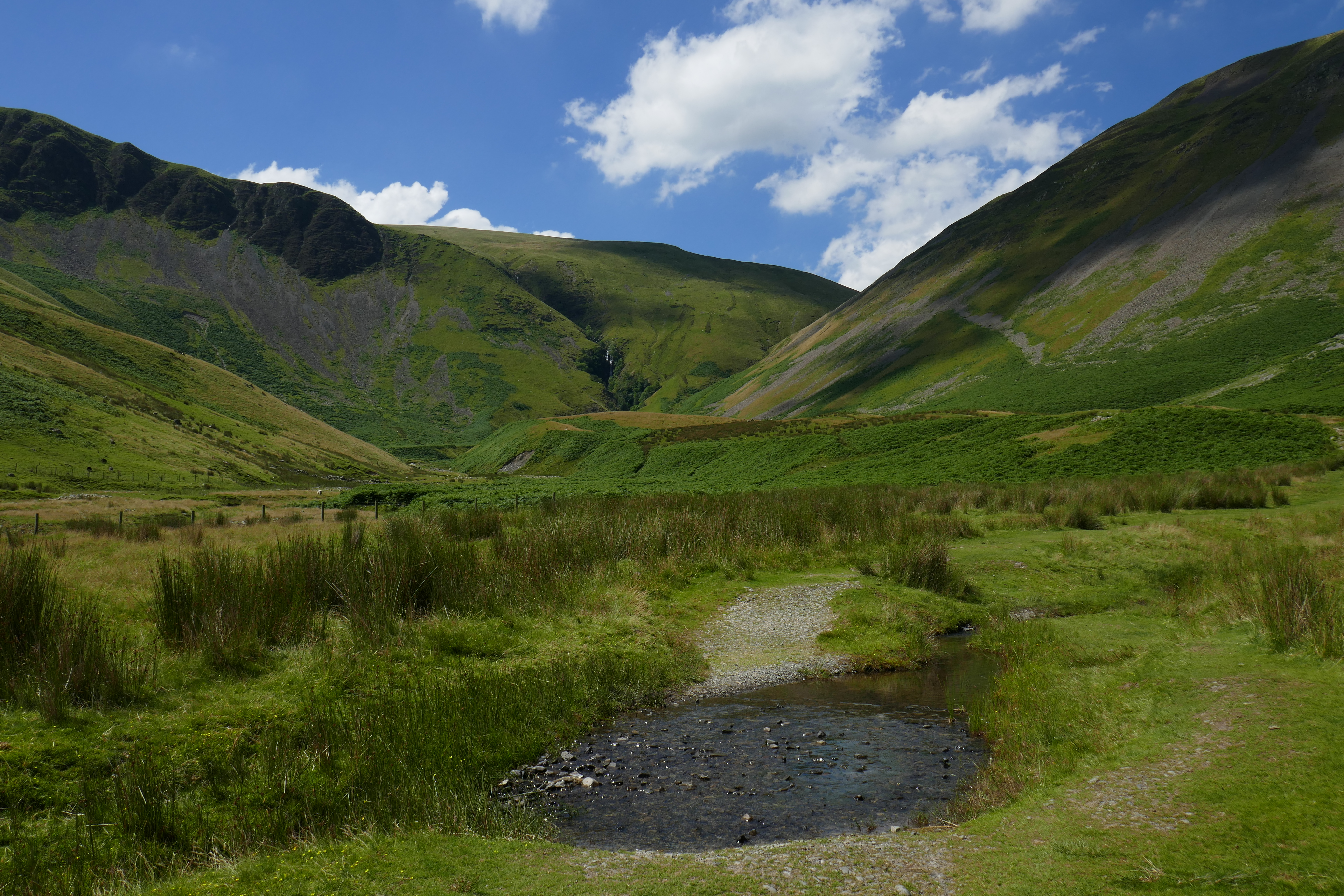
Perhaps to make up for the wet weekend in the Lakes just 10-days before, we were lucky enough to be camping in the beautiful Howgills for the ‘hottest day of the year’. With temperatures of 30°C forecast in the valleys we obviously headed for the hills to catch any breeze. The Howgills are to the east of the Lake District fells and are grassy rounded hills of grit stone and slates. We had a splendid day, walking up Cautley Spout, a high tumbling waterfall, to The Calf, the highest point of the fells at 676 metres above sea level.
While, no doubt, parts of the Lake District were busy with visitors on such a lovely day, the Howgills are always quieter and we only met a couple of other groups walking during the day. Once we were off the main route and the gravel path of the Dales High Way we had the place to ourselves and could enjoy the airy views over Cautley Crag without interruption.
Over the few days we were there we explored all corners of this rural area; we ate delicious chocolates from Kennedys in Orton, to the north of the fells, had fun trying our hand at weaving at the historic Fairfield Mill near Sedbergh [Mr BOTRA thought he could definitely enjoy doing more of this] and found orchids and butterflies in the beautiful Smardale Gill nature reserve.
Of course, it was just luck that we were on holiday on such a lovely day; we can’t wait until next year when we’ll be free and easy and able to set off camping as soon as we spot a good weather forecast.





 Back on the road again