
Would I lie to you?An Insurance Company and a faulty lie detector

Recently my bicycle was stolen. It was 13-years old, only big enough for someone 160cm tall and its paintwork was scratched. And yet, it was my comfy bike and had been cared for mechanically over the years. For my comfort I had bought a Brooks saddle, changed the stem and added bull bars. It had a rack for a panier when I was shopping and a bell and mudguards. It was MY bike!

I left it outside Sainsbury’s in Lancaster one evening while I was minute taking for a local charity. There is CCTV and the police watched the thieves take my bike about two minutes before I returned [if only I had walked more quickly!]

I reported the theft to the police and Lancashire Constabulary excelled themselves, calling me four times with updates and getting hold of the above CCTV.

I also made a claim to our home insurance company, where our bikes are listed and specifically insured. At first they were sympathetic and everything seemed to be going through as expected. The next day I was informed that I had to answer some questions, that I should do this in a quiet room and sitting down. I was told the questions would be repeated and I should only answer yes or no.

The questions were asked by a machine and were irritating, ‘Did I know how to use a telephone?’ ‘Did I own a computer?’ Among these trivial questions was one along the lines of, ‘Are any of the items you are claiming for still in your possession?’ I tried to answer these questions clearly but by the second time it was hard not to sound irritated by questions that I considered beyond stupid. I wanted to say, ‘duh!’ to every one of them.

Later that day I had another telephone call from our insurance company. If the first sympathetic member of staff had been good cop, this was bad cop. It seemed the ‘system’ had flagged up one of my answers, suggesting my claim was fraudulent. I was informed that ‘the system’ was highly accurate and rarely wrong! I felt I had wandered in to a farcical performance of 1984; I knew I was telling the truth, but a machine I was told was accurate most of the time heard a lie.

I was on the phone for some time, pointing out to someone with no sense of humour that one of my weaknesses was my inability to tolerate stupid questions. I explained that what the machine had heard was not a lie but my frustration. I tried laughing the whole thing off but this just made things worse. The call became darker and by the end I was being threatened and bullied. I was asked if I wanted to proceed with the claim because if I was found to be acting fraudulently I would be placed on a black list and unable to get insurance in the future.

Describing the call to my partner afterwards made me realise how unacceptable their attitude had been. The telephone call was almost more distressing than having my bike stolen. I knew I wasn’t lying but unbelievably I was being accused of doing so by a machine that is considered to be clever, even though it can’t tell the difference between a sneer and a lie.

It seems most insurance companies now use lie detector software to seek out fraudulent claims. Our house insurance this year is through Admiral but they are not alone in this dubious practice. Insurance companies think this policy has been succesful and saved them money. It isn’t clear how much this is thanks to the clever [?] software identifying fraudulent claims or to their bullying tactics following an alert from the lie detector that makes innocent claimants drop a legitimate claim. I accept that some people will make a claim on their insurance that isn’t real but all they really had to do was talk to the police to know that my claim wasn’t one of them.

I am not prepared to bow down to bullies and I stuck to what I knew was a legitimate claim. I no longer had a bicycle and needed a replacement for getting around. The claim eventually went through, although with the £250 excess, it was still an expensive theft for us.

We quickly realised we had under-insured the bike, only pricing the cost of a replacement bike and forgetting things like locks, lights, rack, mudguard and saddles that we have added over the years. These accessories amount to around £250. Fortunately, it was January and I managed to secure a reasonable replacement bike from Trek in the sales that used up all of the amount paid out. But off-the-shelf bikes have no bell, lights or mudguards and we purchased these, along with a rack from our own savings.

As for the saddle … The manufacturer-supplied saddle on my new bike was so uncomfortable, I could hardly walk after cycling it home from Lancaster! For non-cyclists consider the difference between sitting on a knobbly rock to a sofa and you are almost there. We had an old, slightly better, saddle in the garage so I muddled along with that but cycling was no fun anymore. After a month, in desperation, I found there are lots of second-hand Brooks saddles on Ebay and I bought a womens B17 for under half price so I can once again enjoy being a cyclist.

I hope no one steals your bike, but just in case, check your bike is fully insured and maybe practice answering stupid questions with a straight face!


2024 Spending Reviewed: How Much do you really need for a Comfortable Retirement

It is that time of the year when once again I share the expenditure of a couple living in the northwest of England and reveal our spending in all its individualism and flaws.

Our finances had another injection of welcome income in 2024 as my partners state pension and final work place pension kicked in [hurrah to a bus pass and a Christmas bonus of £10 :)]. Near the end of 2025 my own state pension will begin and we will be fullon pensioners and have two bus passes! Even in 2024 93% of our spending came from income, rather than our savings, and this number makes a massive difference to how secure I feel about our finances.

Nevertheless, inflation continues and after spending £28,573 in 2023, we began 2024 with a budget of £30,000 but quickly revised this to £31,000 and added £3,000 for expensive [non-campervan] holidays. You can see how that additional income is going to my head. We managed to keep to this budget [just!]

Once again this year, as well as considering the budget, I also weigh up the environmental impact of our spending and I have highlighted this under each spending category.

Here is how our budget breaks down:

Essentials – total £11,753 [35% of total spending] [2023 £8,418 / 30%]

Food – £4,970 [2023 £4,535] – Averaging £414/month, this is an increase of around 10% on our food and alcohol. We continue to both be vegetarian and often vegan and shop mostly at Lidl, with the exception of wine which comes from our local wine shop, The Wine Society and France. Our shopping habits are mostly a win for the environment and our pocket.

Utilities, insurance & phones for a 2-bed 57.2 sq mtrs [615.7 sq feet] bungalow – £4,131 [2023 £3,584] – Our gas and electric has remained expensive this year averaging £70/month. We decided to enter a fixed price contract towards the end of 2024, which we hope was the right call. In winter we keep the house moderately warm but we do wrap up in layers too and always have cosy blankets to hand. Our water bills remain low [about £18/month] as we have a meter. When we are at home we use about 90 litres of water/day, which is less than the average for a single person household in the UK. United Utilities tell us a single household uses an average of 149 litres of water/day and a typical couple use 276 litres/day. We find it hard to imagine what people do with this much water. We continue to be careful with our gas, electric and water usage, aware that these are resources we should be conserving. Saving energy and water is a win for the environment and our pockets

Essential repairs and replacements – £1,916 [not a separate category in 2023] – This is our spending on essential repairs to our property and the cost of replacing our elderly mattress and laptop. Repairing is better for the environment than replacing but we still have a gas boiler which contributes to climate change. We have begun to think about heat pumps.

Our health – £736 [2023 £299] – We replace our specs every three years at the moment and in 2024 it was my turn. Fortunately we only needed check-ups at the dentist and various over-the-counter medications.

The money we spend on the essentials above are, in theory, the minimum we need to survive. It does now include some repairs and replacements but not the costs of owning a campervan, stuff buying and holidays.

Stuff (electronics, books, newspapers and other kit) – £4,969 [15% of total spending] [2023 £5,832 / 21%]

Household spending [everything from glue, newspapers and books to bird food, gardening stuff and parts for the bikes] – £3,612, [ 2023 £4,979] I have separated out essential repairs and replacements from items that are truly more stuff, although this category will include smaller repairs. In 2024 we did more work on our garden, buying recycled bricks and building a raised bed which then needed plants and a new tree to fill it. We also purchased one new replacement mobile phone and new ladders.  Buying reclaimed bricks and planting a tree are environmental wins and costs that we could bear.

Clothes & accessories – £1,357 [2023 £853] – Another expensive year for clothes! A good chunk of this spending was buying new waterproof jackets, which will hopefully last a few years. I had a spectacular fall in 2024 and ripped the knees of a pair of good walking trousers [not in a stylish way]. I did manage to replace these in a sale and we continue a one-in one-out policy on clothes. Where possible we have scoured charity shops for clothing, particularly for fancy dress parties. An environmental and spending thumbs down.

Experiences – £16,061 [47% of total spending] [2023 £13,619 / 47%]

Holidays [still our favourite spending line] – £7,358, [2023 £4,481] – This paid for around 17 weeks of holidays in 2024. We spent 86 nights in our campervan [including five weeks in France]. We also tried some non-campervan holidays including a couple of weeks self-catering in Scotland and a pushing-the-boat-out trip to Italy. This was our February visit to Turin and Florence for an unforgettable two-week trip by train that cost £3,000. We have also stayed in one of Manchester’s Premier Inns about half a dozen times when we are visiting for friend’s celebrations. Taking the train to Italy is at least 80% less in carbon dioxide emissions than flying and is much more fun!

Restaurants & cafes – £3,554, [2023 £2,687] – Wow! What can I say, we clearly love going out for coffee and food and watching the world go by!

Running the campervan [servicing & insurance etc] – £1,975 [2023 £3,475] – 2024 has been a much cheaper year for our campervan as it has required no major work, just the usual services, insurance and MOT.  A campervan does burn fossil fuels, so a thumbs down for the environment but camping holidays are cheaper, so a plus for our pockets!

Diesel for the above ‘van – £1,076 [2023 £1,210 ] – We can’t save the planet single-handed but we can try. One way is to use our campervan [our only vehicle] as little as we can. For short journeys we walk or cycle and for longer trip we take the bus or the train if it is feasible.

Tickets for concerts, football & attractions – £1,081 [2023 £696] – We continued getting out to see good films at the cinema in 2024 (The Outrun was a favourite] but around 20% of this spending was during our holiday to Florence. We didn’t visit everything in the city but entrance fees are high in Italy.

Public transport costs – £1,017 [2023 £1,070] – A consequence of using our own vehicle less is using public transport more and this figure does not include our train travel to Florence, which comes under holiday spending. In 2024 my partner got his much anticipated bus pass and with the £2 capped bus fares we have used buses without a thought and made the most of it, travelling to the Lake District and out of Morecambe for linear walks. The increase to £3 in 2025 feels steep but by 2026 I will have my own bus pass! We have a Disabled Rail Card to reduce the cost of our train fares and this is our preferred method of getting to Manchester. A return to Manchester is around £30 for the two of us, although unreliability continues to be frustrating. Although rail travel is often more expensive than driving, we prefer to keep our environmental impact as low as we can.

Giving – £1,057 [3% of total spending] [2023 £704 / 2%]

Gifts & donations – £1,057 [2023 £704] – In 2024 we continued to support charities that we care about and an increase in our gifting to charities and family and friends reflects our greater security with more income. We have also both taken up some volunteering in 2024, giving our time and skills to local organisations. By focussing our giving on environmental charities we can be part of the change required.

TOTAL SPENDING FOR 2024 – £33,840

I am pleased that we just came in just under the £34,000 budget. Our actual spending is still much less than the £43,100 quoted in 2024 as the amount needed for a couple to achieve a moderate retirement but well above the minimum amount. I would suggest our retirement is much more than moderate!

2024 has been our highest spending year in retirement. In the last eight years of retirement we have spent an average of £26,619 a year.

By the end of 2025 our pension income will be complete when I reach state pension age. We are currently expecting to spend around £35,500 in 2025 [including another splashing-out holiday]. This will be mostly, but not entirely, funded by income.

Here’s to 2025 when we hope to continue to live the life we want to lead and have the resilience to survive whatever 2024 brings us.

Let me know in the comments below how your budget matched your spending in 2024 and your hopes for 2025.

Smelling good! Plastic-free Update #6

Tins of Clay Cure natural deodorant balm
The Clay Cure – deodorant in a tin

Reducing plastic is important to me but so is finding things that do what they say on the tin. The Clay Cure natural deodorant balm covers both these bases, it comes in a tin and does what the label says!

My search for a deodorant that is effective and easy to use is one that has lasted decades. I have tried rock-like crystal deoderants that had little impact; I have experimented with deodorant bars from Lush [one of my favourite companies] but found them messy and ineffective [but they do work for others] and I have tried doing without. The latter means I end up washing my clothes more often which uses more washing powder [in a cardboard box] and wears out my clothes more quickly, so isn’t a perfect solution.

So when I purchased a tin of The Clay Cure’s deodorant balm a couple of years ago, I wasn’t very hopeful that this would be the wonder product it is. Now I wouldn’t go anywhere without it.

For women and men, the deodorant balm comes in a small metal tin, not quite 7cm in diameter and around 2.5cm tall. It has a screw-on lid. Inside is a solid but soft deodorant, about the consistency of fridge-hardened butter [but it is vegan] [it is often softer in summer when the weather is warm]. The tin comes with a flat wooden spoon, familiar from tubs of ice-cream. You use this to scoop up a pea-size ball of the balm. Rolling this between your fingers warms and softens the balm and it is then easy to rub it in under your armpits. It disappears immediately, there is no waiting for it to dry, it isn’t greasy and it doesn’t stain your clothes.

I now buy in bulk from The Clay Cure website and, if you sign up for their newsletter, you will be notified when they have offers. There are currently eight different perfumes and a neutral deodorant. I like all of them, particularly the lavender and the lime and sage but you will have your favourite. You can find them on sale in other retailers such as wholefood shops and large farm shops.

If you buy two from their website, they are currently £8 each. I haven’t tracked how long they last but it spreads into months. There is no waste due to being packaged in a tin. This means you can get at every single bit of the balm. You are also left with a tin which is useful for storing all sorts of stuff from pins to peanuts or screws to sweets. Adding up all the plus points, this deodorant balm doesn’t feel like an extravagance.

Other easy wins in my aim to reduce our plastic footprint and stay reasonably clean and fresh smelling include solid shampoo, rather than bottles. We also always use bars of soap, rather than shower gel or liquid soap.

As usual, I have not been paid or even given any free products [I wish] to write this review. I share information about products I have found and enjoy using.

The Final Columns on the Spreadsheet & Financial Independence

My partner in travelling reached 66 years of age recently. He is fortunate to get his state pension at this age, along with his workplace pensions and his bus pass! This birthday was a huge milestone for us on our journey from being economically inactive to becoming pensioners.

When we both stopped working the nine to five in 2017 we had little income to speak of. What we did have was a spreadsheet [of course] with nine columns, one for each year until 2025. The spreadsheet forecast how much of our savings we would need to spend every year so that we could pay the bills and live our lives. We reviewed it regularly in the light of the actual amount we had spent and how much I had managed to earn as a travel writer. Every year on the 31 December I cheerfully deleted the column for the year that had ended. As our pensions have crept closer the trusty spreadsheet has diminished.

I met an old friend I hadn’t seen for a few years recently and she asked me, ‘Did the spreadsheet work?’ Her question made me smile; feel grateful that she had remembered all those conversations about early retirement we had; and also stop and think before I answered her. I realised, yes, the spreadsheet had worked and so much better than I might have hoped.

The spreadsheet started life in 2011 and until 2017 was used to track how much more money we needed to save until we could afford to retire. As the pennies became pounds the amount we needed before we could stop work got smaller.

From 2017 the spreadsheet’s use changed and a new section was added for cashflow, so that we never tied up any money long-term that we needed as our ‘income’ in the short-term. In constant use, the spreadsheet keeps us on track month by month as the details of our spending [mostly in our control and predictable] and income [unpredictable until my small NHS pension arrived in 2020] were updated. This enabled us to see at almost a glance what fiscal flexibility we had every year. Without this information, making financial decisions that were outside our budget would have been more difficult. In particular, the spreadsheet informed our decision to move house in 2019 [something we hadn’t planned for in 2017]. The spreadsheet has been our companion on our journey, growing and evolving as our life has changed, always helpful, sometimes accommodating and never draconian.

It has held my hand for so long, I have realised I will miss this spreadsheet when all the columns have been deleted in two years time. In 2026 all our pensions will have matured, I will also have a bus pass and we will have two fairly predictable incomes once again. Although we won’t be part of the workforce it will feel like we have gone back in time to the days of straightforward fixed incomes. Making sure our expenditure stays within budget will be managed by a different [and even older] spreadsheet!

I never guessed I was the sort of person who would become sentimental about a spreadsheet. Maybe it isn’t surprising when I consider how much it is a symbol of the big step we made in giving up our jobs in 2017. I think maybe my old friend would understand my emotions and I hope you readers do too.

2023 Spending Reviewed: The Only Way is Up!

It is that time of the year when once again I share the expenditure of a couple living in the northwest of England and reveal our spending in all its individualism and flaws.

Given current inflation, it isn’t a headline grabber to reveal that during 2023 our spending increased. When we retired in 2017 our budget was £27,000 a year or less and although we budgeted for inflation we mostly spent less than £27,000 until 2023. Last year I watched our spending increase by a whopping 8% on 2022!

Below you can read the details of this spending. This year I have highlighted how our attempts to live a more environmentally-friendly life both costs us and saves us money.

The big change for us in 2023 was an increase in our regular income. Hooray! My small NHS pension [it doesn’t even pay our supermarket bills] and my irregular and diminishing travel writer income and interest on our savings are now joined by my fellow frugalista’s local government pension. Successfully getting this money out of Lancashire County Council is a long and sorry tale of out-sourcing mayhem that I won’t bore you with but it did involve the helpful people of Fort William Library as we got to grips with their ancient flatbed scanner during our Scottish holiday. Our income is now about 70% of our spending and we are starting to feel just a little secure.

Our other big expense in 2023 was trading in our much loved blue Renault Master campervan for a younger and smaller Ford Transit in a shade of silver that looks almost blue in the right light! We received a good trade-in for our Renault but still reduced our savings by a chunk to make this purchase. The only big home improvement expenditure was flooring in our kitchen that was reassuringly expensive enough to surely outlive both of us! 

Here is how our budget breaks down into my different categories:

Essentials – total £8,418 [30% of total spending] [2022 £8,941 / 33%]

Food – £4,535 [2022 £4,074] – Averaging £377/month, it isn’t surprising we spent more on food and alcohol in 2023 as we have all witnessed the supermarket price rises. We continue to both be vegetarian but in 2023 we leaned closer to being vegan motivated by health issues. As well as being healthier, a vegan diet is generally a cheaper way to eat. I always say I couldn’t give up cheese and I haven’t, but we’re limiting our dairy consumption to some mature Gouda in the Friday night risotto and I find I’m not missing it through the week. Butter on my toast, in contrast, is a tough sacrifice. Our shopping habits are mostly a win for the environment and our pocket.

Utilities, insurance & phones for a 2-bed 57.2 sq mtrs [615.7 sq feet] bungalow – £3,584 [2022 £4.031] – By contrast I am suprised that the cost of our bills has reduced. In 2023 we managed to save money on our water bills by using less and we found cheaper contracts for our mobiles and broadband. Our gas and electric only increased by £26 in 2023 and the biggest increase was our council tax. Saving water is a win for the environment and our pockets

Our health – £299 [2022 £836] – 2023 has been the year of teeth! We still have a NHS dentist and constantly count our good fortune as the tooth is [groan] this budget line would have been considerably more if we were paying private prices!

The money we spend on the essentials above are, in theory, the minimum we need to survive, if nothing goes wrong or wears out and we didn’t own a campervan and never went anywhere!

Stuff (electronics, books, newspapers and other kit) – £5,832 [21% of total spending] [2022 £4,719 / 18%]

Household spending [everything from glue, newspapers and books to bird food, gardening stuff and parts for the bikes] – £4,979 [ 2022 £4,076] I thought 2022 had been the year of stuff and hoped to reduce this budget line in 2023 but it wasn’t to be! Instead we flashed the credit card to purchase two handsome new armchairs from John Lewis that make me happy every time I curl up in one to read a book. We also spent money on the garden, creating a new hedge with wildlife in mind and replacing plants lost in the frosts of December 2022. The PC we use for TV viewing began to fail and we spent £470 updating the components while re-using the existing case. Fortunately my partner is able to carry out all the labour for this sort of work. In the autumn a storm wrecked a garden arch that we replaced and one of our mobile phones was long overdue being replaced. There is always something! With the exception of the wildlife friendly garden plants this is an environmental and spending thumbs down.

Clothes & accessories – £853 [2022 £643] – Until the last few months of the year I was hopeful we were keeping this category in check as all we had purchased were a few replacement t-shirts from charity shops and new cycling helmets. Then suddenly a new padded jacket, a fleece and hiking shoes could wait no longer. We still have a one-in-one-out policy with clothes as the space we have hasn’t increased. Again an environmental and spending thumbs down.

Experiences – £13,619 [47% of total spending] [2022 £11,805 / 46%]

Holidays [still our favourite spending line] – £4,481 [2022 £4,096] – Our spring holiday to France in our campervan was wonderful and it was where we made the decision to downsize our ‘van. This decision was made for many reasons and one was an urge to have other sorts of holidays that didn’t involve a campervan. So, this total also reflects a week in a holiday cottage and a few days in a hotel in Glasgow [travelling by train] as well as those [getting more expensive] campsites.

Restaurants & cafes – £2,687 [2022 £2,311] – In 2023 we made a conscious effort to particularly support our local veggie and vegan restaurants. We are lucky to have The Whale Tale, Pure Vegan and The Herbarium nearby in Lancaster and they all serve fantastic food and we don’t want to see any of them close.

Running the campervan [servicing & insurance etc] – £3,475 [2022 £2,058] – With perfect timing we traded in the Blue Bus beautifully kitted out with four six-month old tyres. We didn’t think our two-year-old Ford Transit with around 18,000 miles on the clock would need new tyres immediately. However, when we gave its tyres an up-close-and-personal check up they looked as if the previous owner had spent all those 18,000 miles off-road! Life is precarious enough without risking being on the road with cracked, pitted and battered tyres and we replaced them. Our much-loved Renault also developed an electrical fault in the spring that required a replacement leisure battery and needed a new bathroom tap. The new-to-us Ford had a minor dent, a small patch of rust on the rear doors and the sliding door needed adjustment. Ford require owners to pay a few quid for an annual bodywork inspection to keep any warranty valid and as the previous off-roading owners hadn’t done this [goodness knows why not!] these cost us £600. A campervan is neither positive for the environment or our pockets!

Diesel for the above ‘van – £1,210 [2022 £1,905 ] – We can’t save the planet single-handed but we can try and one way is to use our campervan [our only vehicle] less. In addition we are getting more miles to the gallon of diesel from the Ford Transit and it is Euro 6 compliant. There is a tiny environmental win here.

Tickets for concerts, football & attractions – £696 [2022 £744] – In 2023 we re-discovered our love of cinema, something that had taken a bit of a knock during Covid-19. The Dukes in Lancaster shows some fantastic films as well as theatre and the highlight of the year for me was Carol Morley’s Typist Artist Pirate King, a moving and funny road trip film. Look out for it on TV if you missed it in 2023.

Public transport costs – £1,070 [2022 £691] – A consequence of using our own vehicle less is using public transport more. We have a Disabled Rail Card to reduce the cost of our train fares and a return to Manchester is around £30 for the two of us, although unreliability is frustrating. While the trains continue to cause us more drama than you want from public transport, the £2 bus fares have transformed our local travel plans and we hop on and off buses with abandon. In 2024 my older partner will get his bus pass and we can’t wait! Using public transport is a tick for the environment but using the train is often more expensive than driving.

Giving – £704 [2% of total spending] [2022 £940 / 6%]

Gifts & donations – £940 [2021 £1,352] – In 2023 we supported Morecambe’s Food Bank, charities campaigning against climate change and Ukraine once again. I wish we didn’t have to support any of these charities but the need continues. Gifts to family and friends, it seems, have become more frugal and none of them have complained!

TOTAL SPENDING FOR 2023 – £28,573

2023 has been our highest spending year iin retirement. Over my seven years of retirement we have spent an average of £24,988 a year. With inflation remaining high we are now budgetting around £30,000 for 2024 and we’ll see how that pans out. 

In 2024 our income increases as Anthony reaches state pension age. It is now only two years until I will be 66 years old too and our income will [hopefully] be sufficient for our lifestyle.

Here’s to 2024 when we hope to continue to live the life we want to lead and have the resilience to survive whatever 2024 brings us.

Let me know in the comments below how your budget matched your spending in 2023 and your hopes for 2024.

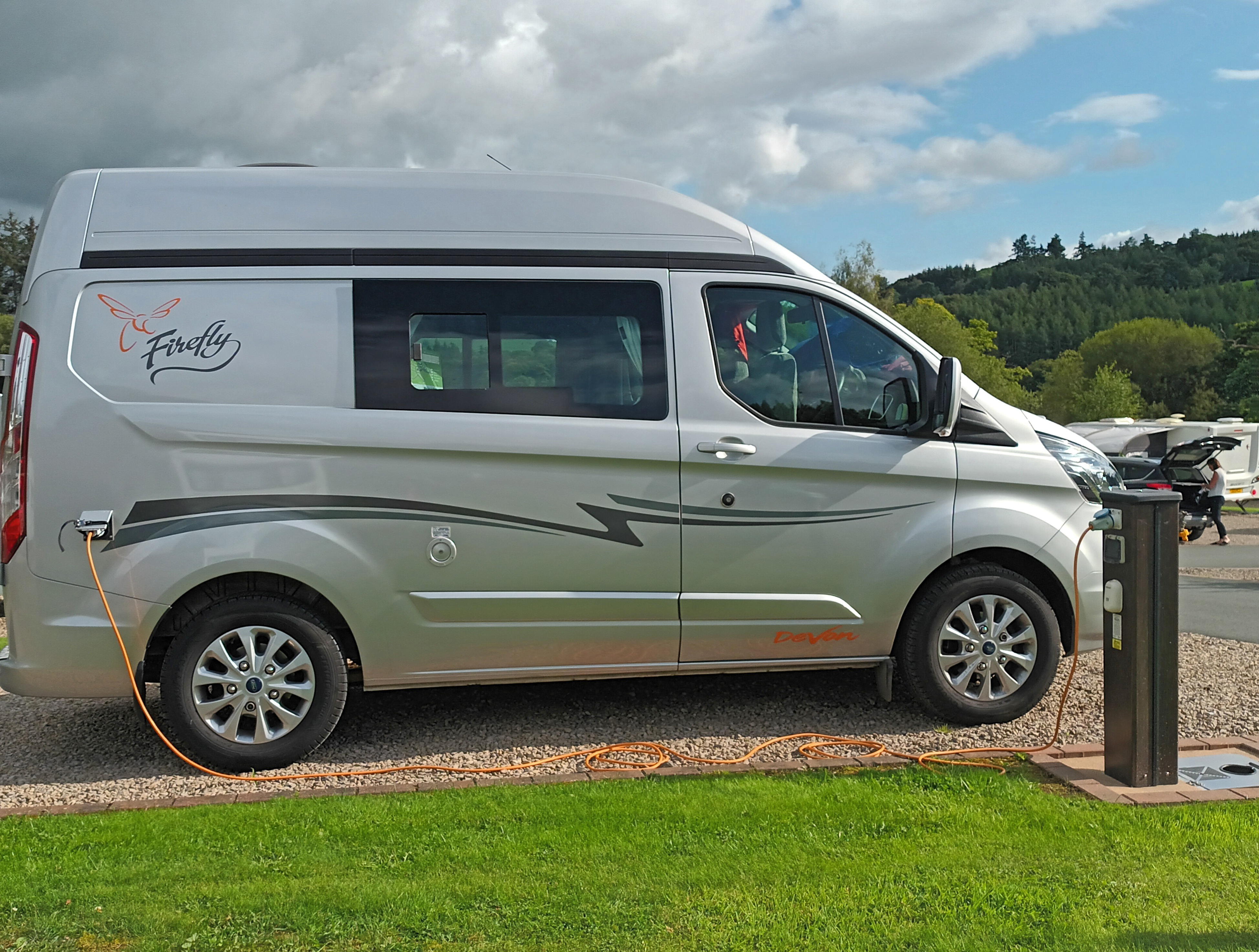
From Gallic Tempest to Flashy Firefly: Our Third Devon Conversions Campervan

We started the conversation during our campervan trip around France. Was it time to change our campervan? We adored our Devon Conversions Tempest on a chic blue Renault, it had everything we needed. After eight-and-a-half years, over 900 nights and around 80,000 miles it had been the workhorse campervan you expect from a Renault Master. Sitting in the French sun with a bottle of wine we mulled over options. Not owning a campervan at all was one we needed to consider but my tears at even the thought answered that question! We are a good team and generally get the best solutions when we put our two heads together and eventually we realised that what we wanted was a smaller ‘van.

When we bought our Devon Tempest we were keen to try the luxury of a travelling with a bathroom and didn’t want the faff of turning the front seats around. We had enjoyed what we think of as our enormous 5.4 metre long Blue Bus but both now felt ready to return to a simpler way of camping. We also felt uncomfortable owning a diesel ‘van with a Euro Five engine, we wanted something less polluting.

The research began with electric ‘vans but it soon became apparent that although there are a few out there they are still a rare beast and would cost almost as much as our Lancashire bungalow! A second-hand but newer campervan with a Euro Six engine was a cleaner option that wouldn’t leave us destitute. Visiting campervan dealers it quickly became clear that what we wanted was difficult to find. Campervans have become so popular they fly off the forecourt and those on offer were unsuitable in so many ways.

Then we had a piece of luck. A chance conversation alerted us to a short wheel base Devon Firefly on a Ford Custom Transit coming up for sale. We like the Devon Conversions campervans and had owned two previously so we were beyond excited while we waited. The Firefly is a similar layout to our previous Devon Conversions campervan, the Sundowner, although that was on a VW. It was a layout we prefered as it includes a toilet tucked away at the back, so we could downsize without losing all the facilities we had been used to.

Seeing the Firefly, the only thing wrong with it was its colour! Our first three campervans have all been blue and we were looking at a silver campervan. I quietly started to wonder how much a re-spray would cost! Eventually I came to accept that silver is on the blue scale and we were buying a ‘van that identifies as blue!

Buying second-hand is so different from buying new. As well as not being able to pick the colour we couldn’t pick and choose from the menu of expensive extras and the ‘van came with someone else’s choices. We had the electric water heater they had fitted taken out, as it took up space and, with no shower, was no more use than a kettle. We also had a diesel heater fitted. I am mystified to know why someone wouldn’t put a heater in their campervan as in the UK this really only leaves about three months of the year when you can comfortably go camping. This was also our first experience of owning a conversion with a compression fridge rather than a three-way fridge.

Emptying our Tempest took a week as we considered each item, trying to decide what was essential and what wasn’t ready for down-sizing. The essentials still seemed a very large pile to fit into a small five-metre-long campervan. At the dealers I said a tearful goodbye to our Blue Bus and wished it a happy second life. Back home we thankfully found a place for all our stuff in the Firefly and set off on our first camping trip to Small Batch campsite near Church Stretton in Shropshire.

Our shakedown trip only had a few mishaps. After so many years with our Tempest and knowing all its quirks and corners, we felt like beginner campers again with this new machine. Most embarrasingly and publicly, we were that ‘van that set off the alarm at bed time, disturbing the whole campsite! We had never had an alarm before and some learning was required. The compression fridge had more space than our previous fridge and I had packed it with food, including garlic bread for our evening meal, forgetting we no longer had an oven! Fortunately, we were away with friends with a larger ‘van and an oven so we didn’t have to try cooking garlic bread in the RidgeMonkey. We learnt to switch the compression fridge off during the night as it is very noisy! And we got back into the habit of turning those front seats. After six nights away we were settling down and getting used to living in a campervan that was just underfive metres long. We also had a long list of modifications we wanted to make.

A kind friend, watching us struggling to figure out locking the Firefly so that the alarm wouldn’t go off, suggested that changing ‘vans was good for our brain health as we were having to re-learn so many things. I hung on to her positivity as we muddled through all the new-ness of the Firefly.

It seems that our Tempest has sold to new owners so we hope we meet it on the road one day and that whoever purchased it has lots of fun travels and enjoys all that space.

The Aerative Clothes and Boot Drier

Updated April 2024

We don’t buy gadgets! But this one has been so useful in our campervan I had to share it with you. Wet clothes and shoes draped around our small campervan make me stressed. They get in the way and make the ‘van feel damp. Some ‘vans have luxurious bathrooms with heating and you can hang up clothes there, shut the door and forget about it but this isn’t an option for us. Now, providing we have a hook up, the Aerative shoe and clothes drier takes the strain out of rainy days and laundry.

At £69 this has to be good, so what do get for your money? The Aerative comes in a draw string bag and takes up about the space of a small pair of shoes. Folded up it sits in your shoes but the drier also has a hook that unfastens so you can easily hang it up. It then opens out into a coat hanger shape, with air ducts along the arms. You simply plug it in and press go. It also comes with pegs for items that don’t hang up so easily, such as socks. Another advantage is that it only uses around one amp so won’t blow the campsite electric system or cost you a fortune if you’re on a meter.

To dry a shirt we hang the Aerative from a hook or from a cupboard door handle near to a plug, open the Aerative out fully, hang the shirt on the Aerative and switch on. It does dry fast but this will depend on the fabric of your shirt. We find that often the very bottom of a shirt remains damp and we will turn it upside down and peg it around the hanger to finish it off.

Drying boots and shoes is easy and there is no need to extend the arms into a hanger. In the folded position shown in the photograph above you can place each ‘arm’ in a shoe and switch it on. It takes a long time to completely dry a pair of soaked through boots but this and air drying overnight should mean you have dry boots the next day which is luxury.

The only downside to this useful piece of kit is the noise. It hums like a low-powered hair dryer so is fine while we are sitting reading or cooking but you wouldn’t want it on all the time. If you have a bathroom and can pop it in there and shut the door this will be less of an issue.

Twelve months on, I wouldn’t be without this piece of kit. It still fits in our downsized campervan and feels essential for drying wet gear and washing. If more campsites had a drying room [or it never rained] we probably wouldn’t need an aerative but in the real world …

I haven’t been paid to write this review or received a free piece of kit I merely wanted to share with readers something we have found that has made our camping experiences better.

Sacreblue! The cost of food in France in 2023 [with 2024 update]

Shopping can be a bit of a chore but when we are abroad it is an exciting part of the holiday. There are different products, interesting labels and everything just seems so much more colourful. From the shelves of strange liqueurs to the dazzling range of cheeses it is all thrilling and a feast for the senses. This year inflation added colour to our shopping trips as I constantly expressed horror at the prices!

In May and June 2023 we spent six weeks in France, mostly exploring the Atlantic Coast and areas just inland. Last year we visited Germany and the Netherlands and I concluded that food prices were much the same as the UK. This certainly wasn’t the case in France in 2023.

In France, our supermarket shopping was 30% of our total spending [excluding the cost of the ferry]. Last year it represented 20% of our total. We spent similar total amounts on each trip but how this was distributed was very different.

Our food and drink budget while we were travelling around France came to €941/ £809. This is just our spending in supermarkets [our cafes and restaurants bills is another thing] and is an eyewatering equivalent of around £540/month. At home our supermarket bill averaged £340/month between January and April. So where did we spend this additional £200/month?

2024 updateAfter five weeks in Normandy in September 2024 we spent €718/£610 on supermarket shopping. This is the equivalent of around £574/month (including the same red wine consumption as 2023), so suggests a small rise in prices. Without the additional red wine we drank and carried home and the duty-free gin, we averaged around £490/month on supermarket shopping in France. At home, our UK supermarket bill is averaging around £383/month in 2024. The main difference is that while in the UK we mostly shop in Lidl, in France we didn’t use the discount supermarkets, we shopped in Carrefour, E.Leclerc and Intermarché.

Some examples from our 2023 shopping baskets- 500g of penne pasta €2.08/ £1.79 (not own brand) (Tesco equivalent £1.50), 200g of Gouda slices €2.25/£1.93 (Tesco £3.75 for 50e0g), 175g houmous €2.99/£2.57 (Tesco 200g £1.20), red peppers €6.40/kg/ £5.50/kg (approx 6 peppers) (Tesco 60p each or approx £3.60/kg) and 250g of mixed cherry tomatoes €2.60/£2.24 (Tesco £1.80). One of the few things that came in cheaper were courgettes at €2.70/kg/ £2.32/kg (Tesco £2.78/kg). We mostly shopped in Super U but did occasionally use other supermarkets.

So was it our fondness for red wine that tipped the scales? We drink about three bottles of wine a week when we are away, rather than just one bottle a week at home. On top of these twelve extra bottles we returned across the Channel with 17 bottles of wine stashed away under the bed of our campervan for drinking at home. Even at an average of €5 each [and we often spent much less] these additional 29 bottles would only account for €145/£123 of that £809 or £82 per month. Of course, we have saved some money returning home with cheaper wine so hurrah for that small win.

I hope you are keeping up with the maths … Allowing for the additional wonderful red wine we purchased, we are still looking at approximately £118/month additional cost on our food shopping. This is around 1/3rd more than we spend at home, so did we do anything different? After all we were on holiday.

We ate in restaurants four times during our holiday [at home we eat out around once a month], the rest of the time we cooked in the Blue Bus. We ate similar food to home, vegetable dishes with pasta, rice or couscous. We did develop a liking for the vegetarian frankfurters you can sometimes find and these were around £3 a pack but they were a weekly, not a daily, extravagance. At home we make houmous regularly but don’t on holiday. This was more available than ever in France but was too expensive to have more than three or four times. Even peppers, that we eat kilos of at home, became a treat and I suspect, due to the cost, we ate less fruit and vegetables than we do normally. We did eat more bread and cheese than at home but this simple fare is one of the things I love about being in France. We cannot take dairy and fresh vegetables into mainland Europe since Brexit but we did pack our van with enough soya milk, teabags, tins of chickpeas and pesto to last the holiday.

Looking at these figures, the only conclusion I can come to is that almost everything was just more expensive than the UK. Fortunately, French campsites are cheap! Look out for another post soon with the full costs of our holiday.

I am certainly not saying don’t go to France, as it is fantastic for a campervan holiday, just budget for spending more on food!

Do you need £34,000/year to retire in 2023?

A recent article in the i newspaper [link at the end] tells readers a couple will need £34,000 a year to have a moderate retirement. The piece refers to former pensions minister Steve Webb and includes tips for making the most of your money. It suggest three levels of retirement income that you could aim to save for; basic; moderate and comfortable. Our budget of £27,000 a year fell somewhere between basic and moderate!

As I have written before, I thnk that everyone has different spending habits and priorities and no one person’s retirement will be the same as another but here was an article confidently prescribing the income you need for retirement. I wondered how they could be so precise.

The article states:

A moderate retirement – which gives you two weeks’ holiday in Europe and a long weekend every year, as well as money to maintain your home and £800 to spend annually on clothes – costs around £23,000 if you are single, and £34,000 if you are a couple (these figures assume you have paid off your mortgage). 

By Jessie Hewitson i News Money and Business Editor
March 4, 2023

Frustatingly, the article doesn’t give much detail about how a retirees money would be spent so it is hard to understand the working out. Regular blog readers will know that we have quite a lot more holidays than the two weeks and long weekend the piece allow for. Even with only £27,000/year to play with we are usually away for over three months each year! The article suggests we are doing the impossible.

The clothing allowance of £800 per year is mentioned and it is implied that this amount is per person, budgeting £1,600 for a retired couple to spend on clothes. For the last couple of years we have spent between £600 and £700 on clothes for the two of us, quite a significant saving. Maybe with a full breakdown I would be able to see where else we spend less than this average moderate retired couple.

For a while my mind wandered as I tried to imagine how one person would spend £800 on clothes. I found my imagination just isn’t that good and I sought help from the John Lewis website. Some browsing revealed that you could spend £100 on a pair of jeans, not much more than I would spend on a pair of hiking trousers. These jeans [like my hiking trousers] would no doubt last years so doesn’t really explain the £800 per person. Ramping things up, I began looking at winter coats, sorting them by the highest price. Apparently you can spend over £1,000 on a coat! That is expensive but surely for that price it would last a lifetime! All this pointless browsing just proves that everyone’s retirement is different. There will be people who enjoy buying and wearing expensive clothes but I am not one of them.

Our clothing policy is that things are replaced when they wear out. If something doesn’t get worn during a year it goes to the charity shop with the exception of my back-of-a-drawer guilt clothing. I admit I own a couple of items that I never [or hardly ever] wear. I still have the frock I wore at my graduation in 1995 even though I haven’t worn it for years. I was so proud of my achievement when I wore my cap and gown [and this dress] at the graduation ceremony. I earned my degree at the age of 35 and the dress is still tied in with those memories and I haven’t been able to give it away.

Anyway, I have digressed. Back to retirement. Given that the article budgets so much for clothing it would be good to scrutinise other spending lines to see if they stand up to scrutiny. Without the detail I can only guess that the holidays are more luxurious than ours, more expensive supermarkets are used for shopping and maybe decorators and new curtains are allowed for rather than DIY and second hand.

How much income you need in retirement is a common and legitimate question and despite my critique, the article does contain some useful advice for anyone planning their retirement so please read it. What it doesn’t say is that the only way to know how much YOU will need in retirement is to monitor your own spending, rather than relying on someone else’s estimate. Once you have a handle on how much you spend and what you buy, you can begin to estimate what you need. It might be £34,000 or it might be less or more. Only you will know if your own retirement essential is watching a new film at the cinema every week, gym membership, drinking a glass of high-quality wine every evening or maybe all or none of these things. Mapping out your spending and planning accordingly will help you have the retirement you want. You certainly don’t have to spend £800 a year on new clothes but if that is your priority then budget for it.

You can read the article here.

2022 Spending Reviewed: Some Frugal Fails & Some New Ways of Being

The cost of living has been on everyone’s minds in 2022 so how did we cope in a year where inflation raced ahead into double figures, while interest on savings lagged behind? Did we make any changes to our lives that show up in our spending? Once again I have divulged the expenditure of a couple living in the northwest of England in all its peculiarity and shortcomings.

During 2022 we still only had my small NHS pension, my irregular travel writer income, interest and Premium Bond winnings [no we didn’t win big!] to pad out our savings. This income contributes about 40% of our spending and it is our dwindling savings that provide the majority of our funds through the year. We are beyond excited that in 2023 one of Anthony’s work-related pensions kicks in [over 20 years of service] as we gradually come to the end of our savings.

When we retired in 2017 we aimed to live on less than £27,000 a year for the foreseeable future, and despite high inflation we have spent under that figure for five of the last six years but it was a close run thing in 2022. Today the average household in the UK spends just over £30,000 a year [even if you take out mortgage / rent costs] and if we were both earning minimum wage for a 37 hour week and paying tax we would have an income of almost £33,000, so we were not budgetting for anything like the lap of luxury.

As in previous years, expensive home improvements that we consider one-off are kept separate and not part of the headline figure. On top of the budgeted expenditure in the usual categories [see below], in 2022 we also eventually managed to renovate our tired bathroom, splashing out £10,000 on a new super-modern bathroom and flooring for our hallway. I am hopeful I will never have to re-fit a bathroom again [I’ve no idea how anyone manages this without a campervan to fall back on] and I hope this one will see me out!

Here is how our budget breaks down into my different categories:

Essentials – total £8,941 [33% of total spending] [2021 £8,730 / 38%]

Food – £4,074 [2021 £4,142] – I have watched this figure carefully throughout the year and I am surprised it is less than 2021! The evidence suggests that the price of food has increased and there was a point where a pack of butter seemed to increase by the day and yet the spreadsheet doesn’t lie. I can’t explain this and my waistline would suggest we haven’t starved. We continue being vegetarian and using Lidl for most of our shopping, with top ups at the Co-op, Sainsburys and Tesco. We were in Germany and the Netherlands for two months of the year but food seemed a similar price there and we have averaged £339 / month spending in supermarkets [including alcohol] in 2022.

Utilities, insurance & service charges for a 2-bed 57.2 sq mtrs [615.7 sq feet] bungalow – £4,031 [2021 £3,854] – Considering the rising cost of everything, this budget line hasn’t risen too much either. Like most other people we have received the government help on our energy bills. We can’t do much about our Council Tax and TV License but did get a better deal on our home broadband. We have always saved energy and water for our pockets and the environment, using grey water to flush the loo, switching the shower off while we lather up and only washing clothes at 30C.

Our health – £836 [2021 £734] – Most of this spending in 2022 is on physiotherapy after my ongoing bout of sciatic pain. The NHS waiting list for physiotherapy is generally so long we just get on with this ourselves to prevent problems becoming chronic. This is certainly a frugal fail as after paying £55 a session for two months I found out our GP practice has two NHS physiotherapists with waiting lists of only a few weeks!

The money we spend on the essentials above are, in theory, the minimum we need to survive, if nothing goes wrong or wears out and we didn’t own a campervan and never went anywhere!

Stuff (electronics, books, newspapers and other kit) – £4,719 [18% of total spending] [2021 £3,170 / 14%]

Household spending [everything from glue, newspapers and books to bird food, gardening stuff and parts for the bikes] – £4,076 [ 2021 £2,506] This is much higher than 2021 so was 2022 the year of stuff? There were a number of replacements; new curtains for the living room; a couple of new electronic gadgets as thngs broke and a massive frugal fail – the decision in January to buy our first tumble drier! Doing this just as energy prices were rising was pretty stupid and [of course] we hardly dare use it now. Our local library has helped us be more frugal when it comes to reading. Once I had discovered the online reservation service [75p per item] and gained my reward card [6th book free] I was hooked. Other books come from friends, charity and second-hand book shops.

Clothes & accessories – £643 [2021 £664] – We try and follow a one-in-one-out policy with clothes as even good quality kit eventually wear out and almost half of this £643 went on footwear. After putting up with wet feet time and time again on our hill walks we splashed out on a new pair of boots for me and had to replace other shoes. A massive frugal fail occured on our trip to Scotland in March. We set off in glorious and warm spring weather and forgot to pack our thick padded coats! Of course, you guessed it, a week in and the Scottish weather was Arctic and every charity shop had sold all its stock of warm and showerproof outerwear. We had no choice but to buy a coat each and were just grateful that we caught the sales. The only bonus to spending an unnecessary £130 is that we now keep these two spare coats in the campervan, so we’ll never be caught out again!

Experiences – £11,805 [46% of total spending] [2021 £9,517 / 31%]

Holidays [still our favourite spending line] – £4,096 [20210 £3,634] – We eventually got our holiday with friends in a big Scottish house in 2022, having waited two years and a pandemic to get together. We spent about four months of the year sleeping in our campervan in the UK and Germany and the Netherlands and so paid for lots of campsites and ferries but to save money we only took one trip across to mainland Europe instead of the two each year we planned when we retired.

Restaurants & cafes – £2,311 [2021 £2,225] – This number tell a story of someone who, although they love their family and friends dearly, has lost the need to socialise so much since being locked down. Our spending on eating out [everything from takeaway chips from our local chip shop to a posh meal out with friends] hasn’t recovered since BC[Before Covid-19]. In 2019 we spent just over £2,400 in this line of our budget, revealing how our life has changed and I don’t know if going out will ever return to BC levels. That said, we ate so much cake and ice-cream in Germany I’m honestly amazed this figure isn’t double!

Running the campervan [servicing & insurance etc] – £2,058 [2021 £1,280] – After a cheap year in 2021 it was inevitable we would have to spend more on the Blue Bus in 2022. The biggest expenditure was front tyres that were replaced in the autumn as they were getting to the end of their life. As the spare tyre was five years old we swapped it for one of the removed front tyres that still had some tread and a couple of years of life left in it.

Diesel for the above ‘van – £1,905 [2021 £1,261 ] – It is not surprising this budget line has increased in 2022 as the cost of diesel rocketed. Paying more than £100 to fill up its huge tank is no longer a novelty! When we are at home and on campsites we generally travel on foot, by bicycle or by public transport and our campervan can easily sit for a week or two without going anywhere. We also deliberately reduced our mileage on our trip to Europe, staying in Germany and not following the Elbe into Czechia as we had originally planned.

Tickets for concerts, football & attractions – £744 [2021 £589] – This is another area of spending that hasn’t recovered in the AC [After Covid-19] world. In 2019 we spent £200 more on going out than we did in 2022 and in 2018 we spent even more! Nevertheless we are getting back into the swing of enjoying some experiences. Gigs in 2022 included The Pretty Reckless in Manchester and we had a nostalgic trip to see Preston North End play football with a friend [we were regulars when we lived in Preston]. I sat next to a couple who had been attending PNE matches for over seven decades, what dedication! We have also visited some wonderful places, a highlight being Eilean Bàn early in the year. This island sitting under the bridge between the Isle of Skye and Kyle of Lochalsh is a haven for nature and has a delightful museum to Gavin Maxwell who lived here at one time.

Public transport costs – £691 [2021 £528] – Bus and train fares have increased. On our regular trips to Manchester to see friends we always choose to let the train take the strain but the West Coast Mainline now resembles a lottery more than a service. Three train companies run this route, Northern, TransPennine and Avanti and all of them [but particularly the latter two] have failed to provide a full timetable throughout the year even before strikes began. We now expect cancelled trains on the reduced timetable and plan accordingly after a couple of frustrating and uncomfortable journeys.

Giving – £940 [4% of total spending] [2021 £1,352 / 6%]

Gifts & donations – £940 [2021 £1,352] – In 2022 we have supported Morecambe’s Food Bank, charities campaigning against climate change and Ukraine. Whereas our donations to charities have increased, our gift giving has been more frugal. What isn’t included in this figure is the regular item I pop into the Food Bank bin in the supermarket. This is a small part of our grocery total and we find it is a way of giving without noticing the financial cost.

TOTAL SPENDING FOR 2022 – £26,405

Considering inflation and some big frugal fails I am happy with this figure. The area I would like to reduce in 2023 is the £4,700+ we spent on stuff. Even though where possible we bought second hand, much of this spending has a negative impact on our planet.

Over my six years of retirement we have spent an average of £24,715 a year. Thanks to my travel writing income over these years we have enough flexibility to be able to have a budget of more than £27,000 in 2023 and beyond without being forced to go back to the nine-to-five.

We now have only three years until we are both receiving our state pensions and no longer rely on our savings.

Although retiring early was fantastic, for me, saving was never just about being able to give up work before we were in our mid-60s, it was also about us having the financial resilience to survive whatever ups and downs life threw at us. Let’s hope we continue to stay afloat and even thrive through whatever 2023 brings us.

Let me know in the comments below how your budget matched your spending in 2022.