How we stay within budget while on holiday in our campervan

2011 August van pictures 014
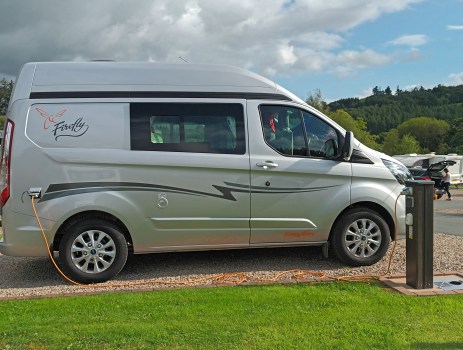
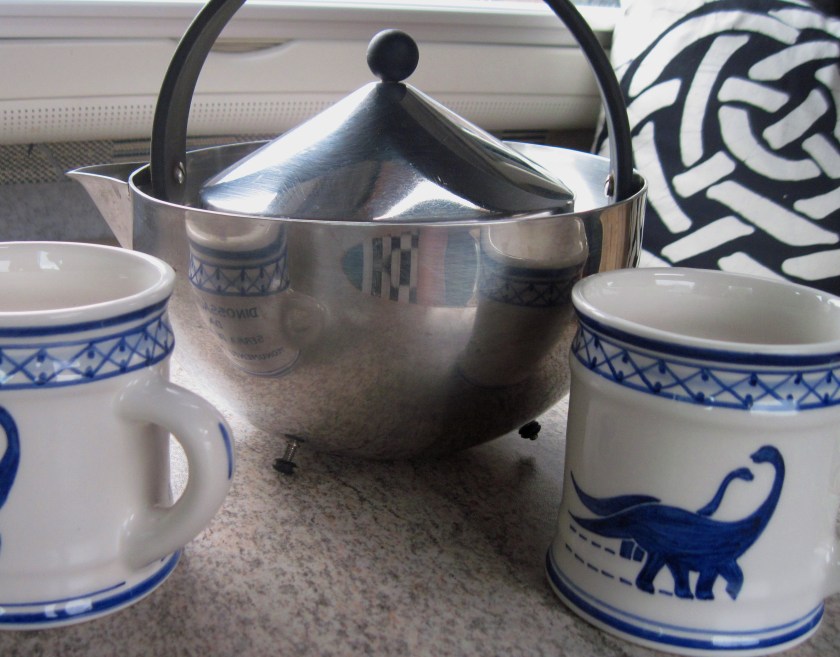
Cups of tea in the ‘van are cheaper than a cafe

How we all spend our money is a personal thing and holidays is no different; we all have our different priorities.  It is hard to argue that a campervan or motorhome that cost just over £40,000 is a budget option and I know that we only have our newish ‘van thanks to an inheritance that meant our savings for retirement could stay on track while we also funded a new ‘van which we expect to last us at least ten-years and many miles.

All that said, we do try and make the trips in our ‘van as frugal as possible by following these tips.

Campsites – the cost of an overnight on a campsite can be very high and, if you use campsits, is a major cost for ‘van owners.  We reduce our costs by wild camping and using Britstops when this makes sense and seeking out cheaper sites with fewer facilities at other times.  We also make use of the Caravan Club and Camping and Caravanning Club small farm sites, although we do think these can sometimes be over-priced.  Most of our camping is out of season when sites are cheaper and we can make good use of the ACSI card scheme in Europe, paying between €11 and €19 for a site.

Liquid Petroleum Gas – Our ‘van has a LPG refillable bottle that makes using gas for cooking and heating very cheap.  At around 50p / litre LPG is much better value than using replaceable gas bottles.

Cooking in the ‘van – this is where a campervan really comes in to its own and makes our trips affordable.  Eating out is expensive and we only do this as a treat.  The ‘van has a two burner hob and an oven that run on LPG and we have an electric hotplate to use when we are paying for a hook-up so cooking in the ‘van is both enjoyable and easy.

Planning meals – when we are travelling we plan meals for three or four days in advance and shop in supermarkets.  Our fridge will hold enough food for this long and we always have some tins in the cupboard if we don’t get to a supermarket when the fresh food has run out.  This way we are not tempted to eat out, we’re not tied to shopping everyday and we make sure we don’t waste and throw away food.

Onboard brews – unless we are in Italy, when having coffee in a cafe is part of the holiday experience, we will often make our morning coffee in the ‘van and always make cups of tea.  We carry good quality ground coffee and have a double-walled insulated cafetiere and a beautiful enamel milk-warmer so that we can make good coffee anywhere and we use a teapot to make a decent cuppa.

Cheap or free activities – Fortunately we are still two reasonably fit individuals who enjoy walking and cycling; both free activities (although the gear can be expensive).  We do visit attractions occasionally but this is often because I am writing a travel article.  I’ve just looked to see how this looks in practice and on our year travelling we spent just 5% of our expenditure on entrance fees and cable cars (just over £1,000).

Diesel – we own a 5.6 metre long campervan, rather than a large motorhome and we bought the most economical model of the Renault Master available so that our diesel bill isn’t too high.

Fixing things – when things break in the ‘van we don’t immediately buy new, we see if we can fix it.  We always carry some basic tools and equipment for fixing things on the ‘van and it is amazing what you can fix with a zip tie and a roll of duct tape.

Mr BOTRA the bicycle mechanic – self-taught, Mr BOTRA can fix most things on the bikes and this has saved us hundreds of pounds over the years.  From experience, we now always travel with the tools to fix the bikes and some basic spares after needing to replace my pedals on a trip to Germany; we hadn’t packed the pedal spanner and had to pay a local bike shop to do the job.

Buying second-hand – whenever we can we like to buy the gear we need second-hand.  Not only is this cheaper but we feel we have given something a new lease of life and we have helped the environment by recycling.  Outdoor gear is well-made and lots of people buy walking clothes that they either grow out of or hardly use and there are lots of bargains out there on Ebay.


Heading to the hills on the hottest day of the year [so far]

P1000412.JPG
Looking up to Cautley Spout in the Howgills

Perhaps to make up for the wet weekend in the Lakes just 10-days before, we were lucky enough to be camping in the beautiful Howgills for the ‘hottest day of the year’.  With temperatures of 30°C forecast in the valleys we obviously headed for the hills to catch any breeze.  The Howgills are to the east of the Lake District fells and are grassy rounded hills of grit stone and  slates.  We had a splendid day, walking up Cautley Spout, a high tumbling waterfall, to The Calf, the highest point of the fells at 676 metres above sea level.

While, no doubt, parts of the Lake District were busy with visitors on such a lovely day, the Howgills are always quieter and we only met a couple of other groups walking during the day.  Once we were off the main route and the gravel path of the Dales High Way we had the place to ourselves and could enjoy the airy views over Cautley Crag without interruption.

Over the few days we were there we explored all corners of this rural area; we ate delicious chocolates from Kennedys in Orton, to the north of the fells, had fun trying our hand at weaving at the historic Fairfield Mill near Sedbergh [Mr BOTRA thought he could definitely enjoy doing more of this] and found orchids and butterflies in the beautiful Smardale Gill nature reserve.

Of course, it was just luck that we were on holiday on such a lovely day; we can’t wait until next year when we’ll be free and easy and able to set off camping as soon as we spot a good weather forecast.


A wet weekend in the Lake District gave us chance to face our fears

P1000079.JPG

Rannerdale near Buttermere in the Lake District

It takes really bad weather to keep us ‘van bound on a camping trip.  We have good waterproof gear and our map reading skills can deal with low cloud and showers.  But the recent weekend was as bad as it gets in the Lake District.  Of course, we did get out for a walk on both days but Saturday was that atrocious combination of high winds and heavy rain that makes walking more of a chore than an enjoyable past time.  We walked from the campsite for about an hour and a half and then filled the site drying room with our dripping gear.

Spending time reading and playing cards in the ‘van did give us chance to talk over some things in depth; we talked about work and no longer working and we shared our worst fears for our forthcoming retirement.  What was interesting is that for two people who have been planning this retirement for at least the last six years [and actually for the last 30-years] our anxieties are very different.

My worries are all about our health.  I fret that one of us will either not even live long enough to enjoy our retirement or only survive for a year or two in to retirement before dying.  My alternative nightmare has one of us becoming too ill or infirm to take part in all the walking and cycling we want to spend our long retirement doing.  I am optimistic [or naive] about our finances, sure that the sums are robust and that we’ll deal with any problems as they arise.

Mr BOTRA’s worries are mostly related to money; he is the more cautious one of the team.  He is concerned that we haven’t budgeted correctly and we will run out of money before all our pensions kick in [not until 2026] and he worries that by finishing work he is closing off options to earn a few thousand extra that could be kept in the bank in case we want to move house, buy a new campervan or have some other emergency [of course we have a small contingency fund].  Having worked full-time for all his working life [apart from our gap year] he also has concerns about how his days will be filled without work, although he has no shortage of interests and ideas for things he wants to do.

While Mr BOTRA assures me that we will probably live a long and healthy retirement, I equally reassure him that he will soon wonder where he fitted in the time to go to work and that the spreadsheet doesn’t lie.  These reassurances are important but equally important is to recognise and face the fears of your partner honestly so that you can work as a team to put things in place and [hopefully] stop these fears becoming reality.


Frugal hair cuts

20160525_094148
The Babyliss [for men] clipper
I will admit I was nervous trimming Mr BOTRA’s hair for the first time as I didn’t want to make him the laughing stock of his office.  Fortunately, we seem to have got away with it and no one asked him the name of his amateur hairdresser.

A few months ago we splashed out some of our hard-earned on hair clippers [of course after thinking about it for some months and researching the best options].  Although the cost of buying the hair clippers was about £50 this outlay does now mean that we can both have our hair cut for free.  Even though neither of us have ever visited any of the fancy salons in Manchester city centre, DIY hair cutting still saves us around £250 a year.  That means in just a few months the hair clippers have already paid for themselves.

As well as saving money, we no longer have to be a part of that painful experience of chatting to the hairdresser [maybe this awkwardness is just my socially inadequacy].  For Mr BOTRA and I, finding things to chat about to each other has never been a problem [we already know where we are going to go on holiday] so hair cuts at home are more relaxed and save time too.

Home hair cuts are not for everyone.  We are not able to create that perfect coiffured look at home but fortunately, that isn’t what we need.  Neither of us have any job interviews coming up, need to be mother-of-the-bride or need to impress anyone.  We understand that there are times when you might not want to have a home haircut.  What we are both interested in at the moment is looking reasonably tidy, having a short cut that is easy to wash and doesn’t take any styling and [of course] in saving money.


I have never met a strong person with an easy past

2014-06-11 2014 June La Banne d'Ordanche walk 006
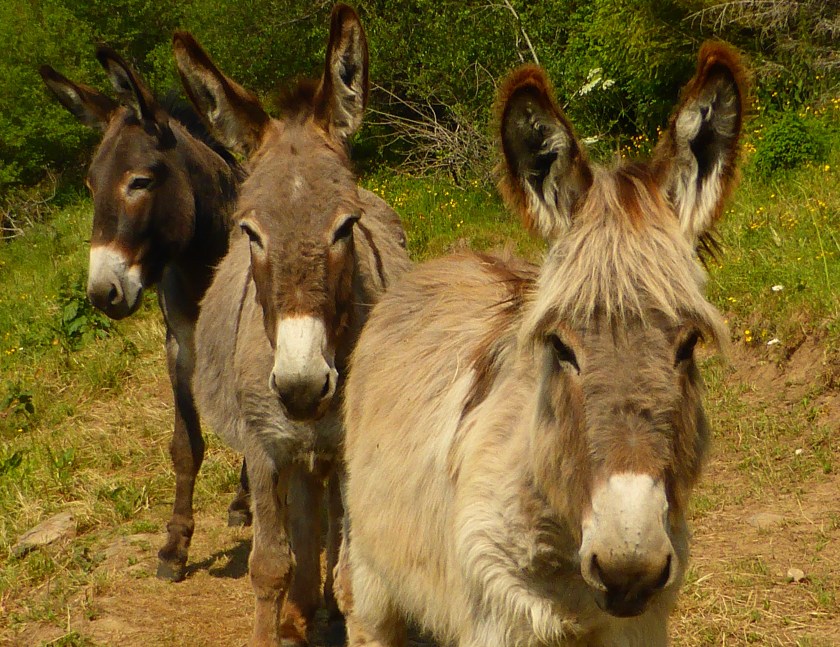
Donkeys are said to bear a heavy burden

‘I have never met a strong person with an easy past’

I came across this quote recently, although I can’t find anyone to attribute it to and started thinking about it in terms of my own life.

I am not claiming that the past I have experienced has been particularly tough but I can see how the usual tough times have helped me to grow and become someone with the resilience to manage difficulties in a positive way, learn from my mistakes and maintain an inner strength.

To give readers a short history of some of those challenging times.  At the tender age of 21-years I had a few months when three events happened; my first husband left me for a new life with a mutual friend, the grandmother I loved very much and who lived next door died suddenly and my parents divorced.  For a while I coped with this badly and mooched around feeling sorry for myself and seeking sympathy from my friends.  However, I was young and I bounced back and as my attitude changed I felt stronger for the experiences I had been through and could see these had been life changing events.

I have now reached the age of 56-years and can’t help but be aware that this is the age my mother was when she died.  But although this rumbles in the background of my brain it feeds my optimism, rather than pessimism; I only carry some of her genes and there is no indication that I am going to drop off this planet in the near future [touch wood.]

We are shaped by our past and it makes us stronger and I think the death of my mother at a young age (and also the death of Mr BOTRA’s mother also coincidentally at 56-years) have made me the person I am; that is one who is determined to retire before I get too old to make the most of it.  These experiences have helped me set a course for financial independence.

I am not trying to give you a sob story but in the past I have also been made redundant from jobs I have given all my energy and enthusiasm to; been bullied by work colleagues that are just inadequate individuals and fluffed more job interviews than I care to really remember.  I have regrets; I have sometimes not been the friend I would like to be and I have tolerated people in my life who have sucked out my joyfulness and spat it in to the gutter for longer than I should have.

I don’t regret these experiences, they have all contributed to the person I am today and help me to enjoy today, taking control where I can, trying to accept what comes along and planning for the future that I want.

Why we won’t get bored in our retirement

P1070869
These are our plans for retirement

Pinned up in the van is the above list of things.  Mr BOTRA and I think of the lines of this verse as our ‘to do’ list when we are on trips in the van.

Our plans for our [hoped for] long and happy retirement are to spend lots of time on campervan trips and doing all the things on this list.

This list is not ours it is one of those oft quoted things you find on a fridge magnet or a postcard but it does nicely summarise the things we like to do on our campervan trips.

Walk in the rain – or [hopefully] in the sun, or the wind; whatever the weather we will just walk [or cycle] every day.  We will walk up mountains, along valleys, traverse ridges, follow coastlines and explore towns and cities, at walking pace we can really appreciate the great outdoors.  When we were away in the van for a year in 2009/10 (blog here) we walked most days, slept well and were fitter and healthier than we had ever been.

Smell flowers – There is no better display than the one nature provides and I always take time to smell the flowers [and watch the birds and animals], as well as try and identify what they are with the books we have in the ‘van … sometimes this is very hard.

Stop along the way – In a campervan there is really no rush and no excuse not to stop and explore whatever we find because being in the ‘van is part of the fun and the journey.  Sometimes these unscheduled stops take you to unexpected and interesting places.

Build sandcastles – Or beach comb, or bird watch or just more walking but on beaches.

Go on field trips – For me every day in the ‘van is a field trip and the blog is my field note book.  When I was a geography student the field trips were my favourite part of the course and I picked modules to maximise the number of trips I took part in.  Field trips are about taking everything in, observing, experiencing and soaking in the sounds, tastes, history, smells and stories of a place.

Find out how things work – I will admit to a liking for interpretation boards and Mr BOTRA reads these avidly.  I am also addicted to looking things up on Google.  As far as I am concerned, every day is an opportunity to learn something new.

Tell stories – To each other and to others [when they will listen].

Say the magic words -These must be ‘Let’s go camping!’  I say these all the time.

Trust the universe – Okay, this is a bit dippy, I trust it to just keep expanding and be there.


Working up to retirement

P1090134
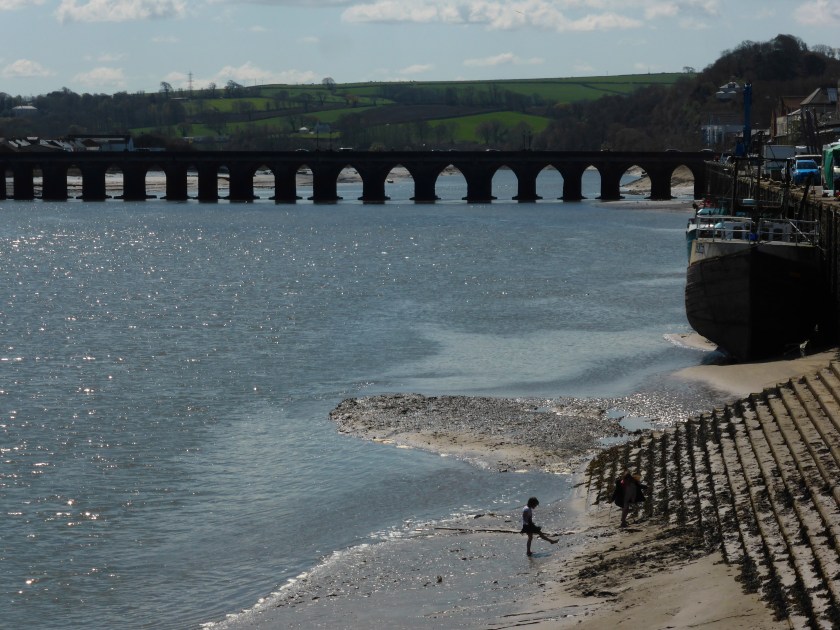
Children playing in the river Torridge at Bideford

To update my previous blog post about the  uncertainty of my salaried work, this is now sorted and I am so pleased that I won’t have to travel to the windowless cave-office [yipee].  Instead I have managed to negotiate home-working from the end of June.  This means I can carry on working up to my retirement at the end of the year.

It is still a period of change in the office, as my co-workers are all being transferred to the precariousness of a new organisation that will be delivering the service or have successfully found different jobs to avoid the fun and games of the reorganisation.  Either way, I am going to miss seeing them all every week, hearing their news and helping them plan their holidays [I can’t help taking on this planning role for people whether they want it or not – I really missed my vocation as a travel agent].

So now my mind is turning to the pros and cons of home-working.  Will I lose the plot and miss other people so much that after just a few weeks I am talking to myself and have forgotten all my social skills [those who know me will ask what social skills]?  Will I miss the regular requests for money for leaving presents, wedding presents, new baby presents etc?  Will I be the person that sits in the local cafe relying on their WiFi and making one cup of coffee last hours just so that I can be around other people?  Or will I love the freedom to be able to put the washing in the machine as a break from the PC and rustle up our evening meal at lunch time?  Will I rattle through my work load and be even more productive because there are no interruptions?  Who knows.

I already work from home two days a week as a travel writer and so I have my home office space organised and I think I have the discipline to stop work, pack it all away and not look at it again until my next working day.  I will be able to keep in touch on the telephone but I will also meet with my manager and other colleagues at least once a month and I hope that will be enough to stop me being too isolated.

On the finance and savings front I think it is a win-win.  Although I will have heating costs from working at home [unless I spend lots of time in the cafe] I won’t have travel costs plus I will be earning money that I wasn’t expecting to be earning just a couple of months ago.  I always take in my own lunch [but no more office microwave for heating up left overs] so that cost won’t change.  Currently my employer generously pays for the numerous cups of tea and coffee I drink during the day, so I will miss that perk.

And yet every day I am working at home I will remember that at least I have a window and a view of our gardens.


A labyrinth is a symbolic journey

2011 March Grassington signpost with grid reference
A map always helps to decide which way to go

I love maps!  I gaze at them and imagine journeys I can take and try and picture the places they represent.  My fingers follow the patterns of the paths, rivers and ridges and how these affect the pattern of the towns and villages.  For me, maps open up possibilities and going out with a map gives me the confidence to explore; this also means that without a map I feel a bit lost and all-at-sea.

I like to think of our plan for early retirement and financial independence as a map.  This map also has a path I am wandering along but the benefit of the map is that I can spot the opportunities for short-cuts and longer more scenic routes, should I fancy deviating from the path.  This map gives me confidence and the ability to be flexible around the route Mr BOTRA and I have mapped out and with this map I am hopeful that I won’t end up in a dead end or get lost along the way.

And so, not surprisingly, I love the look of these literary maps.  They are designed as a sort of mobile and self-taught creative writing course, with exercises to help a writer explore a particular environment.  There is a writing map for the city, for cafes and bookshops, for writing by the sea and in crowded places  and others.  Each map is designed by a different person and is a beautiful item to own and look at and make use of.  I am hoping someone buys at least one for me some time soon.

As a travel writer and a blog writer I am not too proud to take any help I can get.  I get loads of inspiration from other people’s blogs, from conversations with other people, from observation and from reading.  These literary maps look like a great way to initiate the generation of new ideas in my brain.  Take a look and let me know how you find inspiration for your ideas, projects and writing.

A quick word on the quote I have used: “A labyrinth is a symbolic journey . . . but it is a map we can really walk on, blurring the difference between map and world.” From Rebecca Solnit wonderful book Wanderlust: A History of Walking.

Normality is a paved road; It’s comfortable to walk but no flowers grow

2012-05-29 011 Passo del Futa campsite and sunset and van
A beautiful Italian sunset

Normality is a paved road; it’s comfortable to walk but no flowers grow

I am well aware that for many people even ticking along through life can be stressful and that life throws more tough times at some people than is fair.  I am sure these folk must feel irritated by trite sayings like this … so apologies if I’ve got your back up but perhaps you will still read on.

The quote is attributed to Vincent Van Gogh and it is one of those quotes that appears in the blogosphere now and then to start a discussion on taking an unusual or creative path.

Firstly I need to say that I have had times when too many awful things are going on and I will be heard to complain, ‘I just want a quiet and normal life!’  I don’t think there is any shame in wanting a carefree and stress-free life.  I also know that when I have survived a period along the rocky road and I return to the smooth path of ‘normal’ life I have a greater sense of strength and self-reliance … adversity can be character building.

What I also take from this quote is that sometimes I need to turn away from the easy paved road because it is taking me in a direction that will not make me happy in the long run, even if it seems the path of least resistance.  This policy has stood me well in terms of my working life and my happiness [although not always my pocket].  If you saw a copy of my cv you might be horrified at the number of organisations [over 20] I have worked for since I first started work at the age of 16.  This fickleness is partly because I am easily bored [the longest I have stayed in any job is five years] but is also due to my lack of patience with employers who either undermine me, pay me badly, set impossible targets, have ridiculous rules or don’t give me enough to do.  It is best not to mention any of them here by name but I have had some employers who have excelled themselves and are guilty of more than one of these things!

As an example, let me take you back in time to an office in a Midlands city in the 1980s.  I worked for a [very] short time for a company who insisted women [not men] wore tights even if it was 30°C in the office [this was before air-conditioned offices].  In addition, although the office of about 20 people was very busy processing wages for temporary workers Monday to Wednesday, on Thursday and Friday we were kicking our hosiery-clad heels.   These were pre-internet days and having nothing to do at work was exceptionally tiresome; however, my practical and money-saving suggestion to management that I work part-time was refused.  Needless to say, although staying in the job would have kept me on the smooth path of security, I soon left for the rocky road of short-term unemployment until the next opportunity came up.

I think this experience of constantly changing jobs makes me feel fairly confident that I will always find some kind of work if financial pressures mean that I need to because of some unforeseen catastrophe.  This certainly contributes to giving me the confidence to take retirement as soon as I can.

Further thoughts in 2021

It is interesting to read this post during the Covid-19 pandemic, when all I crave is a return to the life that I was calling normal!  Taking early retirement was certainly a good move and in the three years of expected early retirement I hung onto my resilience to cope with problems as they flew into my life without announcement.  Then along came Covid-19 which certainly put pressure on that resilience.  I am certain that lockdowns and this pesky virus are not the out-of-the-ordinary problems I was thinking about when I wrote this post.  Some readers are looking for the good to come out of Covid-19 but for me, I don’t feel that anything positive [or blooming flowers] has resulted from it, apart from progress in science.

Many of us are wondering about how the pandemic will change us.  I have written about how I have been cruising in neutral and feel I have lost a precious year of my life as so much has been on hold.  My normal is to be travelling and exploring and I long to return to my travelling life and for my own version of that comfortable paved road of normality at the moment!

When is it time to tell our employers?

P1050910

I am not suggesting by the photograph that this discussion will be unpleasant and I have no illusions about being irreplaceable but I have been wondering when I should tell my employer that I intend to leave and enter a non-working state of retirement very soon.  The company I work for won’t be expecting my retirement just yet as I am [only] 56 and most of my generation are expecting to work at least until they are 60 years old.

Before the chaos of the forthcoming reorganisation I had been thinking that I wanted to give my employer what I consider sufficient warning [about three months] but as my leaving date is now up in the air I had decided to keep quiet until I know if I will be offered a suitable working base beyond the summer.

I have concerns that once they know I am leaving they will treat me differently in some way, maybe give me all the jobs no one else wants to do or just cut me out of business discussions.  However, keeping quiet brings its own problems.  I have recently been given a new area of responsibility that takes up about three days a month, as a colleague has moved on.  I have no doubt I wouldn’t have been given this responsibility if they knew I was leaving in the foreseeable future.  This change to my role suggests my employer doesn’t intend to make me redundant but leaves me feeling guilty.  I have now been trained up to carry out an important and vital role within the company and as I work in a fairly small organisation and I am the only person that is trained to carry out this task and only I know that I am planning to leave in at least eight months time [and counting down].

This new responsibility has left me feeling even more that unless I want to leave the company in the lurch [and I don’t] I do need to give a few months notice so that I can train someone else in all of the tasks I carry out but the options relating to the re-organisation continue to confuse the picture.

Things are a bit more stable and straightforward for Mr BOTRA and he plans to inform his employer in December, giving them three months notice.  This decision is partly dictated by practicalities, as he holds a company credit card and will need to stop using that in enough time for all transactions to be processed before he leaves.  But also like me he wants to keep his cards close to his chest for as long as he can, just in case …