La Villes-aux-Dames and Tours

06.19.2018 Tours (12)
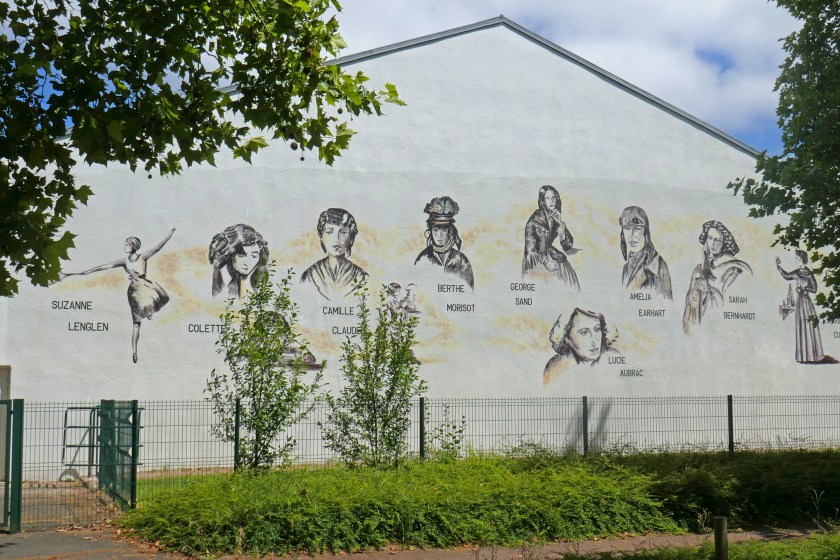
La Ville-aux-Dames mural on one of the schools

In 1974 the good people of La Ville-aux-Dames near to the city of Tours in France decided [very appropriately] to give only women’s names to their streets and roads.  I loved finding La Ville-aux-Dames [the town of women] but didn’t expect the town to have taken the female theme to such amazing heights.  Even on the lovely campsite, Les Acacias in La Ville-aux-Dames all the chalets are named after women; you can stay in Edith Piaf, Maria Callas and others.  Taking a stroll around the local area I found not only are the roads named after women, the local schools are too; as well as Avenue Jeanne d’Arc, Square Mary Queen of Scots and Rue Colette I found École élémentaire Marie Curie.  Some names were less well known to me and had me checking them out; Gabrielle d’Estrées advised Henry IV and had three children by him and I learnt that Anna de Noailles wrote three novels and poetry.

The mural in the photograph above is on one of the local schools and has images of nine French women;  Marie Curie, George Sands, Colette, Lucie Aubrac [history teacher and resistance member] and Berthe Monsit [impressionist painter] and others.  I was delighted to think that all the children who attend this school will know who these women are and what they achieved, adding a bit of balance to the male-dominated history my own schooling involved.  Just walking around the streets was an education.

The name is testimony to the abbey for nuns that was here and it is said the name La Ville-aux-Dames comes from the old name for the area, Villa Dominarum, the Latin for ladies town.  Surrounded by excellent agricultural land the local people produced milk for Tours and the inhabitants became known as ‘Caillons’ after their curd cheese.  In November La Ville-aux-Dames’ Marche des Caillons, a sponsored walk, attracts over 400 people.  Today the inhabitants of La Ville-aux-Dames call themselves Gynepolitains from the Greek words for women and town.

The campsite proved to be fantastic for visiting the lovely city of Tours.  On the confluence of the Rivers Loire and Cher we had no expectations of this city and so its beauty and charm was a surprise.  We cycled the seven kilometres in to Tours along the Loire cycle route and chaining up the bikes pottered around fairly aimlessly.  We knew of no ‘must see’ sight so we were free to just wander and admire with no pressure.

Starting at the cathedral we had coffee and cake in a lovely cafe and then followed lively streets to the old city.  Here there are pretty squares surrounded by 15th century timber-framed houses with amazing narrow extensions on the back for staircases; these looked very Disney-esque and heath robinson.

In the big market hall we explored the lovely stalls and bought fresh vegetables and local cheese and yogurt for our evening meal.  We ate at a cheap and cheerful burger and kebab cafe in a lively square and finished up with sweet peppermint tea.  Walking back to our bikes by the River Loire I fell in love with the elegant fountain [below] in the Place Anatole in front of the library.

06.19.2018 Tours (8)
Beautiful and vibrant Tours

Campsites during our trip to Croatia, Italy & France

06.15.2018 Le Poet Celard (3).JPG
The lovely campsite at Le Poet-Celard

During our trip through Germany and Austria to Croatia [with occasional excursions in to Slovenia] and on to Italy and France we stayed on 37 campsites.  Each site has some notes about our experience of the site:

Campsite nameNumber of nightsCommentsCost
Camping Freizeitzentrum, Sagemuhle, Trippstadt, Germany1Large site by a small lake with bar & restaurant, lovely clean faclities, very hot water & indoor wash up, grassy pitches on well drained soil & open site, very good bread rolls£19.50
Hofgut Hopfenburg, Munsingen, Germany2Open site above the town with hard-standing walking from site in woodland, facilites excelletn, clean, warm, very hot showers, indoor wash-up, drying room, fresh bread, great site for €15.  For a fuller review read here.£15.00
Alpencamping Mark Weer Austria2Green site with grass & trees & friendly welcome, walking & cycling, clean facilities, good hot showers, bread rolls & lots of info£17.00
Camping Goldeck Seeboden, Austria1Grassy terraced site with clean facilities, building work going on & entrance steep, facilities dingy & cold but warm water, air of neglect£19.00
Camp Slapic, Duga Resa near Karlovac, Croatia3Nicely laid out site with open & shady pitches by river, English spoken at reception, lovely modern facilities, bar & restaurant, walking & cycling & railway station 5 mins away£19.00
Camp Marina Lozovac Sibenik, Croatia2Small site with marked pitches & some shade, clean facilities, roomy shower/wet rooms & hot water that runs continuous 2 kms from national park & excursions from site£15.00
Autocamp Peros Zaton Nin, Croatia1Small site, friendly welcome, grassy with trees, facilities basic but the water is hot & showers fine, peaceful, a few kms to Nin a lovely old town£17.00
Bluesun Camp Paklenica Starigrad, Croatia4Large site by the sea with bungalows & chalets, stony ground, level & pine trees for shade, modern facilities & good hot showers with no push buttons & roomy cubicles near the town£17.00
Hostel Plitvice Rastoke Camperstop, Slunj, Croatia1Car park with fantastic views over the river gorge to the town and EHU.£15.00
Camp Slapic, Duga Resa near Karlovac1Different pitch, the site now has bread in restaurant£19.00
Vugec Plac Camper Stop Samabor, Croatia2Small site for 4 vans, flat & grassy with 1 bathroom & sitting area / itchen & pool, all new & clean, hedged & gated in peaceful area with open views, good hot shower, friendly owner£20.00
Terme Olimia Camping Podcetrtek, Slovenia1Clean facilities, shaded pitches, aquapark not open so fairly peaceful but some road noise£17.00
Camping Terme Ptuj Slovenia1Grassy site, pitches in circular areas, busy with group from Netherlands, good hot showers£19.00
Camping Amarin Rovinj Istria, Croatia2A large grassy sloping site with trees, facilities basic but clean & hot water, fresh bread & shop water taxi & bus to Rovinj£17.00
Motovun Motorhome Parking Motovun, Croatia1Sloped gravel parking area for 12 vans, some trees only 1 shower & 1 toilet per sex, good hot showers & water by pitch£25.00
Camping Park Lijak Active Sempas near Nova Gorica, Slovenia1Grassy site with views of hills, friendly welcome, facilities modern & clean, water in showers only just warm enough, €5 tourist tax£17.00
Belvedere Pineta Campng Village Grado Italy3Large site by lagoon in pine woods, good size pitches, cycling routes from the site, no toilet seats or toilet paper, €17 on ACSI (we used some free camping cheques) good hot showers, supermarket, restaurant & bleach, wi-fi €5 a day£0.00
Lago 3 Comuni Alesso, Italy2Small site with pleasant bar, small pitches, showers push button & barely warm but facilities clean by a lake & mountain views£21.00
Sosta Barcis, Italy1Level car park by lake & cycling from site, small town with some shops, toilets nearby & water & electric on pitch, some music noise until 01.30 it was Saturday£14.00
Camping Lago Arsie, Italy2Level grassy site by lake with shop & restaurant, good size pitches, very little shade, helpful reception, showers hot but showerheads a burst of water rather than a shower, facilities modern£19.00
Camping Valle Verde Predazzo, Italy3Excellent & peaceful site in mountain valley, given a map of 10 local walks & cycle routes, facilities clean, toilet paper & paper towels, good hot showers£19.00
La Sosta, ponte di Legno, Italy1Car park on the edge of the mountain town with cafe & hook up, slight gradient, toilet with cafe, water on pitch£15.00
Camping Presanella Temu, Italy1Lovely views from this grassy site, clean facilities, cycle route from site, free wi-fi, hot showers but no heating in facilities£28.00
Camping Covelo, Iseo, Italy4Small site between lake & railway line, cramped pitches, friendly & helpful staff, good hot showers & clean facilities, near to town, extra €2 for lakeside£19.00
Montgenevre Aire, France1Large gravel aire with views over the village & mountains at 1,859 metres£13.00
Le Glandasse, Die, France2Large friendly site by the river popular with Dutch, marked pitches, showers small & push button, clean & almost warm enough, no toilet paper£13.00
Champ la Chevre, Lus-la-Croix-Haute, France1Sloping site with few level pitches but open views to the mountains & by village, indoor pool, good hot showers & clean facilities£15.00
Les Chapelains, Saillans, France2Small site by a town, friendly welcome, marked pitches, facilities open & showers only lukewarm & push button£15.00
Les Clorinthes, Crest, France1Level site with trees, friendly welcome & near to the town, facilities clean, showers push button & could be warmer£17.00
Le Couspeau Camping, le-Poet-Celard, france2Terraced site with wide open views across to hills, friendly welcome, 5 hrs of free wi-fi, all facilities, peaceful location, modern facilities & good hot showers, restaurant & bar£15.00
Camping de Mars, Cordelle, France1Overlooking the Loire, peaceful spot, facilities a bit dated & showers tepid, friendly rabbit, paid with free camping cheques so only paid tourist tax£1.10
Couleurs du Monde, Montrichard, France1Level site next to supermarket & 1 km from Montrichard & the Cher River, wrist bands obligatory, facilities clean but water tepid, popular with English£15.00
Les Acaacias Camping, Tours, France2Level site with some road noise, friendly & helpful welcome, good facilities, showers roomy & warm enough, 7 kms cycle route to Tours£17.00
Camping Les Plages de Loire, Rochefort-sur-Loire, France1Flat site by small town between Le Louet & Loire, facilities mixed, showers have been updated but were not very warm & push button, wash up is somewhat grim, pitches marked but narrow£13.00
Les Paludiers, Batz-sur-Mer, Le Croisic, France2Large rambling site with marked pitches, some very sloped, showers were roomy with sinks & warm enough in good weather, helpful reception£17.00
Municipal Campsite Corlay, France1Grassy area by play ground with hook up for 4 vans, toilets, basins and showers that were hot & good but a bit scruffy, no one came to be paid£0.00
Riva Bella, Ouistreham, France2Flat site near town & supermarkets with indoor pool but also peaceful corners, modern facilities, roomy showers with wash basins that had warm water£17.00
Camping La Fontaine des Clercs, Montreuil, France1The pleasant aire was full so we used this terraced site with some small pitches & dated facilties, free wi-fi, showers tepid but very hot water in sinks, popular & busy£19.90

Life in the day of a travel writer

06.22.2018 Batz sur Mer and Le Croisic (4).JPG
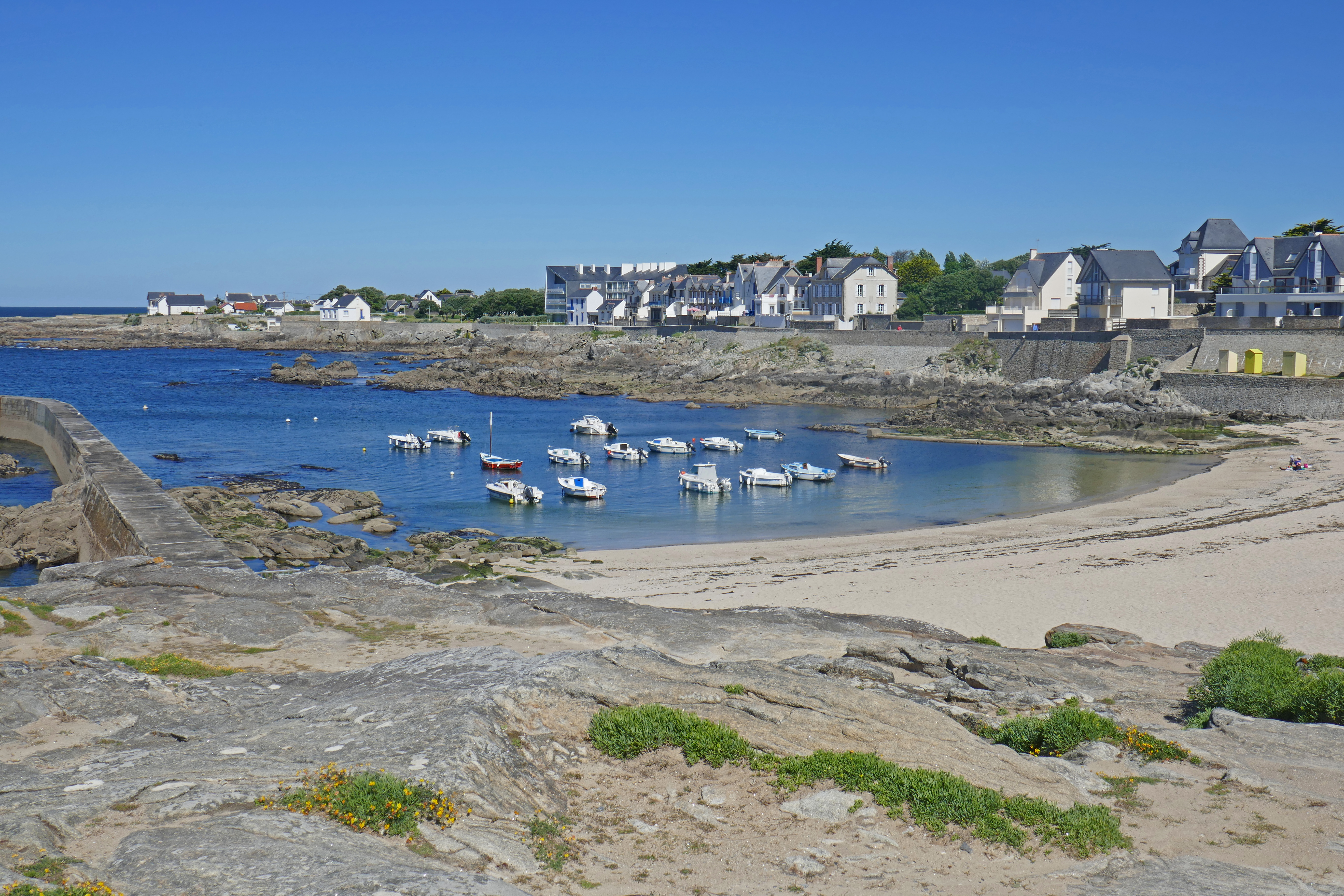
The beautiful bay at Batz sur Mer


Is being a travel writer non-stop glamour, always in business class on the plane and being wined and dined at the launch of a new hotel?  Well it isn’t like that for this campervan travel writer and I wouldn’t have it any other way.  I only write about my travels because I enjoy sharing the wonderful places I have visited and want to inspire others.  Each trip I make is a real trip that we have paid for ourselves and are trips that anyone with a ‘van could make.  I am not interested in writing about luxury tours that I wouldn’t make if someone else wasn’t paying.  I guess if you are a travel writer or editor invited on to press trips for the PR then your days might be glamour-packed but for the travel writer without a commission this is a long way from reality.  First and foremost the trips we follow in our campervan are our holidays, the payment I get for writing about it is a bonus that comes after the event.  Below might give you some idea about how much work it takes to create an article.

The work starts even before you pack a bag

Research – This can start months before we set off on a trip.  I read travel books and articles, watch TV programmes and follow other travel bloggers and sometimes a story or a place grabs me and sparks off an idea for a trip that I will run with.  Sitting at my laptop I research exciting places to visit in an area, stories that might interest readers, campsites and walking or cycling routes.  I will also look at ideas for the best photographs of the area.  This is generally internet research but I also read guide books and walking guides to learn from other people’s travels and find out about places we might enjoy visiting.

The weather – As I said these are real holidays and trips and so we get all sorts of weather but travel magazines want to see blue sky and sunshine.  In the days leading up to a trip or THE important venue during the trip I check the weather forecast obsessively – a dull day means I have to be more creative with my photography and rain plays havoc with photographs and my camera.  Magazines require good quality and colourful photographs that will inspire readers and my writing is nothing without good photographs to illustrate the words.

We arrive

Being there – This is the holiday, the easy [thanks to the planning] and certainly the most enjoyable part.  We are there and visiting the place of interest or following the walk I have planned.  At this point I am truly on holiday, as with no commission in my pocket I have no idea if an editor will buy my story.  I am in the moment and appreciating and absorbing the colours, smells and feel of a place while also taking hundreds of photographs and cursing street furniture, signs and other visitors that get in the way.  Of course I am still a writer and so I am always on the look [or listen] out for that extra something that will help make a place come alive for readers.

That evening

Sifting the photographs – I try and sort through my photographs while the day is still fresh in my head, deciding which are worth working on and which didn’t come out as I hoped.  I am a writer not a photographer and make no claim of expertise in this area.  By going through the photographs immediately I can check their quality and if they are all a disaster we might have chance to go back for a second try.

Edit the best of the photographs – Using Photoshop I try and do this on the same day, otherwise I end up with a backlog of hundreds of photographs to edit.  This can take hours!  Sometimes Mr BOTRA reads to me while I edit 🙂

Writing up notes about the things I have seen – I am a bit old fashioned here and always write my notes in long-hand in a journal at first, the pen and paper experience seems to help me to think.  I will type up these notes either that day or later and use these notes as a framework for a story.  I note down smells and sounds, as well as what we have seen and snippets of conversations that I liked, all this helps to bring the place back to me once I start writing.  I also need to keep notes of the cost of campsites and entrance fees as these are often required by magazines.

Back-up photographs and notes – I am terrified of the photographs I have worked so hard to get going missing and so I am a bit obsessive about backing up.  Photographs are left on the SD card and as well as the laptop are copied to a pen drive and a hard drive, just in case the camera and / or the laptop goes missing or gives up the ghost.

File away useful leaflets and information – I also keep leaflets from venues and for walks so that back home I can check the correct name and spelling and maybe opening times, rather than just rely on the internet.

More backing up – If wifi is available I will upload the best photographs to the web as well as the obsessive back-up procedure.  Sometimes campsite wifi can be very slow.

Back at home

The writing and editing and writing and editing …. I don’t normally start writing my articles until I am home, although ideas will have been meandering around my brain during the trip and added to my notes.  This is not a nine-to-five job for me and so I have the luxury to be able to be a slow writer and generally spend around two weeks on a 2,000 word article, constantly checking facts, seeking the right words to describe a place and adding the reference information.

Choosing photographs – From the hundreds of photographs I have taken this gradually has to be whittled down to the 30 photographs that I think would look best in a glossy magazine.  This can be a painful as well as a time consuming process.

If you still want to have a go at being a travel writer I can highly recommend it and there is some useful guidance here.

In contrast

At the end of our trip around Croatia, Italy and France we had a few day in Brittany that won’t appear in any of my travel articles.  We were meeting friends and socialising in the the lovely resorts of Batz-sur-Mer and Le Croisic and later in the pretty inland town of Corlay in Brittany.  It was these few rest days that inspired me to write about the work involved in being a travel writer, as the down time I had made me realise how much free time I have when I’m not doing all of the above!


Why I love cooking with my RidgeMonkey grill

2018 March Devon Conversions meet Melton Mowbray (29).JPG
Aubergines cook well in the RidgeMonkey

I bought a RidgeMonkey grill / sandwich toaster after a recommendation from another campervan owner [thanks Andrew Ditton] and what a revelation it has been, almost transforming my campervan cooking overnight.  We generally have home-cooked food in our campervan, eat out in restaurants only on special occasions and only buy occasional veggie sausages for a fast food meal, so cooking is an important activity in our campervan.  Previously I have struggled, even with a lidded frying pan, to get my cooking really hot when trying to brown or char peppers, aubergines, asparagus and other vegetables.  They would cook but the pan never got quite hot enough to get them beyond soft and cooked to that attractive golden brown finish.  Making Spanish omelette was problematic too as they took a long time to cook through.  All these problems have now been solved by splashing out [£22] on a RidgeMonkey sandwich toaster.

This wonderful item is sold to anglers as a sandwich toaster, enabling them to make a hot meal while on the riverbank but it is so much more than that.  I am sure it will make toasted sandwiches but I use it for vegetables, omelettes, warming crumpets, hot cross buns or baking fresh pitta bread and I feel sure over the years I will find so many more uses for this practical and versatile piece of kit.  Other people report using their RidgeMonkey to create a full English breakfast and roast potatoes, the list of things you can cook in this wonderful pan is only as long as your imagination.

The RidgeMonkey opens in to two identical halves, both with a non-stick finish and each is just over 2 cms deep.  The dimensions of the XL are 20.5 x 18.8 cms, so it isn’t enormous and I would suggest you buy this size as it works well for cooking for one or two.  The long handles stay cool and fasten and clip together allowing you to turn it over and cook items such as omelettes or hot cross buns on both sides without turning them over.  This mechanism also locks in the heat and means I can enjoy golden brown aubergine [and other veg].  With a non-stick finish the RidgeMonkey is easy to wash and they now come with a selection of utensils that won’t scratch the non-stick finish.

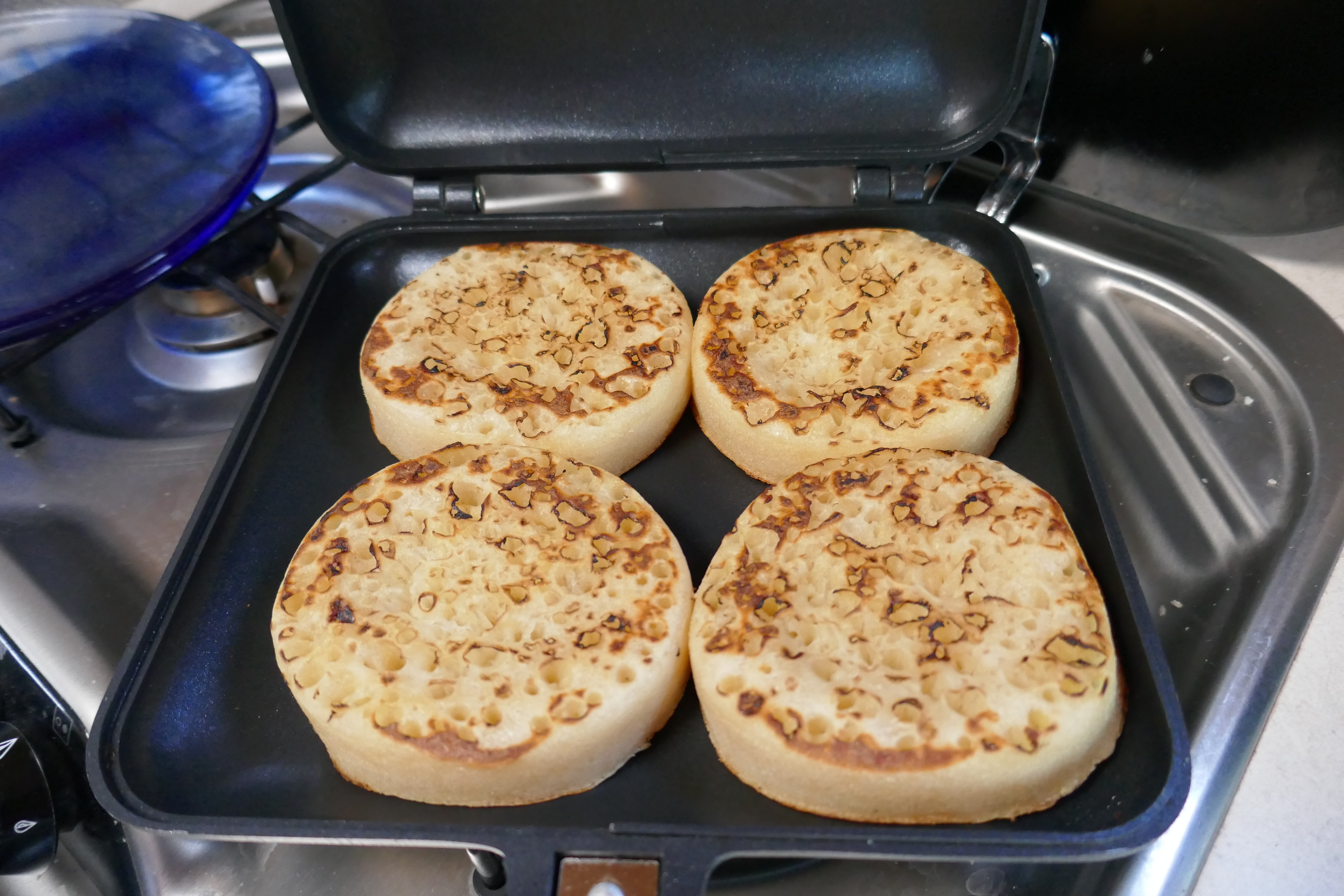
Crumpets
Crumpets in the RidgeMonkey taste better than ever

Reasons travellers love the internet

2011 August van pictures 014
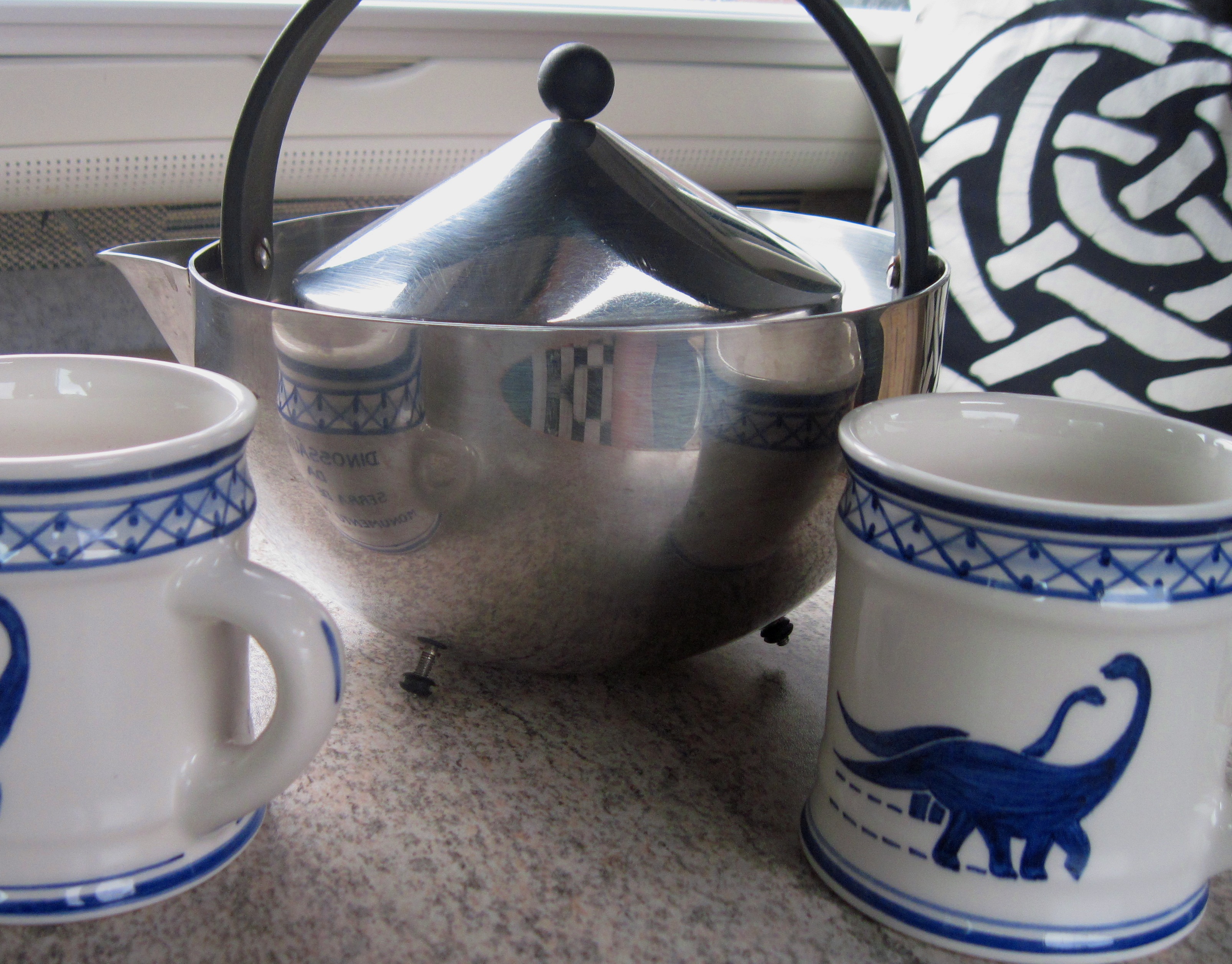
We use our Portuguese dinosaur mugs every day in our campervan

For the first thirty-years of my life I was waiting for the internet to become available; I wasn’t clever enough to put my finger on just what it was I needed but when it arrived I knew the internet was going to become an indispensable part of my life. I know we all managed without it through the dark years but so many things would have been so much easier if it had come along just a bit earlier. I use the internet for many things but for me as a travel writer it is particularly useful for planning and writing about travelling and holidays. Here’s a list:

Campsites – Through the 1980s and 1990s we took our young son on backpacking holidays around Europe; trips that required a bit of planning. Months before our trip we would write to various tourist information offices requesting leaflets about the area. We might find some details about local campsites in these or in a Rough Guide but we would have little idea how good or bad the sites were until we arrived. I have lost track of the number of times we have trekked out of a town to a campsite only to find it is either full, unfit for human habitation or closed. While this can generate fun travellers tales after the event at the time it was always stressful as we sorted out overnight accommodation for a family of three.

Train timetables – A few kilos of the weight in our packed rucksacks was due to the hefty European timetables book. This is a marvellous publication that opens up all sorts of possibilities and I always loved browsing through it but it isn’t very portable. Just think if we could have checked train times on our phone! We always travelled to Europe by train and booking these trains required joining a long snaking queue at Manchester Piccadilly around eight-weeks before we travelled to select the complex combination of trains and couchettes we needed to get us to Italy, Spain, Germany or Czechoslovakia.

Local bus times – We might receive some general information about local buses in the brochures from the tourist information centres but, as we often had little idea where we were actually going or what there was to do in an area, we had to spend a chunk of our holiday time seeking out this information in person. Hanging around information centres was an aspect of our holidays that was always particularly boring for a small child. I remember booking our trains back from what was then Czechoslovakia; this involved firstly finding the right office and then hanging around for many hours with mostly little idea of what was going on as systems were checked and connections calculated.

Buying maps – Before the internet I either bought maps locally or had to take a trip all the way south to Stanfords in London to buy maps for foreign places (although you could ring and talk to the marvellous and knowledgeable staff, send a cheque and buy that way). Not having a map is not an option for me, I like to know where I am. I still get a thrill from being able to search online and buy maps from the comfort of my own home.

Top attractions – Today there are so many websites to check out what there is to see in a city, there is no danger of missing the top sites [I doubt anyone wanders around Milan failing to find the Teatro alla Scala anymore]. For those ‘must see’ attractions with long queues you can now book timed tickets in advance. We would miss this convenience now wouldn’t we?

Staying in contact – Trying to get to grips with the bureaucratic nightmare of an Italian post office takes any fun out of sending postcards; even finding the right queue for stamps to the UK is mystifying. When eventually we had purchased the correct stamps we would spend hours writing these postcards [trying to think of something different for each one] before sending them home; if we were lucky they might arrive before we did. Today friends and family can read my blog or we can send texts or emails as we travel.

Learning the lingo – We bought a cassette tape and book to learn Czech as this wasn’t a language our local library kept in stock, otherwise we borrowed language tapes for a few weeks at a time to try and get to grips with a language. Today I can learn as many languages as I want via Duolingo for free, how cool is that.

Top tips for a fantastic campervan trip to Croatia

05.10.2018 Malapaklenica (1) small
The Mala Paklenica gorge

Drink the coffee; it is good and affordable.  Outside of tourist resorts, Croatian cafes rarely sell cakes or anything at all to eat [but bakeries generally have excellent cakes you can buy and eat with your coffee].  Buy a coffee and you can linger and watch the world go by as long as you like.

The coastline of Istria is beautiful but take the time to explore inland.  We walked the 10 kms St Simeon Path that winds steeply down from the stone village of Gračišće to a stunning waterfall that falls into a turquoise blue pool and then climbs through woodland back up the hillside.  We also cycled along the some of the Parenzana cycle trail around Motovun, a wonderful walled hilltop town with stunning views.

Paklenica National Park is a fantastic place for walking and climbing but it is also popular and it is worth turning off the main valley route where you will quickly find solitude.  Mala Paklenica is a narrow gorge where the walking is more difficult but worthwhile and just outside the National Park there are scores of other walking and cycling opportunities.  We followed the trail to see the mirila above Starigrad, fascinating engraved stones up to 300-years old that mark the places where bodies were laid down to allow the bearers to rest during the journey from their mountain hamlet to the cemetery.

Krka and Plitvicka National Parks both get very busy with coach loads of tour groups, as well as individual visitors as seeing the waterfalls is an understandably popular activity.  It is worth arriving as early as you can to miss some of these crowds and enjoy the views in tranquillity.  We arrived at Krka at 09.00 and enjoyed the early morning peace before the rush.

Don’t miss Zagreb out of your Croatian itinerary, it is a pleasant and lively city that is easy to walk around.  The city has plenty of green spaces to relax in, more cafes than you will ever need and for lunch you can visit La Štruk and enjoy a baked cheese štrukli – this is the only dish the restaurant serves and it is delicious and filling.  For culture we visited the unique, heartbreaking and sometimes amusing Museum of Broken Relationships.

Camping Slapić near the small town of Duga Resa is an idyllic spot to relax.  There are cycling and walking routes from the site or you can just sit and watch the clear waters of the river pass by.  The Croatian campsites we stayed on were generally of a high standard and well run.

Veliki Tabor sitting on a hilltop north of Zagreb is everything a European castle should be and it will charm you.

In a previous post I mentioned how gorgeous it is around the village of Samobor so I couldn’t miss it out of this post too.

North-east of Zagreb we were enchanted by the city of Varazdin with its garden-cemetery and pretty historical centre and castle.  This is certainly somewhere that needs a campsite so that visitors can stay longer.

Croatian people will be so happy if you learn just a few words of their language.  Just being able to say hvala [thank you] and dober dan [good day / hello] will get you a long way.


Noticing local stone in Caithness

2017 July August Scotland (186) Whaligoe Steps.JPG
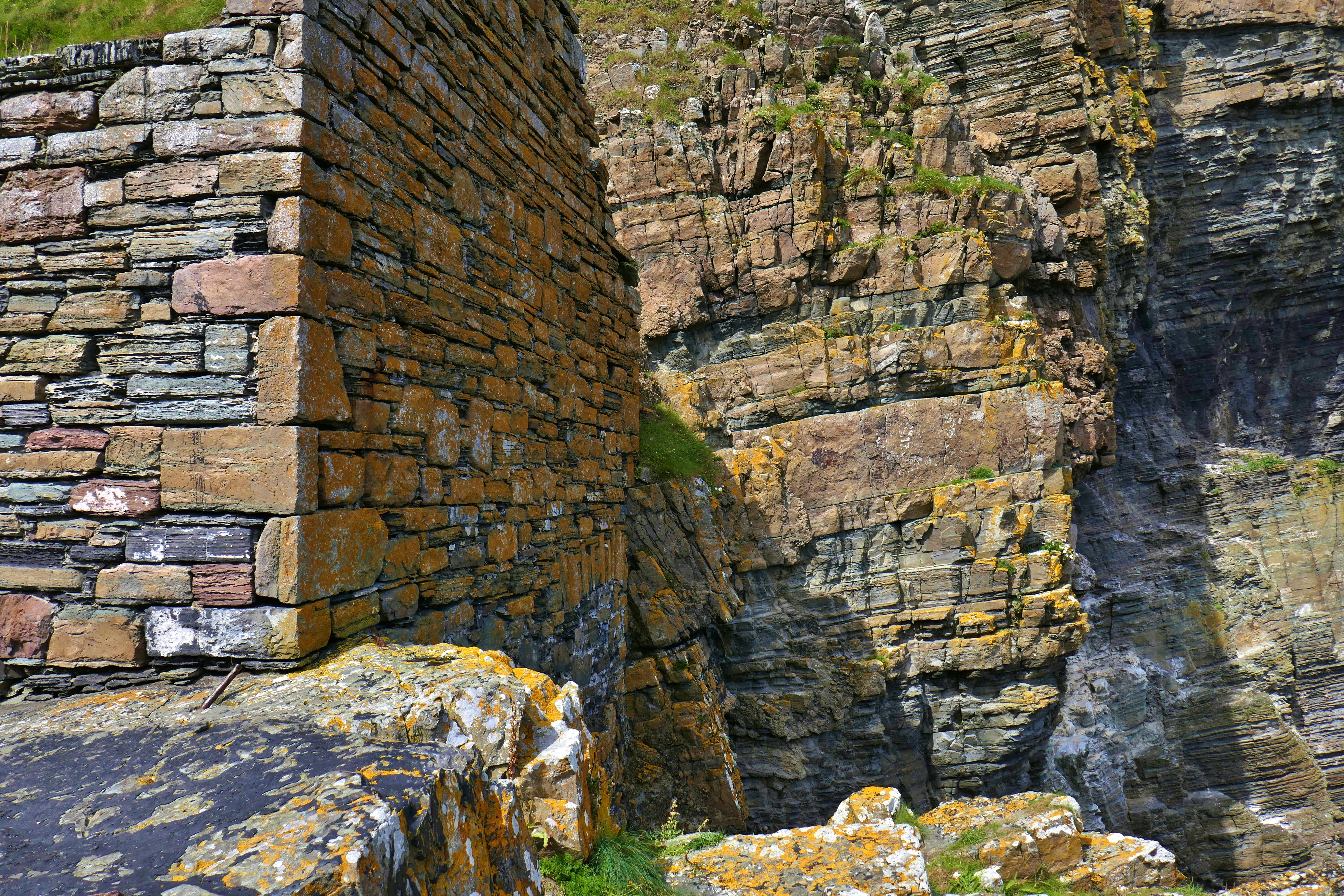
The abandoned harbour buildings at Whaligoe and the cliffs merge

You might not think about it but you will notice when buildings are made from local stone.  You will sense that these buildings merge with the landscape, they fit in and sit comfortably and harmoniously in their setting.  The example in the photograph is from Caithness but once you start looking you will see buildings created from local stone everywhere you go.  Last summer we climbed the steep descent of Whaligoe steps.  These old steps wind down the cliff to a tiny sheltered harbour that is hidden in a fissure in these sedimentary rocks.  Fishermen once launched their boats from here and when they returned with a catch, women gutted the fish and carried the heavy loads back up the winding 300-plus steps to sell them at market.  The harbour and steps were built from local Caithness flagstones and have been lovingly restored by local volunteers; the sedimentary sandstone splits easily to make excellent building materials.  When these sandstones meet the sea they result in sheer cliffs that create ledges for nesting seabirds.  The sea exploits the cracks in the rock forming fissures, sea stacks and arches and creating a dramatic coastline.

It was Richard Fortey’s wonderful book, The Hidden Landscape that first got me thinking about the place of vernacular buildings in the landscape and their relationship with the underlying rocks.  He writes evocatively about the hidden rocks that shape the personality of a landscape, dictating the soil, the plants and the buildings, describing how slate roofs and thatched cottages can be traced back to the geology of an area.  His book begins with a journey back in time:

‘I travelled to Haverfordwest to get to the past. From Paddington Station a Great Western locomotive took me on a journey westwards from London further and further back into geological time, from the age of mammals to the age of trilobites… Under the River Severn and into Wales, I was back before the time of the dinosaurs, to a time when Wales steamed and sweated with the humid heat of moss-laden and boggy forests in coal-swamps, where dragonflies the size of hawks flitted in the mist; and then on back still further in time, so far back that life had not yet slithered or crawled upon the land from its aqueous nursery.’

Oodles of kindness found in Croatia

05.08.2018 Starigrad cycling (8)
Cycling by the Croatian coast near Starigrad Paklenica

Perhaps all our spring holidays are destined to have an ‘incident’ and if a bicycle accident is as bad as it gets on this trip then we are happy enough [although no incident at all would be better].  We were visiting the lovely town of Samobor, a short distance north-west of Zagreb and in a region famed for its wine and the grapes are grown in small strips of vineyards on the steep slopes.  Samobor’s main square is packed with cafes, many of them serving the local speciality cakes, kremsnita, a light and fluffy version of a vanilla slice.  These are delicious and we tucked in to a slice each while considering how friendly all the Croatian people we had met were.  In every cafe and campsite people had been helpful and welcoming and also pleased when we used our four words of Croatian.  We speculated whether Croatian people were naturally nice or if all these people were just good at their tourism jobs.

 Our lovely campsite was a two kms easy cycle ride in to Samobor’s town centre along flat roads.  Climbing back on our bikes after our cakes we found the one-way system took us up a hill and as we then descended a steep residential street a breeze caught my much loved Portuguese sunhat I was wearing and I stupidly put a hand up to save the hat.  At that moment time went in to slow motion as it dawned on me that I was losing control of my bike and I was going to hit the tarmac.

Every part of my body hit the road in some way.  My lovely calm husband made sure I was safe and gently untangled me from my bike.  I could hardly move as I cautiously checked the many different parts of my body that hurt and when I did try and sit upright dizziness overcame me so I stayed lying down.  Over the next thirty minutes every Croatian who passed us by, in cars, on foot and other cyclists, stopped to ask if they could help, reverting to English as soon as they realised we weren’t Croatian; their kind-heartedness was both natural and extraordinary.  One man from the street bought a bottle of water, other local residents offered a pillow and everyone asked if they could call an ambulance for us.

I hoped I would be able to get back on my bike but it became apparent this might not be possible in the short-term and so Luka and his brother Noah, whose house I had fallen outside, came up with a plan to help.  They stored my amazingly undamaged bike in their garage, helped me in to their car and drove me the short distance to our campsite.  Hubby followed on his bike and then Luka and Noah took him back so that he could return on my bike; what heroes!  During our car journey I was still in shock and at first could only keep repeating ‘Hvala’ [thank you], ‘You speak Croatian!’ Luka delightedly exclaimed.  I managed to pull myself together enough for conversation and Luka, Noah and I found a shared love of Manchester United, we talked about the many beautiful places we had seen in Croatia and they told me about their studies.  They were both exceptionally generous human beings.

At the campervan I investigated my injuries, cleaned up the cuts and grazes, got out the ice packs and ibuprofen and counted my lucky stars I had no broken bones.  My left wrist was sprained, a rib cracked, my right hand had some wounds and there was blood on my face from grazes.  In truth it is easier to tell you where I don’t have any bruises than describe where they are.  The right side of my face soon swelled up and after a couple of days the bruises emerged from underneath my tan.  I keep forgetting about this visible sign of my injuries and then wonder why people are looking at me strangely, children must be saying to their parents, ‘Why has that woman got a blue face?’  I can’t open a jar of olives just at the moment, reaching up to all those high cupboards in the ‘van is painful and getting comfortable at night is tricky [even with painkillers] but it could have been so much worse.

Falling off my bike is a drastic way to test the goodness of the people of Croatia but we can now confidently say that Croatia is not only beautiful it is also truly friendly.


Most German campsites are excellent but some are more excellent than others

04.27.2018 Munsingen cycle ride (11).JPG
The Swabian Alb biosphere near Münsingen is perfect for cycling

We rarely plan much when it comes to our trips around Europe, so much depends on what we want to do, how we feel and the weather.  And so we rolled in to Hofgut Hopfenburg campsite near to the pretty town of Münsingen in Baden-Württemberg and south of Ulm expecting little more than a comfortable place to overnight.  We received a friendly welcome and I left reception with a local cycling map and information about the nearby Swabian Alb biosphere, a local nature reserve.  This looked promising so we decided to stay and explore.

The campsite is terraced and so pitches have a view across the town to the gentle green hills beyond.  The facilities are excellent with good hot showers, indoor washing up area [you remember how important I think that is] and were clean and modern.  Wonderful fresh bread was available every day and the campsite runs a small shop selling local products.  As well as touring pitches the site has a collection of wooden Romany caravans, yurts, tipis and some chalets so visitors have a choice of accommodation.  While we were staying a wedding was held in the garden.

If you are using this marvellous campsite as a stop-over there is a nature reserve accessible from the site where you can stretch your legs for an hour or so after a day of driving.  This hillside reserve with meadows, woodland and an arboretum has views over the town and is also a pretty walk in to Münsingen.

For around 100 years [until 2005] the undulating meadows and woodland to the east of Münsingen were used as a military training ground.  Initially by the German army and after 1945 by the French army who, in particular, used the area for tank manoeuvres.  Inaccessible to the public the area in some ways stood still and the wildlife was protected, although always at risk of being blown up.  Today this area is once again accessible and managed to protect the wildlife, although visitors need to stick to the paths because of the risk of un-exploded ordnance.

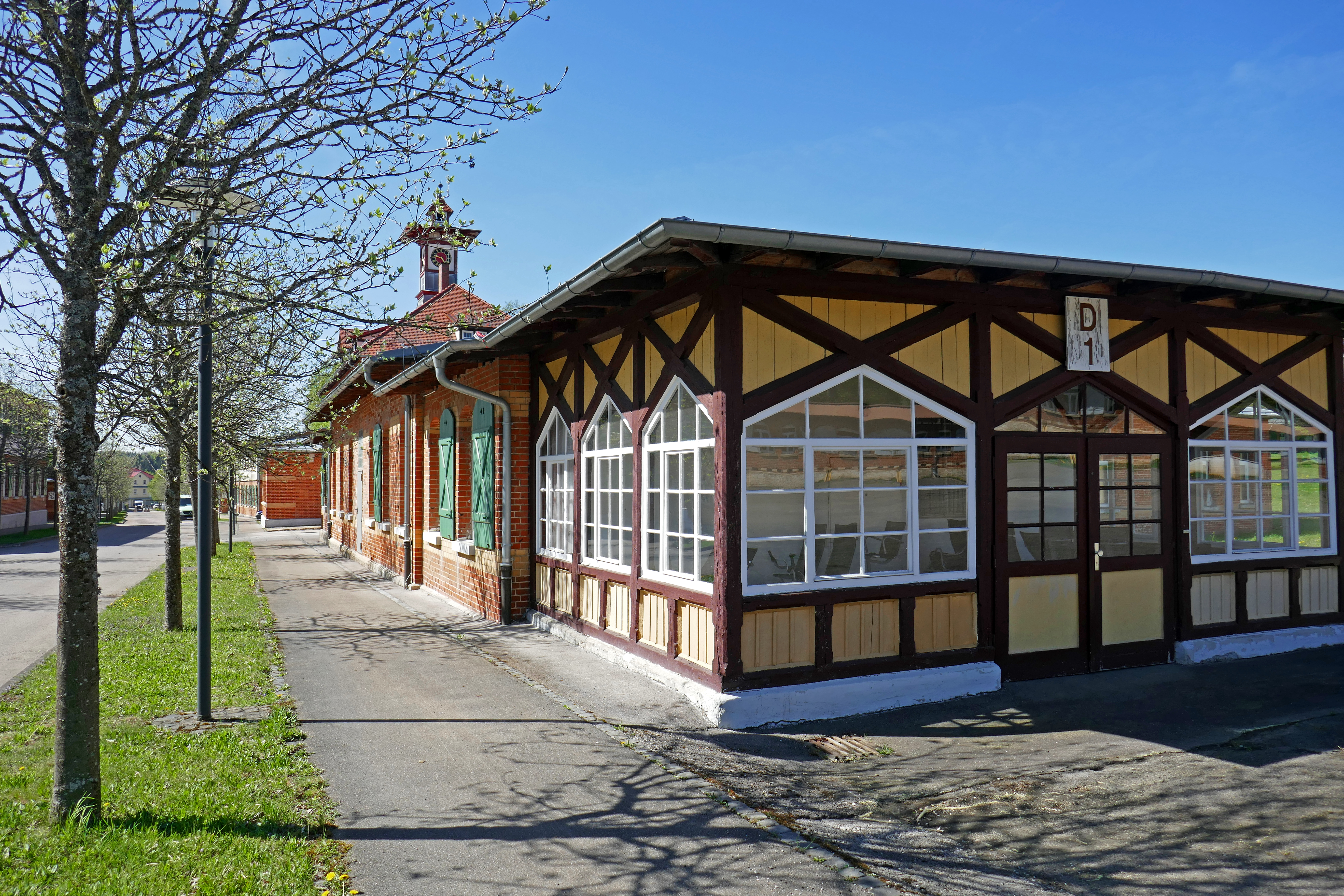
We began at the Biosphere Centre in the old military barracks which are surprisingly charming buildings.  As well as the information centre there is an art gallery here but as we cycled around most of the buildings appeared to be empty.  The Biosphere Centre has headphones with an English tour and we learnt a lot about the wildlife, geology, culture and the management of the area.

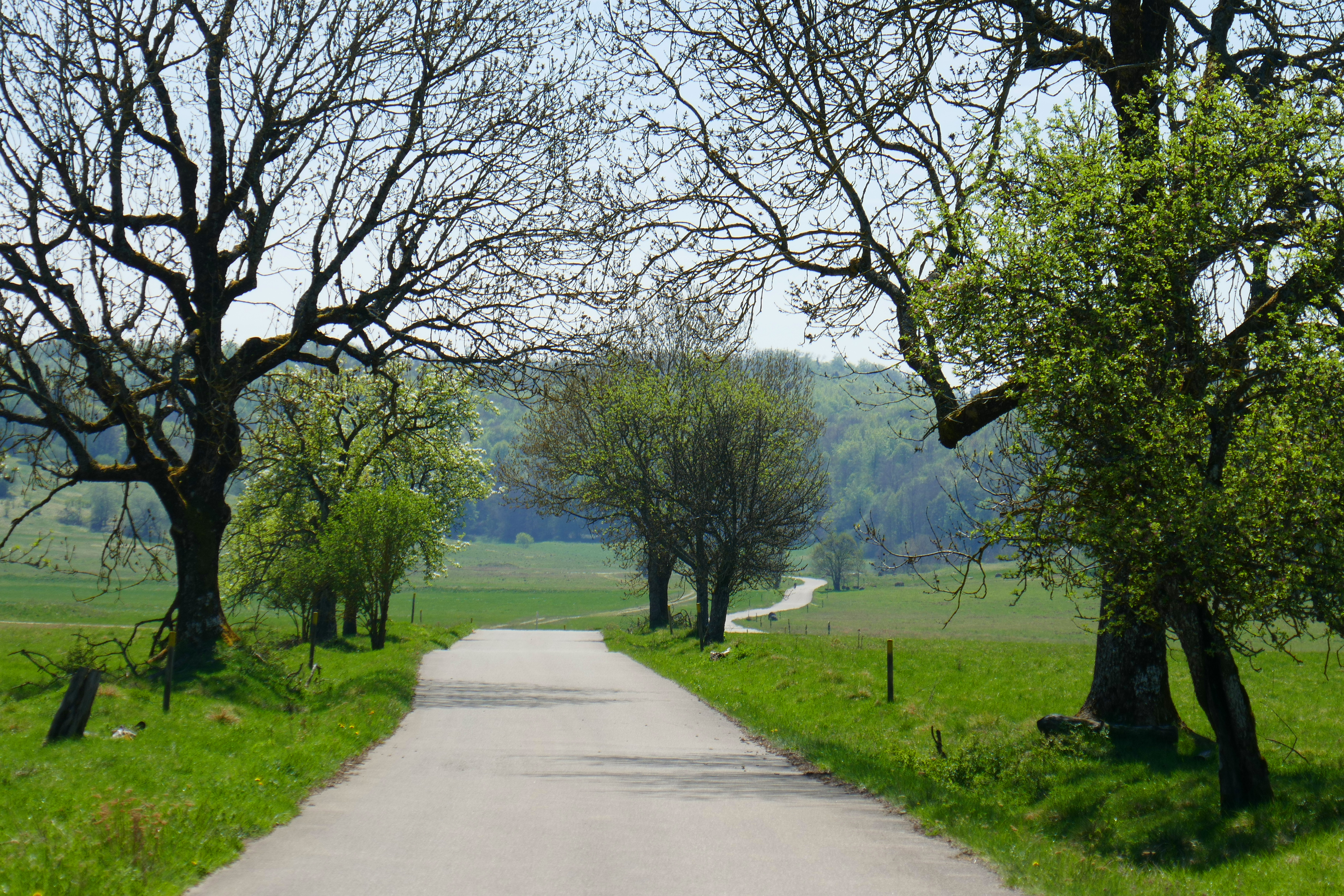
The tarmac paths around the reserve are perfect for cycling and are all way-marked and numbered.  The area is fairly flat with only small hills to conquer and cycling is just the right pace to enjoy this landscape.  On a sunny weekday there were few people around and we were happy cycling on these traffic-free routes lined with trees rich with blossom.  In the fields are large herds of sheep that are managed to maintain the diversity of plants in the grassland and kestrels and buzzards hunted over the fields.

On a hilltop is the abandoned village of Gruorn.  The villagers were forced from their homes to make way for the military training in 1939 and the houses were used for practice.  Today the church and old school house have been restored and both can be visited.  The schoolhouse has a museum about the village and a cafe.  The churchyard is attractive and colourful with flowers and we sat in the sunshine enjoying a beer before continuing back to the excellent campsite.

04.27.2018 Munsingen cycle ride (5).JPG
Part of the old military barracks

Reasons to loathe winter washing up at campsites

P1090120
Outdoor washing up

Picture the scene.  It is dark and the wind is whipping around the campsite and heavy showers rush across the site in flurries.  The showers and toilets are cosy and warm but there is a frozen camper standing at the outdoor washing up sinks wrapped in fleeces, cagoule and a hat.  As they run the tap the water is whipped across the sinks as it is caught by the wind and under their breath the washer-up is cursing the campsite owner that has saved money by constructing dish-washing sinks that are open to the elements.

We like to camp all through the winter and in all sorts of weathers.  In winter we like to spend some time at a campsite with warm facilities that we can use in comfort and many sites fit this bill but let us down when it comes to washing up.  An all too common design for campsite dish-washing facilities is to have a roof but be open to the elements.  This has the advantage that you can stay dry in the inevitable rain [unless it is windy too] but even wrapped in layers the biting cold of the wind is tough for whoever is on washing up duties.

I understand outdoor washing up sinks in hot countries but in England, Scotland and Wales it seems optimistic at best.  Yes, of course we can wash up in the campervan and given these outdoor facilities we often do but this isn’t the point.  When we are on a campsite with facilities we like to use them and rather resent having to boil the kettle in the ‘van for hot water and do the dishes in our tiny sink when there are perfectly adequate sinks provided if only they were indoors.  We start to wonder why we pay for sites, we might as well be wild camping on these inclement nights [and often do this too].

There must be an off-the-shelf campsite facilities block that all these different campsites purchase as we see these outdoor sinks so often.  Or have these campsite owners never been camping themselves and so have never experienced the dish-washer agony?  We are so relieved when we arrive at a site, check out the facilities and find a room [with a door] [and ideally a window to watch the world from] for washing up in.  This luxury on a campsite is worth paying for!

A selection of campsites [not exhaustive] we have found where the dish-washing facilities are indoors:

Castlerigg Hall, Keswick

Inver Caravan Park, Dunbeath

Eye Kettleby Lakes, Melton Mowbray

Holgates at Silverdale

Caravan and Motorhome Club site at Wharfedale near Grassington

Caravan and Motorhome Club Site near Barnard Castle