My first year of retirement in numbers

P1080617.JPG
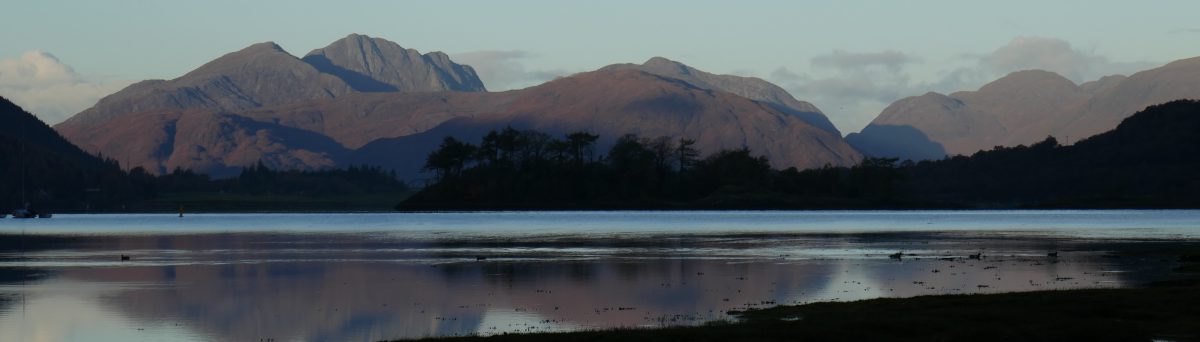
Above Castleton in the Peak District

Twelve months retired – so how has that gone?  We’ve certainly packed a lot in to the last year and at home we have settled in to a pattern for a shared retirement that is comfortable and relaxed.  At home we both have our own projects and interests and often beaver quietly away at these before taking an afternoon walk around the neighbourhood or cycle to the supermarket.  But we were only home for eight months of the year and those holiday days have a different pattern of walking and cycling and discovering new places.  In some ways this year has been unusual as after the incident in Greece we were without a campervan for two months while it was off the road.

I have managed to keep my resolution to not say ‘I don’t know how I ever had time to go to work’ which I guess must annoy all those people who are squeezing work and life into their seven days.  We have also made a conscious effort to do just / at least one thing each day.

Holidays and trips – 16 different holidays from one-night to two months.  We had planned two longish trips to mainland Europe in the spring and the autumn and we had a wonderful trip to Spain and Portugal in September and October but our trip to Greece in the spring didn’t go quite according to plan.  Now this is all over we can look back on the whole Greek tragedy as a learning experience [although one we would have preferred to do without] and we haven’t let the trip knock our confidence; we might even head off to Greece again in the future.  In the UK we spent a few weeks in Scotland, went to the wonderful Upton Blues Festival and various other short breaks.  We have been away in the campervan for about 120 nights during the year.  This is less than we would have expected as the ‘van was off the road for a couple of months.  We tried other types of holidays and these just confirmed that the campervan life is the one for us.

Number of accidents in the campervan  – 1 (see above)

Number of times we have set the alarm clock – NONE!

Writing travel articles – 8- this is a similar number of travel articles for MMM as last year.  This doesn’t sound many and it truly isn’t and is in no way a full-time job.  But I work slowly and each 2,000 words represents about a months work – research, travelling, taking photographs, further research, editing photographs, writing and editing.  In addition I write some campsite reviews and short articles.  This makes my retirement a working one, although if it felt like work I would stop tomorrow.

Number of matinees we have been to – Three – hurrah!

Number of times I have wanted to go back to nine-to-five work – NONE!

Foreign languages learnt – 3 [although I am not fluent in any] – before our spring trip we both worked hard at learning some Greek with flash cards and 1970s TV programmes and our efforts were generally appreciated.  I also used Duolingo to brush up my Italian.  In the summer I learnt Spanish on Duolingo and TV learning and Mr BOTRA picked up some Portuguese.  This learning meant that we could confidently book in to campsites and order in cafes.  Mr BOTRA also keeps his German up to scratch.  Next year we will want to learn some Croatian and Slovenian phrases as well as brushing up other European languages.

Good deeds done – Never enough!  I wanted to do some good in retirement and continue to do the things I listed in this previous post.  My elderly neighbours situation has recently worsened and I feel guilty for not helping her more.

Tai chi – Between once a week and daily!  While we were away in September and October we practiced tai chi every day, a combination of fine weather and peaceful campsites made this easy and fun to do.  At home we just about have enough space for tai chi without bumping in to each other and so manage to do occasional practice, as well as get to our weekly class.

Number of books read  – 64 – this year I have made a conscious effort to read more travel books and fiction as well as novels.

Number of blog posts in 2017 – 101 – I managed 78 posts on Back On The Road Again and just 23 posts on my Memorial Bench Stories blog [I must try harder].

Number of days we haven’t been outdoors for at least half-an-hour – 4 [this is a guess] – mostly we like to get out and enjoy some fresh air even if it is raining and we get out for just half-an-hour.

It has mostly added up to a good year and bring on year two of retirement, I’m loving it.


£24,000/year budget for two people who are on holiday for 1/3rd of the year: 2017 finances reviewed

P1010172
Another thrifty year

This is our first year of retirement so we are interested to see how the spending has panned out for us with no income compared to our budget when we were both working.  I did consider not sharing our review of our 2017 finances as I am not sure how interesting or useful this information is to others.  Everyone’s situation is so different, people have different priorities, hobbies and needs.  So is it really helpful to know that two people with a campervan-habit living in a small flat in Salford need around £24,000 a year to have a good quality of life?

We are really head-over-heels to have come well within our budget of £27,000 a year.  We always knew this was a generous amount but it is good to have it confirmed in hard figures.  I don’t think we will slack off the budgeting in 2018 as we like the idea of having a good financial cushion for any future problems.

All that said, here are the numbers:

Holidays [our favourite spending line] – £5,285 – for this we have been away for over a third of the year [118 nights in the campervan, plus a couple of other holidays in self-catering cottages] [this amount includes £1,000 for two 2018 holidays] – a bargain!

Food – £3,612 

Restaurants & cafes – £2,864 – [this spending increased in 2017 in part due to better tracking of where the money has gone]

Running the campervan [servicing & insurance etc] – £1,636

Diesel for the above ‘van – £1,641

Gifts & donations – £1,173

Tickets for concerts, football & attractions – £633

Other household spending [including parts for the bikes] public transport & miscellaneous – £2,271

Our health [including tai chi classes] – £376

Clothes & accessories – £525

Utilities, insurance & service charges for a 2-bed 58 sq mtrs [624 sq feet] flat – £4,166

TOTAL SPENDING FOR 2017 – £24,196 – comfortably within our £27,000 budget.


Lightwaves 2017 at Salford Quays

Salford Lightwaves 2017 (24).JPG
The web of light by the water

Lightwaves has become a regular at Salford Quays in the run up to Christmas and is as much part of our Christmas preparations as writing cards and remembering where we have stored the lights.  Over the years we have had huge white rabbits, Dr Who and tiny boats bobbing on the quay.  As has become traditional, we walked down to Salford Quays on the opening night and joined the throng on a bitterly cold but fine night to see the art works for the first time.

The 100 photograph light boxes with images from across Greater Manchester came first.  I had expected these to be landscapes and was surprised how many were portraits, some showing real Mancunian character but I had looked forward to having to guess the views and would have enjoyed more scenes from the ten boroughs.  After reminiscing about the Sooty Show, always a favourite in our house, we found the breathing tent and sat practicing our deep tai chi breathing, watching the lights climb up and down the side of the tent as we inhaled, filling our lower dan tien and fully exhaling.  We walked beneath the grid of rope by the quayside watching the lights change colour from bright green to yellow.  This light responds to a microphone that is in the river, translating the sound in to light

In front of the Lowry are Jackie Kay’s neon words, ‘I forgot to say.’  This is supposed to get you thinking and anyone can call the number and leave a message about what they have forgotten to say … but ringing slipped my mind.

For the last couple of years Lightwaves have co-operated with Blackpool illuminations and we have had some of their spare installations.  I like the combination of the technical and artistic light structures and the brash lights of Blackpool.  This year as well as Sooty Show images we had the pirates below and some nostalgic Star Trek images.

Salford Lightwaves 2017 (31).JPG
Pirates of Salford Quays

Fed up with your December birthday? Then change it

P1070738.JPG
My birthday cards don’t have to compete with Christmas cards anymore

For years my Christmas-time birthday was a huge disappointment.  As a child it was over-shadowed by the seasonal festivities and couldn’t help but be just another strain on the family finances at the most expensive time of the year.  Aunts and uncles would buy me ‘joint’ gifts for birthday and Christmas, assuring me they had spent extra.  As every December-birthday person knows, even if they had spent more, nothing beats having two specific gifts for birthday and Christmas and that this isn’t something that June-birthday children have to contend with.  As a child I never had a party on my actual birthday, it was too near the festivities, no one had time and who wants to eat birthday cake at Christmas.  As an adult the lovely Mr BOTRA and my son and daughter-in-law have made a fuss of me and ensured the day was special and spending time with these three people is wonderful and should be enough … but I always wanted what everyone else had, a celebration with my friends.  On my birthday these friends were either with their family, busy at some other Christmas event or away for the festive period.  The only way to get everyone together was to celebrate outside the Christmas period, so when I was 40 I arranged the party for January.  It still took me a few years after that birthday to realise that this was the way to go and it was 2011 when I decided I wasn’t putting up with this unsatisfactory situation any longer and I moved my birthday to November.

There were friends who protested that it couldn’t be done, a few who still forget the new date, but honestly, I haven’t regretted moving my birthday to the preceding month for one minute.  Now, my birthday isn’t shoe-horned in to the Christmas festivities, my birthday cards don’t have to compete for space with the Christmas cards and my friends are available for a celebration.  It is this latter result that is the most important to me, I get to bring everyone I care about together for one celebration and that makes me happy.  It isn’t about presents and cards, for me it has always been about wanting to be with the people I love.

Over the past few years I have celebrated my birthday with friends in various ways.  We have played crazy golf, been for walks, had ‘posh’ afternoon tea, visited an art gallery and been out for meals.  At last I get to experience what other people with birthdays in any other month except December take for granted, a birthday spent with my family and friends.

And what of my birth-date?  This day still exists, of course I have to use it for paperwork and forms but really it is now just any other day.  The recollection that it is the anniversary of my birth might pass through my mind at some point during the day but it is no longer my birthday, that is the November date that I chose.  Moving my birthday was one of the best things I ever did and I am not moving it back.

Discovering the Arts and Crafts Movement in the Lake District

P1070511.JPG
Beautiful Blackwell Arts and Crafts House above Windermere

In retirement our winter trips are being dictated by the weather forecast rather than the weekend and this freedom is liberating.  With some cold sunny weather forecast last week we baked a cake, packed some warm clothing and set off for the Lake District.  Windermere is easy to get to from Salford and we were soon soaking up the views along the lake from Orrest Head, pottered by the Windermere and seeking a cosy pub to warm up in.

In the afternoon we visited the lovely Blackwell Arts and Crafts House.  We had been here before many years ago and since then the staff and volunteers have been busy and many improvements have been made.  Built by M H Bailie Scott as a holiday home for Edward Holt, this is a beautiful example of an Arts and Crafts house that retains many of its original features that, in keeping with the movement, are both decorative and practical.  The door handles are leaf-shaped, the window catches are interesting.  There is attractive stained glass and plaster work too but just as important, the atmosphere is relaxed, rather than stuffy and visitors are encouraged to linger.

After being a holiday home the house became a school and then offices before being bought by a Trust in 1999 and it opened to the public in 2001.  The White Drawing Room has slender columns with decorative capitals, a sunny aspect over the lake and is a room where the sunlight dances around the room.

The Arts and Crafts Movement began in Britain in the 1880s and spread across Europe and America.  As the V&A writes:

‘It was a movement born of ideals. It grew out of a concern for the effects of industrialisation: on design, on traditional skills and on the lives of ordinary people. In response, it established a new set of principles for living and working. It advocated the reform of art at every level and across a broad social spectrum, and it turned the home into a work of art.’

The Arts and Crafts Movement has strong links with the Lake District.  The three founder members, William Morris, Edward Burne Jones and Phillip Webb were supported by  George Howard from Naworth Castle near Carlisle and he used William Morris’ wallpapers in many of his properties.  John Ruskin, a Lake District resident, strongly influenced the Arts and Crafts Movement.  He considered machine-made items to be dishonest and that craftmanship was linked to dignity.

P1070558.JPG
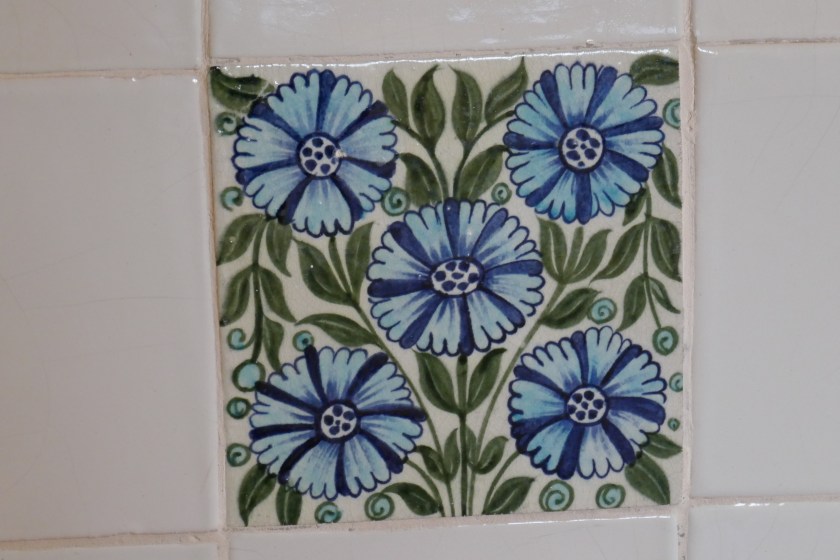
Tile detail from a fireplace at Blackwell

Ready for any emergency?

10.27 Castrojeriz (111).JPG
Our ’emergency’ kit

Emergency kit is a bit of a grand name for our tupperware box full of things we keep in the campervan.  This box contains items we think might be useful when we are out walking or cycling and ’emergency kit’ is what we call it when we are checking what to stuff in the rucksacks or pannier for a walk or bike ride.  We have recently reviewed what we carry in this kit.  We like to have these small essentials in one place so that we feel ready for almost anything and can head off for the day with some confidence.

We have used items in the ’emergency kit’ [for ourselves and other people] and we have added to it when we have had an ’emergency’ and realised there is something essential missing.  One summer we ended up on a path heavy with nettles, I was wearing shorts and emerged unable to see my legs under a tapestry of nettle stings and we spent much of the rest of the day looking for a chemist in Cotswold villages to get antihistamine tablets, now we carry these.  We use the tick lasso regularly as we are often in areas where these small insects are numerous [we also keep our tick-borne encephalitis jabs up-to-date].  The plasters get used regularly for small injuries but many of the other items are there for a serious emergency, such as the foil emergency blankets and whistle.  We previously carried just one small torch but now keep our two head torches in the ’emergency kit’ as if we are returning in the dusk or dark from a walk or cycle ride these are more useful for getting us home safely.

We think we are prepared for anything but what do you think is missing?  Our kit comprises:

  • Two head torches and batteries
  • Bandages [various]
  • Wipes
  • Towelettes
  • Lifeboat matches
  • Plasters, including blister plasters
  • Paper and pencil
  • Compass
  • String and spare lace
  • Scissors [fantastic neat folding scissors actually]
  • Bite and sting relief cream and bite and sting click-away
  • Insect repellent
  • Foil emergency blankets
  • Medications – antihistamine, ibuprofen, migraine tablets, paracetamol [we change these regularly so they are not out of date]
  • Sewing kit [not sure what emergency this is really for]
  • Swiss army knife with knife and corkscrew
  • Whistle
  • Tick lasso (for removing ticks)

In addition we also ensure we carry at least one charged mobile phone as well as a map and water on any walk or bike ride that is further than a trip to the shops.

The mountain safety advice is not to bother but should we carry a distress flare?  What do you always carry with you?


Data roaming on ferries – don’t get caught out

10.05 Porta Cova (18).JPG
The Portuguese coast near Porto Covo

I thought using my phone for data and calls in Europe was a simple transaction nowadays.  I have a contract with a fair amount of data, calls and texts and I can use this just as I would at home in the UK.  This makes so many things easier as we travel around Europe, we can google for local veggie restaurants, check the opening times of attractions and the weather and call home and we thank the EU for this convenience on a daily basis.  But, on our recent trip to Spain and Portugal I found that on a ferry using your mobile phone gets more complicated and expensive mistakes can easily be made.

I was surprised to find I had a data signal on my mobile phone as we sailed out of Bilbao but naively assumed that connections had improved so much they could now reach out to the Bay of Biscay.  I had switched my phone on to pick up the ship’s wi-fi but as I had a data signal I decided I didn’t need to go through the rigmarole of signing in to that.  Then a text message pinged up telling me I had spent £4+ on data outside my allowance, then another text with a higher amount, then another and so on.  There was no explanation as to how I had gone over my data allowance and I spent a few frantic minutes checking my phone account to see if I could clarify what I had done but as the text messages mounted up I [sensibly] switched the phone off for the rest of the ferry journey.

I switched my phone on again as we docked in to Portsmouth.  The last text message I had received informed me I had spent £34+ on data outside my allowance.  I checked my data usage again and couldn’t see how I had spent that, my data usage was well within the gigabytes I pay for on my contract.

I rang Three, my phone operator, as Mr BOTRA drove us away from the south coast to see what this £34 additional charge was about.  The operator very efficiently informed me that with data roaming switched on [as it is quite safely all over Europe] when on a ferry or cruise ship my phone will automatically seek any connections.  When the phone can’t find a two, three or four G network it will seek out a satellite marine mobile provider via the ship; this was the first I had heard about marine mobile.  It seems these marine mobile providers are outside a normal data allowance contract and so are charged separately and those on Britanny Ferries that we were travelling on are very expensive charges [although they do warn you about these charges on their website].

It is some consolation that these data roaming charges, as this article suggests, have caught other people out as well as me, with some ending up with bills much more than the £34 I now had to pay.

Fortunately my story of ignorance has a happy ending for a frugal traveller as Three, noting that I have been a loyal customer for many years, refunded the £34 I owed for the few minutes my telephone was connected to the marine mobile satellite.  They did this without me having to ask [I was still in shock] and quickly, so Three deserve a big thank you.

Next time I will just keep my phone switched off on a ferry and relax and enjoy the view.


Spain & Portugal: What did a two months campervan trip cost?

09.07 Salamanca night visit (35).JPG
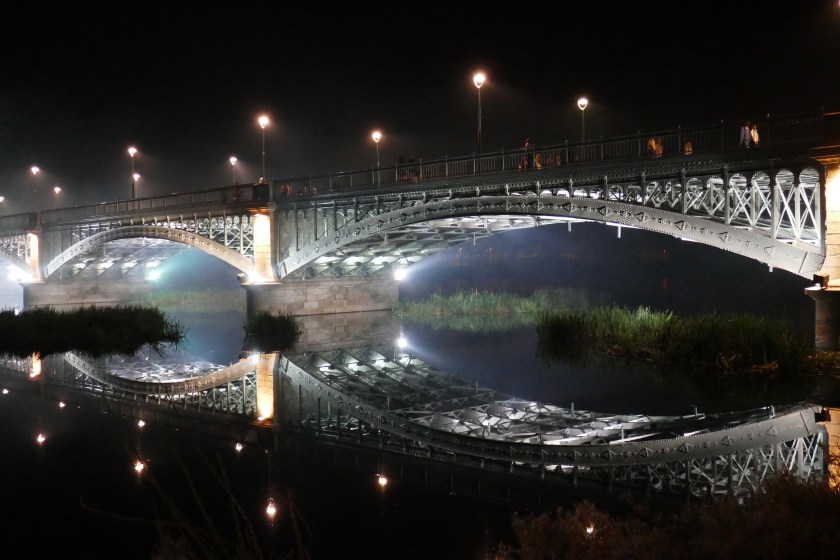
The river Tormes in Salamanca

We loved touring around Spain and Portugal and highly recommend it.  If you’re planning your own trip to these or many other European countries these costs might be a useful guide, although WARNING – everyone’s trip is their own and everyone’s spending is different.  We are not uber-frugal campers and anyone could do this trip cheaper [even we could if we tried] but this is our trip, it isn’t all about money and we set out to enjoy it in our own way.  So below are a few notes on our spending.

  1. Of the 66 nights we were away only seven of these were spent free-camping, the rest of the time we were on campsites [although we stayed on low-cost camperstops and ACSI sites].
  2. In Portugal we had coffee and cake in a cafe almost everyday because it is cheap enough and the cakes are fantastic [hence the €434 spent in cafes] but we are vegetarian and so had very few evening meals out in restaurants as Portugal isn’t always ready for vegetarians.
  3. We did drink wine or beer every night but we did try some very cheap [and very good] red wine [the lowest we tried was 1.89].
  4. As you can see, we paid to get in to some attractions as we travelled, budget travellers could skip these.
  5. Other spending includes an occasional washing machine, presents for loved ones at home, bike spares, some clothes and a few household replacement items.
  • Diesel – €523
  • Food [supermarkets etc] – €864
  • Cafes & restaurants – €434
  • Campsites – €931
  • Bus fares, taxis etc – €48
  • Entrance fees to attractions – €174
  • Other spending – €146
  • TOTAL SPENDING – €3,120

Interestingly, this amount is more or less the same as we would have spent had we stayed at home [and while away we’ve not been using gas, electric or water in the flat] so the only additional cost to our normal spending has been the ferry.  Portsmouth to Bilbao is an expensive route at £730 but it does take you straight to Spain and I feel that this amount represents better value when spread out over a two month trip.

We have been generous with our budget and expected higher spending than this on our trips away so our annual spending for our first year of retirement is still looking good at the moment despite additional spending following the incident.


Spain and Portugal campsites & overnights

09.14 Vila Praia de Ancora campsite.JPG
Evening light on a campsite

In the spirit of sharing for anyone who is planning their own trip to northern Spain and Portugal, during our two months trip around these two countries we stayed on some great campsites, a few indifferent ones and a few free camping places.  The full list with the low season cost and some comments are below:

Campsite nameCommentsCost
Port at PortsmouthEdge of the lanes for checking in, facilities nearby open 05.00-23.30, some noise and 4 other vans €           –
Casalarreina Aire near Haron, SpainOn the edge of a small town, pleasantly situated by sports area, short walk in to Casalarreina and shops and cafes €           –
Camping Fuente de la Treya, SoriaGood hot showers, not the cleanest, main road above site so some noise, grassy and trees, okay for one night, electric €6/night €    21.50
Camping Carion del Rio Lobos, Ucero, SpainLots of shade under the trees, clean facilities, showers very fine spray and not quite warm enough €    28.50
Camping El Acuedecto, Segovia, SpainOn the edge of the city, marked pitches, buses to city, clean facilities & roomy showers, water not very warm, plenty of dishwashing and laundry sinks €    26.00
Camping Gredos, Hoyos del Espino, SpainA sloping site in the pine trees, peaceful and walking & cycling in the natural park, excellent hot showers, wash up a bit grim, pitches a reasonable size €    18.10
Camping Parque National Monfrague Malpartida de Plasencia, SpainA large site, ACSI, English spoken, some shade, uneven pitches, good hot showers, shop & bread €    17.00
Camping Don Quijte, Salamanca, SpainLarge, level and sandy pitches that are marked with hedges & have plenty of shade, good cycle route to the city and good hot showers with clean facilities, ACSI €    17.00
Camping Sierra de la Culebra, Figueruela de Arriba, SpainA peaceful site in the countryside, some shade, sandy, facilities dated & have shower curtains but acceptable, ACSI €    17.00
Active Lima, Entre Ambos-os-Rios, PortugalSite in pine trees, few definite pitches, facilities basic & no hot water at sinks, showers lukewarm, English spoken, ACSI €    13.00
Parque de Campismo do Paco, Vila Praia de Ancora, PortugalIn eucalypus trees & oak, no marked pitches, popular site, facilities fine, hot showers & toilet paper, only lukewarm water for wash-up, ACSI €    11.00
Parque de Campismo de Cerdeira, Campo do Geres, PortugalA large terraced level site under trees, organised & modern facilities, shop, showers, clean but lukewarm, wash up outdoors €    23.00
Campismo Arco Unipessoal, Arco de Baulhe, PortugalSmall terraced site, 300 m from a town, facilities open, clean & showers reasonably warm, open views to hills, wifi at bar, ACSI €    17.00
Parque de Campismo Municipio de Meda, PortugalA neatly laid out small site by the swimming pool, good English spoken at reception, toilet paper, very hot showers, fully adjustable, clean facilities, good wifi on pitch, an excellent site by the town €    11.00
Camping Quinta das Cegonhas, near Gouveia, PortugalTerraced site with views down the hillside, good information on walks, facilities clean & showers hot, English spoken, well organised, good wifi on pitch €    19.10
Toca da Raposa, Meruge near Oliveira do Hospital, PortugalSmall site with trees for shade, friendly welcome, walks information available, clean facilities & good hot showers, wifi at bar, ACSI €    15.00
Coimbra Aire at Parque Verde / Piscinas, PortugalCar park near the town & river, popular & busy, road noise, toilets that are open in the day €           –
Quinta do Pomarinho, Castelo de Vide, PortugalSandy site with some trees but limited shade, lovely views of hills, good facilities, wifi by reception, 1 1/2 hr walk to town, hot showers, lots and lots of information about walks locally €    20.00
Camping Alentejo, Evoramonte, PortugalBy a busy road, flat site, some shade, pool, clean facilities, showers only warm €    12.00
Costa do Vizir Camping, Porto Covo, PortugalLarge site with many facilities near the village, showers fine & clean, paved roads, no views but peaceful €    17.10
Foia Autocarravana parking near Monchique at 902 m, PortugalCar park with cafe, shops & antennae at top of hill, good views, traffic late at night & early morning €           –
Vale a Carrasqueira Camperstop, Caldas de Monchique, Portugal14 pitch camperstop with lovely views over a wooded valley, extra €2.50 to use pool, wifi, basic clean facilities, good hot showers €    12.50
Camping Alvor, Alvor, Portugallarge site with pool, shop & motorhome service pint, busy due to ACSI reduction, hot showers & clean facilities although a bit dated €    13.00
Algarve Motorhome Park, Silves, PortugalLarge gravel aire by the road, little shade, clean & tidy, 2 showers cost 50c each €       8.50
Parque de Campismo Municipal de Serpa, PortugalSandy site, some slope, some trees, good hot showers & clean facilities, Intermarche & cafes near & town only 10 mins away €    10.05
Parque de Campismo Markadia, Odivelas, PortugalBeautiful & peaceful position on the reservoir with generous pitches, clean facilities, roomy & hot showers, bread €    19.44
Orbitur Parque Campismo de Evora, PortugalMarked pitches, facilities dated but acceptable, showers hot, 2 kms from centre, large pitches €    14.58
Elvas car park by Aqueduct, PortugalLarge slightly sloping car park, beside the stunning aqueduct & 15 mins walk from the town, popular aire €           –
Camping Os Anjos, Campo Maior, PortugalSmall terraced site with open views, clean facilities, no toilet paper, water for wash up & showers not hot enough, information on walks, 1.5 kms from the lovely town €    17.30
Camping Cuidad de Caceres, SpainTerraced site that is popular & large, each pitch with bathroom, some road noise, shower a bit feeble but hot & nice to have space, ACSI €    17.00
Camping Parque National Monfrague, Malpartida de Pasencia, SpainStill busy but good welcome, wifi, roomy showers with hot water & good flow, good wash-up facilities, ACSI €    17.00
Camino de Santiago Camping, Castrojeriz, SpainPeaceful site with marked out pitches & bread by small town, showers push button for short time but hot, only 1 hot tap for wash-up, ACSI €    17.00
Camping de Haro, SpainLarge site with shady marked pitches, well organised, heating in sanitary block & good hot showers, 10 mins walk from the town, ACSI €    19.00
Bilbao Port for Britanny FerriesFlat & busy car park after check-in with toilets available, arrive between 16.00-19.00 €           –

Ordsall Allotments: #surprisingsalford #24

P1040608.JPG
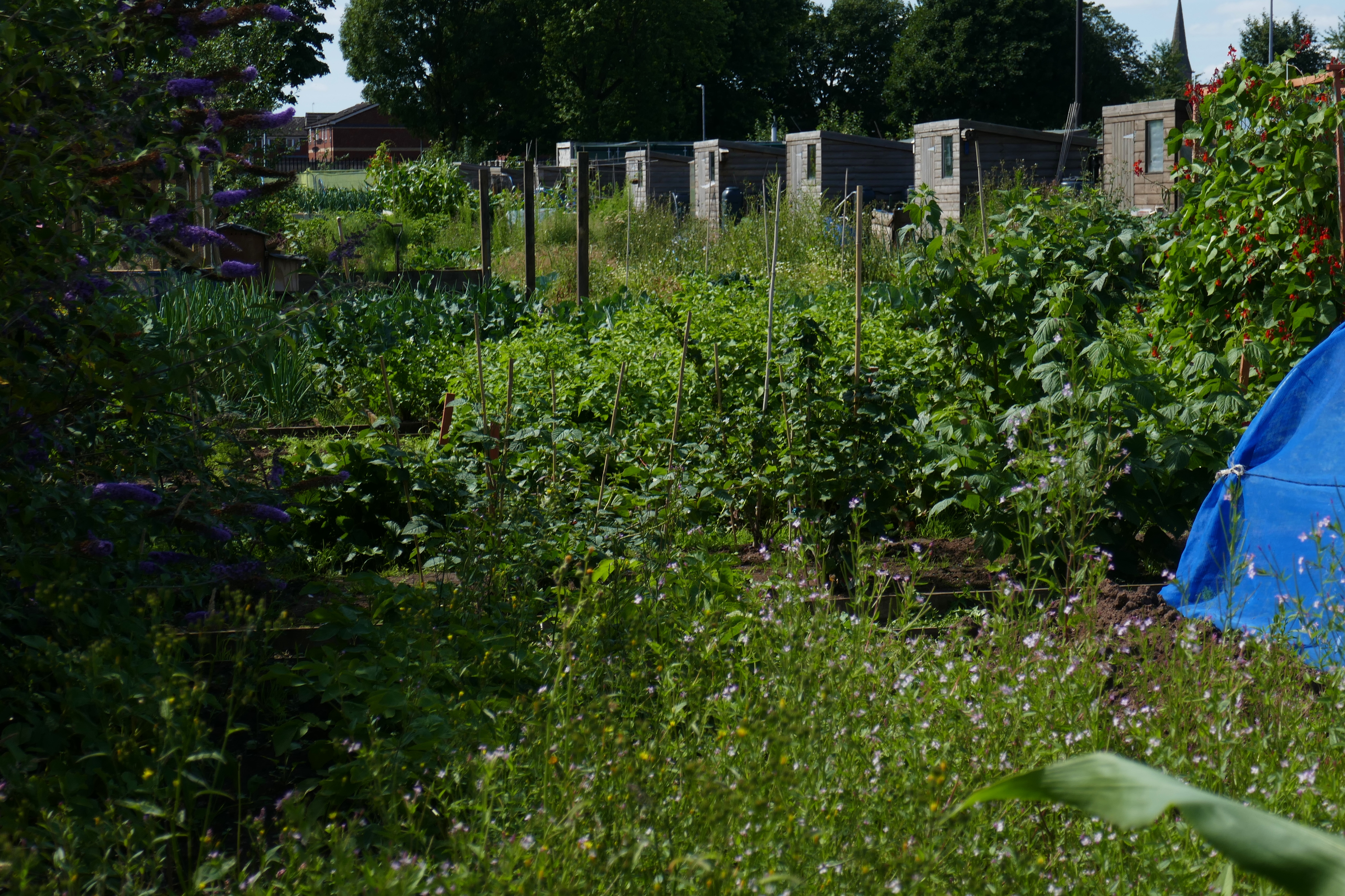
Summer crops at the allotments

There haven’t always been allotments in Ordsall and it took a long community-led campaign and lots of work and planning to get them.  For some time the Ordsall Allotment Association had members but no allotments but eventually the allotments were completed and the site was officially opened in 2014.  The allotments have transformed an area of derelict land in the centre of Ordsall in to a green oasis.  The site was formerly part of the centre of the estate and the Jubilee pub, a post office, and library were cleared as part of the redevelopment of Ordsall.  The former St Clements School site on Robert Hall Street had originally been identified for the allotments after the school closed in 2007.

The 23 allotments have now matured after three years of growing and I always stop to peer through the fence when I pass and see what is growing on the plots and admire the neat rows of sheds and vegetables.

In September the allotment members have an annual show where they showcase their produce, celebrate their achievement and compete for the best vegetables.