
Frugal hair cuts

20160525_094148
The Babyliss [for men] clipper
I will admit I was nervous trimming Mr BOTRA’s hair for the first time as I didn’t want to make him the laughing stock of his office.  Fortunately, we seem to have got away with it and no one asked him the name of his amateur hairdresser.

A few months ago we splashed out some of our hard-earned on hair clippers [of course after thinking about it for some months and researching the best options].  Although the cost of buying the hair clippers was about £50 this outlay does now mean that we can both have our hair cut for free.  Even though neither of us have ever visited any of the fancy salons in Manchester city centre, DIY hair cutting still saves us around £250 a year.  That means in just a few months the hair clippers have already paid for themselves.

As well as saving money, we no longer have to be a part of that painful experience of chatting to the hairdresser [maybe this awkwardness is just my socially inadequacy].  For Mr BOTRA and I, finding things to chat about to each other has never been a problem [we already know where we are going to go on holiday] so hair cuts at home are more relaxed and save time too.

Home hair cuts are not for everyone.  We are not able to create that perfect coiffured look at home but fortunately, that isn’t what we need.  Neither of us have any job interviews coming up, need to be mother-of-the-bride or need to impress anyone.  We understand that there are times when you might not want to have a home haircut.  What we are both interested in at the moment is looking reasonably tidy, having a short cut that is easy to wash and doesn’t take any styling and [of course] in saving money.




I have never met a strong person with an easy past

2014-06-11 2014 June La Banne d'Ordanche walk 006
Donkeys are said to bear a heavy burden

‘I have never met a strong person with an easy past’

I came across this quote recently, although I can’t find anyone to attribute it to and started thinking about it in terms of my own life.

I am not claiming that the past I have experienced has been particularly tough but I can see how the usual tough times have helped me to grow and become someone with the resilience to manage difficulties in a positive way, learn from my mistakes and maintain an inner strength.

To give readers a short history of some of those challenging times.  At the tender age of 21-years I had a few months when three events happened; my first husband left me for a new life with a mutual friend, the grandmother I loved very much and who lived next door died suddenly and my parents divorced.  For a while I coped with this badly and mooched around feeling sorry for myself and seeking sympathy from my friends.  However, I was young and I bounced back and as my attitude changed I felt stronger for the experiences I had been through and could see these had been life changing events.

I have now reached the age of 56-years and can’t help but be aware that this is the age my mother was when she died.  But although this rumbles in the background of my brain it feeds my optimism, rather than pessimism; I only carry some of her genes and there is no indication that I am going to drop off this planet in the near future [touch wood.]

We are shaped by our past and it makes us stronger and I think the death of my mother at a young age (and also the death of Mr BOTRA’s mother also coincidentally at 56-years) have made me the person I am; that is one who is determined to retire before I get too old to make the most of it.  These experiences have helped me set a course for financial independence.

I am not trying to give you a sob story but in the past I have also been made redundant from jobs I have given all my energy and enthusiasm to; been bullied by work colleagues that are just inadequate individuals and fluffed more job interviews than I care to really remember.  I have regrets; I have sometimes not been the friend I would like to be and I have tolerated people in my life who have sucked out my joyfulness and spat it in to the gutter for longer than I should have.

I don’t regret these experiences, they have all contributed to the person I am today and help me to enjoy today, taking control where I can, trying to accept what comes along and planning for the future that I want.

Working up to retirement

P1090134
Children playing in the river Torridge at Bideford

To update my previous blog post about the  uncertainty of my salaried work, this is now sorted and I am so pleased that I won’t have to travel to the windowless cave-office [yipee].  Instead I have managed to negotiate home-working from the end of June.  This means I can carry on working up to my retirement at the end of the year.

It is still a period of change in the office, as my co-workers are all being transferred to the precariousness of a new organisation that will be delivering the service or have successfully found different jobs to avoid the fun and games of the reorganisation.  Either way, I am going to miss seeing them all every week, hearing their news and helping them plan their holidays [I can’t help taking on this planning role for people whether they want it or not – I really missed my vocation as a travel agent].

So now my mind is turning to the pros and cons of home-working.  Will I lose the plot and miss other people so much that after just a few weeks I am talking to myself and have forgotten all my social skills [those who know me will ask what social skills]?  Will I miss the regular requests for money for leaving presents, wedding presents, new baby presents etc?  Will I be the person that sits in the local cafe relying on their WiFi and making one cup of coffee last hours just so that I can be around other people?  Or will I love the freedom to be able to put the washing in the machine as a break from the PC and rustle up our evening meal at lunch time?  Will I rattle through my work load and be even more productive because there are no interruptions?  Who knows.

I already work from home two days a week as a travel writer and so I have my home office space organised and I think I have the discipline to stop work, pack it all away and not look at it again until my next working day.  I will be able to keep in touch on the telephone but I will also meet with my manager and other colleagues at least once a month and I hope that will be enough to stop me being too isolated.

On the finance and savings front I think it is a win-win.  Although I will have heating costs from working at home [unless I spend lots of time in the cafe] I won’t have travel costs plus I will be earning money that I wasn’t expecting to be earning just a couple of months ago.  I always take in my own lunch [but no more office microwave for heating up left overs] so that cost won’t change.  Currently my employer generously pays for the numerous cups of tea and coffee I drink during the day, so I will miss that perk.

And yet every day I am working at home I will remember that at least I have a window and a view of our gardens.


Just the two of us …

cocktails.jpeg
Splashing out on cocktails

It was Mr BOTRA’s birthday a little while ago [apologies this blog post isn’t as up-to-date as it could be].  We have always been frugal with presents and don’t buy expensive gifts for birthdays [we either need things and buy them or it is just stuff we don’t need] but I did buy him something to read and some of his favourite chocolates.

Along with these gifts I wrote a note promising to buy him cocktails down at The Lime Bar on Salford Quays.  You might say one of two things to this;  it is either no big deal or an extravagance too far for two people who are saving up for early retirement.  However, it was a lovely and enjoyable gift for both of us, as we got to spend time together, just the two of us.

We eat out or have drinks fairly regularly in Salford and Manchester but always with friends, sometimes to celebrate something or sometimes just as an excuse to get together or before seeing a band or going to the theatre.  We enjoy these sociable occasions and want to continue being able to afford these luxuries [necessities].  However, going out for drinks or a meal when it is just the two of us is an indulgence;  after all if we want to chat to each other we can do this at home.

And we do chat and talk at home; we talk about what we have been up to during the day, our plans and hopes for the future, our friends and family, what we are reading, the state of the nation, our finances and little things we have seen that have amused us [of course we also argue sometimes].

But it turned out that being ‘out’, that is away from the flat, was different.  It meant that we weren’t distracted by chores or projects, the internet or the radio and so our time at The Lime Bar was special because I was able to just enjoy being with my lovely partner.  We enjoyed good cocktails and nattered and I remembered why I have been happily married to him for over 30-years.  Is that so extravagant?

A labyrinth is a symbolic journey

2011 March Grassington signpost with grid reference
A map always helps to decide which way to go

I love maps!  I gaze at them and imagine journeys I can take and try and picture the places they represent.  My fingers follow the patterns of the paths, rivers and ridges and how these affect the pattern of the towns and villages.  For me, maps open up possibilities and going out with a map gives me the confidence to explore; this also means that without a map I feel a bit lost and all-at-sea.

I like to think of our plan for early retirement and financial independence as a map.  This map also has a path I am wandering along but the benefit of the map is that I can spot the opportunities for short-cuts and longer more scenic routes, should I fancy deviating from the path.  This map gives me confidence and the ability to be flexible around the route Mr BOTRA and I have mapped out and with this map I am hopeful that I won’t end up in a dead end or get lost along the way.

And so, not surprisingly, I love the look of these literary maps.  They are designed as a sort of mobile and self-taught creative writing course, with exercises to help a writer explore a particular environment.  There is a writing map for the city, for cafes and bookshops, for writing by the sea and in crowded places  and others.  Each map is designed by a different person and is a beautiful item to own and look at and make use of.  I am hoping someone buys at least one for me some time soon.

As a travel writer and a blog writer I am not too proud to take any help I can get.  I get loads of inspiration from other people’s blogs, from conversations with other people, from observation and from reading.  These literary maps look like a great way to initiate the generation of new ideas in my brain.  Take a look and let me know how you find inspiration for your ideas, projects and writing.

A quick word on the quote I have used: “A labyrinth is a symbolic journey . . . but it is a map we can really walk on, blurring the difference between map and world.” From Rebecca Solnit wonderful book Wanderlust: A History of Walking.

Emotions vs economics

P1080525
Our beautiful insulated cafetiere and milk pan make great coffee and so make me happy

According to the National Employment Savings Trust (NEST) in the UK we have spent £6.2billion in the last five years on stuff we don’t need and rarely use.  If you thought that each of these impulse purchases added another day or two to your working life would you still buy that exercise machine, that electronic soup maker or that juicer that languishes at the back of a cupboard?  For me, having a goal to retire early helps to put a brake on the impulse to buy.  But everyone has to work it out for themselves and there are some interesting purchases listed here that are regretted and are now languishing in someone’s attic.

Of course, if you use your juicer every day, after exercising in your spare room and filling your soup maker then these products weren’t a wasted impulse buy for you … but we all have at least one guilty secret don’t we?  Even Mr BOTRA and I bought a rowing machine some years ago that was soon listed on Ebay.  Our insulated cafetiere and lovely milk pan [pictured above] by contrast was a well thought out purchase [for us] as it means that we can make good coffee in our ‘van that hasn’t become tepid before it is ready to drink [thus saving money in cafes].

Psychology Today considers there are reasons why we impulse buy; it might be that we love shopping or we don’t want to miss a bargain; because we are offered three for two or we have delusions that this new thingamajig will save us time or money or make us a better person.  What it comes down to is that humans often make an emotional decision about an economic activity.  Psychology Today also offers techniques for avoiding impulse buying.  The NEST article ends optimistically, suggesting that individuals learn from their impulse buying mistakes and all those regretted purchases are certainly the backbone of Ebay.

Mr BOTRA and I have had an expensive month [even though February is so short] and I am certainly not going to lecture anyone on their own purchasing choices.  But our shopping wasn’t done impulsively.  I follow a simple process to avoid wasting money; I write down what I think I want to buy [I don’t do this for groceries you understand], consider it for at least four weeks and finally decide if it is something we still need rather than want.  For us, walking boots and warm winter coats have all worn out recently and we opted to buy quality replacements that make a bigger hole in the budget but will [hopefully] last longer.  We have also made two recent purchases that will result in long-term savings.  The first is thermal vests; as I get older I become more of a wimp that craves the sunshine and warmth of summer; comfy and cosy thermals should keep the chills at bay and the heating bills down.  Secondly, after many months of deliberation, we have bought hair clippers that will save money on hair cutting and soon pay for themselves.


Counting the pennies for treats

20160206_112203

Back in the day (before Mr BOTRA and I went on our twelve month trip in the campervan around Southern Europe) we had a daily ritual of emptying our pockets, purses and wallets of any small change, from 50p downwards and putting it in a piggy bank.  Every couple of months the piggy bank would feel heavy enough and we would spend an hour of a wet Sunday afternoon counting the change into neat piles, putting it in plastic coin bags and depositing it in the bank later that week.  In a year we would accumulate about £250 just from the change in our pockets.

In those days we kept this money separate from our other savings and twice a year in January and August we would spent the small-change-savings in the Rohan sale.  Rohan sell travel and outdoor clothing that is high quality, easy to wash and quick to dry, doesn’t require ironing and of course looks great.  Part of the plan for the twelve month trip away in a small campervan was to maximise the space and practicality of the trip by taking only clothing that fitted those criteria.  We didn’t take Rohan gear exclusively but they were a large part of our wardrobe and still are.

Using the savings from our small change to buy what is (for us) fairly expensive clothing was an excellent way of making this affordable, allowing us to have a bi-annual treat and taking us towards our goal of a quick-drying, iron-free wardrobe.  For two people who don’t really enjoy shopping, these trips to the Rohan shop were anticipated with excitement and were all the more enjoyable for being funded by our pennies.

This seemed such a great way to treat ourselves without feeling guilty about using our savings.  Our treat was technical clothing but yours might be anything;  eating out, theatre tickets, computer games, books, holidays, music or tickets for rock concerts.  The key to success with this seemed to be the discipline of only spending what we have saved and buying something for both of us.

Today we spend our days mostly wearing technical outdoor gear and have been able to completely do away with the ironing ritual.  The outdoor clothing we have is mostly of such a high quality that I am confident some of it will see me out for the next 30 years of my life.

Nowadays we no longer need to buy any clothing or really feel a need for any expensive treats but we have kept the ritual of emptying our purses of change every evening.  The amount has reduced in the last few years as more of our spending is using plastic, rather than cash, but it still adds up to about £120 a year and this currently is added in to our fund for financial independence, rather than being earmarked for specific spending.  Perhaps when we finish work and are living off our savings we might once again use our small change savings for some sort of treat.


Magical and almost glamorous shoe cleaning?

20160209_080007

To get even a mention on this blog products have to be exceptionally good value; that is they are either really cheap or they hit all corners of the BOTRA-trinity of being affordable, high quality and long-lasting.  The wonderful Leather Genie shoe polish pushes these buttons and works better than any shoe cleaning product we have every used before.

When it comes to shoe cleaning Mr BOTRA and I don’t generally get over-excited but we have found this fantastic product saves us both money and time … a win-win in anyone’s books.

We found this super merchandise in an unlikely place.  We were strolling around the Caravan and Motorhome Show in Manchester last year, admiring ‘vans we couldn’t afford / didn’t need and looking at accessories we didn’t want when we spotted a shoe cleaning stall.  As usual my shoes needed some TLC and so I stopped to see what the fuss was about.  In just a few minutes the salesperson bought my shamefully scruffy walking shoes up to such a lovely shine I was astonished.  And yet, we don’t make snap purchasing decisions in the BOTRA household and so we had to do a few circuits of the venue mulling over the spending of £13 before we returned to the stall and came away with our very own pot of Leather Genie.

Leather Genie uses jo joba oil to give a shine to your leather, be it shoes, furniture or clothing.  The polish is quickly applied with a sponge in a no-mess fashion and shining your shoes takes only a minute or two and gives a grease-free lustre to leather in any colour.

No one would call me a smartly-dressed individual, my preferred look is comfy walking gear and that includes my shoes.  That said, I don’t like to waste money and throw shoes away just because they are scuffed.  I had a pair of burgundy leather shoes whose soles still had plenty of wear but which all sorts of cleaning products had failed to bring back to any sort of sheen and even I had become too ashamed to wear them for anything beyond going out to the bins.  A quick rub with the Leather Genie and these shoes were once again presentable, now that is a result.

I am not an enthusiastic shoe cleaner, as you can probably guess, and generally grab a pair of shoes just before I head through the door and as I put them on realise how shabby they look.  Because the Leather Genie is colourless and smells pleasant it is possible to quickly shine up my shoes without getting messy black / brown polish over my clothes and still get out of the house on time; this may not be glamorous but it is pretty cool.

We have had our tub of this magical shoe cleaning polish for over twelve months now and it looks like it will last a few more years, so £13 from the family budget well spent.


Comfortable in the cheap end of town


20120804_154817
Salford Quays isn’t the cheap end of Salford

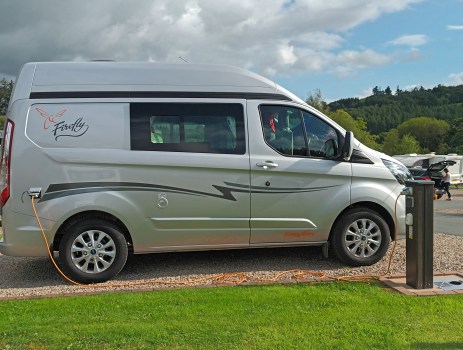
We have spent our adult lives determined not to be defined by our possessions.  We have dressed in charity shop bargain finds and always been a few years behind the fashion;  we’ve camped and self-catered rather than had luxury holidays; we’ve managed with bicycles and no car and we’ve always lived in housing that is at the cheap end of the scale.  I know we now own a pretty new camper van but I don’t feel a need to justify this, it will last us years and doing without a camper van would be like sawing an arm off (… okay I realise I have just justified the owning of the ‘van right there).

At our time of life (in our 50s) we have a bunch of friends who own big houses full of expensive furniture, carry designer handbags and take holidays to exotic far-flung locations, fortunately they are prepared to be friends with such a thrifty couple.  When we first down-sized and moved to our small flat in the cheapest end of Salford (and Salford itself is the cheap end of Greater Manchester) we felt too ashamed to invite visitors round; what would they think of our frugal housing choice, how would they judge us?  After seven years living in our tiny home we are now more comfortable with the choice we made as it is clear that the decision is paying off and we are near to our goal of financial independence and early retirement.  We are mortgage-free, own a small flat that is inexpensive to heat and maintain and live in a development that has good security; useful for a couple who are always away in their camper van.

There are times when our choice is more difficult to deal with than others and particularly when it is our turn to host book group.  This involves entertaining and feeding ten people and we do it by squashing them around our dining table using an array of cheap folding chairs.  At first we were embarrassed that everyone has to shuffle around when one of the group wants to use the bathroom and that there is only comfy chair space for five, discouraging relaxing and chatting into the night (as we are getting too old to sit on the floor).  Now we are just grateful that our very good friends are willing to put up with this discomfort and visit and they don’t complain or judge us.

I am happy that we have lovely friends who accept our decisions, even though they are very different from their own and this helps us to feel comfortable living in the cheap end of town.


I saved my money

We are often asked how two low-paid public sector workers managed to afford a new campervan.  There is no mystery to this, we didn’t find a lucky money tree, win the lottery or rob a bank, the answer is that we saved our money to achieve our dream.

P1080174This (and perhaps my love of the west coast of Scotland) is why I feel a connection to the Deacon Blue song Dignity.  If you don’t know this song, you can hear Deacon Blue version here.  I became reacquainted with this beautiful song when the singer-songwriter Karine Polwart played her own version of this 1987 hit at a gig last year, after playing it at the National Theatre of Scotland Blabbermouth event in 2014.  This was a twelve hour celebration of Scottish music and spoken word on the eve of the Scottish referendum and you can see her playing it in this video.

The song is about a man who works for the council and is mocked by local children but who has a dream; over the years he saves his money to achieve his goal.  The song reminds us that no one is who they might seem at first glance and celebrates the hopes and dreams of those who work in humble but essential jobs.

I had dreamt about owning a campervan since I was 13-years old and although there were many years when this and a twelve month gap year in a van seemed unachievable and impractical Mr BOTRA and I got there eventually and the adventures are told on my first blog.  Now we are saving for early retirement because for us there is no dignity in working until we drop.

Dignity lyrics

There’s a man I meet
Walks up our street
He’s a worker for the council
Has been twenty years
And he takes no lip off nobody
And litter off the gutter
Puts it in a bag
And never thinks to mutter
And he packs his lunch in a Sunblest bag
The children call him Bogie
He never lets on
But I know ’cause he once told me
He let me know a secret
About the money in his kitty
He’s gonna buy a dinghy
Gonna call her Dignity

And I’ll sail her up the west coast
Through villages and towns
I’ll be on my holidays
They’ll be doing their rounds
They’ll ask me how I got her I’ll say
I saved my money
They’ll say isn’t she pretty
That ship called Dignity

And I’m telling this story
In a faraway scene
Sipping down Raki
And reading Maynard Keynes
And I’m thinking about home
And all that means
And a place in the winter
For Dignity

Chorus

Set it up (repeat)

And I’m thinking about home
And I’m thinking about faith
And I’m thinking about work
And I’m thinking
How good it would be
To be here some day
On a ship called Dignity
A ship called Dignity
That ship