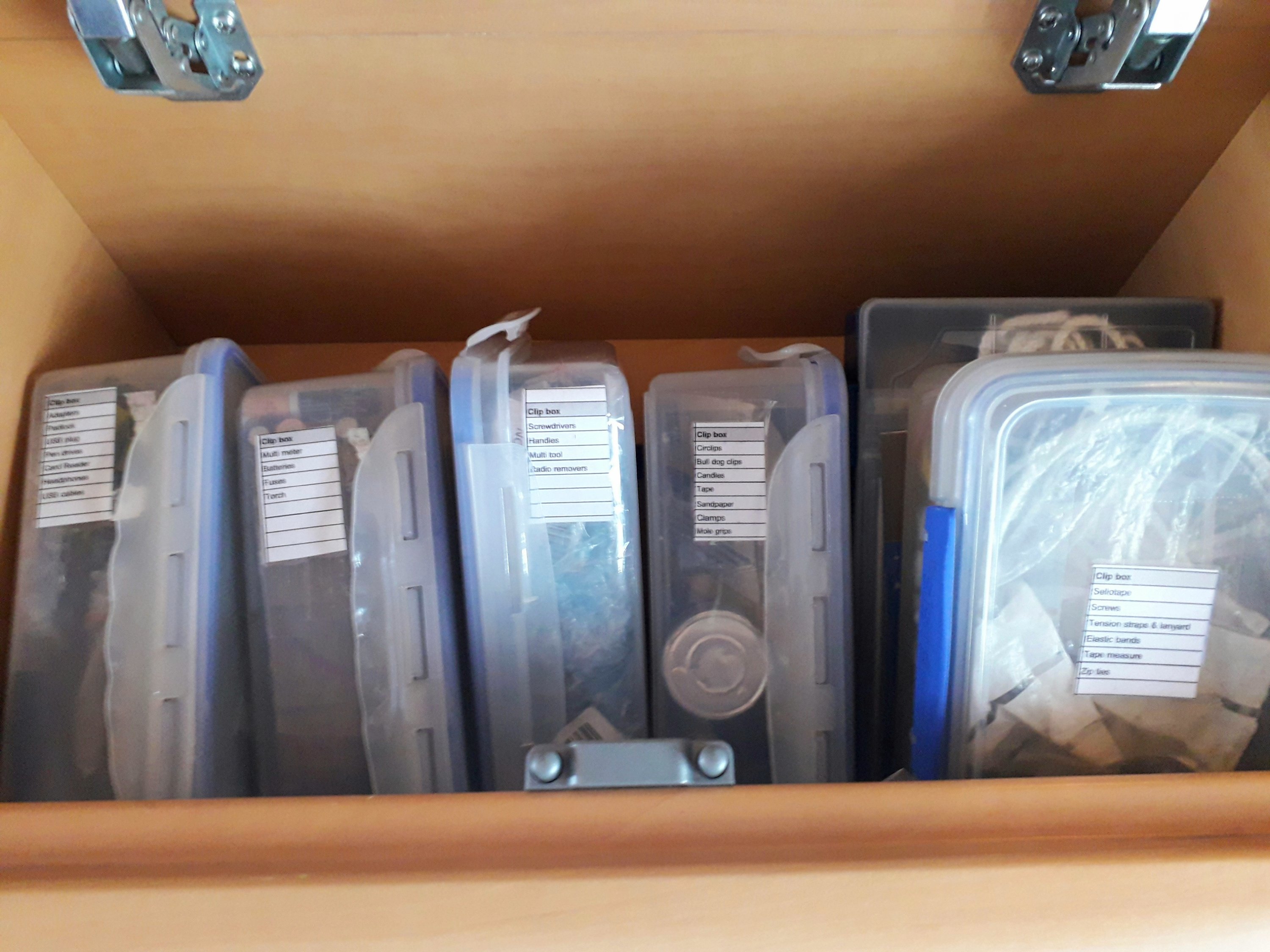
Does everyone carry zip ties in their campervan? Certainly without these handy plastic ties in our campervan spares cupboard we would sometimes struggle to stay on the road. I am old enough to remember the days before zip ties but still find it hard to think how we managed without these small bits of nylon in the past. We have used zip ties to hold lights onto bikes when the mount has broken; they have replaced broken handles on bags, held together rolled up blankets and more recently were essential for a makeshift [but solid] repair on our Renault Master.
According to Wikipedia, Cable ties were the invention of Maurus C Logan of the electrical company Thomas & Betts. Appearing in 1958 under the brand name Ty-Rap they were initially designed to organise and keep tidy the multiple lengths of cabling in aeroplanes and Logan spent a few years working out the design. They are, of course, still really useful for that original purpose as we now have multiple lengths of cabling that needs organising in our home.
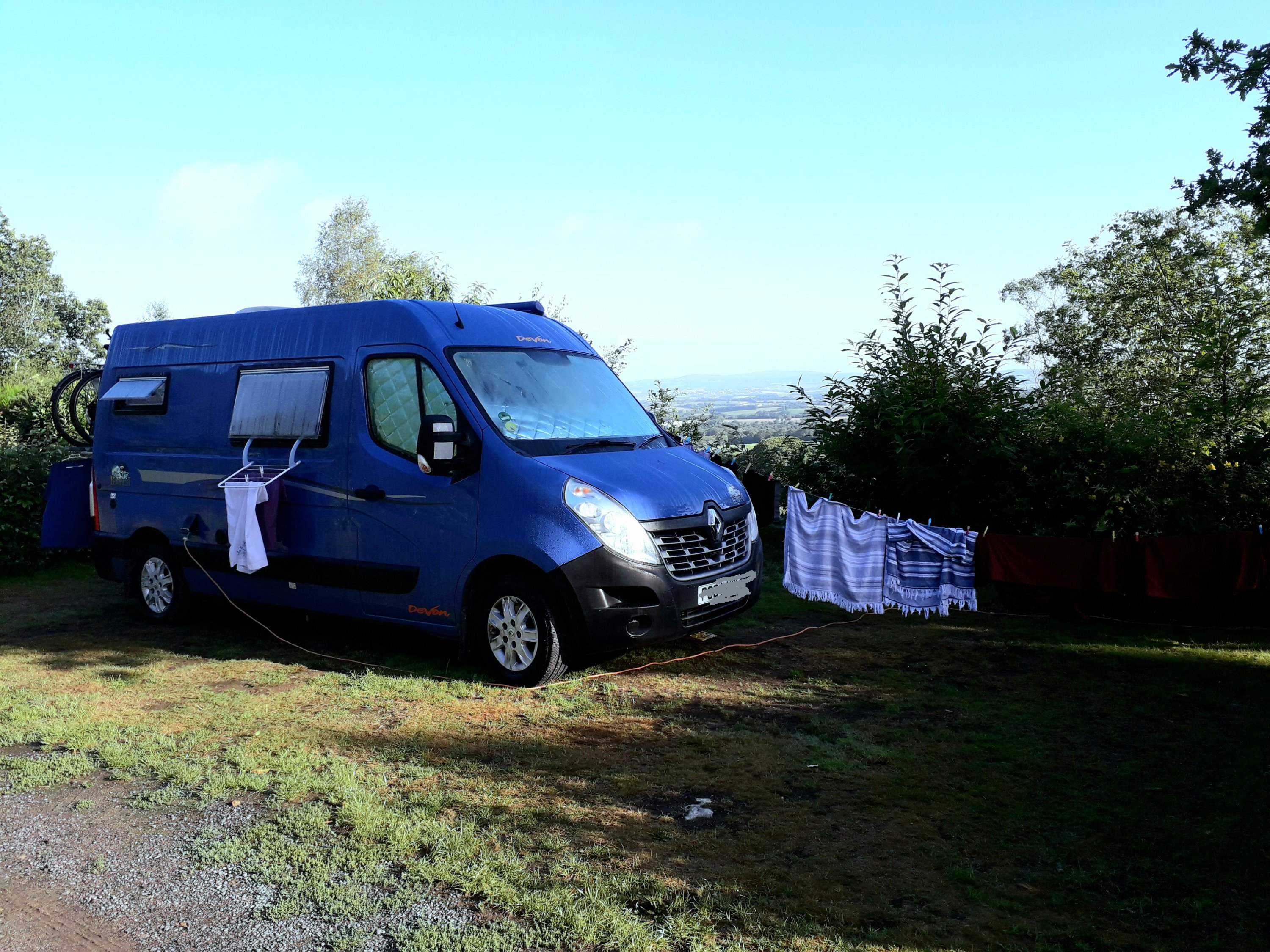
I like to get our van serviced and checked regularly, so before we set off on our trip to France we took our campervan into the local garage. We needed some new front brake pads and oil changes were due. It seemed worth getting these things sorted before travelling so that we could be sure the Blue Bus would have a trouble-free trip. Unfortunately, this forethought had the opposite result as the garage didn’t quite put our Renault back together in the way they had found it.
Driving down to Portsmouth for the St Malo ferry there was an alarming banging noise from the front wheel at between 65 and 70 mph. We slowed down and pottered into the next services to stop and take a look. It seemed the cover over one of the wheel arches was flapping as the bolts that hold it in place had come loose. In our campervan we have one cupboard devoted to things that are useful for repairs. Here we keep various kinds of tape, spare handles, superglue, waterproof clothing repair kits, needles and thread, tools and of course zip ties. In this instance the reel of strong tape held the flapping plastic still and the rest of our journey to Portsmouth was uneventful apart from the three hour traffic jam that almost made us miss the boat!
We thought that was the end of the matter but should have known better. A few days later I was doing some stretching exercises on the ground beside the ‘van, glancing underneath I noticed something hanging down that shouldn’t be. Further investigation revealed that when the garage had carried out the service they hadn’t fixed the plastic cowling under the engine [the under-engine undertray] back in properly and it was now hanging down low just waiting to be caught on an unsuspecting speed bump.
We do have breakdown cover but decided to have a go at fixing it ourselves and so lying on the outdoor mat I had been exercising on, Mr BOTRA lay under the confines of our campervan while I handed the appropriate sized zip tie to him. He fixed three of these in the holes where the missing bolts should be. We checked the repair regular but this temporary fix saw us around the rest of Brittany and back home from Portsmouth. They worked so well I wonder if Renault should consider using cheap zip ties instead of the bolts that the garage had failed to fix properly.
Our quarantine is almost over and after the excitement of the dentist trip on day one of freedom, day two will involve a trip to the garage to give them the chance to put right their mistake.
I have a mixed relationship with uncertainty. While it can be a marvellous travelling companion, bringing us unexpected pleasures such as finding a pretty village on a fantastic walk or stumbling across a fair when we only stopped in the town for coffee. The uncertainty I experience when there is a problem or after something goes wrong is less enjoyable. Problems with our campervan, such as our little Greek incident, send my anxiety levels sky high. These days I am struggling to stop my brain from descending into a worried spiral as our plans to travel in our campervan are regularly disrupted overnight.
I have written before about the travelling plans we had made for the spring BC [before coronavirus] and how these were ditched during lock down. As restrictions relaxed and then campsites re-opened DC [during coronavirus] I tentatively began to pencil in some trips away in our Blue Bus. We decided to stay local and we enjoyed some wonderful active and safe holidays in the Lake District through July, knowing we could get home in an hour or so if we needed.
I understand that we are still in DC and that this virus has not gone away. We continue to socially distance, we wash our hands thoroughly as often as possible and we wear our masks when we need to. Looking forwards in June, I imagined that life in the UK would have settled into a management stage by now as we learned to live with the virus. I thought this would lead to a bit more certainty and our future travel plans could be more concrete into the autumn. Apparently not! Although I had accepted that we would be unable to visit the wonderful country of Portugal this year, I had started to get hopeful that we would be able to travel around beautiful Spain in September and October, using the ferry booking we had made in those carefree January days. My cautious optimism was dashed on the 25th July when it was announced that the Foreign Office no longer recommended travel to Spain.
I like to think of myself as adaptable but this skill has been severely tried this year. I find I dare not even write about what our plans are now, firstly because they change so often and secondly because putting it in black and white might jinx things. What is certain is that we will not be packing until the day before our next trip [having to unpack without going away is too depressing] and if we do get away we won’t have any activities even pencilled in. Perhaps I am being too pessimistic and cautious but in these ever uncertain times it is hard to dream that anything will have a positive outcome.
Does it help to keep up-to-date with the news, or is that just another source of anxiety? Sorting the rumours from the truth is important but takes time and these days my own careful assessment of risk means nothing if the Government decides to show their resolve by stamping down on what I can do.
I don’t have a crystal ball, I don’t know what tomorrow will bring but I do know that even the uncertainties seemed more certain in my BC world! I could worry about illness or mechanical problems almost carelessly, confident that the risk of those things happening was small. My over active imagination never conjured up anything like the constantly changing restrictions and rules we have been living with DC in the UK.
Uncertainty and certainty are both part of life and I know I can’t control everything but at the moment all I can really try and control are my thoughts. I could disappear into a pool of my own despondency. Instead I make myself sit with my uncertainties and anxieties and write about them. This does help. I feel all the emotions and then send them on their way, leaving me to focus on staying in the present, co-operating with the inevitable and accepting that this new super-charged uncertainty is here to stay.
Many of us want somewhere to take our campervan that is away from the crowds, has plenty of footpaths, lovely views and a few attractions. If this is what you are looking for then the Arnside and Silverdale Area of Outstanding Natural Beauty on the north Lancashire south Cumbria border is a great choice. This small area bounded by the stunning Morecambe Bay and the River Kent has been a favourite destination of ours for the last 30-plus years. When we lived in Preston and were enjoying a car-free existence it was a lovely area that was accessible by train for walks. Once we had a campervan it became a go-to destination for a few days away on our own and with friends. Although only a small area it is packed with variety.
The area’s big draw for wildlife lovers is the RSPB’s reserve at Leighton Moss but there are also historic and heritage attractions and some marvellous and varied walking. Where else can you be pottering along a craggy coast in the morning and after lunch be sauntering through pretty woodland or following the shores of a small lake to a limestone pavement? This is truly a diverse landscape, with so much to offer.
I have lost count of the number of holidays we have had in this area, in good and bad weather but I always return home loving it more. If you’ve never been to Arnside and Silverdale think about planning a few days or even a week or so in this wonderful area.
Here are some ideas to help you make the most of a camping trip to this area:
Campsites
Most recently we stayed at Hawes Villa Camping, a small reasonably priced site with some basic facilities and great walking right from the step of your campervan with Hawes Water just ten minutes away.
If you want a site with full facilities then the more expensive Holgates Silverdale site might suit you. The large site has a pool, bar/restaurant, shop and play area. It is also in a beautiful position on the edge of the village. Holgates Hollins Farm site is nearer to Arnside Crag and is quieter but still has an excellent sanitary block.
We have walked by Gibraltar Farm campsite many times but never camped here. I do know it has plenty of fans and as it sells its own ice-cream I will get there soon!
You can find a few quiet wild camping spots too.
Walking is the best way to get to know this area
To get the most out of walks an OS map or the Cicerone walking guide are both helpful.
The Fairy Steps – You can walk to this limestone escarpment either from Arnside or from Hawes Villa Camping. Climbing up the path through the woodland from Hazelslack you will come to a limestone escarpment that at first glance is impregnable. Look carefully and you will find a narrow gash through the limestone and a series of steps to the top. Popping out onto a grassy ledge you have a splendid view over to the Kent estuary. As you squeeze up the gash in the steps you can try and climb without touching the sides so that the fairies will grant you a wish. Good luck with that!
Arnside Knott – Arnside nestles on the slopes of Arnside Knott, a limestone hill with tree-covered slopes that reveals stunning views over the Kent Estuary and Morecambe Bay. It is a straightforward but steep walk, either from Arnside or from either of the Holgates campsites.
The coast – There are footpaths around pretty much all of the coast here. Highlights include the old tall chimney at Jenny Brown’s Point and the lime kiln near to Gibraltar Farm campsite, the pretty and sheltered cove at Silverdale, the stunning mixture of craggy coast, bays and woodland around Arnside Knott and the dyke and salt marshes from Arnside to Storth.
Eaves Wood – Meander through this lovely wood and climb to the viewpoint where you will find the Pepperpot, a monument built to commemorate the Jubilee of Queen Victoria. The Silverdale Holgates campsite is on the edge of Eaves Wood and the paths can be easily accessed from the site.
Gait Barrows National Nature Reserve and limestone pavement – From Hawes Villa Camping walk by Hawes Water and you come to Gait Barrow, an expanse of grey limestone pavement cut with grykes and dotted with low-growing trees. No dogs are allowed on the pavement.
Dallam Tower Deer Park and Beetham – A longer walk from Hawes Villa Camping could take you to the pretty village of Beetham. The path from Heron Mill at Beetham takes you uphill over pasture. As you walk look out for the herd of fallow deer that are kept here. Walking down the hill, with the stately Georgian Dallam Tower on your left, you reach a pretty section of the River Bela before it runs into the Kent. Cross the river and you will be in Milnthorpe.
Things to see and do
RSPB Leighton Moss – Open all year, the expansive reed bed is home to a wide range of wildlife; as well as fantastic wildfowl and marsh harriers there are otters and red deer. There are trails to walk, hides and amazing views from the Sky Tower.
Leighton Hall – Open limited days from the beginning of May to the end of September, this historic house has links with the Gillow furniture makers.
Heron Mill, Beetham – This restored and working corn mill in normal times [BC] is open Wednesday to Sunday for most of the year. There are tours when you can see the waterwheel working.
The train from Arnside or Silverdale to Grange-over-Sands – On the railway line from Arnside you cross the 505 m long viaduct over the River Kent. Grange-over-Sands has a lovely railway station, a pleasant park and a selection of good cafes and interesting shops.
Carnforth – The black and white film, Brief Encounter was filmed in Carnforth. Take the train or drive to Carnforth Station Heritage Centre and The Brief Encounter tea room. Afterwards spend some time browsing the rambling bookshop across the road; I have never walked out of this wonderful shop without at least one great book.
Warton Old Rectory – This ruined 14th century house is in the pleasant village of Warton and is free to explore. Afterwards visit the church and find out why this small village has links to George Washington, the US President. From the village you can also walk over Warton Crag.
An Arnside teashop – Everyone has their favourites; the Old Bakehouse is justifiably popular, Posh Sardine is recommended, there is a chip shop and on a sunny day you can enjoy a pint with a view at The Albion.
A cross bay walk – Check out the Guide Over the Sands events page for dates of the planned cross bay walks. In the summer this is an exceptional way to enjoy the beauty of Morecambe Bay. Led across the sands and mudflats by the Queen’s Official Guide, the walk is about eight miles, takes three to four hours and will involve wading through water that is at least knee deep. During the coronavirus pandemic these guided walks have been cancelled but they will hopefully return in the future.
I thought I was one of those people that plans for the unexpected, always thinking about the worst that could happen but even I never imagined there would be a life I would have to live where we couldn’t take our campervan away on a camping holiday. I had thought ill health might stop us travelling, or money, or a breakdown or maybe a ferry strike would keep us in the UK but not being able to stay overnight anywhere for over three months! That scenario was never on my radar until March 2020.
We were at home, where else, when the confirmation that campsites could open on 4 July 2020 was announced. Like all these political proclamations, everyone had expected it for days but to get the news was a relief … you would think. After the initial elation, I found that new anxieties floated to the surface. My head fretted that something would go wrong. Covid 19 certainly hasn’t gone away and is here for a long time if not forever. This means that any number of things could happen that could lead to a loss of freedom once again if we aren’t managing it sensibly. Covid 19 cases could increase again and even if there is no evidence that camping is the culprit, someone could decide it has to stop. I worried that this could even happen before 4 July arrived. I wanted to get out camping that night, not have to wait eleven long days!
Many people are still wary about going away from home and I understand this but I almost feel that if we don’t go straight away we may stay at home and never travel again. Travelling is an important part of me and I dislike being confined to home, but even I have felt my expectations falling and my horizons lowering over the months at home and I am aware that there is a hint of apprehension about getting on the road again.
This week I have been checking the cupboards in the ‘van, filling them with what we need and anticipating being away camping again with a combination of joy and a bit of a tear in my eye. On the eve of the 4th July, I feel a mixture of trembling excitement and sick anxiety and it feels important to work through this. I need to crack on and get out into the big world again.
All being well, we will be camping, along with plenty of other people, on July 4th and I expect we will get back into the swing of it and after a week or so feel like we have never been away. I don’t think I will ever take the freedom to travel for granted again. We are starting slowly, camping not far from home and mostly on sites with no facilities.
I know we are lucky to have some amazing places nearby, to be alive and healthy, to have each other and to own a campervan. I will be so happy to be back out in our Blue Bus and once again smiling to myself when I wake up as I remember I am in our campervan. I can’t wait to have days when I have no idea what will happen and where we will end up. Tomorrow I will be back on the road again!
Will life become divided into BC [Before coronavirus} and AC [After coronavirus]? And I think I need a category DC (During coronavirus] as this pandemic is likely to be with us for a year or two. Looking back on camping trips we made before lock down they have a happy-go-lucky almost dreamlike quality that I don’t see returning for some time. We took stopping at a cafe, visiting a museum and, of course, camping, not exactly for granted but certainly something we had the freedom to do when we wanted. All this changed in the UK on 23 March 2020 and although things have begun to re-open, as I spend DC standing on a 2 metre line to queue and video calling friends I can’t say the experience is like it was in BC.
Our last BC camping trip was to Torridon in Scotland. We set off in March expecting to be touring this wonderful country for a month and hiking through some of its glorious countryside. Even though our trip was cut short by the virus, we had a wonderful few days before we had to return all the way home.
We have stayed in Torridon, on the west coast of Scotland, before but the last time we were there together on a walking holiday the UK was at war with Argentina over the Falklands Islands. We were looking forward to a much delayed revisit.
Walks from Kinlochewe
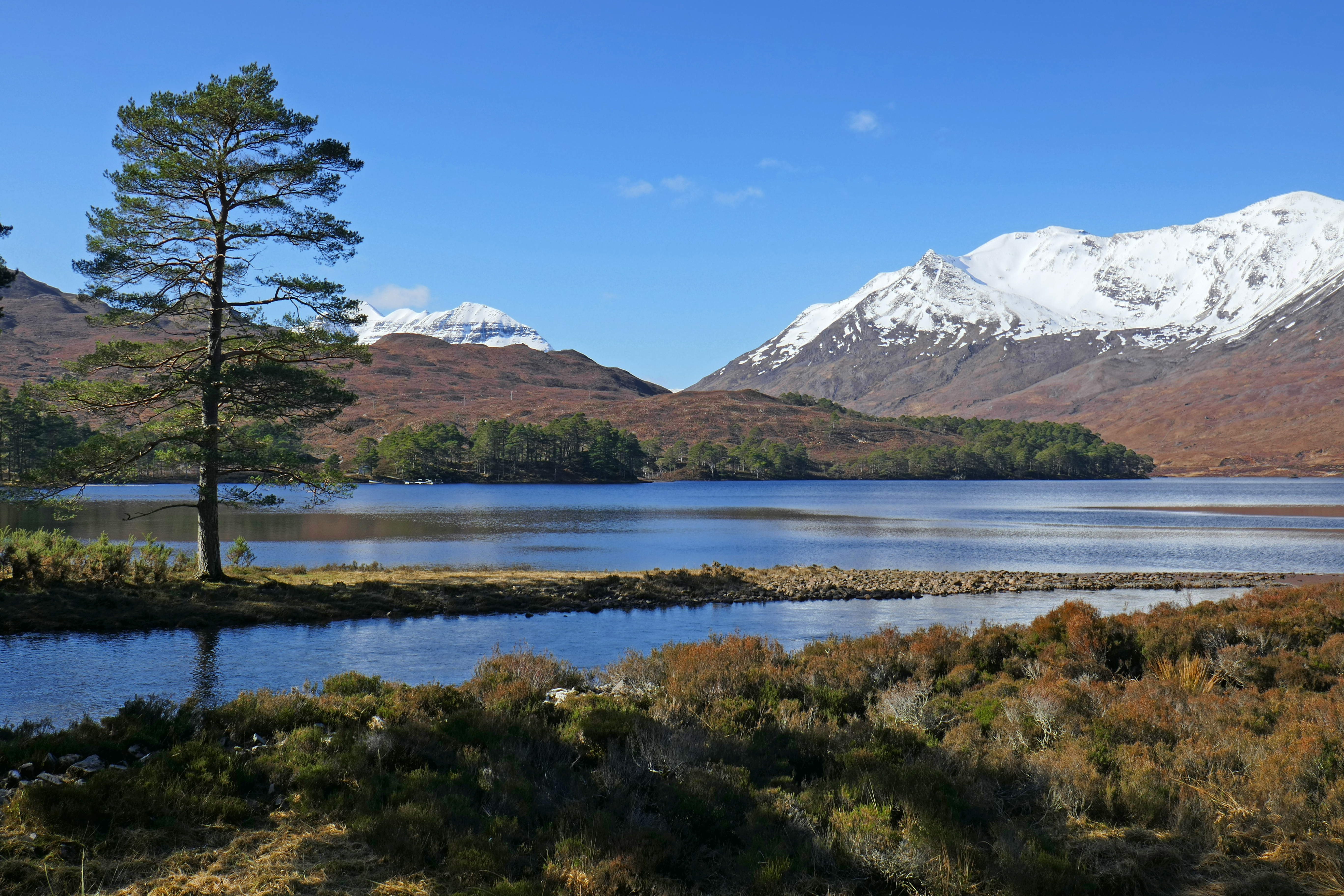
You couldn’t ask for better weather the day we followed the tracks and paths around Loch Clair and Loch Coulin. With blue sky and snow still lying on the mountains, the views over the lochs to the distinctive peaks of Liathach and Beinn Eighe took my breath away. The walk is mostly flat and easy to follow for 9 km / 5.5 miles. More details on the Walk Highlands website.
From the Kinlochewe campsite we walked to Loch Maree and along Gleann Bianasdail. This is the approach to Slioch, the craggy high mountain by the loch, but on a cloudy day we stayed low, walking about 16 km / 10 miles. The walk along the river to the loch is a pleasant and easy 10 km return and takes you by the old cemetery and through beautiful gnarled trees covered in lichen. The footbridge over the roaring waterfall might be where some would turn back but we continued up Gleann Bianasdail. Keep a look out for the wild goats that scamper up the steep hillsides here and are delightful to see, we also spotted some red deer. The views back to Loch Maree as you climb higher are worth the longer walk and the river gorge has some vibrant green Scots pine trees huddled along its banks.
Walking there and back the same way when the views are so varied and awe-inspiring is no hardship and I have no hesitation in recommending the 13 km / 8 mile return trip to Loch Grobaig, a tiny loch in the trough between the mountains of Liathach and Beinn Eighe. Starting at the small car park above Torridon House, the path follows the river, through woodland that soon opens out to moorland and a stony and occasionally boggy path. Beinn Alligin looms to your left, the snowy slopes of Beinn Eighe pop up ahead and to your right are the steep slopes and crenellated ridge of Liathach. Following the river, a dipper bobbed along the rushing water between the rocks. As we gained height we looked back for the views of Upper Loch Torridon. We had Loch Grobaig to ourselves and as we ate our lunch I felt embraced by isolation and magnificence.
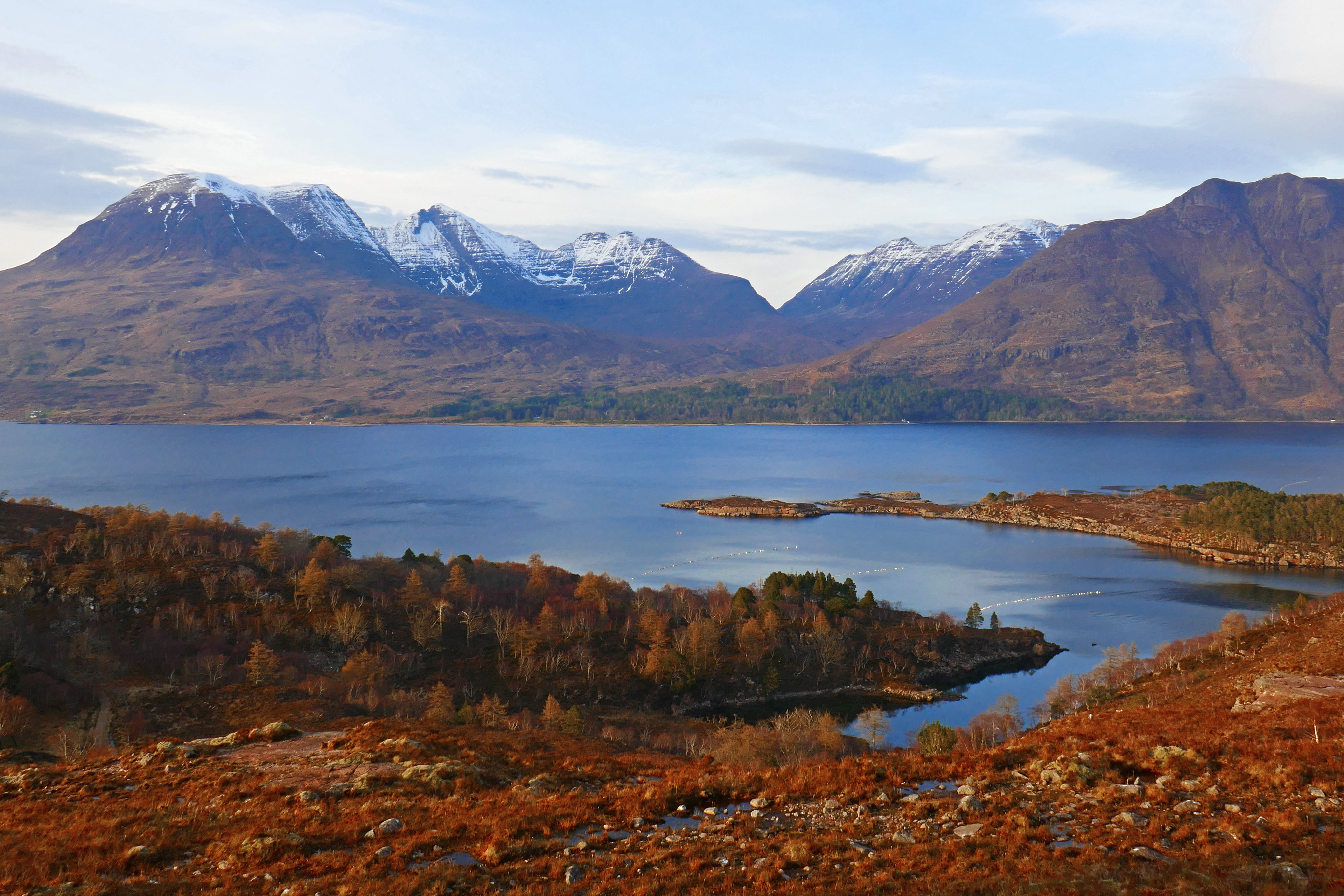
In the evening sunshine we stopped to recreate photographs we had taken all those years ago at the viewpoint above Upper Loch Torridon. Our trip was cut short but the memories remain. As I type we can’t return to Scotland yet but we hope it will be sooner than 30+ years [maybe even DC] when we are back there again.
The view across Upper Loch Torridon
We stayed at two campsites
Ardtower Caravan Park is a top-notch independent campsite with views over the Moray Firth from the higher hard-standing pitches. We have stayed a couple of times and the owners are always friendly and welcoming.
Kinlochewe Caravan and Motorhome Club Site is a beautifully positioned site at the foot of Beinn Eighe and in the small village. At night the skies are dark and during the daytime the views and local walking are amazing.
Wildlife-rich wetlands of Friuli-Venezia Giulia near Grado
At the moment, with coronavirus restrictions, I can only dream about campervan trips. When we are able to travel again, Italy will be on my list of places to revisit as I always enjoy finding some of that stunning country’s lesser known sights. Tucked away in the north-east of Italy, near the Slovenian border, is the Friuli-Venezia Giulia area, a lovely part of Italy that we only found thanks to our lack of planning.
Our campervan trips to mainland Europe are only ever sketched in, with little detailed planning. We were therefore excited to have the opportunity to explore somewhere new as we drove over the Slovenian border into Italy’s Friuli-Venezia Giulia. Invaluable in this exploration was a guidebook we had picked up in Slovenia by chance that showed the wealth of natural protected areas in this corner of Italy; it seemed like our sort of place and we decided to stay for a while. From the guide I learnt that Friuli-Venezia Giulia has it’s own Fruilian language and is packed with landscape variety, from wildlife-rich flat coastal wetlands on the Adriatic to the splendour of the foothills of the mountainous Dolomites and also has plenty of history.
We chose Belvedere Pineta Camping Village as it gave us good access to the excellent network of dedicated bicycle paths around Grado. This is a large and rambling site that was quiet in late May. Set among the trees, insects can be a problem but this does mean that there is plenty of bird life. We would eat breakfast entertained by jays, a nuthatch, magpies and blackbirds and in the evenings scops owls made their sonar-like calls overhead and fire flies lit up the bushes. One morning we watched a hare lolloping around the empty pitches at the furthest edges of the site.
Before reaching the campsite we used the guide to find the Doberdo Lakes Nature Reserve where lakes have formed in depressions [poljes] of the limestone / karst. We had some trouble reaching the lake as the road was closed due to road works; however the diversion took us to a parking spot on the northern edge from where we walked through the woodland to the jungle-like reedy edges of the lake. The best views over the pretty lakes were from a high crag that we hiked up to and where there is climbing and a climbers hut at Castelliere Gradina. We also stumbled upon World War One defensive tunnels cut into the rocks.
Cycling north from the campsite there is an excellent traffic-free cycle lane alongside the main road for the 6.5 km to Aquileia. We returned this way but got to the ancient Roman city of Aquileia on a longer route following quiet winding lanes [11.5 km] after turning left from the campsite entrance. This took us through large flat fields of crops and vines and alongside drainage ditches and canals. We stopped often to take in the agricultural scenery and see the ducks and geese on the water. Aquileia is popular with visitors and has information boards to describe the sights. We walked along the Roman harbour remains where the now silted-up river made it difficult to make much sense of what you could see. For a small fee you can visit Aquileia Cathedral which has some stunning early mosaics.
Boats in the harbour of the smart resort of Grado
Cycling to Grado through this low-lying landscape is an easy 7.5 km from our campsite on dedicated paths and it is popular with all abilities and ages. The short distance look us a while only because we stopped so often to admire the views across the lagoon and see the wildlife; we were particularly excited to spot a pair of African sacred ibis. The town of Grado is on an island in the Adriatic and we were cycling over a five-kilometre long bridge that crosses the dramatic and panoramic waterscape of the lagoon. Grado is a classy resort with a harbour full of boats and a well-kept promenade dotted with sculptures. We wandered through the town’s attractive historical centre and found its cluster of ancient churches that use re-cycled Roman columns and have sixth century mosaics. The Basilica di Santa Eufemia has a pulpit resting on old Roman columns and is covered by a brightly coloured Venetian canopy. The octagonal baptistery is 5th century, as is the Santa Marie delle Grazie that again has re-used Roman columns and capitals in its interior.
You could cycle to the Valle Cavanata Regional Nature Reserve from Belevedere Pineta Camping Village [it is just over 30 km round trip] as there are dedicated cycle routes all the way. Alternatively you could stay at one of the many campsites to the east of Grado and be nearer. We opted to drive to the Valle Cavanata visitor centre on the Grado lagoon so that we could cycle around the nature reserve. At the visitor centre we were given a free map showing cycle routes that allowed us to explore the area at our own pace. This reserve is a paradise for casual bird watching and near to the centre we stopped to watch the flamingos and egrets. Cycling out towards the Adriatic coast on sandy tracks we met flocks of bee eaters. At the coast we cycled along the top of the dyke with views across the sea until we reached Caneo. Here small fishing boats were moored in tree-lined creeks and we watched two coypu swimming along the Isonzo / Soča river at the estuary. We returned a different way along the minor roads by canals and drainage ditches and by fields of cereals and fruit trees. The area is well organised for cycling and popular with German and Dutch visitors. On the way back to the campsite we stopped at one of the many roadside stalls to buy fresh strawberries, asparagus and red onions that are grown here.
It was only from a recommendation by a couple we got chatting to on the campsite that we heard of the small town of Palmanova, about 25 km north of our campsite. We drove to the town that sits inside a 16th century Venetian nine-point star-shaped fort and was only completed in the Napoleonic era. We found parking for the Blue Bus outside the walls and entered the town through the Udine Gate, one of three gateways, after taking a look at the aqueduct system. A short walk along the main street and we were soon in the huge central square, the Piazza Grande, the scale of which feels out of proportion for the town. Reconstructions of military and water management equipment from the past sit in the square and six roads radiate from this large piazza, each grandly flanked by two statues. Palmanova was built as an experimental utopian community as well as a defensive fortress city against the Ottomans; however, for some reason this charming town had little appeal and in the 17th century people were paid to encourage them to live there.
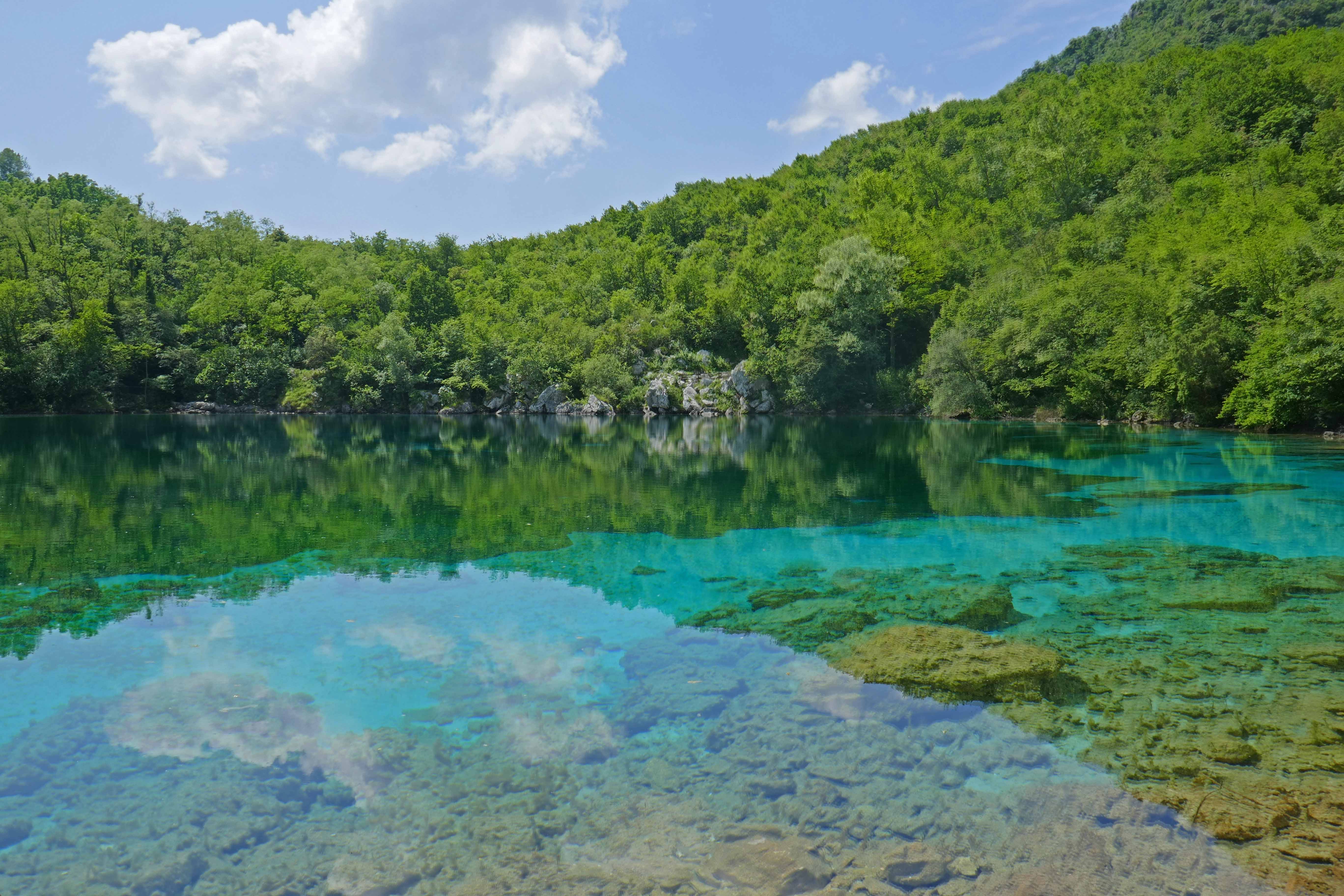
We moved on to Riserva Naturale Regionale Del Lago di Cornino. This small lago provided a perfect short halt, with parking above the lake that is an almost unbelievable vivid clear turquoise and sits prettily among trees and high crags. After lunch looking over the view we sauntered around the circular lake footpath. Peering through the trees over the water, we fortunately spotted an adder hanging ominously from a branch over the water before we alarmed it. Overhead numerous griffon vultures, reintroduced to the area, circled slowly. No doubt if we’d been a victim of the adder they would have made a tasty meal of us!
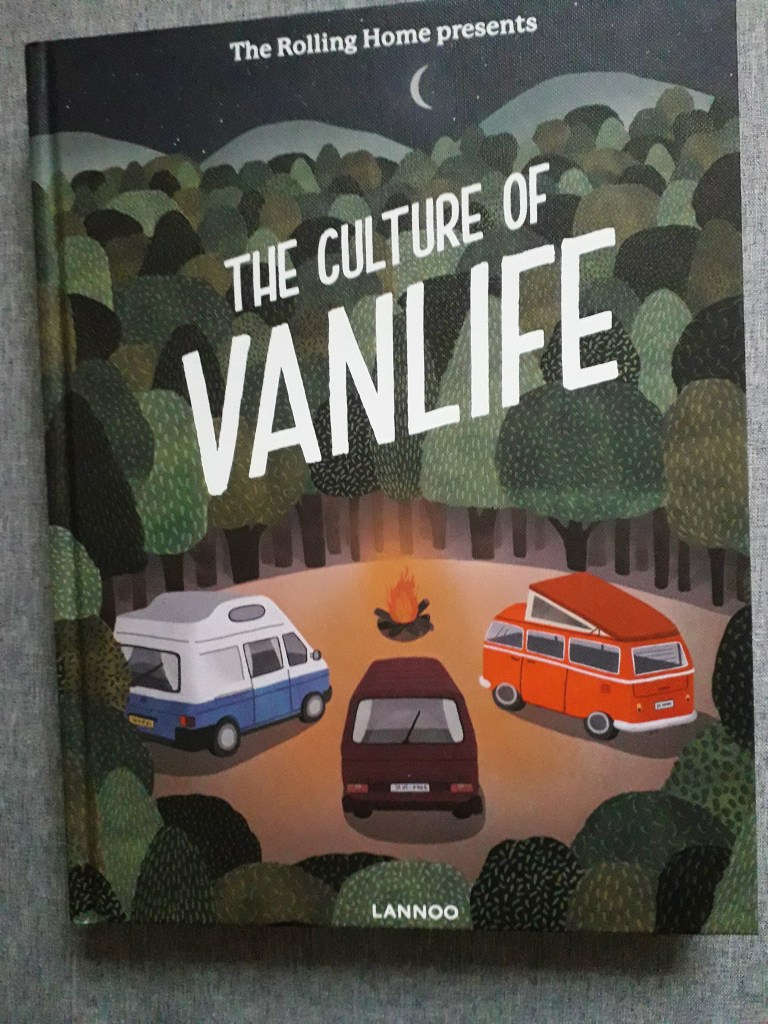
A book just about campervans! You can imagine just how much that appealed to me. I was lucky enough to be chosen as a winner of The Rolling Home book, ‘The Culture of Vanlife’ in a Twitter competition. If you’re thinking of buying this for yourself or think that it might make a great present for the campervan lover in your life, here’s my review.
Firstly I wanted a bit of background about The Rolling Home. In 2016 they published a photographic book and today they are producing regular journals which are a platform for campervan owners from around the world to share their passion for living in a van through a collection of stories, illustrations, interviews and technical advice. The Rolling Home story involves Calum Creasey, Lauren Smith and a 1996 VW Transporter. They have been travelling on and off since 2010, creating their dream van on a low budget with an eye for style and finding their own community.
The Culture of Vanlife is a delightful book to flick through. It is packed with beautiful drawings and photographs that make you want to start travelling. With an eye for an evocative image, you could just gaze at the photographs and cartoons in this hefty book and be happy.
But how do the words stack up? Once you start reading you find a collection of essays and chapters by different writers that aim to explore the culture of vanlife through the ideas and people that make it. On the first page they sum up their way of thinking about living in a campervan, seeing them as, ‘Catalysts for happiness.’
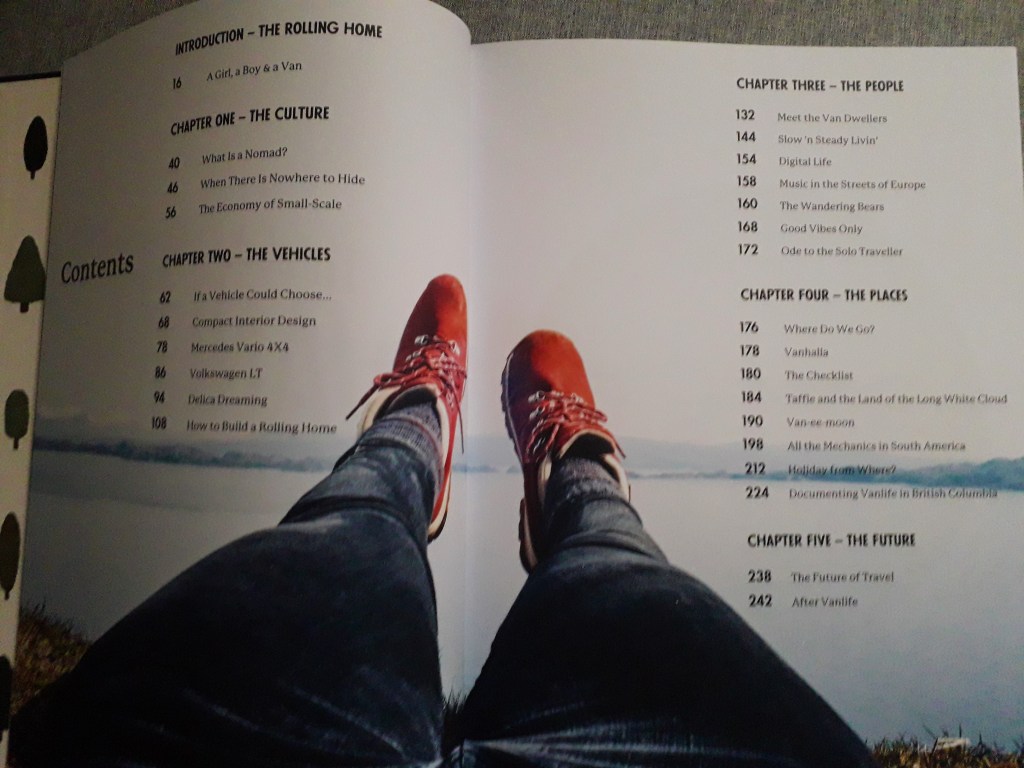
There is plenty of variety here. The first chapter discusses the perils of social media against the urge to be nomadic and appreciate the present. I was interested in Mattias Wieles’ chapter about vanlife and minimalism. Mattias and his girlfriend travelled for a year in a yellow van packed with everything they owned.
‘We sold everything, threw out all financial burdens, cut all redundancies out of our lives. All our possessions fitted in our little van now; ties had been cut, jobs left behind, subscriptions to magazines and the gym cancelled. We said goodbye and felt free as never before.’
Mattias writes that a shift in how they viewed their trip happened when they left Europe and adapted to having limited opportunities to buy food and fill up with water and they found a simpler life. He sums up perfectly how living in a campervan eliminates anything unnecessary from your life until there is no hiding from who you really are. With no fancy job, the latest smart phone or new clothes to shield you, vulnerability can materialise. Mattias writes honestly about how the road changes you and that in this simpler world there is just the earth and the people you love.
There is, of course, a chapter on the vans, although no mention of the vehicles I have owned, a VW T4 and T5 or a Renault Master … enough said! Let’s move onto interior design, where readers can see there is no right way to do it and everyone has a different idea of a perfect campervan. If you are a self-builder you will enjoy the case studies. There is something for everyone here, a 4×4 Merc, a VW T25, a small Japanese van, some technical info, a van with a wood burning stove and one with a roof-top bed.
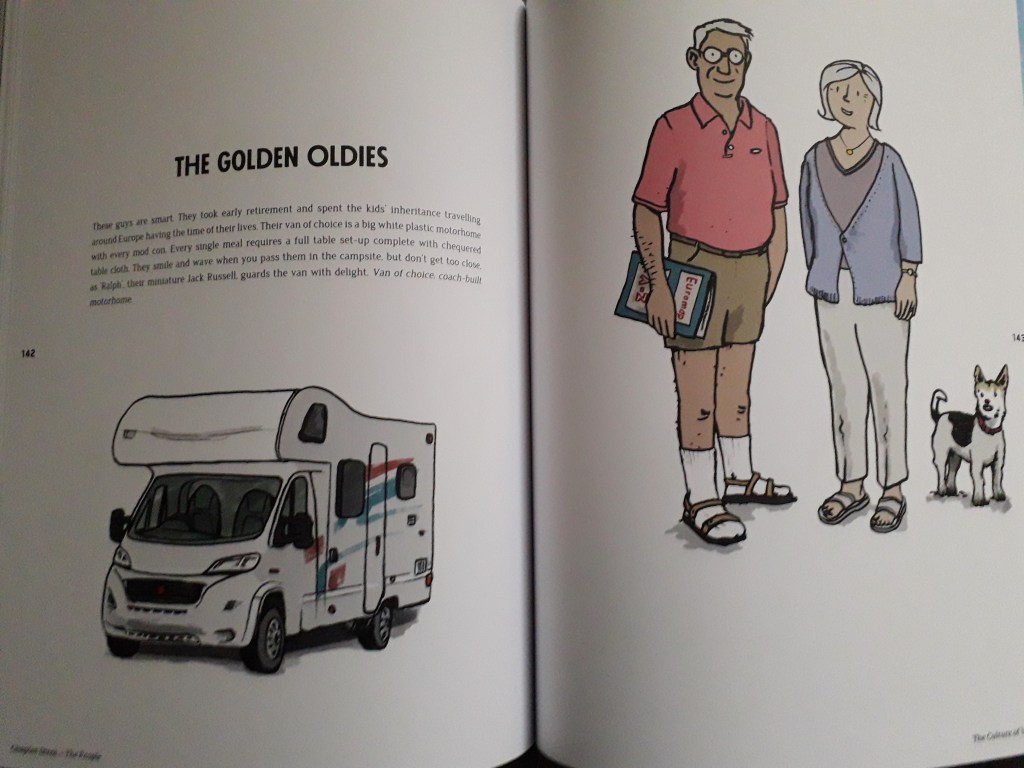
Chapter Three is about vanlife people and readers are invited to meet the ‘van dwellers.’ ‘The Adrenaline Junky’ fills her camper with kit for activities. ‘The Digital Nomad’ is a working recluse who is always online. ‘The Hipsters’ live in a Mercedes Sprinter and have a herb garden on the dash. ‘The Eco Warrior’ has a recycled Transit van and ‘The New-Age Hippies’ have a converted horsebox which they share with their rescue dogs. ‘The Golden Oldies’ have a coach built ‘van and travel around Europe spending the children’s inheritance. These are just for fun; I don’t recognise myself in any of these vanlife profiles and there is still no mention of a Renault Master!
The real strength of The Culture of Vanlife is in the personal stories it tells. Matt and Steph talk honestly about full-time vanlife as a young couple who spend six months a year on the road
‘For us, van living created a very intimate and close relationship. Disagreements are dealt with immediately and we usually end up laughing about it an hour later! As a result we have become excellent at communicating and knowing how the other feels, sometimes even without speaking.’
The thoughts on solo van travel might touch you; the van owners who make music and busk on their travels might inspire you; or reading about the family in a converted bus might encourage you to reconsider your life’s trajectory.
‘In Norse mythology, Valhalla is the great hall that warriors go to after falling in battle … there is a lesser-known land, Vanhalla. Some say it is a fictional place, where camper vans and their inhabitants go to when they no longer travel.’
I hope I won’t be ending up in Vanhalla soon but this fantastic idea introduces a list of favourite places to travel, from Europe to South America, India and Canada. There are stories from New Zealand and rugged British Columbia. You will find plenty here to inspire your own trip.
This is a book that asks questions and tries to get beyond the hashtag campervan lifestyle on social media. The book reflects on the tension between the simplicity of vanlife that so many people seek and digital connections that allow remote campervan fans to reach out to others. The authors find both real communities and those in cyberspace and consider their value.
Yes, this is a book that will look beautiful on your coffee table and any campervan owner could buy it to browse and learn from. If you are looking for a gift, I would suggest you buy it for that reflective and discerning friend who is yearning for a campervan. If they sit down and read some of these stories they will either buy a ‘van and set off on their own journey the next day or realise the lifestyle isn’t for them. Either way they will thank you for the present.
We didn’t know in February that in less than a month the country would be locked down but with the hindsight we now have I am so pleased we got away for a ten-day campervan holiday while coronavirus made its way across the world to the UK. We toured around Wiltshire for most of that time and for five nights stopped at the Camping and Carvanning Club site at Devizes. Our average stay on a campsite is less than two nights, so five nights is a chunk of time for us to settle anywhere but in February open campsites were not easy to find and the Devizes site turned out to be a great base with lots of options.
On the way to Devizes we drove up to the high car park near The White Horse of Westbury. It was a windy day and our walk to see the horse carved out of the chalk, although now covered in concrete, and around Bratton Camp blew away the cobwebs after a long drive. On the northern edge of Salisbury Plain, the views from the 17th century Westbury White Horse stretch for miles.
We walked, took the bus and also drove from the campsite. Here are the places we visited.
Taking the bus from the campsite
Leaving the Blue Bus at the campsite, we used the local buses to visit a couple of attractions.
Opposite The Three Magpies pub, at the entrance to the campsite you can pick up a bus to Devizes. Alternatively, a short walk over the canal bridge and along the quiet lane takes you to Seend. Here you can catch the number 49 bus to Trowbridge in one direction and to Avebury and even Swindon in the other.
Bradford-on-Avon – Taking the 49 to Trowbridge, we picked up a train to Bradford-on-Avon on a day of bright sunshine and showers. Visiting this pretty town sitting on a steep hillside by the River Avon was perhaps the highlight of our time in Wiltshire. With stone buildings that are warm and elegant and charming cobbled streets, Bradford-on-Avon has plenty of old weaver’s cottages from its time as a cloth-making town. Overlooking the Town Bridge, which has an old lock-up perched on it with a weather vane known as the Bradford gudgeon, we found Il Ponte Italian restaurant, a great choice for coffee and lunch.
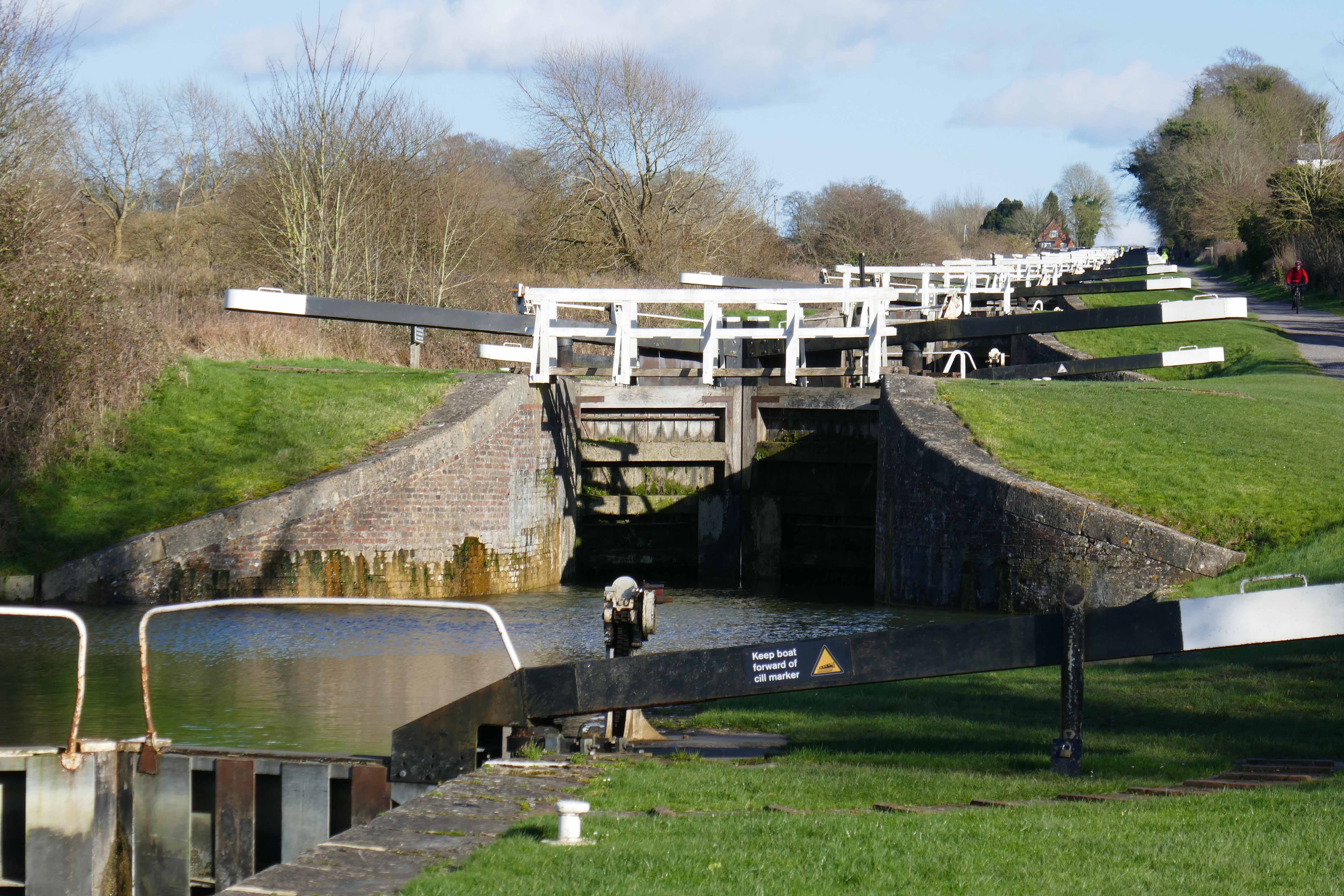
The long flight of Caen Hill Locks
Away from the town centre we explored the enchanting and strangely proportioned Saxon Church of St Laurence with narrow arched doorways and windows and crossed the river to reach the 14th century Title Barn. With sunlight filtering through the slit windows of this monumental building I gazed up at the impressive timber roof, the stories from the past echoing among the beams.
We climbed steep lanes and steps to the highest buildings in the town that have views across the Avon valley to Salisbury Plain and The White Horse. At the end of one lane, perched on the hillside we found the splendidly situated medieval chapel of St Mary Tory. Tory here means hill [tor] and we looked over the town from what was once a pilgrimage site between Glastonbury and Malmesbury. The chapel was restored in the 19th century and more recently the east window was replaced with modern colourful stained glass.
Avebury – Using the bus in the opposite direction we spent a day walking seven miles around the many Neolithic sites of Avebury. After walking around the huge circular bank and ditch with impressive standing stones, we walked to West Kennet Long Barrow, passing the mystery that is Silbury Hill on the way. This long barrow is my favourite site out of the many at Avebury and on a fine sunny day the views from West Kennet Long Barrow were worth the exertion. A burial site for many individuals, along with pottery, beads and a Neolithic dagger, large sarsen stones hide the entrance to the barrow’s 42-foot-long passage which has two side chambers and another at the end. We returned to Avebury by East Kennett and the Sanctuary, another baffling site that you can be creative imagining what it was used for.
Walking from the campsite
The Kennet and Avon Canal runs alongside the Devizes campsite and an easy and enjoyable walk of about two miles each way will take you to Caen Hill Locks, 29 locks rising 237 feet. It is an exhausting trip for boat owners, taking the best part of a day to travel up or down this row of locks and you are bound to spot one or two as you walk.
Carry on a mile or so more and you reach Devizes. We were there on market day which always adds an extra bustle to a town. We admired the outdoor stalls and then walked through the indoor market which has a wide array of goods from cakes and cards to wooden crafts. Chatting to one stall holder he recommended Times Square for the best coffee in this agreeable town. On market day it seemed that everyone had decided to enjoy a break in this friendly cafe but it is big enough to accommodate everyone and the stall holder was right, it was good coffee.
We visited The Wiltshire Museum to see its exceptional collection from the many ancient sites in the county. If you are confused about the timeline of Wiltshire’s history then this is the place to help you get it straight in your head. If you don’t want to immerse yourself in local history then the tour of the Victorian Wadworth Brewery might be more your glass of ale. After walking back along the canal [or you can take the bus] a visit to the Three Magpies pub next to the campsite for a glass of Wadworth was a great way to round off the day .
Walk in the opposite direction and you reach The Barge Inn after just over a mile.
Days out in our campervan from the campsite
As well as walking and taking the bus, we took our campervan out for a couple of days.
Stonehenge – We last visited Stonehenge in our first campervan in 2006. The stones are the same but the organisation of the site has changed massively since then. Today the visitor’s centre is one mile away from the circle and one of the roads alongside the stones has been closed. We purchased timed tickets in advance and arrived at the large car park [with dedicated motorhome parking] with a comfortable amount of time to visit the exhibition before taking the free shuttle as far as Fargo Plantation. This enabled us to approach Stonehenge across the green pasture land, skylarks singing above us and the stones in the distance. Of course, the scene isn’t as it was in the Neolithic era but it is more peaceful than it was.
In 2006 we paid extra to be able to walk among the stones as the sun set, a truly magical experience. Today, the stones are surrounded by a low fence and with controlled visitor numbers everyone has space to walk around the stones and get an uninterrupted view from different angles and in different light. There is no doubt that Stonehenge is a popular place to visit and given the limitations, English Heritage are doing a good job at enabling everyone to enjoy and understand the structure. For me, Stonehenge remains a special place and I look forward to coming back when the A303 is out of sight.
The huge stones at Stonehenge
Marlborough& Savernake Forest – If you want somewhere to stretch your legs, enjoy a spell of window shopping followed by some people watching in a cosy cafe then Marlborough, with the second widest high street in the UK, will fit the bill.
Nearby is Savernake Forest, an expanse of woodland with a network of footpaths, deer and a remarkable collection of ancient oak trees, each with a name. In the mixed woodland, with so many paths, we were soon disorientated and only knew where we were when we stumbled upon the sign for one of these gnarled oak trees. We found The Saddle, The Cathedral and Old Paunch; these trees already have character but knowing their names made me consider the features of each tree and admire the ridged bark and dripping moss.
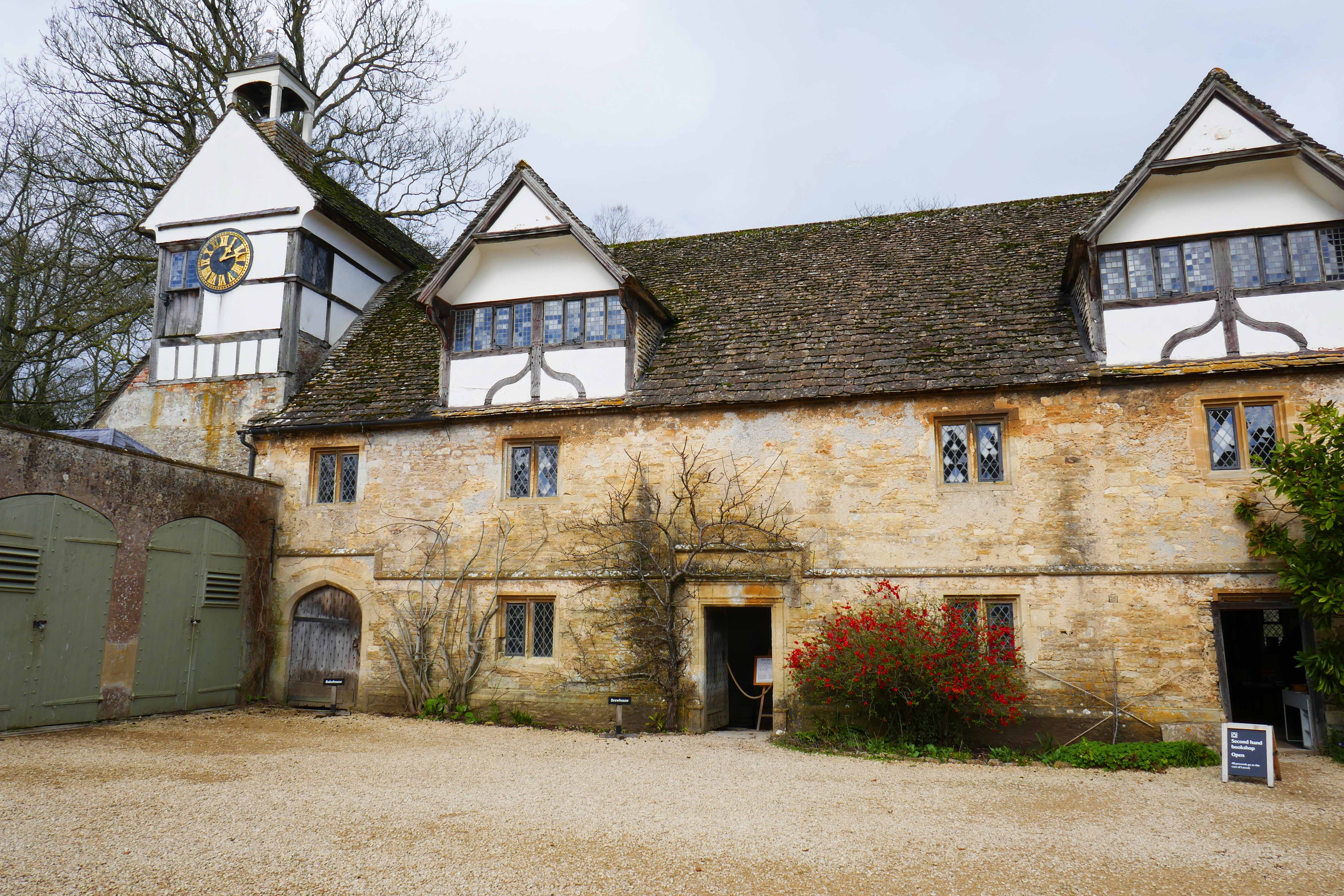
Lacock Abbey & village – Owned and managed by the National Trust, Lacock Abbey is a 13th century abbey that was converted to a family home in the 16th century. If you recognise the building and the village this is probably because you have seen it on a film or TV programme. Downton Abbey, Cranford, Harry Potter and others have all been filmed here. The car park isn’t huge but it does have some large spaces for motorhomes.
The house has plenty of personal touches that retain an intimacy in the rambling building and there are knowledgeable guides in most room. William Henry Fox Talbot lived here and in 1835 captured the first photographic negative of one of Lacock Abbey’s oriel windows. You can see this image and others in the small museum by the entrance that tells the interesting story of photography.
The courtyard at Lacock Abbey is charming
Devizes Camping and Caravan Club site is an open and green site with friendly and helpful wardens. The facilities would welcome an update but are totally satisfactory.
I realise that none of us can travel anywhere just at the moment due to coronavirus but I hope this post and these ideas might contribute to your planning for future trips while we can only dream. Happy future travels!
I like showering. No lazing in long baths using up gallons of water for me, I am happy to have a short shower and save some water. But showering in the dark is taking being environmentally friendly a step too far!
On our last trip to Spain we found that many campsites had invested in lighting that reacts to movement sensors, an excellent idea in theory. The lights sense your presence and come on when you enter the facilities block and, when no movement has been detected for some time, will go off, by which time you should have finished your ablutions and left. By not relying on unreliable humans to remember to turn the lights out precious energy can be saved. A marvellous small step towards tackling climate change.
And yet, this system all depends where you put the sensors and how long the timer for the lights is set for. On the Spanish campsites we visited, the sensors were usually placed above the main door, convenient for detecting people as they came in and out. The flaw in this system is that while I am hidden behind the shower cubicle door in an evening, the not-very-clever sensor detects no movement.
Picture the scene, I will be scrubbing off the Spanish dust after a day walking or cycling. I am happily humming a tune and thinking about the wonderful places we have seen that day when suddenly blackness descends as the timer clicks the lights off!
As I see it, at this moment I have three choices, none of which make for blissful bathing.
Option one is to continue showering despite the dark. Do I really need to see what I am doing? Do I want to risk falling over the soap, mislaying my flannel or banging into the door? Having decided being light-less is impractical, I start to hope option two might work out. I continue to run the water, hoping another camper will decide to use the facilities, come through the door any moment and trip the light sensor so that I can once again see what I am doing.
Of course, we are usually in Spain when it is out of season, the campsites are quiet and most people shower in the mornings, so after waiting a minute or so I have to resort to option three. In desperation and now hoping the opposite to option two, that no one does decide to use the facilities, I grab my towel and rush dripping out of the cubicle. I then dance in front of the sensor, waving my arms and kicking my legs like an unhinged bather until the lights return!
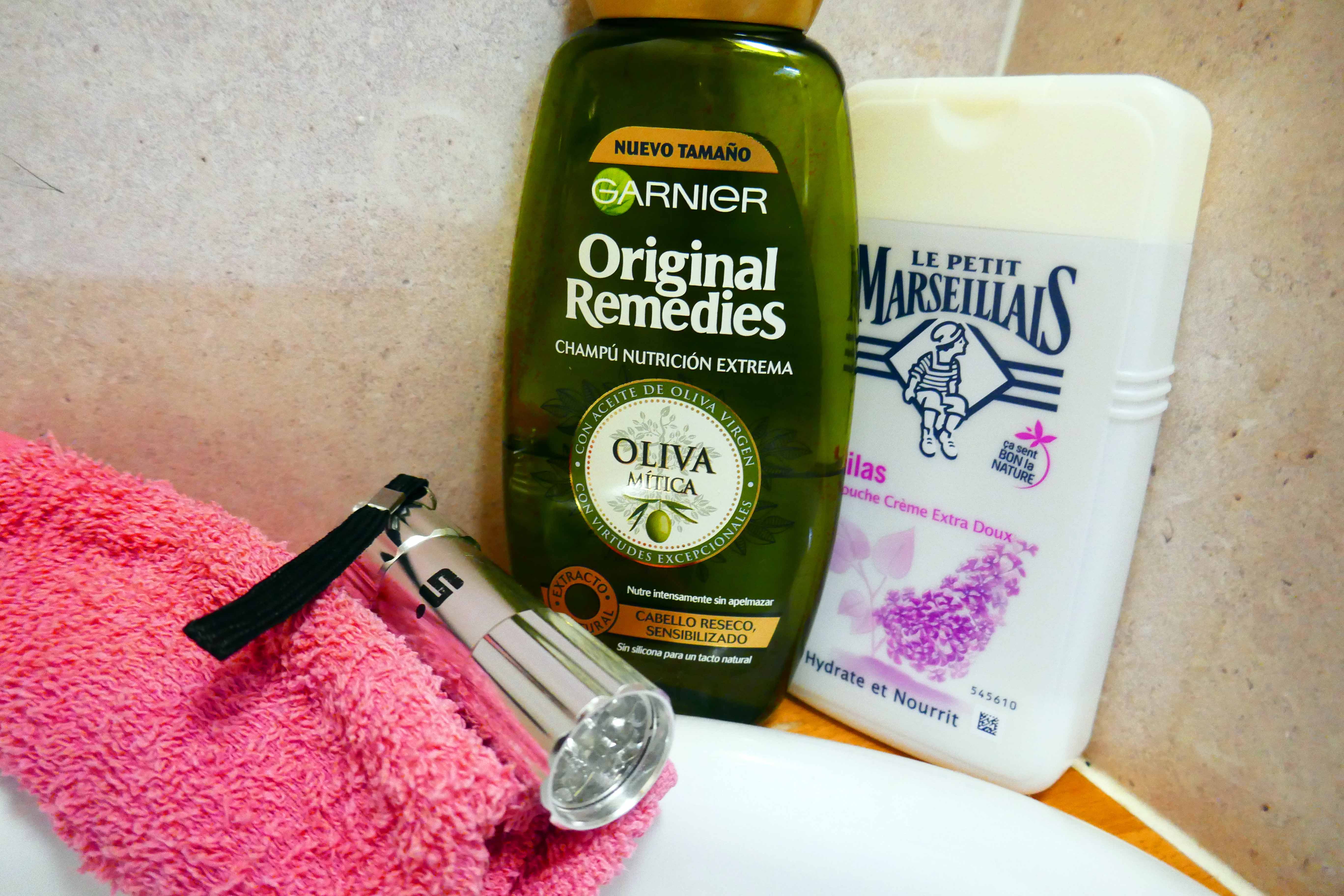
Should you ever witness this shower shimmy, please don’t judge me too harshly … perhaps I should just take a torch to the showers!
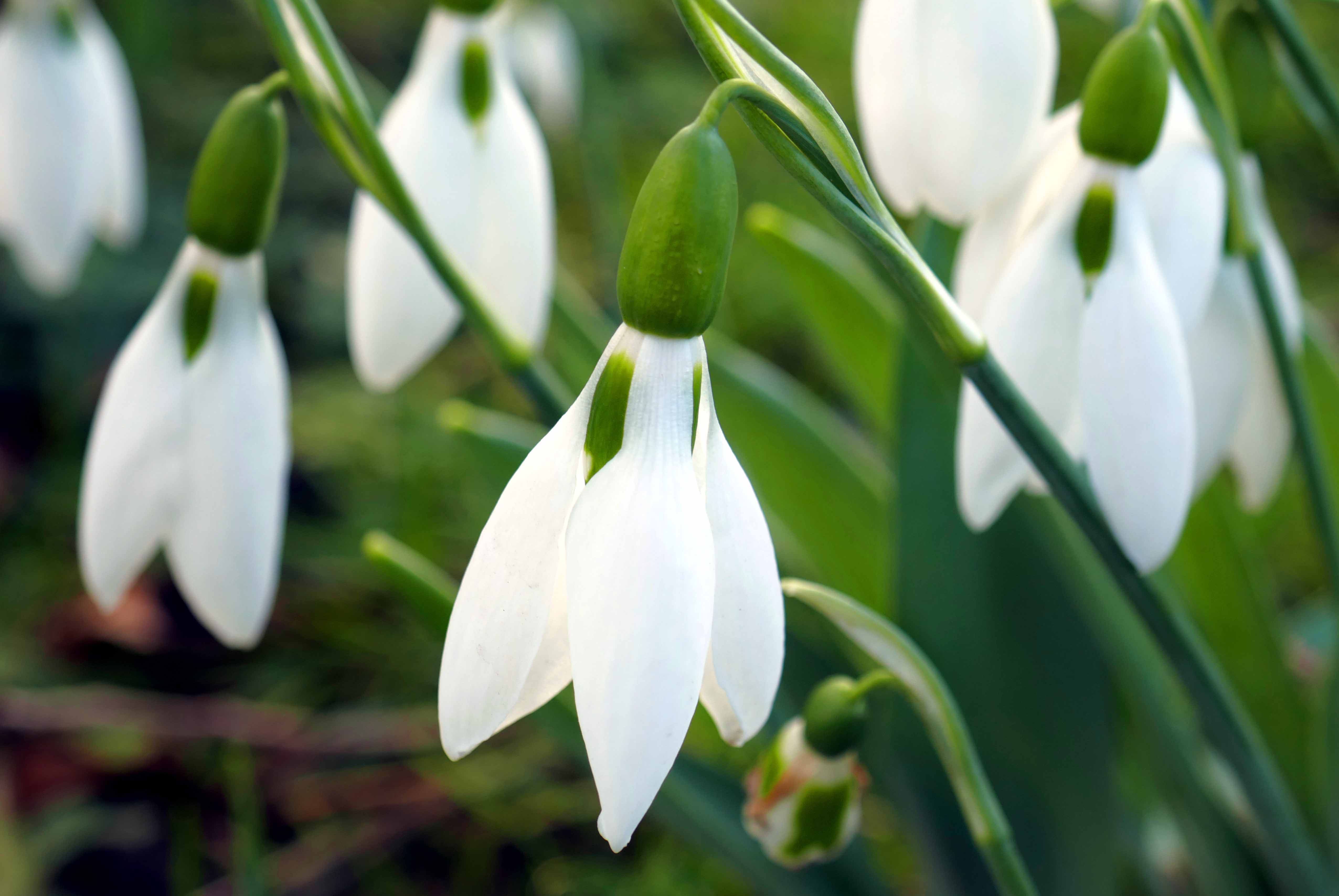
One of the stunning varieties of snowdrops at Cobble Hey Farm
If, like me, you look forward to the days getting longer and warmer, you will be noticing the brighter morning light and that the sunsets are just that little bit later. The seasons are beginning to change! It is the emerging of snowdrops that for me really signals that winter will eventually end. Every year I anticipate the arrival of these tiny white flowers that are both hardy and delicate and represent the transition from the quiet of winter to the blossoming of spring.
There are some wonderful snowdrop gardens across the country and you will have your own favourites but here are my top picks of places to see snowdrops in Lancashire.
Cobble Hey Farm, high on the slopes of the Lancashire Bowland Fells, is the place to lose yourself in snowdrops. Edwina, the gardener, has created a unique woodland garden over 20 years in this wild spot and among winding paths and a stream there are collections of different varieties of snowdrops. The common snowdrops have naturalised under the trees and there are plantings of rarer snowdrops interspersed with occasional pink Hellebore and daffodils. Wrap up as it can be cold on this fellside and explore this cheerful garden. I found myself looking more closely at snowdrops than I have ever done before as I wandered around the garden, finding ivory-coloured snowdrops, large-flowered snowdrops, tall varieties and others with daffodil yellow-stems.
If you have time you can walk on the farmland and maybe see the lapwings and there might be new lambs in the barn and goats in the field. When you need to warm up there is a cafe here too.
Lytham Hall, Ballam Road, Lytham, FY8 4JX
We took the bus into Blackpool and another out to Lytham from Beechwood Carvan Site but you can park in Lytham if you prefer to drive. Like us, you will want to see the windmill on Lytham’s green, look over the sands and maybe browse the shops or visit one of the many cafes but on a February weekend you will eventually want to walk out of the town to Lytham Hall to follow their snowdrop trail
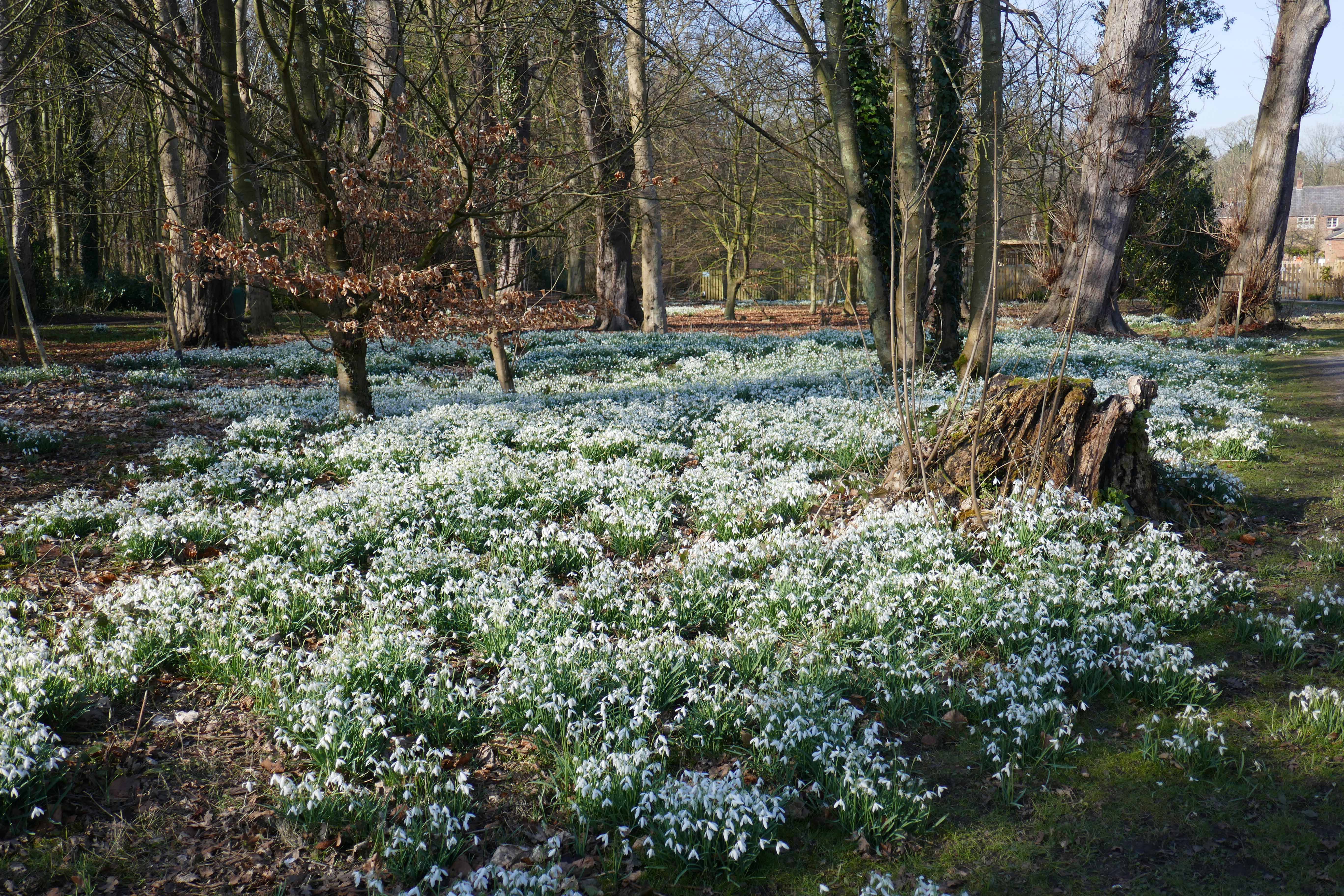
It was a fine day on our last visit and we were greeted by smiling and helpful volunteers and directed into the gardens. Lots of people were strolling through the extensive woodland gardens around the handsome 18th century brick and stone mansion. Occasionally someone would stoop to get a close-up view of one flower in the carpets of bright white droplet flowers.
Lytham Hall was a grand family home and then offices until the 1990s when the 78-acre estate came up for sale. British Aerospace (a local employer) donated the almost £1 million asking price and Lytham Hall is now run by and for the local community and has a range of different events in the house and gardens. They also run a popular cafe in the house.
Bank Hall, Bretherton, PR26 9AT
South of Preston and surrounded by trees is the hidden gem of Bank Hall. The gardens here are open for Snowdrop Sundays through February. Bank Hall has not been lived in since 1971 and deteriorated considerably. It’s appearance on TVs Restoration programme and the hard work of a local group are turning its fortunes around and now renovation of the hall is ongoing. The woodland grounds can be visited on regular open days and wander here in February and you will find rafts of perfect white snowdrops naturalised over hundreds of years in a spectacular carpet.
With two bright green leaves and a dropping white bell-shaped flower, snowdrops are European natives that may be a Roman introduction to the UK. The Galanthus family, from the Greek meaning milk flower, has around 20 different species, varying in height, size and flowering season, some growing to 12 inches high and others flower in autumn.
We stayed at:
Beechwood Caravan Site, New Lane, Thornton-Cleveleys, Lancashire, FY5 5NJ – a small, reasonably priced site that has good bus links with Blackpool and Fleetwood.
If this isn’t enough snowdrops then Hornby Castle in the Lune Valley also has a snowdrop weekend.
Read my full travel article about seeking snowdrops in Lancashire published in MMM in January 2019.