Summer hill walking in Scotland

2017 July August Scotland (194) Morven.JPG
The distinctive shape of Morven in Caithness

Hill walking in Scotland can be a serious business, you can spend hours planning your routes, fork out a fortune for gear and tick off Munros or Corbetts, Grahams or Marilyns.  You can tackle long ridge walks, seek out those tucked away mountains where you won’t see another person all day and you can join others on some of the [rightly] more popular routes up dramatic mountains.  In winter these mountains are often covered in snow that makes the walking much tougher.  I enjoy walking in Scotland when the weather and the views are good far too much to be interested in ticking off tops.  From my limited experience, although Scottish mountains vary enormously, there are a few experiences that many share and our trip up Morven, the distinctive and yet diminutive mountain in Caithness gives a flavour of the summer hill walking experience.  Morven is just 706 m above sea level, making it a Graham, that is a mountain between 610 and 762 metres high.

It is true that not every Scottish mountain requires a long drive along a single-track road, there are some you can climb from the A9, but neither is Morven untypical in requiring almost 6 miles of driving along a narrow lane before you start walking.  Owning a campervan adds to the excitement of the start of any Scottish walk as we are often unsure if we will fit in to the car park.  I am often amazed at the inconsiderate parking of others in small car parks, when tidier parking would have meant that more cars [or a small campervan] could have fitted in.  We set off early on our Morven day and so we got first dips on the parking area that will fit just three cars [if tidily parked].

In the ‘van we often have a brew at this point but eventually we have to put on our gear and venture out on the next stage of the walk; that is reaching the base of the mountain.  The walk-in for Morven will be familiar to many hill walkers; the land rover track takes walkers over two and a half miles in to the moorland, ending at an abandoned cottage.  At least this track is easy going and good progress can be made as the next section of a typical Scottish mountain walk is the bog trot.  The soggy Caithness moorland had grassy tussocks, each one trying to turn over my ankle, and black peaty sections that might look stable but linger for more than a second and your boots are soon covered in dark mud.

Already we have walked for about four miles but haven’t really gained much height and the toughest part is yet to come.  Eventually you reach the climb and in Scotland this means a steep, almost vertical hillside.  I am the slowest hill-walker in Scotland and it is on this section that I will be over-taken by other walkers.  I plod up the hill, desperately trying not to look up, as each time I do the top seems to be no nearer than it was the last time I looked.  There is a rule on Scottish mountains that there will be at least one false summit, these catch out the inexperienced walker who will get excited that the top is within reach and will start looking forward to resting.  These false summits no longer catch me out, I never expect that what I can actually see will be the summit until I am standing on a point where the only way is downhill.  We had Morven more or less to ourselves so there were no other walkers to rush past me, highlighting how snail-like I am.  The bonus with my slow pace is that I spot the wildlife. On Morven there was a mountain hare silhouetted on the skyline, a large group of hinds in the distance, a lizard, plenty of frogs, a water vole and a grouse that terrified me as its frantic wing beats broke the silence.  There were also flowers; bright cloud berries on the summit, bog asphodel and the heather was in glorious flower.

During this slow ascent of a Scottish mountain the weather will change a number of times, either getting worse or better, the only rule is it will change.  Sometimes you have a great view from the summit, sometimes you just miss it, sometimes you are lucky enough to walk through low cloud in to sunshine on the summit and at other times the cloud just stays with you.  The uncertainty of the weather means layers are the only way to walk and these will be on and off throughout the day.  On Morven we set off on a glorious day that slowly got cloudier.  With the cloud came a breeze that was welcome, as when we were sheltered from the wind on the ascent this bought the midges out and I was grateful to reach the blustery and midge-free summit ridge.

Eventually I reach the top, feeling exhilarated and exhausted.  The exhilaration is short-lived because I know that, although the climb up seemed interminable and tough-going, the descent is worse.  By this point I don’t really care where I put each foot I am so tired but the walking now gets more technical; descending a steep-sided Scottish mountain is tricky and puts lots of weight on the knees.  The only way to get through it is to take my time, grit my teeth and once again try to avoid looking at the vast distance I have to cover, concentrating only on securely placing each foot.

On our Scottish holiday, as well as climbing Morven, we walked up two other hills.  Ben Rinnes, at 841 metres high is a popular Corbett in Banffshire where the parking is also limited.  The summit gives great views and with a well-marked path and only 500 metres of ascent it is achievable in a short day.  We also climbed Lochnagar, a splendid and popular mountain above Loch Muick that has plenty of parking.   We took the direct route up the mountain, pausing to enjoy the fantastic viewpoint over the corrie before climbing steeply up above the crags.  We descended down the lovely path by Glas Allt that is quieter and easier on the knees.  After a tiring day of around 12 miles the walk back along Loch Muick seemed to go on forever and if I hadn’t started a game of i-spy-meets-name-that-tune [try and think of a song title that includes something you can see around you, eg River Deep Mountain High] I may never have made it back.

2017 July August Scotland (215) Lochnagar.JPG
The crags of Lochnagar


Orkney the place for perfect holidays

2017 July August Scotland (133) Birsay.JPG
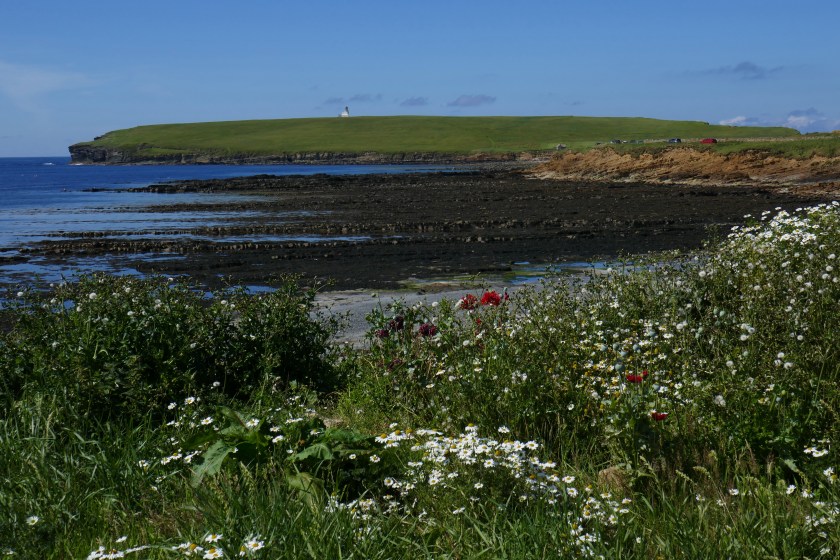
The tidal island of Birsay in the north-west of the mainland

There are not too many places I return to over and over again [aside from local favourites] but the islands of Orkney off the north coast of Scotland is one such place.  Our recent holiday was my sixth trip to Orkney but the first in a campervan and what a difference having the ‘van meant.  On previous visits we have been based in one place, all trips radiating out from that base.  With the ‘van we travelled across the Churchill Barriers from South Ronaldsay to the north of the mainland, staying in a different place every night and getting a different feel for these wonderful islands.  In truth the journey from the wonderful Skerries Bistro and Tomb of the Otters in the south to Birsay in the north is only 40 miles but then why rush around Orkney, there is so much to see, so many different bays to explore and despite repeated visits there are still parts of even the East and West Orkney Mainland that we haven’t yet visited, never mind the other islands.

2017 July August Scotland (60) Wind Wick Sth Ronaldsay.JPG
Orkney stone buildings at Wind Wick

You can expect weather on Orkney and it is always colder than I remember.  We have been here when the winds are relentless, on one visit we had a week of constant fog and we have had days of rain as well as fine and sunny weather.  This trip was blessed with days of sunshine and what I noticed most was the sky.  Orkney lies low and nothing gets in the way of the views of the sky, it is vast and hard to miss and the blue sky appears infinite.  On this trip I got used to the feeling of space that those enormous skies give and I found myself missing it as we returned south.  During the day we walked and drove under these skies and every evening we sat on a shore or a cliff enjoying a different view to watch the sun go down over the Atlantic, the red sky promising another fine day.

2017 July August Scotland (121) Stromness.JPG
Houses on the sea front at Stromness

Orkney is always a great place to visit for wildlife and despite it being early August we saw plenty of birds, including puffins, black guillemots and gannets from the boat.  On the cliffs we saw fulmars and kittiwakes.  We watched seals bobbing in the sea and sitting on the rocks at Birsay.  We searched for elusive otters and short-eared owls [we had to wait until the Scottish mainland before we spotted the latter].  Many come to Orkney for the incredible archaeological sites and we had timed this visit to see the dig at the Ness of Brodgar.  I found the excellent guided tour very interesting, the site is so intriguing, and we contributed by adopting a square of the dig.  We also made our first visit to the Banks Chambered Tomb, where our guide was a natural story teller who bought the site to life.  We watched boats in Kirkwall and Stromness, we beach-combed at Birsay and at the lovely bay by Kirkhouse Point, we explored the cemeteries at Burwick and at Kirkhouse Point and we walked up Marwick Head to the Kitchener and HMS Hampshire Memorial and thought about the 737 people who lost their lives off the coast here in 1916.  Of course we ate Orkney ice-cream and drank Orkney beer whenever we could.

It isn’t just the range of things you can do in Orkney that make it possibly the best place for a holiday, it is the tranquility and calmness of the islands.  Even though I am a relaxed retiree these days I still enjoy slowing down our lives for a while on these beautiful islands.


Trying to do some good in retirement

22.04.2017 Osios Loukos monastery (15).JPG
A pretty dish of flowers in a Greek monastery

One of my aims for retirement was to be helpful and do some good.  It is now over six months since I packed up my work laptop and phone and gave up my salary and it seemed a good time to review how I have got on with this aim.  Although I never think I have done enough and know that I could almost certainly do more if I wasn’t so busy enjoying myself, I have done a few helpful things.  Below is a flavour of how the retired can still be useful members of society:

  • We have spent a couple of days working in the garden for our son and daughter-in-law [not sure if this really counts as a good deed as we would do anything for these two]
  • I spent an afternoon helping a neighbour organising her work files on her laptop
  • I am the volunteer Treasurer for DIY Theatre Company, an established company of learning disabled performers and I provide support to the Artistic Director
  • I voluntarily take the minutes for the Board of Directors that runs the development we live in
  • I visit an elderly house-bound neighbour and have helped her with online shopping
  • We helped another neighbour clear his storage unit and fitted some furniture in to our van and took them to the auction rooms for him
  • We have collected litter locally to try and keep the streets a little tidier

It certainly feels good to have the time to do all these things but I think I could try harder.


Sunsets at Salford Quays: #surprisingsalford #21

2017 May Salford Quays sunset (1).JPG
Looking west from the Media City bridge

We are lucky at Salford Quays that the Manchester Ship Canal is orientated east-west.  Every year on the shortest day we walk down to Salford Quays to see the sunrise.  Unfortunately, this day of celebration has yet to coincide with one of the beautiful sunrises that we do occasionally have over the quays but we remain hopeful.  When I used to cycle to work along the canal I would often enjoy amazing sunrises in spring and autumn during my commute to work.

Not being early birds these days, what we do manage to see more often is the sunset and these are worth walking down to the Quays to see.  We are always joined by other people, both locals and visitors and the bridges will be lined with photographers and those who are just enjoying the natural spectacle as the sun goes below the horizon.

Standing on the bridge by Media City you are looking across the two Mode Wheel Locks on the Manchester Ship Canal.  This unusual name is a corruption of Maud’s Wheel, the name of the wheel at the corn mill that was previously at this spot.  These locks were the final lock on the Ship Canal before the expanse of the docks.

The boat in the photograph is one of the boats that takes parties on short canal cruises from Castlefield in Manchester city centre and beyond are the factories of Trafford Park.


A weekend at the Upton Blues Festival

2017 July Upton Blues Festival (25).JPG
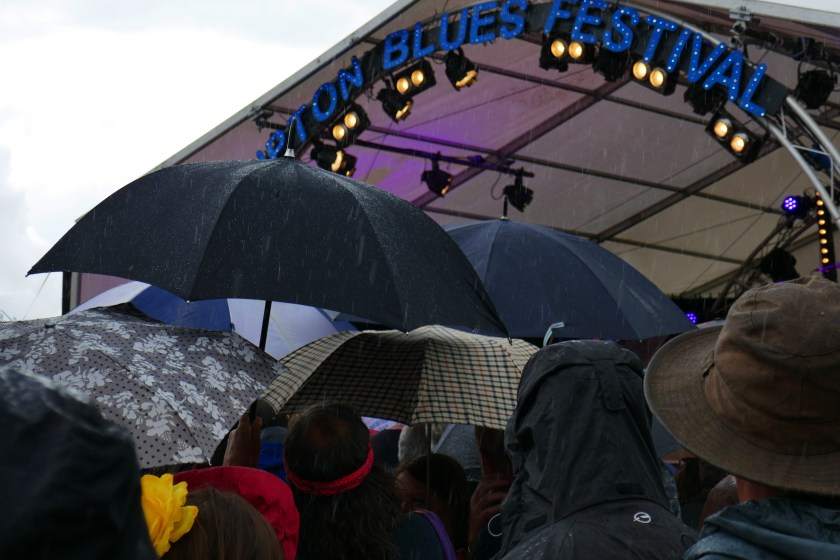
Sometimes it rains at festivals

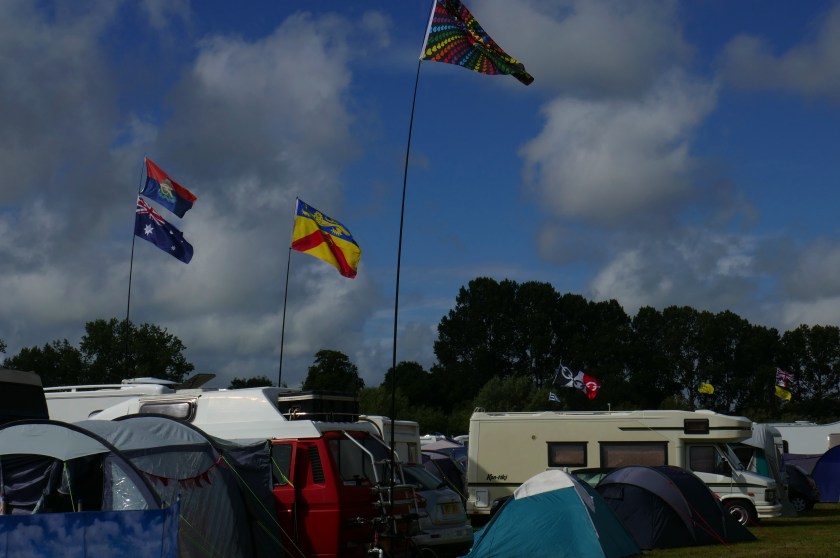
If you have never been to a festival and [this probably goes without saying] you like the blues, then the Blues Festival at Upton upon Severn is an excellent first festival experience.  The Upton Blues Festival is a free festival, that is every gig is free for anyone to attend, and plenty of local day visitors come along to enjoy the music available.  But to get the real festival experience you need to take your campervan, caravan or tent and camp and our campervan is a perfect place to sleep in at a festival.  At Upton the performers are paid from the receipts from the campers who pay £10 a night each to use the flat Fish Meadow that is just ten minutes or so walk from the venues.  The festival also gets money from parking charges for day visitors, sale of beer and merchandise.  As well as the campsite, the festival committee runs two main stages, one by the river and one on the meadow across the town and an indoor acoustic stage and the Meadow Stage is a fantastic place to lie in the sun and listen to good music.  There are also around ten smaller stages in the pubs of Upton upon Severn that are self-funding.  Upton is a relaxed and friendly festival that has none of the corporate blandness or size of other festivals and you can always find some excellent music and get in to your own groove.

Upton Blues has grown over the years and in 2016 over 20,000 attended over the weekend and this year around 4,000 people camped in Fish Meadow.  The first festival was held in 2002 but Mr BOTRA and I didn’t get there until 2014 by which time it was already a well organised and large event.  This year was bigger than ever but the camping facilities held up well, even in the inclement weather, and we never had to queue for a toilet!  I love Upton because of its size and atmosphere, because tarmac roads link the stages [rather than a sea of mud] and you won’t find yourself unable to see the stage because the person in front of you has someone sitting on their shoulders or is waving a huge flag.  The Upton crowd is a friendly and chilled out beast that isn’t there because its the thing to do.

The music at Upton covers the whole spectrum that is called the blues and we saw some great bands this year and as usual there are a couple that stand out.  The high energy blues of Dr Schwamp was just what we needed on a damp Friday night.  They are a great party band with plenty of variety in their set and we’ll certainly look them up again.  We also loved Sons of the Delta who played on the boat on a sunny Sunday afternoon, I shut my eyes and imagined I was on the Mississippi.

You don’t have to do anything but listen to the blues at Upton but we did fit in a walk along the river Severn on Sunday morning.  We enjoyed finding parts of the the town we hadn’t seen before and exploring the countryside around Upton.

The festival feels like it is part of a bigger community and gives a lot back to the town, not just in income for the businesses over the weekend but also improving local amenities from the surplus.  We like to support the local economy when we are there and now have a list of must-do activities when we are in Upton.  We splash out on an Indian meal one evening and we always visit the Pudding Shop to sit outside and enjoy one of their fantastic steamed puddings during the weekend.  The only difficult decision is whether to have apricot, ginger or blueberry pudding.

2017 July Upton Blues Festival (18)
Camping on Fish Meadow


Clifton Country Park: #surprisingsalford #20

Salford Clifton Country Park.JPG
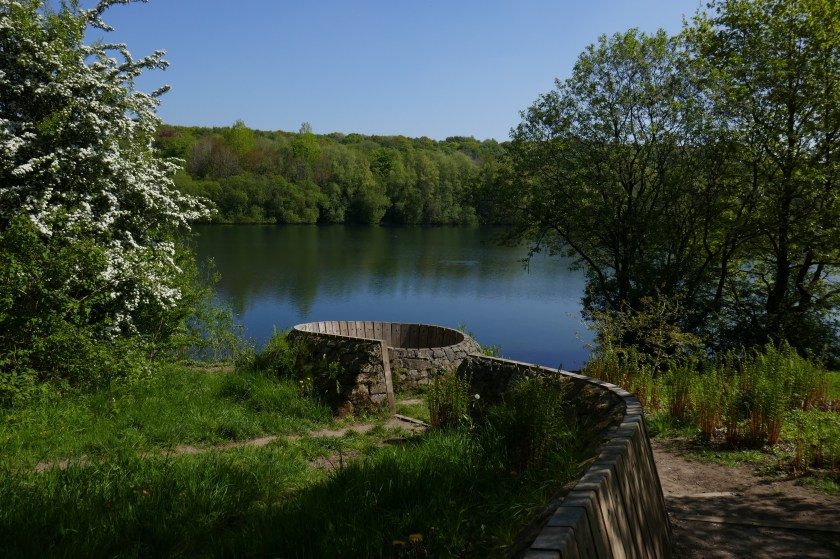
Clifton Country Park and the Lookout sculpture

We chose a gorgeous sunny day to take the bus out to Clifton, just outside the M60.  Although it was mid-week it proved to be a good opportunity to experience just how popular a local facility this country park is as plenty of other people were out enjoying the fine weather and nature reserve.  Clifton Country Park is in the river Irwell valley and is centred around a lake, shown in the photograph.  This lake was created in the 1960s after gravel was extracted for the nearby motorway [then the M62].

As well as the lake this lovely country park has woodland, meadows and pools and is bordered by the river Irwell.  It was once the site of the Wet Earth Colliery, an early deep mine first sunk in 1750s.  The colliery was worked until 1928.  Clifton Country Park also has a cluster of pieces on the Irwell Sculpture Trail that follows the river from Bacup to Salford Quays.  The dynamic trail was updated in 2011 and new sculptures are still added.  The trail is over 33 miles and has over 70 sculptures of which The Look Out at Clifton Country Park is one and is from 2001.

After walking around the lake, we followed the course of the former Fletcher’s Canal which was made navigable by Matthew Fletcher in 1790.  The woodland path is lovely here, with the river Irwell to one side and the remnants of the canal to the other and the bluebells were just finishing when we visited.  Walking back towards the lake we found the old Gal Pit which had a horse gin or horse engine to pull ropes from the pit and an iron sculpture of a Galloway pit pony recreates this today.  Not far away is what is known as Fletcher’s Folly.  In 1805 steam-powered winding machinery was adopted and this chimney was connected to the boiler house by two underground flues which caused maintenance issues.  By the 1890s a new chimney was built leaving this a redundant folly.

With wildlife, history and sculptures there is something for everyone at Clifton Country Park.  If you are interested in detailed history of this area, Salford Council’s leaflet gives a thorough background and a map of the country park and where to find the remnants of the previous industrial use.

Salford University: #surprisingsalford #19

chapel-street-autumn-2016-4
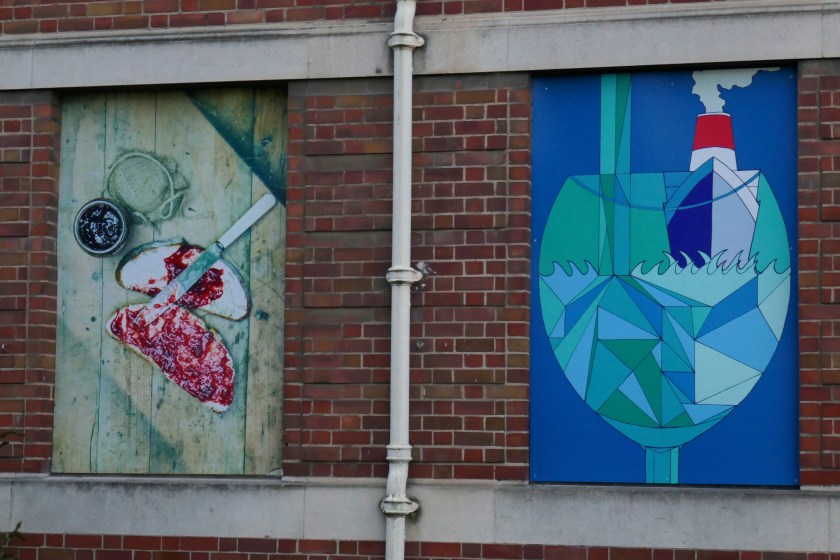
Pictures on The Old Police Station on The Crescent

Our local university, University of Salford, is celebrating its 50th anniversary this year.  Although the history of the institution goes back to 1850 and the Royal Technical College formed in 1921, which in 1958 split in to The Royal College of advanced Technology and the Peel Park Technical College, it wasn’t until 1967 that the Royal College became the University of Salford.  Today the University of Salford has 20,000 students, one of which was our son some years ago; and so our links with Salford began.  The University served him well and its connections with industry and the sandwich degree course he completed with a year gaining useful work experience served him well.

The campus overlooks Peel Park and has an airy and relaxed feel.  More recently the Peel Park main campus has changed beyond recognition and building work is currently a continuous feature.  In 2011 the University also added a Media City campus.  All this development came around the time of redundancies for some staff, as the university reviewed courses and schools and addressed areas that were under-performing.

The Old Police Station faces the main campus of Salford University.  Built in 1957 in brick and Portland stone, the building fell in to disuse in the early 2000s.  In 2011 the building was saved from demolition when the University of Salford had plans to develop the land.  The hope today is to keep the elegant frontage of the building and various plans have been put forward to redevelop the site, although nothing certain yet.  In the meantime the boarded up windows are decorated with images from university students.  This both brightens up the building and is a great way to showcase the student’s work.

Salfordians can be a bit touchy about losing the recognition they feel their city deserves and there was a minor kerfuffle in 2011 when the uni re-branded to become The University of Salford, Manchester.  I can’t get too hot under the collar about this myself as it didn’t make any geographical difference to the campus, it is still our local university.  The addition to the name perhaps made it clear to students unfamiliar with Salford how close the two cities actually are and this might just help it appeal to students keen to be part of the vibrant Manchester student scene.


Why bother travelling?

2012-06-05-cecina-cycle-ride-006
Italy

Migrating Miss’ thoughtful and interesting blog post on why people travel got me ruminating on my own reasons for enjoying travelling and for deciding to become a travel writer and blogger.  I am interested in my local area and I appreciate the many different reasons why many people would prefer to stay at home.  Maura Kelly is right, just looking through Migrating Miss’ reasons for enjoying travel, many of them are existential:

  • To Learn
  • To Challenge Myself
  • Be anonymous
  • Because life is too short
  • To know myself
  • To feel
  • Experience Cultures
  • Have adventures
  • Meet People
  • To Not Look Back & Wonder

Some of these reasons resonate strongly with me.  I am very aware that ‘life is too short’ and I don’t want to ‘look back and wonder’ but then travel isn’t for everyone, some people feel their place in life is where they are and have no need to wander the globe and yet for me travel is an urge, even a necessity and it is a big part of who I am.

I enjoy learning and I certainly learn best when the learning is reflected in the place, geography and culture I am in.  On our trips we like to stop to explore historical sites and learn about why places are culturally important and for me this learning has more relevance when I am standing on the spot.  Looking over Culloden Moor I can feel some of the pain of the soldiers as the Jacobite uprising fell apart; I got a sense of the long span of human history when I walked in the steps of the pilgrims at Delphi and finding the layers of history in the city of Berlin is a thrilling experience.

But thinking about why I love to travel also got me mulling over how I see and experience and in this I am concerned with my observations moving on to interpretations, while appreciating that my own way of seeing a place as a white British woman will be individual.  I try to be mindful of my surrounding and I am delighted when I manage to see the familiar as if it were new and walk down a nearby street with new eyes.  But in truth it is arriving in new places when all my senses are really heightened.  Everything happening around me can feel strange and inexplicable and I am bombarded by new smells, colours and sounds and my brain will be trying to interpret the meaning in the landscape and the way people use the space.  In my own culture, in the north-west of England, I take so much for granted; I know how to use the bus, can identify the crops in the fields and understand the language people are using and my brain will take short-cuts as it doesn’t need to make sense of even the smallest detail.  I can be creative about what I see anywhere but insight can sometimes get lost in the humdrum day-to-day.  Travel opens up my imagination, offers new perspectives and encourages my brain to make new connections.

What has become clear is that for me the buzz that I get from this sensual surge and unfurling of my imagination in these new places has become addictive and after a short time at home I am ready for another fix.


Back where you belong

P1040317.JPG
Can you spot the shiny new wing and bonnet?

It took eight weeks to fix our campervan after the Greek tragedy and what a long eight weeks they were.  For two of those weeks the ‘van was making its way back from Greece, another two weeks were spent sitting around while firstly the body shop did the estimate, then the insurance company assessed the damage and then we waited for parts.  The repair took three weeks and the final week was spent in daily anticipation that the ‘van would be fixed only to be informed sometime mid-afternoon that there was another problem.  One day it was the airbag, another a mechanic put too much weight on the oil filler and broke it off, another day the ABS fault was lighting up.  Every day we were packed and ready to roll but each day the new fault required more parts and another wait on tenterhooks.

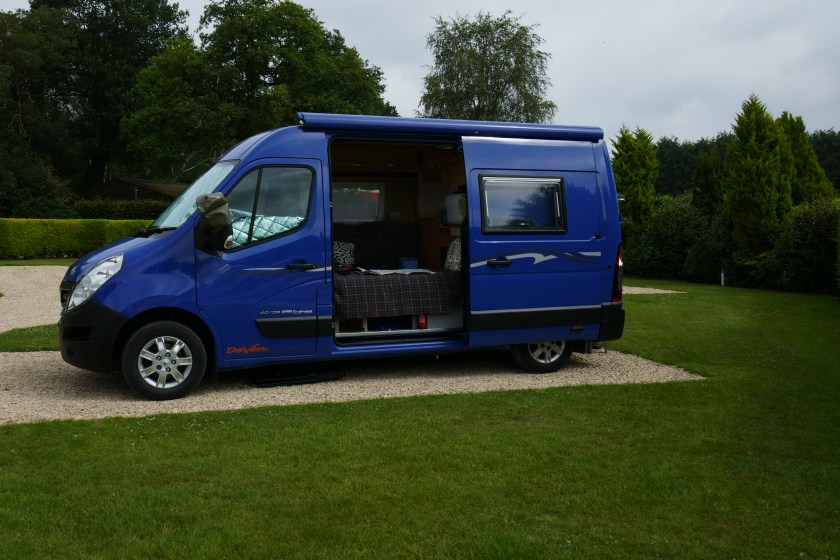
We were so pleased to get our blue Renault back and we went straight from the body shop to a campsite.  We would have camped in any weather but as it turned out we were blessed with glorious and sunny weather and the Cheshire countryside proved to be perfect for a few days cycling.  But first we spent a sunny afternoon cleaning the accumulation of Greek and garage dust from the van interior.  I emptied every cupboard reminding myself what goodies we had left in there, having a little weep when I found the tins of giant Greek beans in tomato sauce and the bottles of dark Greek olive oil.  Despite the mixed emotions, somehow this process healed the weeks of separation and made the ‘van feel like ours again.

In Cheshire we discovered The Whitegate Way, a 10 km cycle route on an old railway line and we cycled around Delamere Forest.  We relaxed and took life easy feeling that our life was back on track again.

We followed this with a weekend camping with friends on the Staffordshire / Cheshire border and then more sociable camping in Derbyshire.  We didn’t travel far and we didn’t need to, we were just content to have our campervan back where it belongs.


Centenary Bridge: #surprisingsalford #18

centenary-bridge-1
Centenary Bridge over the Manchester Ship Canal

The opening of the Broadway Link Road in 2010, called Coronet Way, introduced us all to a new view along the Manchester Ship Canal and particularly of the bulk of Centenary Bridge which can be seen as the road climbs over the railway line.  This modern lift bridge joins Trafford Park on the south side of the Manchester Ship Canal with Eccles and the M602 and is an important transport link for the companies on Trafford Park, as well as enabling those of us who live on the northern side of the canal to reach Trafford Park for work and services.  The bridge got its name as it was opened in 1994, the centenary of the opening of the Manchester Ship Canal in 1894; the 36 mile long huge canal to Liverpool and the Irish Sea that took six years to build.

When I am cycling along this road I always stop to admire the bridge and the Manchester Ship Canal.  The day I took this photograph I was deep in composition when I was joined by another cyclist who was keen to join me for a chat.  He was enthusiastic about the spring weather, the view and the joys of cycling.  We talked for some time about bikes and the best panniers; a conversation I would never have had if I hadn’t stopped to enjoy the view.

The Centenary Bridge is one of only three of its type of lift bridge and was the first low-level bridge to be built across the canal since it had opened.  The bridge was the first with a lifting mechanism, rather than a swinging mechanism; the bridge lifts upwards to allow ships to pass through.  The dual carriage way of Centenary Way was constructed in twelve sections and can lift 15 metres above the road level between the four towers.  Each of the striking square towers is 30 metres high and has a framed indentation that says Centenary Bridge in vertical letters.  The control room is on the Salford side of the bridge.

This video show the massive bulk of the dual carriageway being lowered after a ship has gone through on the Manchester Ship Canal.  The raising of the bridge is an awesome sight that we have been lucky enough to catch just once as we drove from Media City.  With reduced traffic on the canal, this doesn’t happen so often these days.  If the Port Salford plans go ahead perhaps it will become a more common sight.