
Grassington is always a buzzing village, but on our last visit the throng were in high spirits. A film crew were in town and the usual paved streets were covered in earth and shop windows had drab displays that lacked elegance and light. We learnt they were filming the latest All Creatures Great and Small, the cosy 1930s veterinary TV drama and time in Wharfedale was being wound back almost 100 years.
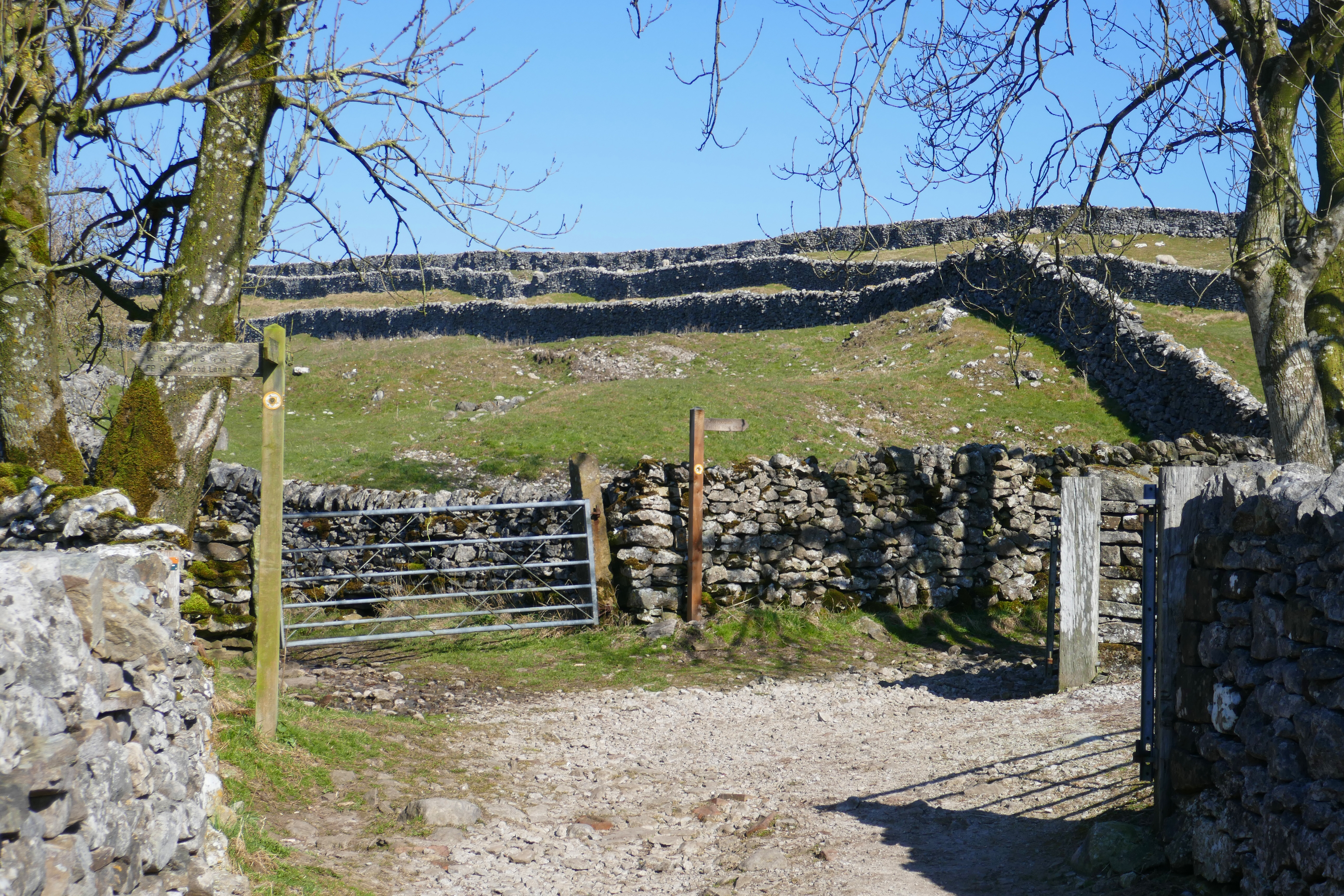
We stayed almost in the present, browsing the second-hand book shelves in the library for a couple of bargains and grabbing a coffee in a cafe with a 21st century coffee machine before climbing the hill out of the pretty, but hectic, village. We were focussed on completing a favourite walk that has open views over Wharfedale, a craggy hill, a scramble down [or up when we walk in the opposite direction] a dry gorge and numerous stiles over dry-stone walls.
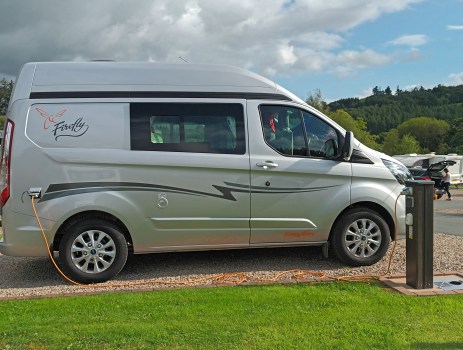
We had started at the Caravan and Motorhome Club Wharfedale site, which is about a 40 minute walk from Grassington. We stay on this campsite regularly and it was an obvious place to use the free overnight voucher the club had sent to members.
From Grassington’s narrow streets we picked up the Dales Way [an 80-mile long distance footpath from Ilkley to the Lake District] on a track that soon opens out to grassy paths across the open moorland. It was a bright spring day and curlew were flying across the moor, their exuberant bubbling call making me smile and evoking memories of previous spring walking days.
The light was so bright it dazzled and the sun had that remembered warmth that gets lost in the dark of winter. A stiff breeze searched out gaps in our clothing, making sure we didn’t get sweaty and another walker wearing shorts had cold-red knees! Below us the River Wharfe’s green flat valley floor was dotted with stone barns.
Leaving the edge of the dale, the moorland is almost treeless, only occasional bushes and trees, still unclothed and baring their winter branches, have managed to avoid the sheep and achieve stunted growth from a gap in a limestone crag. The blue sky is cloudless and vibrant but the startlingly bright March sun washed out any colour in the grasses and rushes. The air tasted fresh and sharp and I breathed in deeply, trying to store the memory of it.
Skirting around the top of Conistone Dib, a dry limestone valley, we continued to Conistone Pie, a flat-topped limestone outcrop that someone once thought was shaped like a pie. In March the sun is still low and on the northern edges of the outcrop the rock created shadows but the south-westerly wind blustered around the sunny side. We circled the outcrop until we found a just-right spot for our lunch and sat with a view over Yorkshire.
After eating, we doubled back to descend Conistone Dib. This dry limestone valley was most likely formed by glacial meltwaters after the last ice age. Whenever we walk here I stop and shut my eyes, imagining the lively stream that once flowed over the crests of the now-dry waterfalls and became tumbling rapids. I can hear the pulse of the clear water as it falls over rocks. After a grassy and less steep section, Conistone Dib narrows and it is even easier to imagine the long-gone waterfall funnelling into the narrow channel, eroding a plunge pool before carving a deep twisting gorge through the limestone. The sun glanced over the gorge and we were walking in shadowy blue depths. Then suddenly, we emerge from Conistone Nib and are once again bathed in bright sunshine as we walk through the village and over the River Wharfe.
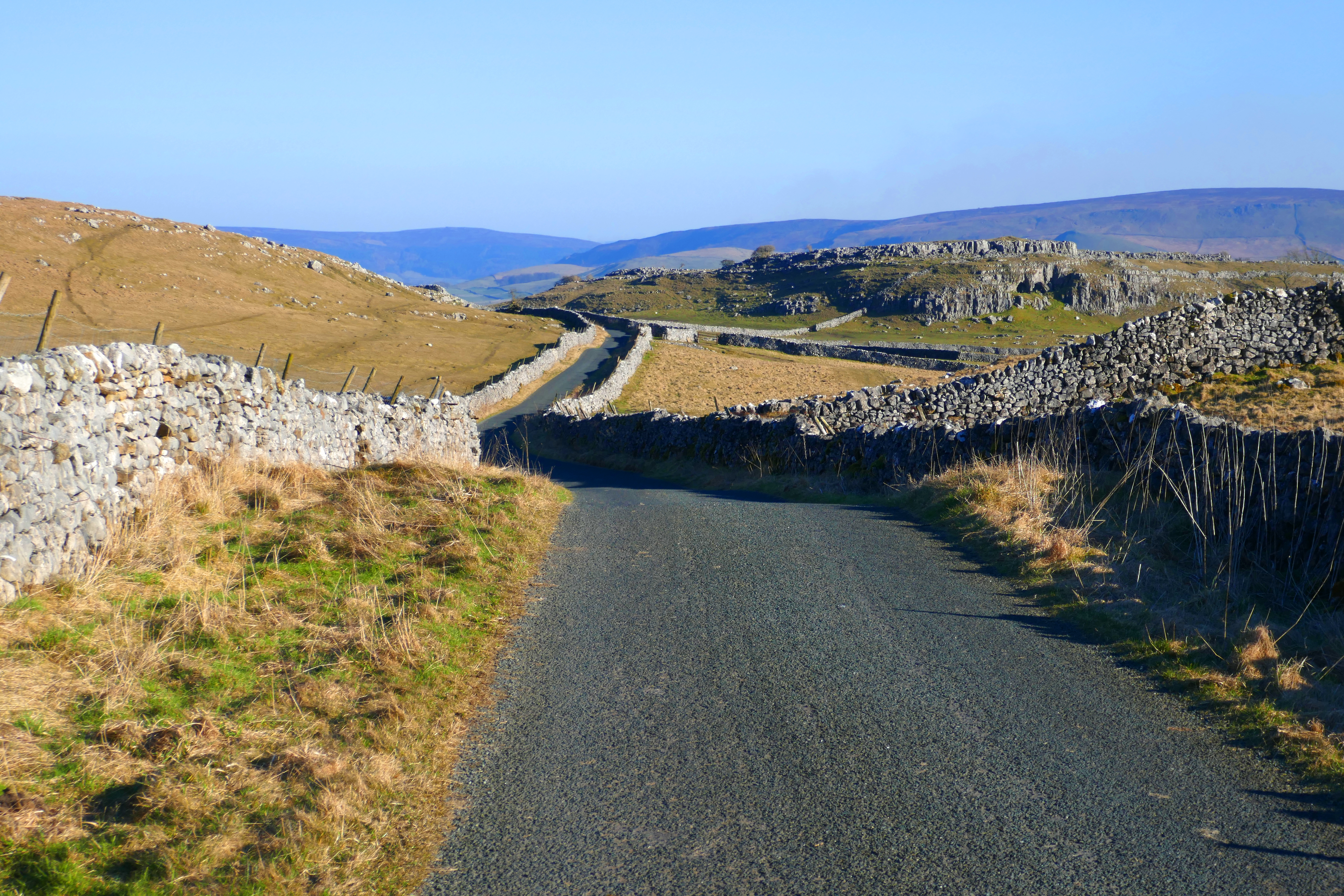
We stopped for drinks at the cafe by the fishing lakes and shared a cake. We were looking across to Kilnsey Crag, the limestone overhang that is another glacial remnant. Our final climb of the day was up the track to Kilnsey Moor. The grassy path that cuts across to Malham Moor always has lapwings in the spring and it didn’t disappoint. We followed the quiet lane back to the campsite enjoying the golden evening light after covering about 19km over around eight hours of perfect leisurely walking.

 Back on the road again