The warmest day of the year [so far] was forecast, so getting out for a walk felt like a priority. But we had necessary chores. We split up and while my partner visited the doctor, I went to the supermarket and organised our picnic. A few hours of the morning were lost but not the whole day.
Catching the bus to Lancaster [with our pensioners bus passes] we were soon on the noon bus to Glasson Dock, along with a bunch of other people. Two women chatted about the perils of long-haul holidays; one person skipped off the bus at the garden centre and a young mum jiggled her baby on her lap, pointing out sights along the way.
Glasson Dock is a small tucked-away Lancashire village between Lancaster and Fleetwood, with a tidal harbour that is still in use as a port. It opened in 1787, when boats could no longer navigate the River Lune to Lancaster.
There are a number of reasons to visit Glasson Dock. The Quayside Cafe is a favourite of ours that serves excellent hearty food. Another fabulous local business is the Port of Lancaster Smokehouse shop and deli and we often pop in for some of their smoked cheeses. Pottering around the harbour looking at the boats whiles away time and the mobile food van is popular with bikers and cyclists. On this warm spring day the cafe was closed and we were focussing on some exercise, with a walk of about 10km along the footpath and cycle route that follows the River Lune back to Lancaster.
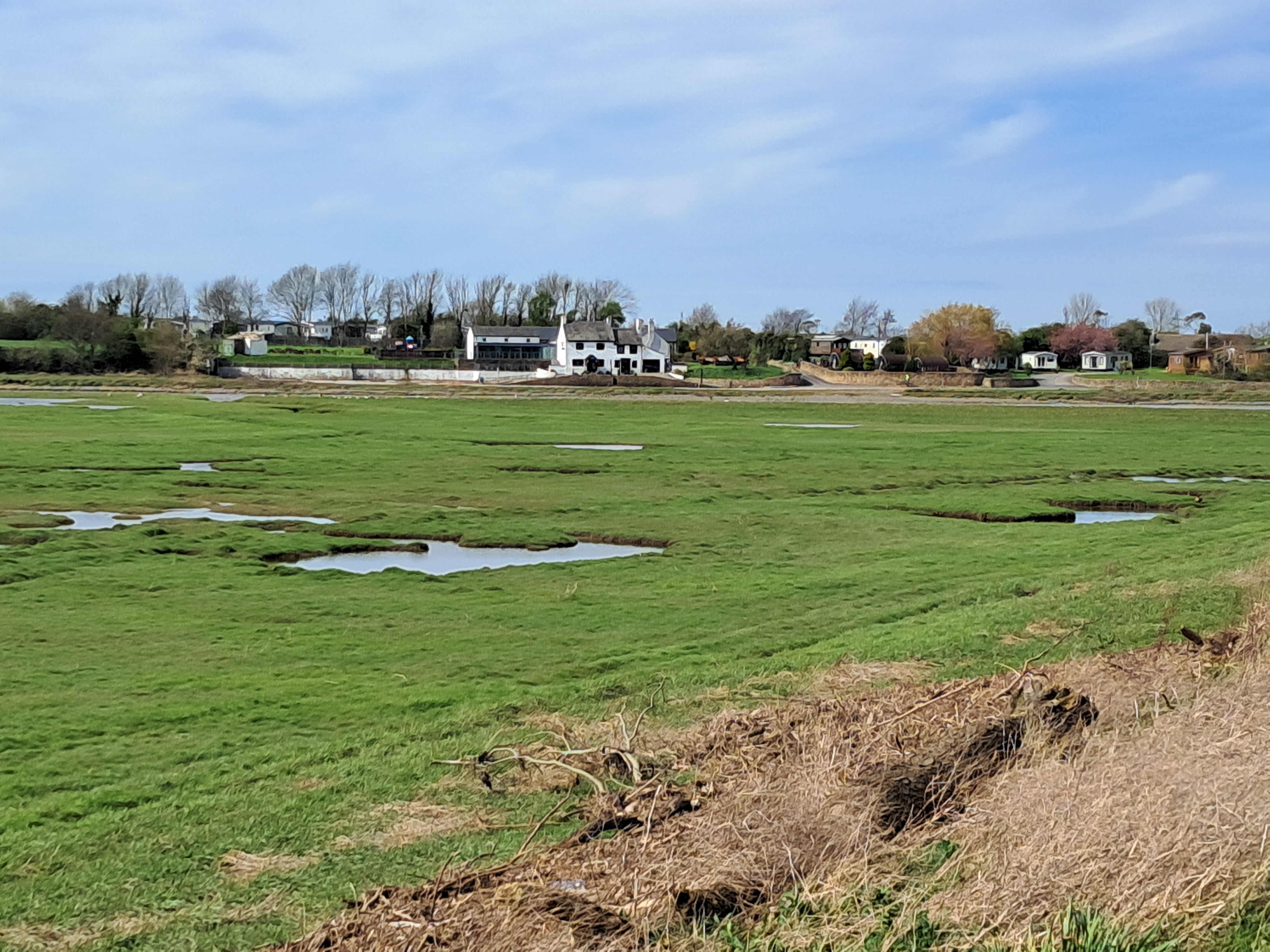
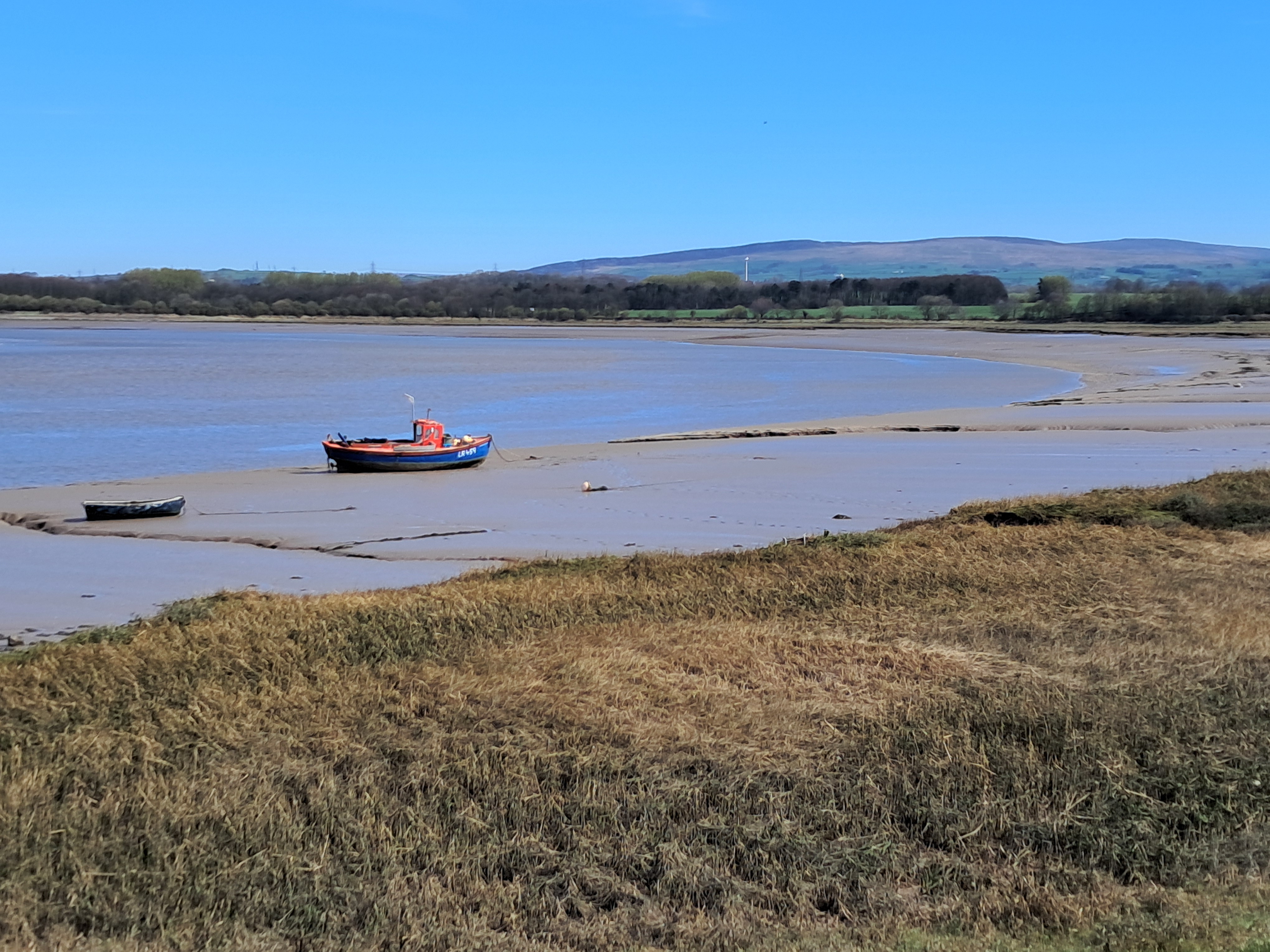
The path firstly winds around the salt marshes to Conder Green, where The Stork Hotel provides refreshments and you can pick up the old railwayline to Lancaster. We spotted groups of geese on the grass and a couple of redshank in the mud. The tide was mid-way between the morning low tide and high tide as we grabbed a bench overlooking the river to enjoy our lunch. We watched an easy-to-spot brilliant-white egret wading through the slowly filling tidal channels of the salt marsh, its feathers fluffed up by the blow-drying breeze. A heron flew unhurriedly overhead as we opened our flask, binoculars to hand.
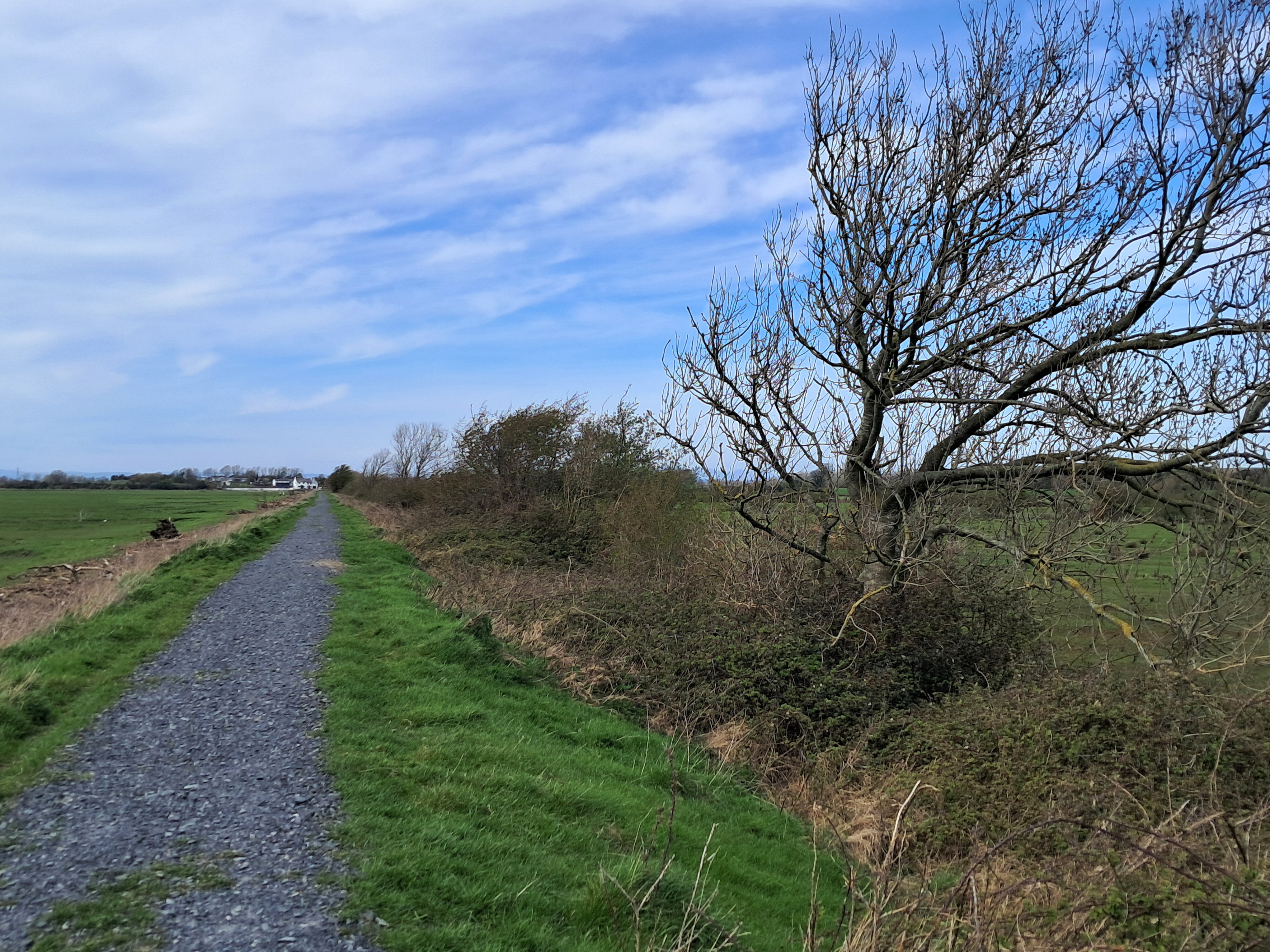
The old railwayline is easy gravel walking. It is mostly lined with trees and in summer’s full leaf they limit the view of the river, but in early spring only the fresh hawthorne leaves are emerging and we could see across the river to Sunderland Point. Bluebells were already flowering in one stretch of woodland and the exuberant bird song filled my heart with joy.
After the rows of solar panels soaking up the sun we passed wet meadows where a lapwing wheeled across the river and landed, an oystercatcher close on its heels [if birds have heels]. Early butterflies fluttered across the path between flowers.
At Aldcliffe Hall Lane we left the cycle route for the path that runs along the dyke. We had a bird’s-eye view over the pools and we searched for a water rail as we’ve been lucky to glimpse one here before. No water rail but pairs of mallards and tufted ducks bobbed on the ponds and a moorhen appeared to half fly and half walk on water in a scurry. The wing beats of two swans had us craning our necks upwards to watch them fly over before landing with elegant splashes.
Blackthorn bushes were festooned with dense white flowers, competing for attention with the bright yellow of the gorse bushes. On this section of the path an optical illusion always makes me think we are heading straight for the Golden Ball Hotel, known locally as Snatchems. The pub is actually on the opposite bank of the Lune but the low river stays hidden from sight until the last disappointing moment. In my dreams there would be a bell by the path that would summon a skipper from the pub who would leap in the ferry and row across for a few pence.
There has been an inn here for hundreds of years and stories about how it gained the nickname ‘Snatchems’ float around the internet. One suggests it comes from Thatchems but the more colourful is that men were snatched from the pub and taken to a ship a few sailors short of a full crew. Imagine sobering up and finding yourself on the high seas!
On the opposite bank the grassed over refuse tip comes next and there are always horses grazing here. In the bright sun we both did a double take at a string of horses, all static on the curved horizon, at first glance they looked like cut-outs of horses.
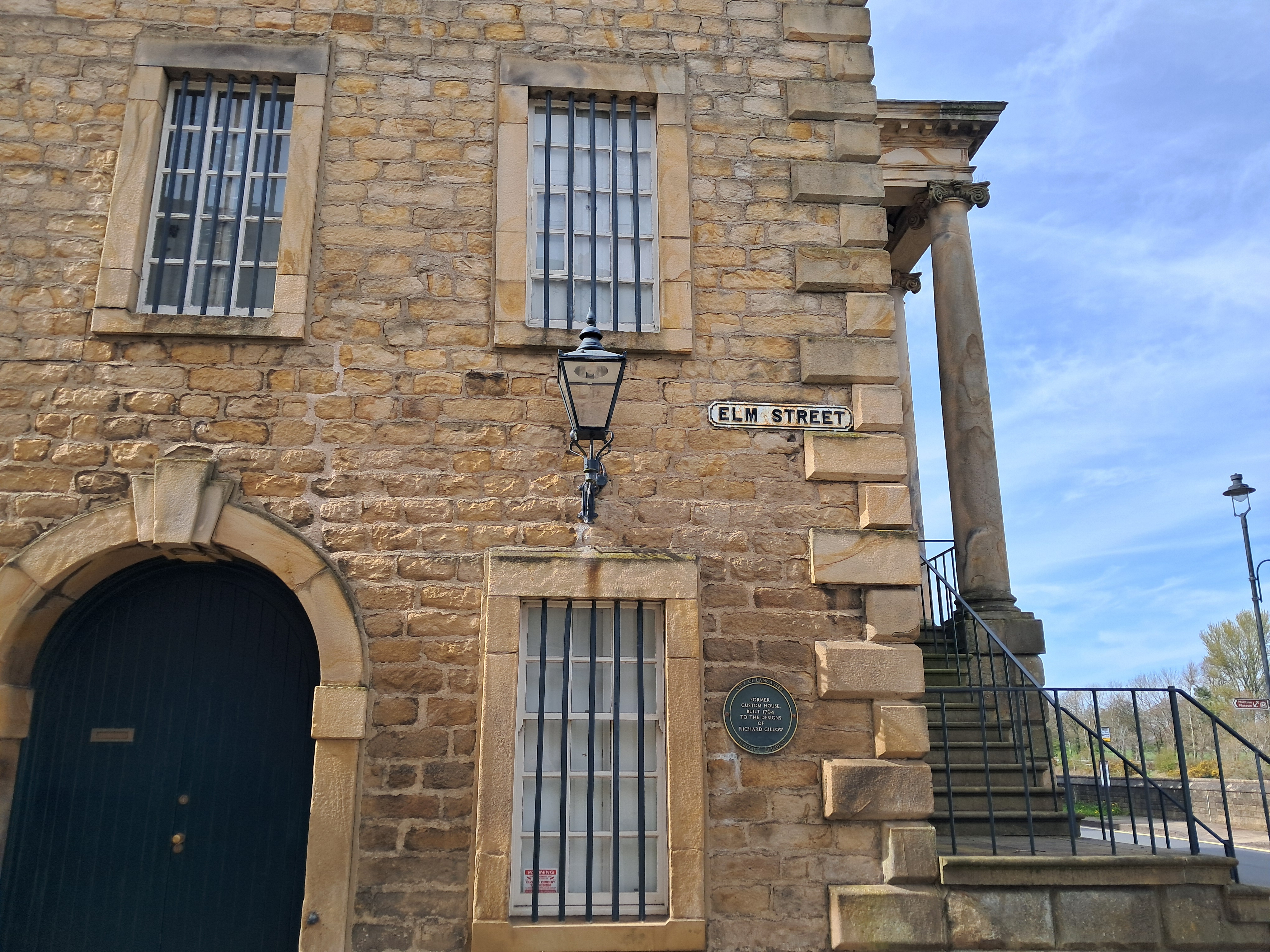
By the time we neared the wharf of Lancaster the high tide had turned and the river was running full. Many of the quayside houses have been preserved and we stopped to look at the 18th century Old Customs House on St George’s Quay, built in the Palladian style with columns and portico. This building is now the Lancaster Maritime Museum and we intend to visit it one day!
We stopped at The Three Mariners Arms, claiming to be the oldest pub in Lancaster and dating back to the 15th century. It is tucked away, almost hidden by new flats and its outdoor seating was perfect for a springtime swift half before the bus home.
 Back on the road again