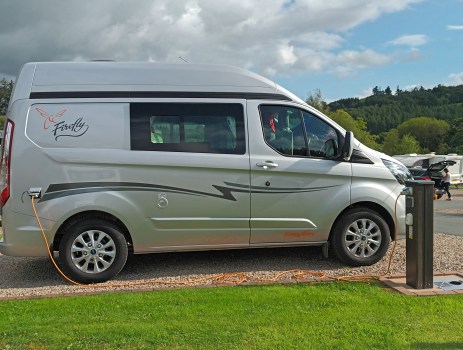
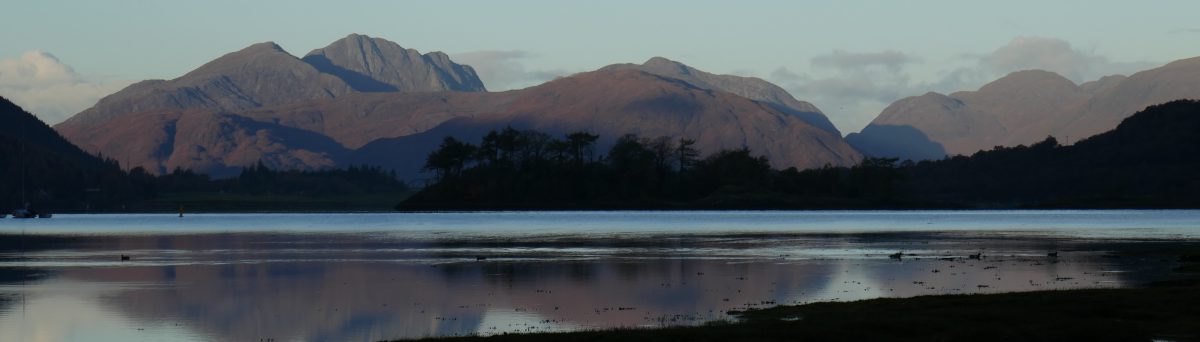

Sometimes we want a remote campsite surrounded by mountains and on other days we enjoy staying at a site by a small town, where we can linger in a cafe with a good coffee before heading off for a walk. Such sites are not common in England, I can think of numerous lovely market towns where there is no campsite, and if you do find one you have to book months in advance! In France almost every small town has a campsite.
The roads of Normandy in northern France were mostly unknown to our campervan. In September we decided to set this to rights and spent five unplanned weeks exploring many of the corners of this mostly rural region.
With over 600kms of coastline, it isn’t surprising that we spent a lot of time walking and driving along the coast east from Cherbourg to beyond Le Havre. However, after a few weeks of seaside, we drove inland. South of Caen we turned our silver-blue campervan in to the campsite in the small market town of Falaise. Following the instructions, we chose a free pitch by the river and I immediately knew I would like it here.
Falaise’s municipal site sits under the walls of the town and by the lively river L’Ante and from our pitch we had a view to the monumental castle perched on the crag. The river carves a cleft through the limestone here, with the castle crag to our left and Mont Myrrah rising to our right. With bright clean facilities, fresh bread delivered daily and sunshine, it was perfect.
Finding out Way around Falaise
On our first wander around the town we followed our noses along narrow cobbled roads that wound uphill between pretty houses to a lofty gate, Porte Philippe Jean. Inside the town walls we found the grandiose square leading to the castle. We were drawn to an unusual art work by Jef Aerosol, a renowned French artist. Called ‘War is Hell’ a tank is covered in black and white images of adults and children affected by the brutality of war and also peace symbols. Reconstructed from many tanks and with sections damaged by bullets and mines, the Sherman tank represents the loss of soldiers and civilians in all wars. Of course, Normandy is packed with Second World War history, but in Falaise and Caen we became aware of how this war was devastating for civilians.

Falaise played an important role in the Second World War and the liberation of France. After the landings on the Normandy beaches about 50km away on 6 June 1944, driving the German army out of Normandy took weeks of brutal fighting. The battle for Caen was merciless and the Germans did not leave the city until 9 July 1944. We had driven from Caen to Falaise in just over half-an-hour, stopping at the Canadian war cemetery and passing the Polish war cemetery on the way. These places of rembrance were reminders of the remorceless fighting in 1944: it wasn’t until 16 August 1944 that the Allies entered Falaise. The liberation of this small town marked the beginning of the end of the German occupation of France.
On that first afternoon, after visiting the Église Saint-Gervais-Saint-Protais de Falaise, which has some elements from the original 11th century church remaining, we sat in a welcoming cafe in the square and drank creamy hot chocolate while lazily people watching.
Chateau de Falaise, the large castle where William the Conqueror was born dominates the town and is certainly worth a visit. The exhibitions in the keep show historical characters telling their story, with English subtitles. We were somewhat overwhelmed with history having heard from William, his wife Mathilda, his son Henry, Eleanor of Aquitaine and others. On the roof we left the exhibits and looked over the cliffs, understanding how the castle’s position helped it survive sieges.
By contrast, the Musee des Automates was window-to-window fun. There were displays concentrating on the mechanics of the figures and the history of creating engaging Christmas window displays in Parisien department stores, but mostly visitors wander between window displays of moving figures and smile. We spent a long time spotting all the action of a comical scene from the Tour de France, a boisterous and colourful dance marathon was lively and Santa’s doll workshop was absorbingly enchanting.
In the Église de la Trinité de Falaise, near the castle, we studied the photographs of Falaise after the 1944 bombing by the allies. I read the stories from local people, feeling a need to bear witness. Their hardship and suffering was heartbreaking.
Walks in the Falaise Countryside
Our favourite holiday activity is to set off for a hike of between four and six hours under a blue sky and with a rucksack packed with lunch. Surrounded by farmland and sleepy villages, rural Normandy around Falaise offered some unforgettable walking in rolling countryside.
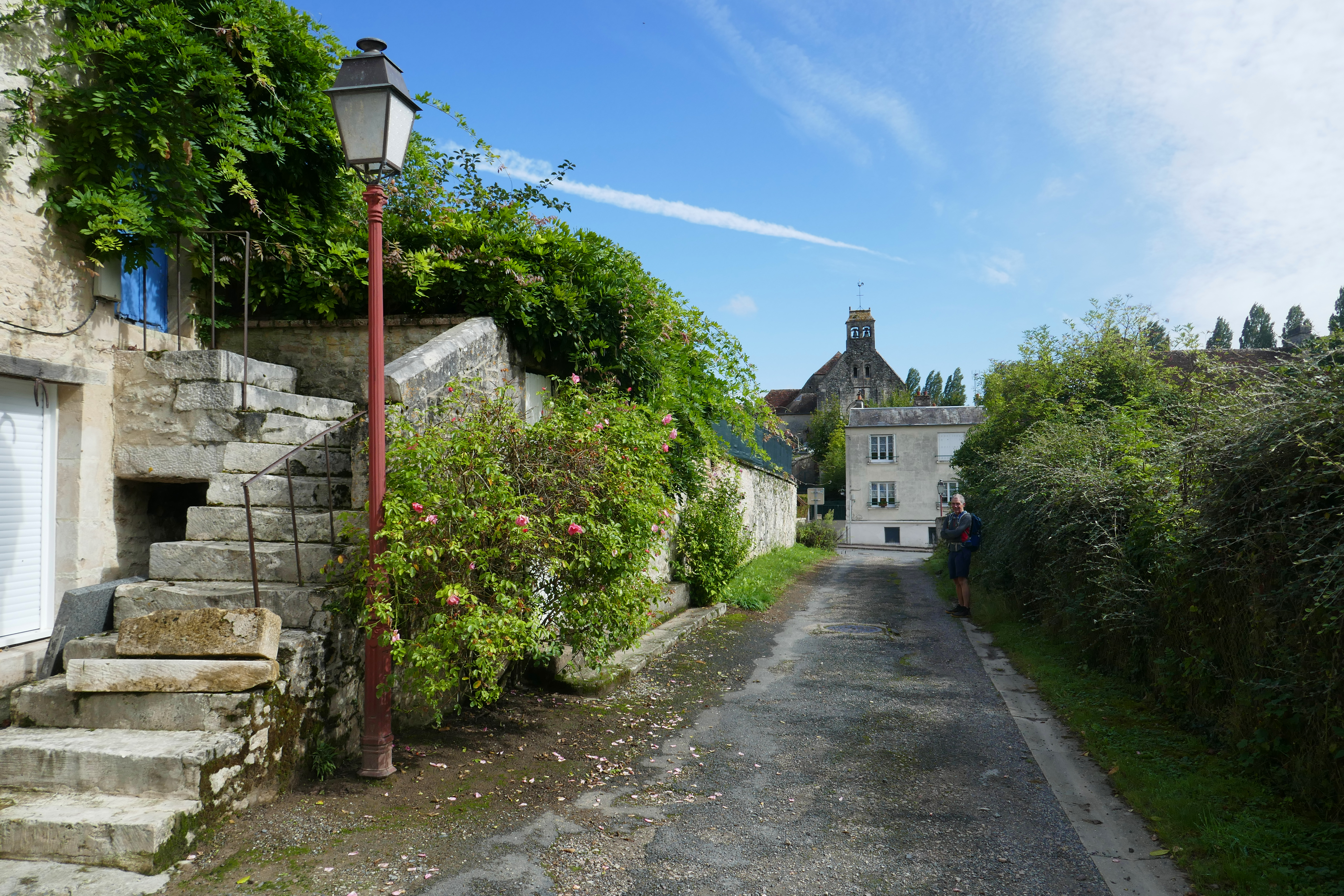
Les Trois Chateaux walking route is 11.5km and begins at chateau number one, William the Conqueror’s chateau in Falaise. Descending from the castle we followed roads through a delightful area by the river that was once mills and tanneries before climbing up Mont Myrrha, an escarpment with a view across the cleft to the castle. We watched a peregrine flying above the towers before descending back towards the town and picking up a traffic-free winding and walled track, the Chemin des Oliviers, to the village of St Laurent. Here we admired the 11th century church with a wooden barrel roof and ornate side chapels.

Crossing open fields above the valley a wind insisted we put jumpers on until we reached the shelter of the stone buildings of Versainville. We peered through gates at chateau number two, an elegant 18th century private building. A dark sunken path opened out to a flower-strewn track by a field of corn and a flock of swallows on the wing. Climbing out of the valley back to Falaise, we walked around Château de la Fresnaye (our third chateau), on the edge of the town.
A 13km walk took us through fields above L’Ante river, beginning on a former railwayline, now a walking and cycling route. Narrow lanes wound around vast fields of crops to the village of Eraines, where we were distracted by the village church. Crossing the river on quiet lanes and by desirable houses, we returned back through St Laurent and the delightful walled path, crossing the river by an old mill that led us back to the walls of Falaise.
Useful Information about Falaise
The Medieval walled town of Falaise has a population of under 10,000, but it has all the facilities visitors in a campervan need. In the evenings, we mostly cook in our campervan, splashing our cash on morning coffee and cake. Occasionally we do enjoy a meal in a restaurant and Falaise has a few to choose from. We ate in the creperie, surprisingly busy for a weekday evening in September. We began with a kir Normande aperitif, a local tipple we had happily discovered. With our galettes, made with buckwheat flour, we drank local cider and to finish we shared a crêpe with banana and flaming rum that was delicious.
Saturday is market day in Falaise and it seemed that everyone from the surrounding villages had descended on the usual sleepy streets and we had to shuffle and meander around the shoppers and stalls of vegetables, baskets and clothing. The rest of the week there are small grocers and supermarkets in the town centre and it isn’t far to the Carrefour on the edge of town. There is a larger E LeClerc about 30 minutes walk from the campsite.
A Day out to Caen from Falaise
The 118 bus takes a winding route from Falaise, stopping in every village, to reach the city of Caen. In Caen, the bus station is about 20 minutes walk from the city centre. We were here on market day [Friday] and the streets around Place Saint-Sauveur were lined with stalls. Buskers gave the city a lively soundtrack.
As you would expect there are plenty of restaurants and shops in a city the size of Caen. We had coffee and enjoyed an excellent lunch in L’Okara Cantine on a chic narrow street.
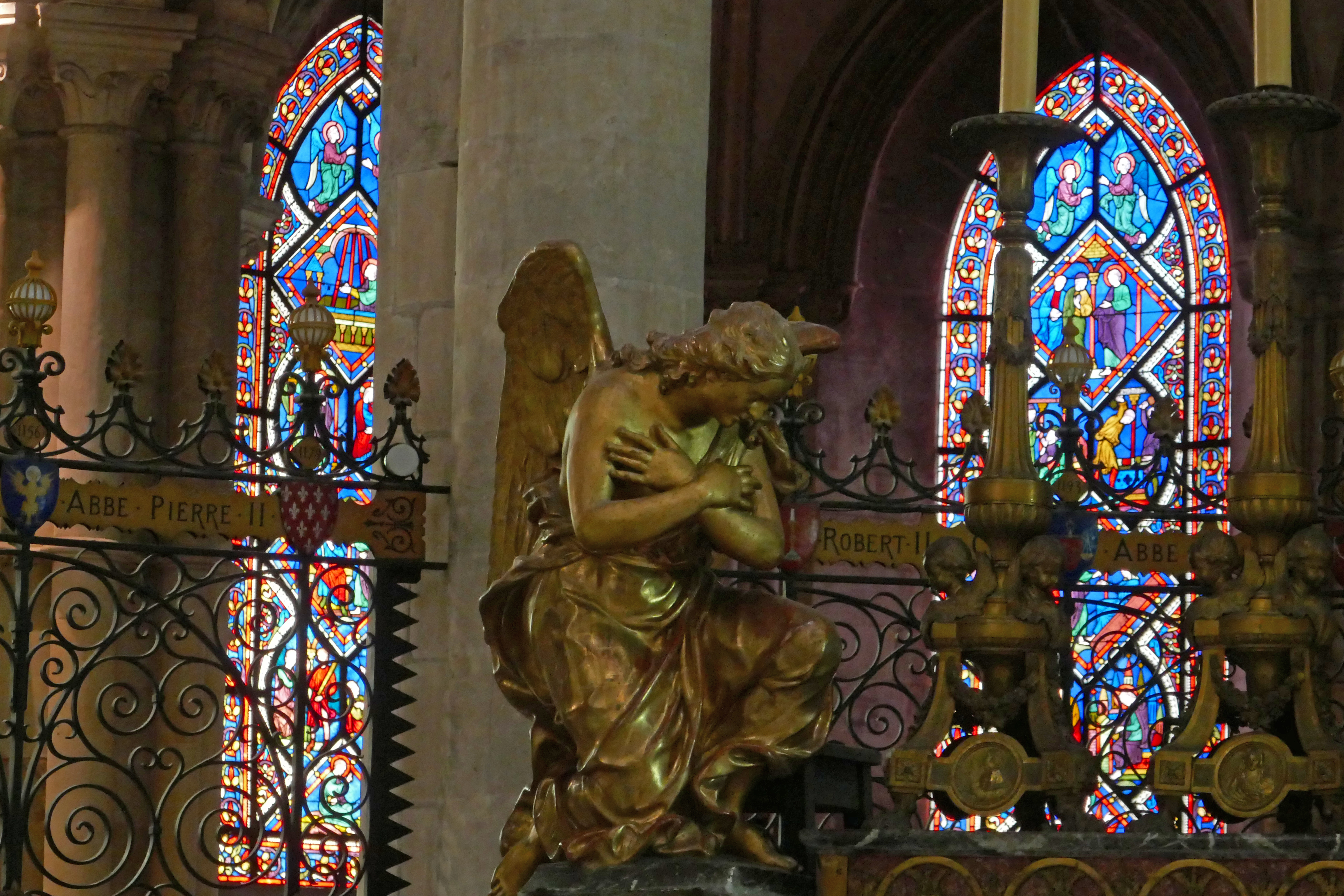
In the immense Abbaye aux Hommes, built by William the Conqueror and rebuilt in the 18th century, there are grand arches, stained glass windows, cloisters and elaborate wrought iron features. William was buried here but disentombed during the revolution and it is said that only a thigh bone now lies in his tomb. The exhibition about the destruction of Caen in the Second World War was sobering. The Abbaye’s role as a hospital meant it mostly survived the bombing.
Exploring on foot, we also found the castle ramparts and the breezy marina before catching our return bus that was packed with young people returning from college.
For more information about the campsite in Falaise and the town, click here.
 Back on the road again